
Season after season, more than 70 percent of players on the PGA Tour choose to play a Titleist golf ball. That percentage only increases among those competing for the game’s biggest amateur titles such as the NCAA D1 Championship, US Amateur and US Junior.
RELATED: Exploring New Bedford, Massachusetts – birthplace of Titleist and the Pro V1
At the same time, the Titleist Golf Ball R&D team continues to push forward, collaborating with the world’s best players to test prototype technologies and gather insights that provide the foundation for the Titleist golf ball development process.
“Everything we do is driven by the desire to better understand player needs and translate those insights into meaningful performance improvements,” says Fordie Pitts, director of tour research and validation.
Today at the Baycurrent Classic in Japan, the next generation Titleist Pro V1 and Pro V1x golf balls begin a key global validation phase that will span the world’s professional tours for the next several months, providing the game’s best players the opportunity to evaluate the new 2027 models under tournament conditions.
This is the next step in a multi-year development cycle, following intensive on-course testing that has been underway since the Arnold Palmer Invitational in early March. That week at Bay Hill, Adam Scott, Ryan Gerard, Jordan Spieth and Harris English each tested final candidates during their Tuesday practice rounds, providing feedback to Titleist reps after every shot.
Player after player – from Justin Thomas to Lottie Woad to Matt Fitzpatrick to Yana Wilson to Viktor Hovland – engaged in the same process over the ensuing weeks and months.
During the next three practice days in Japan, Titleist reps will continue working with players on the range and inside the ropes at Yokohama Country Club as they prepare to game the new Titleist golf ball models in competition. The transition from testing to tournament play, however, is already underway.
“When we’re in the middle of a testing session and a player asks me how soon he can play the new ball, I know we’re onto something,” Pitts said. “That’s how it’s been the past couple months.”
Four players who eagerly awaited their first opportunity to tee up the 2027 models got the chance at the Biltmore Championship Asheville, the opening event of the PGA Tour’s FedExCup Fall season. That group included Neal Shipley, whose move to the new Pro V1 led to both his career-best round (62 in round two) and finish (T-3) on the PGA Tour.
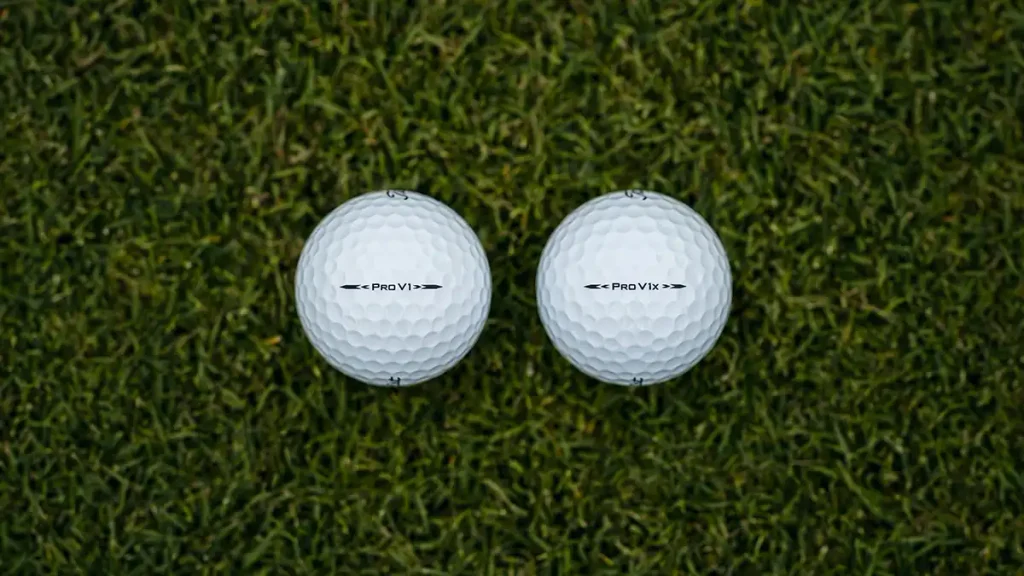
The original Pro V1’s introduction came in late 2000 at the PGA Tour’s Invensys Classic in Las Vegas, where 47 players switched to the new multi-component, solid core technology Pro V1 the first week it was available, representing the single greatest shift in equipment usage ever at a PGA Tour event.
Since then, Pro V1 and Pro V1x golf balls have been used to win more than 110 men’s and women’s major championships. On the PGA Tour alone, they have been teed up in competition more than 100,000 times and counting.
The new 2027 models mark the 15th generation of Pro V1 and 13th generation of Pro V1x. Behind the innovations that precede each new model is an industry-leading Golf Ball R&D team that comprises more than 75 associates and groups such as aerodynamics, engineering, materials research and analytical chemistry, research and intellectual property, product testing and analysis, and product development and implementation.
While specific performance and technology improvements vary from generation to generation, Titleist Golf Ball R&D’s approach remains the same. It’s rooted in a relentless pursuit of innovation and excellence in process – one that synthesises golfer feedback, rigorous R&D and testing, world-class manufacturing technologies and performance validation by the world’s best and most discerning players.