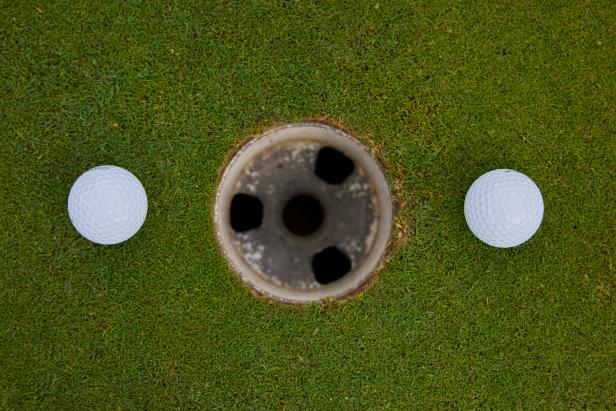
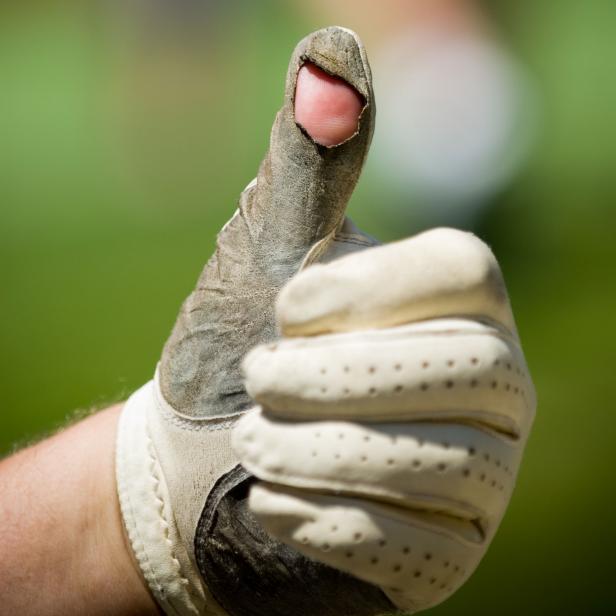
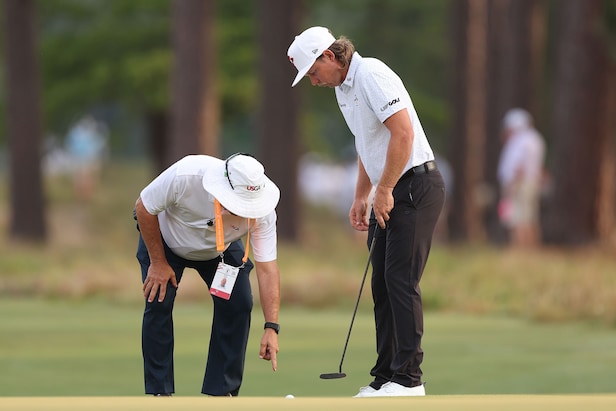
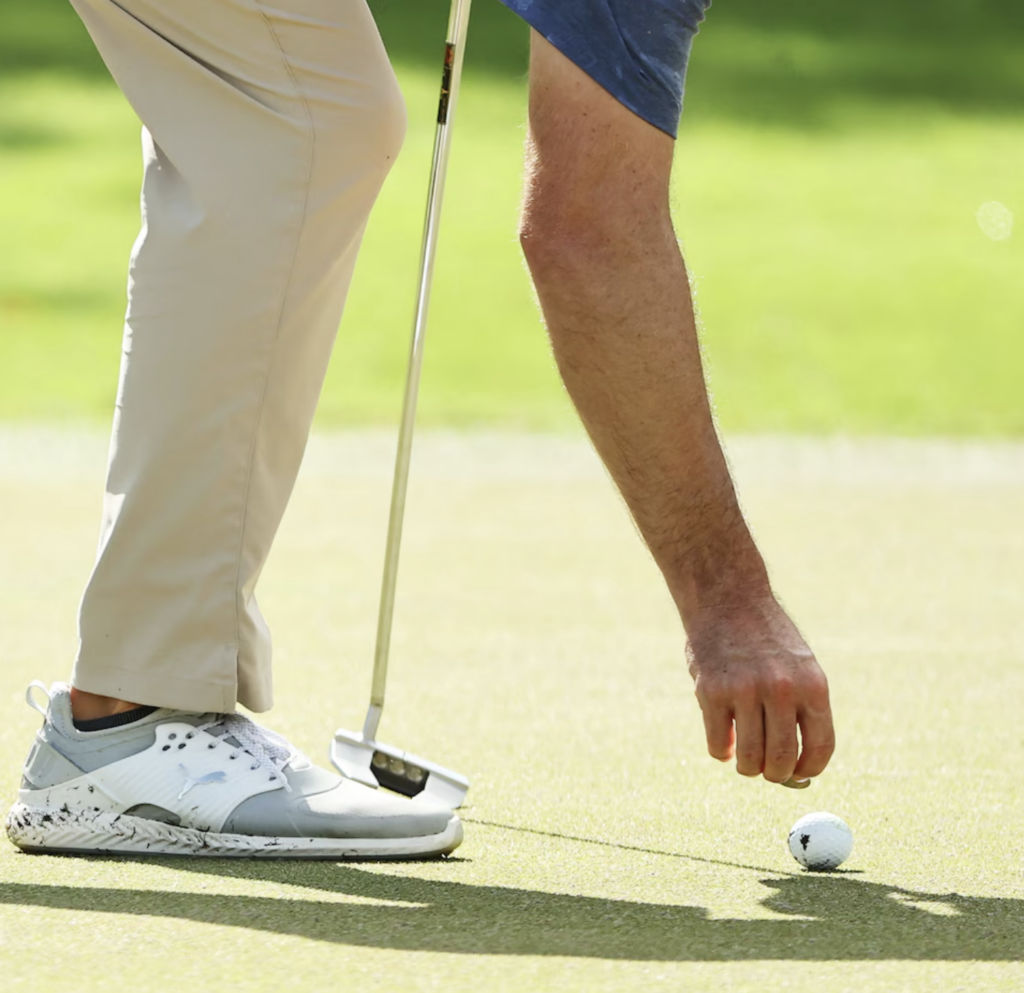
The intent here is not to introduce a new generation of golfers to a classic way to (cough) cheat. Rather, it’s a friendly reminder to be on the lookout for a small handful of players prone to take some liberties when it comes to marking their golf ball on the putting green.
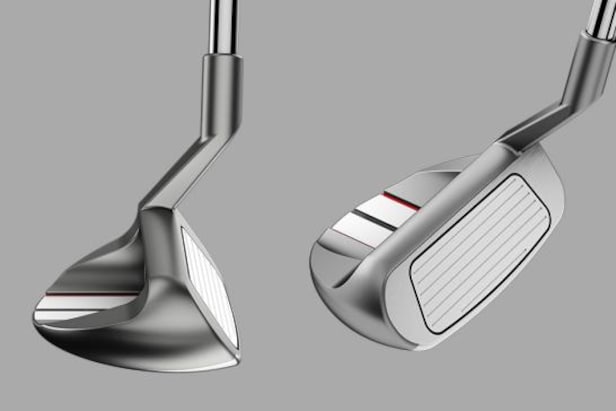
Chippers like the one you see here comply with equipment rules and can be used in competition. Where you might get confused is that it’s against the rules to use a “two-way” chipper.
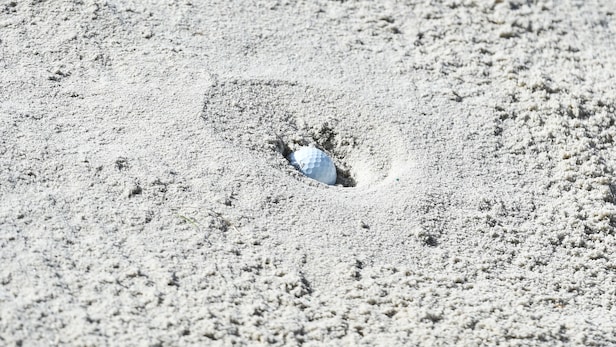
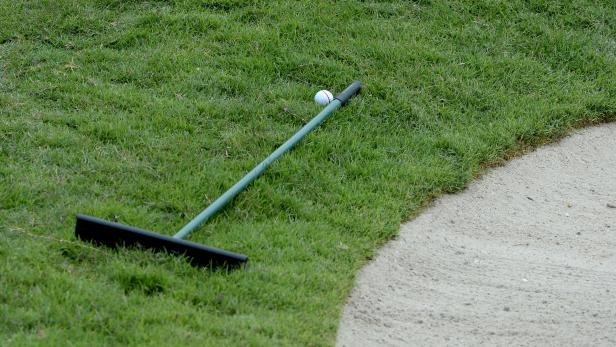
A fried-egg or nearly completely buried lie might give you pause as to what to do next, especially if you have a high lip in front of you. Can you get under the ball enough with your sand wedge to loft it out of the bunker? It’s a dilemma that might leaving you wondering about your options.
Under Rule 4.3a, you can’t use equipment (other than a club or ball) that artificially eliminates or reduces the need for a skill or judgment that is essential to the challenge of the game.
Rule 16 outlines relief from abnormal course conditions. It covers what you can and can’t do when encountering immovable obstructions on the golf course.
Rules officials are not there to decide on the validity of the rules, but rather to enforce them and make sure they’re administered equally for all 156 players in the field.
Nearly a week after six-time LPGA winner Nasa Hataoka was disqualified from the ShopRite LPGA Classic after she signed an incorrect scorecard because she was deemed to have taken too long to search for her ball, the Japanese star posted on social media a long and critical response.
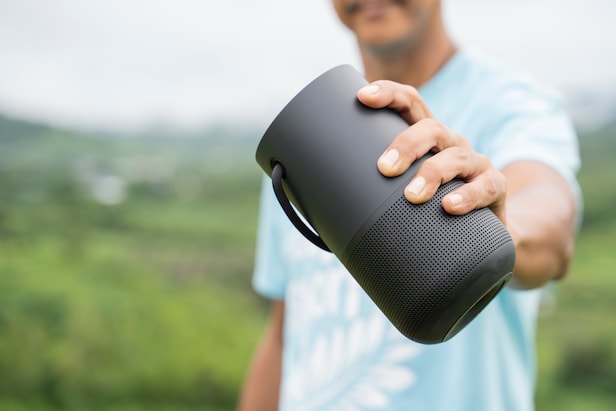
Setting aside any annoying aspects of hearing music on a golf course, especially when it’s a genre of music you don’t like, you might be wondering if it’s ever in violation of the Rules of Golf to listen while playing a round.

 Australian Golf Digest