From a helicopter discovery to one of the most anticipated golf openings in the country, this is the story behind Kangaroo Island’s bold new masterpiece.
The next great chapter in Australian destination golf is about to begin.
For more than two decades, courses like Barnbougle Dunes and Cape Wickham Links have reshaped the way golfers travel, proving world-class golf experiences do not need to sit inside major cities or the gates of private clubs. Now, on the rugged southern coastline of South Australia’s Kangaroo Island, another project is preparing to enter that conversation.
And those lucky enough to have a pre-opening glimpse believe it can sit alongside the very best in the country.
The Cliffs Kangaroo Island is not simply another new golf course. It is an ambitious, highly considered attempt to create one of Australia’s premier golf destinations, built around dramatic landforms, environmental stewardship and the raw beauty of one of the nation’s most unique landscapes. Importantly, it is also a story of persistence.
For developer and operator Sam Atkins, the road to opening has been anything but straightforward. Fires, COVID-19, infrastructure setbacks and years of delays repeatedly threatened momentum. Yet standing atop the towering limestone cliffs overlooking the Southern Ocean today, Atkins speaks with the confidence of someone who knows exactly what is emerging.
“This was always about golf first,” Atkins says. “Golf first, second, third
and fourth.”
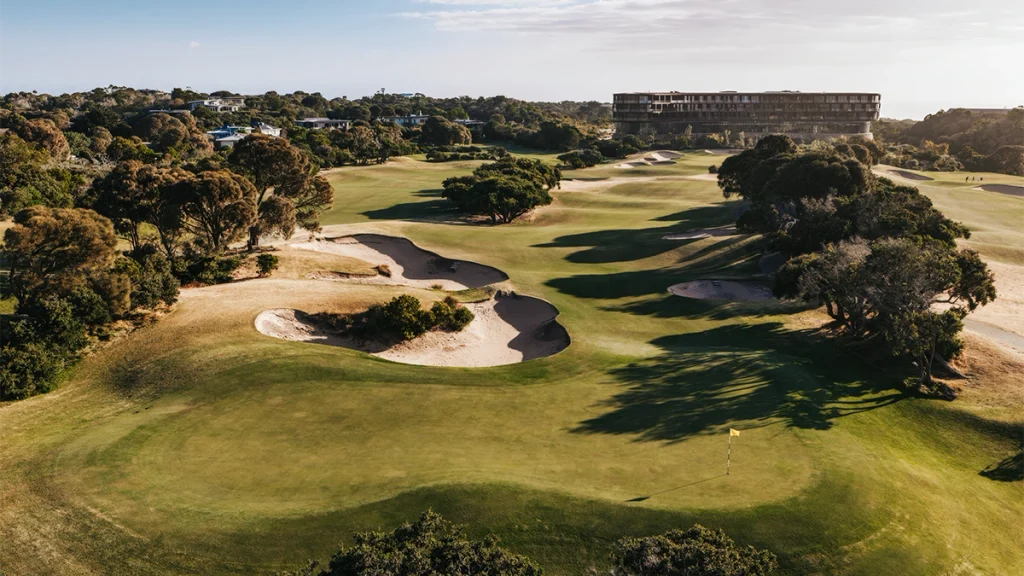
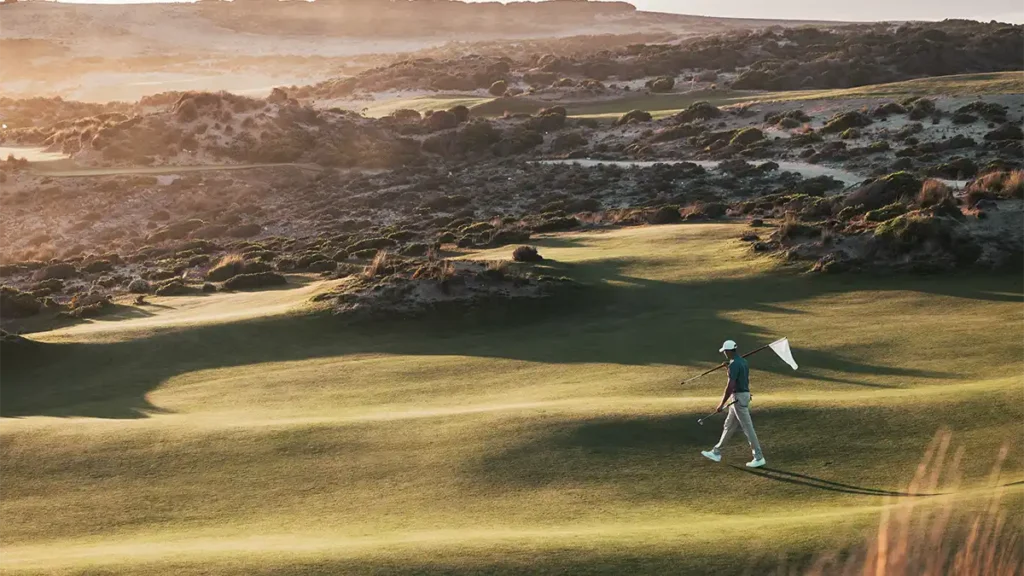
That philosophy is immediately evident across the sprawling 223-hectare property perched above the Pennington Cliffs. Routed by acclaimed course designer Darius Oliver, the layout moves through towering dunes, exposed clifftops and naturally rumpled inland terrain that many who have walked the site compare to the great golf landscapes of Victoria’s Mornington Peninsula.
The result promises to be something distinctly Australian, yet entirely unique. “There’s nothing really like it in the world,” Atkins says.
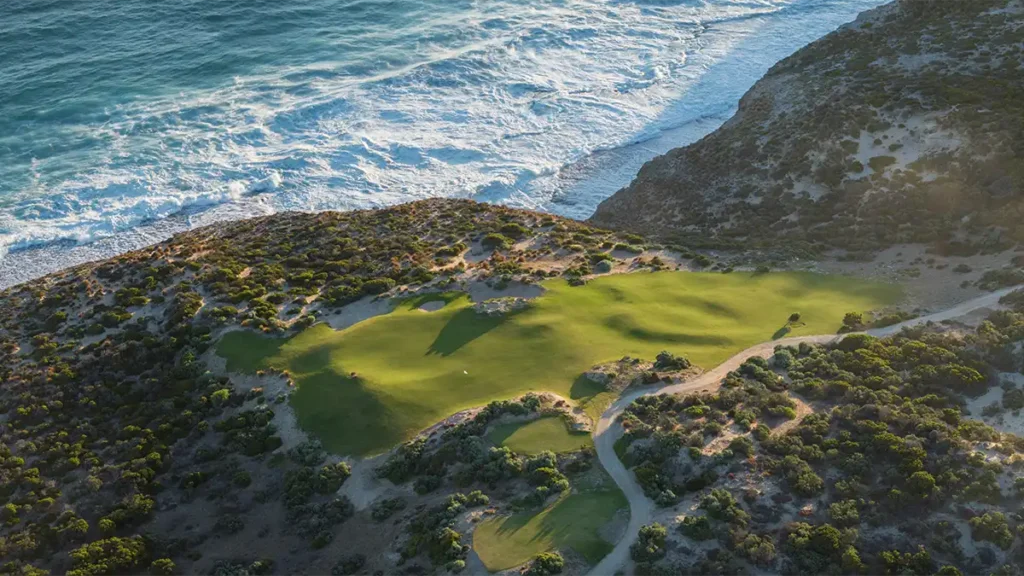
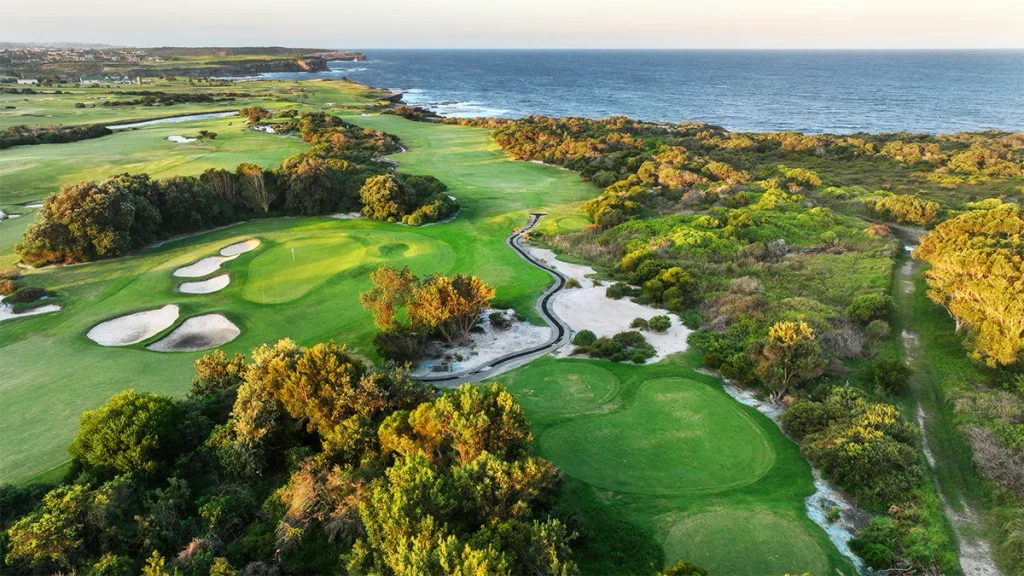
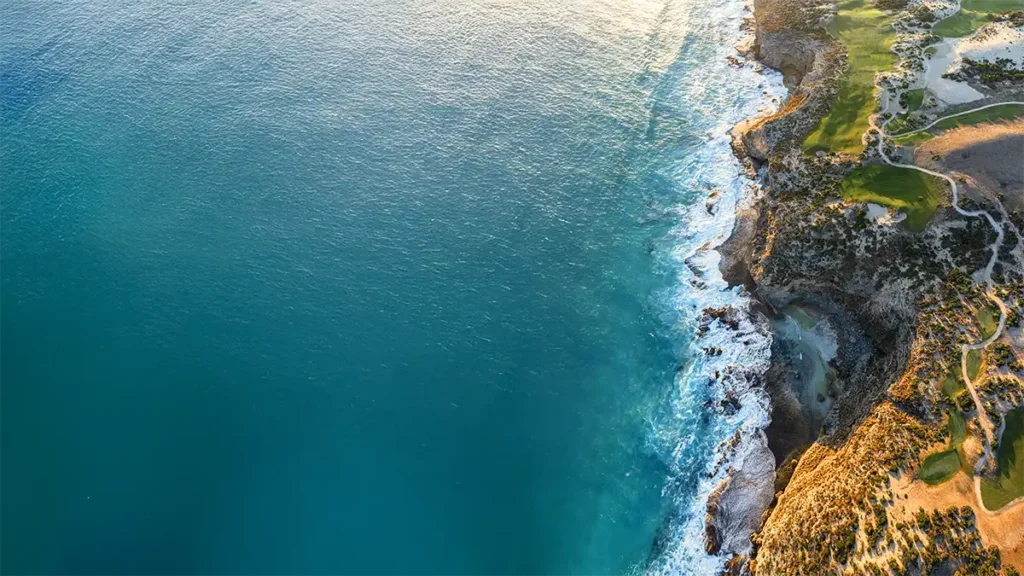
It is difficult to overstate the scale and drama of the property itself. Positioned on one of the narrowest sections of Kangaroo Island, golfers can see both the Southern Ocean and the island’s northern coastline from elevated points across the course. Massive limestone cliffs descend into the ocean below, while rolling dune systems create a constantly shifting golf landscape above. This is not manufactured. It is natural, raw and unmistakably authentic.
The origins of The Cliffs date back more than a decade. After the success of Cape Wickham, several figures connected to that development began searching Australia for another site capable of delivering a world-class golf experience. Kangaroo Island quickly emerged as the standout, while the property itself was discovered from the air.
“They flew over it in a helicopter and immediately understood what it could become,” Atkins says. “They said there was a mini-Mornington Peninsula sitting there.”
Atkins became involved in 2019 after purchasing control of the project, which had already secured significant state development approvals. A South Australian businessman with deep ties to sport, wine and tourism, he brought a different perspective to the development.
Unlike many modern golf projects, The Cliffs was never conceived as a real-estate play wrapped around a golf course. There are no homes lining the fairways and no residential estates built into the routing.
“That was really important to us,” Atkins says. “This had to be done the right way.”
That long-term approach has shaped every part of the project. Atkins’ background in the wine industry, tourism and golf administration heavily influenced the broader vision for the site. A former chair of course at Adelaide’s Kooyonga Golf Club and lifelong visitor to Kangaroo Island, Atkins understood early that The Cliffs needed to become more than simply a golf course. It needed to become an experience.
Then came the setbacks.
The devastating Kangaroo Island bushfires in 2020 impacted huge parts of the island. COVID followed soon after, severely disrupting tourism and delaying major infrastructure works. Water access became another major hurdle, with the project relying on a large-scale desalination and pipeline solution to support the golf course.
For many developments, those challenges may have proved terminal. Instead, Atkins and his team pivoted. During the delays, the group invested heavily into broader tourism infrastructure across Kangaroo Island, acquiring the Penneshaw Pub, local accommodation and transport businesses. The move not only diversified the business model, but embedded the operation deeper into the local community before the golf course had even opened. Today, the group employs more than 60 staff across the island.
“We wanted to understand Kangaroo Island properly,” Atkins says. “Not just come in and build a golf course.”
That local integration has become central to the identity of The Cliffs. The vision is not to isolate golfers within a resort bubble. Instead, the project aims to immerse visitors into everything Kangaroo Island offers, from wineries and oyster farms to fishing charters, distilleries and coastal experiences. And that wider tourism appeal matters because Kangaroo Island was already one of Australia’s great natural destinations long before golf arrived.
“Kangaroo Island is raw, authentic and unique. We want visitors to enjoy the whole experience, from start to finish, not just the golf and hospitality. We want them to leave saying, ‘I just loved it, all of it.’” Atkins says.
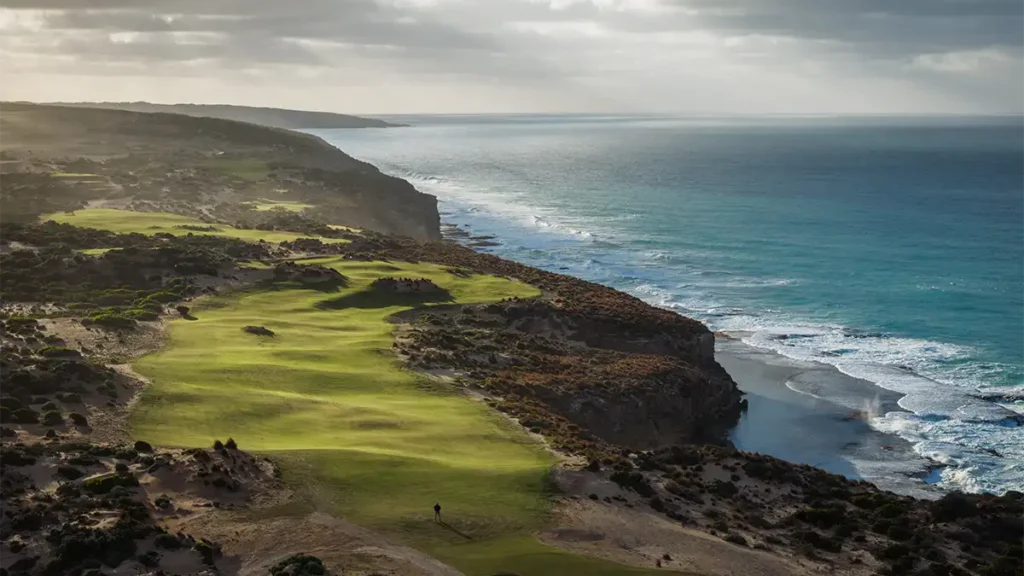
Equally significant is the environmental philosophy underpinning the development. Golf and environmental preservation are often framed as opposing ideas, yet The Cliffs team believes modern golf can actively enhance and protect fragile landscapes when approached correctly.
The project has invested heavily into biodiversity restoration, habitat protection and sustainable land management. Materials sourced directly from the site itself, including limestone excavated during dam construction, have been incorporated throughout the development. Even members of the shaping team became so attached to the property that they remained involved permanently in environmental management roles after construction finished.
“We want locals to walk in and say, ‘Wow, I didn’t realise you were doing this,’” Atkins says.
Then there is the golf itself. Those fortunate enough to have seen early previews consistently speak about the variety, scale and memorability of the holes. While comparisons to Cape Wickham are inevitable, The Cliffs appears set to carve out its own identity entirely.
The routing constantly changes direction and scale. Some holes cling dramatically to cliff edges above the Southern Ocean, while others move inland through sweeping dunes and strategic sand corridors. Importantly, Oliver ensured each hole feels different.
“Making every hole memorable in its own right was a key focus,” he says.
Perhaps the most carefully crafted part of the experience, however, is the arrival. Golfers approach through rugged island terrain before eventually reaching the understated clubhouse precinct hidden within the dunes. The course itself remains largely concealed until the final moments before the opening tee. Then comes the reveal.
“You suddenly see everything at once,” Atkins says. “That moment is really important.”
The course has now entered its final conditioning phase after handover from construction teams late last year. Superintendent Ian Moores, formerly of Ellerston Golf Course, now oversees preparation ahead of public play. Atkins believes Moores’ appointment represents another major step towards delivering the standards expected of a world-class destination course.
“He understands elite conditioning and the environment we’re operating in,” Atkins says.
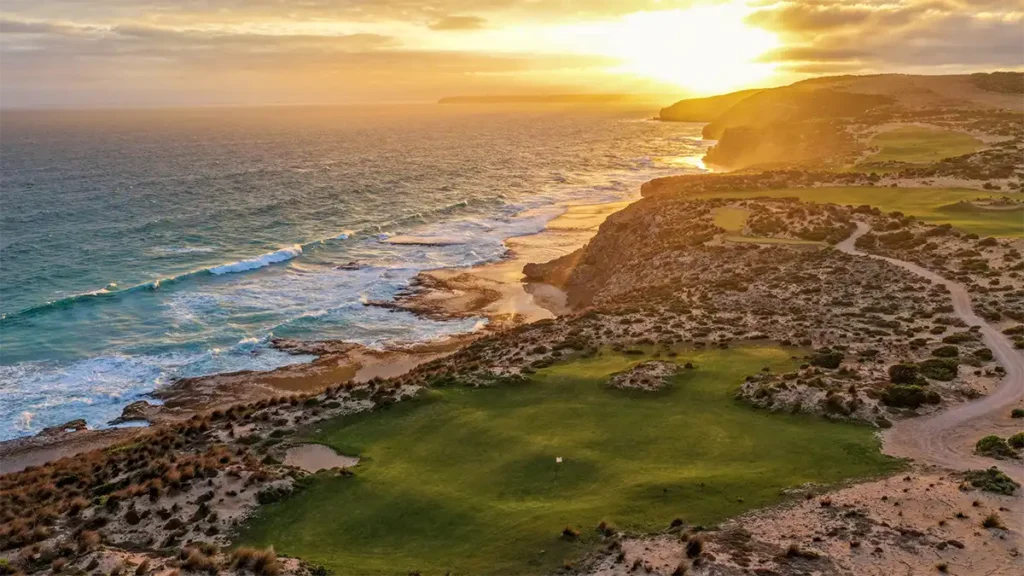
The Cliffs is currently targeting a public opening about mid-November this year, initially operating with clubhouse facilities that will be expanded over time along with premium accommodation options with views that have to be seen to be believed.
The clubhouse site itself is expected to become a centrepiece of the destination. Constructed from limestone, glass and timber sourced to reflect the surrounding landscape, it will sit directly among the dunes overlooking the course and ocean beyond.
Despite the scale of the project, Atkins remains focused on something much simpler. He wants golfers to leave feeling like they have experienced somewhere genuinely different.
“The best golf experiences are hard to explain,” he says. “You just know they felt special.”
Australia has spent the past 20 years redefining destination golf. Barnbougle sparked it. Cape Wickham elevated it. The Cliffs Kangaroo Island now appears ready to become the next great addition to that conversation.
Later this year, when the first players stand on the opening tee, golfers across the country may well discover that the next big thing in Australian golf has been quietly building on the cliffs of Kangaroo Island all along.
Photographs by Gary Lisbon and Jacob SjÖman