
[Photos: Carlos Amoedo]
Some of the best golf holes in the world are short par 3s: Augusta National’s 12th hole, the Postage Stamp eighth at Royal Troon, Pine Valley’s fearsome 10th, the seemingly innocuous 10th at Kingston Heath, the stunning 15th at Cypress Point – all are shorter than 150 yards.
RELATED: A closer look at the evolution of Shinnecock Hills’ iconic design ahead of the 2026 US Open
But none of them are uphill and blind. The 11th hole at Shinnecock Hills Golf Club on New York’s Long Island, both blind from the tee and uphill, is one of the greatest short par 3s in the world.

It’s also one of the hardest despite coming in at less than 150 yards for members and a little longer for the field during this month’s US Open.
In this video we’re going to explore what makes Shinnecock’s 11th one of the most elusive and infuriating par 3s in golf. But to understand why it’s so challenging to even the world’s greatest players, we need to dig into its architecture and trace how the hole came into being.
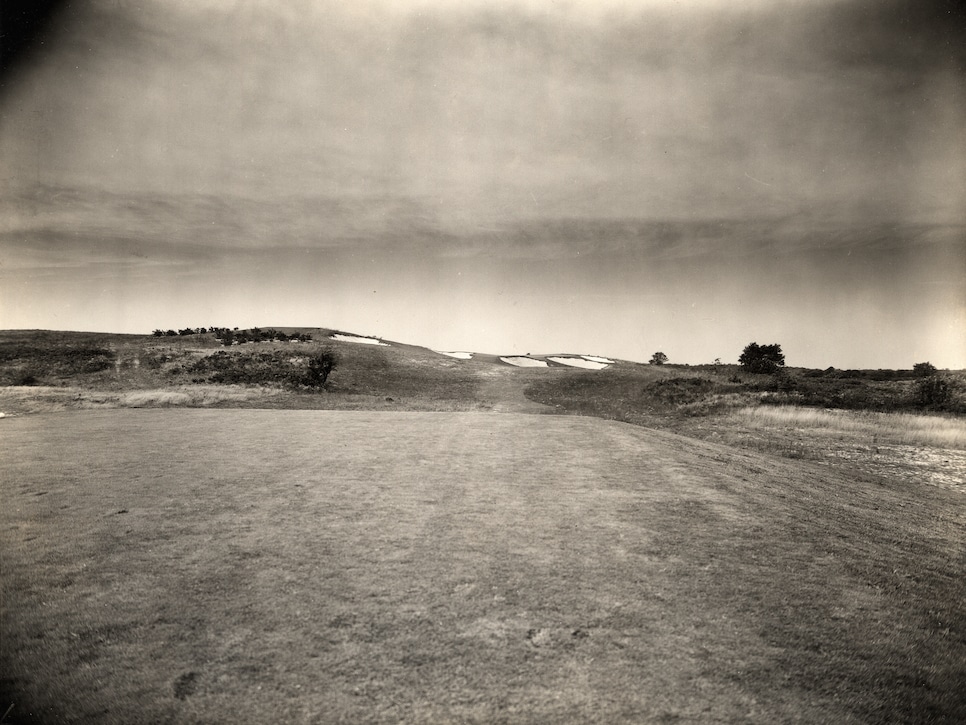
A historical look at the par-3 11th, cut into the saddle of a high ridgeline.
Shinnecock Hills, the long-running No. 4-ranked course on America’s 100 Greatest Golf Courses, has a long, complex history going back to 1891. We’ll explain how its evolution culminated in the creation of the mini but mighty par-3 11th.
Watch our video about the origins of Shinnecock Hills’ 11th hole below: