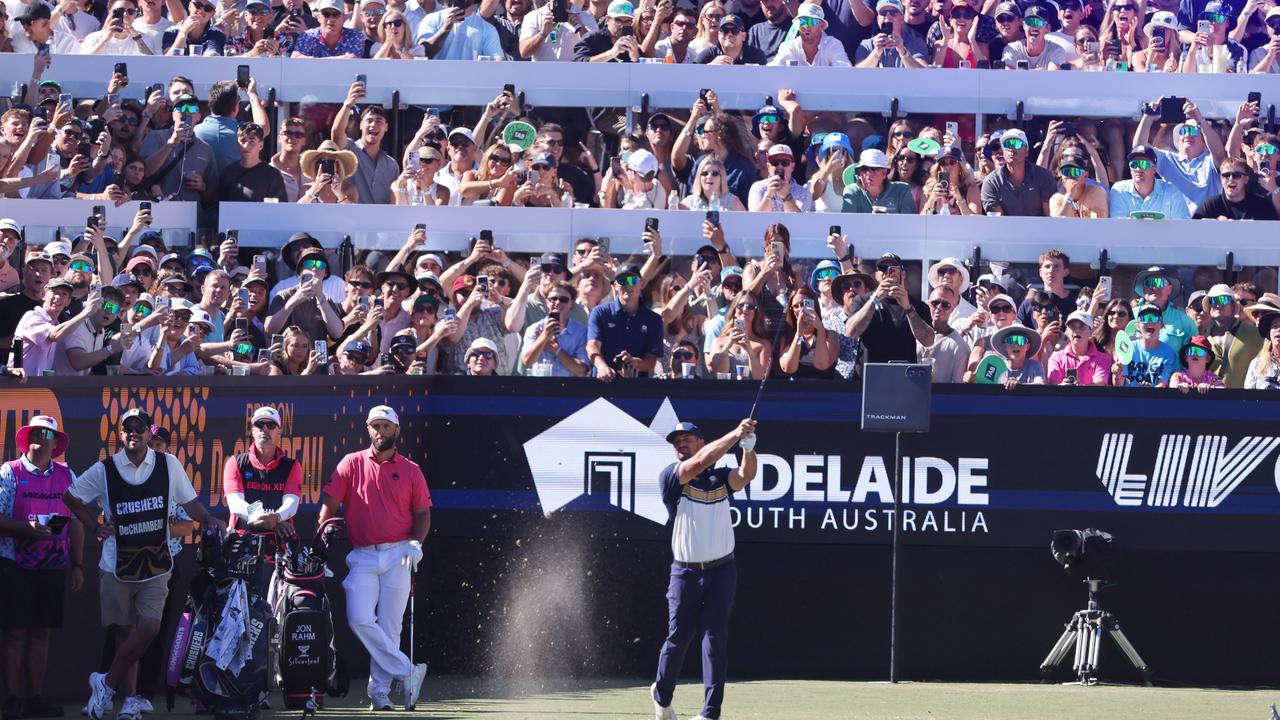
Whether it’s measuring the teeing area or determining the size of a relief area when you have to drop or place a ball while applying a rule, you might think you have some latitude in terms of what club you use to measure. The Rules of Golf, however, are very specific about what you should do when it’s time to measure a club-length.
That shouldn’t surprise you. The book tries to leave very little to interpret when you’re on the course, applying a rule.
A common belief among recreational players is that when measuring the area for a drop, such as when your ball is on a cartpath or in some unplayable situation, you must use the club you intend to use for your next shot. Less commonly, golfers sometimes think a long putter can be used to measure. Imagine the size of the drop area if Bernhard Langer tried to use his 48-inch broomstick putter to measure.
Neither belief is true.
A club-length is defined as the length of the longest club the player is using during that round, but it cannot be a putter. The first part of that sentence is as important as the last. If you’re not carrying a driver in your bag, you can’t borrow your partner’s to gain a couple of extra centimetres of relief area. You have to go with your longest club. And putters are never used. (Also, it’s important to note that the longest club in your bag cannot exceed 48 inches, otherwise it would be deemed non-conforming.)
Another thing to remember is that the length of the club is measured from the toe of the clubhead to the butt end of the grip and that no attachments (like the Arccos golf sensors) are considered part of it. And you can forget about leaving that big “Caddyshack” gopher headcover on.
These stipulations, btw, were part of the major revisions the R&A and USGA made to the rule book back in 2019. Before then, players could choose any club.