Australian Golf Digest
Results for "rules review"

Rules Review: If the ball doesn’t move, can you rotate it on the green without marking it first?
A clarification within Rule 9.4 (9.4b/1) says you can’t deliberately touch a ball even if it doesn’t move from its spot.
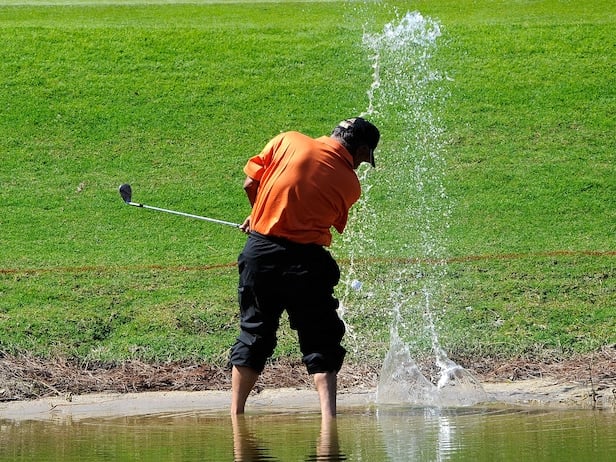
Rules Review: You played from inside a penalty area and hit it OB. Do you have to play again from the same spot?
Assuming it was your tee shot that landed in the penalty area, let’s play the what-happens-now game and walk through your options and what your score would be.
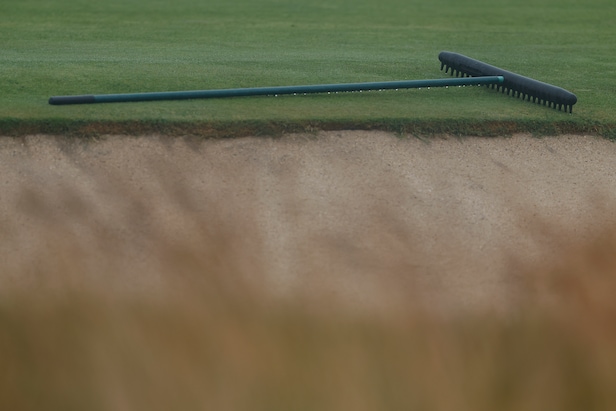
Rules Review: You know a rake will stop your ball from going in a bunker. Do you have to move it?
Whether you’re in line for a potential penalty or not in this situation, it comes down to who left the bunker rake in the position where it could be used as an advantage.

Rules Review: My ball is on the edge of a pond with no penalty-area markings. Is it in or out?
What do you do when you hit a ball on the bank of unmarked penalty area? What do you do when you hit a ball in the middle of an unmarked penalty area? What do you do when your ball is sitting in a dry creek bed or ditch? We answer all three with a review of what is and what isn’t a penalty area.

Rules Review: My opponent just broke two rules before hitting his ball. How do you handle this?
What do you do when someone breaches a rule and then breaches another rule as part of their next stroke? It depends on the format, but this scenario is not as egregious as it might seem.
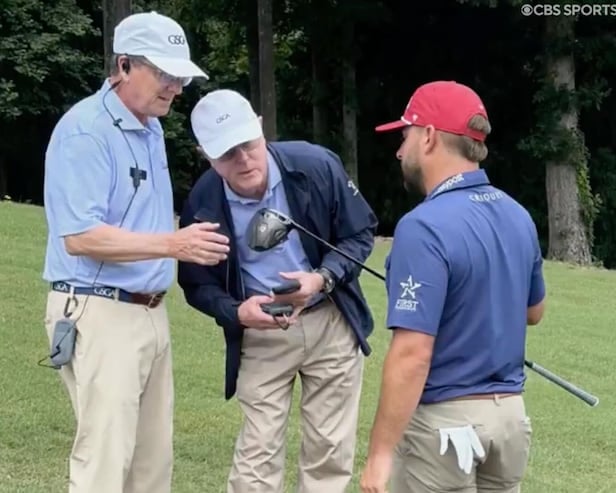
Rules Review: My driver started rattling. Can I replace it during a round?
When Stephan Jaeger’s driver started acting up mid-round at US Open qualifying, officials ruled he couldn’t swap it, the damage wasn’t obvious enough. Here’s what actually counts as “damaged” under the Rules of Golf, and what you can and can’t do about it mid-round.
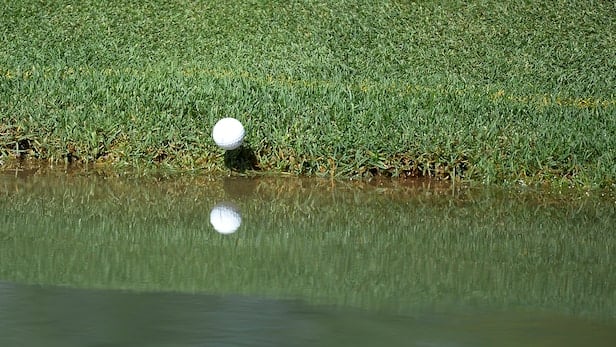
Rules Review: Before chipping my ball, a wind gust blew it into the water. Do I have to take a penalty?
This situation falls under a term that became new to golf’s rule book from 2019: “natural forces”.

Rules Review: He didn’t use a club to move his ball marker. Is that legal?
It’s crucial to get it right when you’re asked to move your ball on the putting green or elsewhere. It’s so important, the Rules of Golf has specific recommendations on how to do it under Rule 15.3/1.
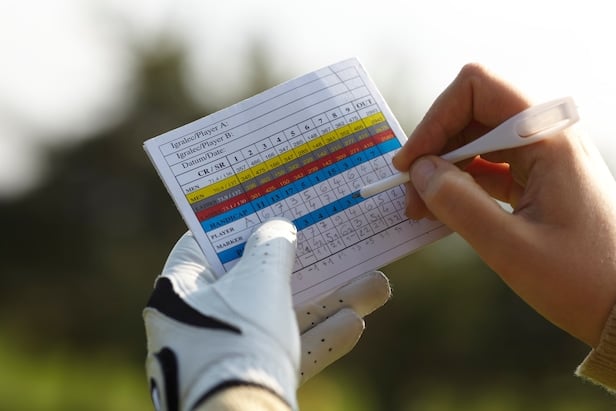
Rules Review: What happens when someone reports an incorrect score and it impacts a match?
What happens in matchplay when the wrong score is given on a hole or holes and it impacts the outcome? Here’s what you need to know about Rule 3.2 and how to proceed if it happens to you.
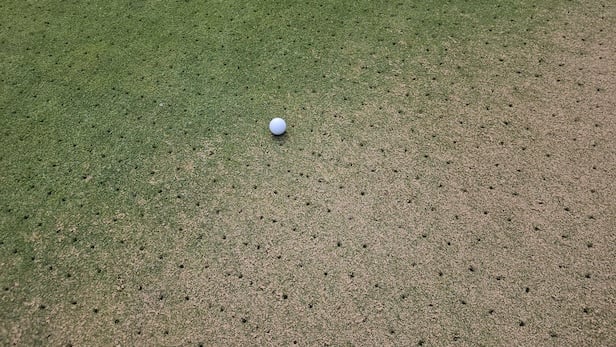
Rules Review: They just aerated the fairways and greens. Can I take relief from all these core holes?
If your putt is bumpy as a result of cored greens, or your chip takes a sideways bounce on its way onto a green, unfortunately, that is just part of the game.

Rules Review: His dropped ball rolled closer to the hole. He claims it was a legal drop and played on. Was he right?
Dropping correctly can still catch out golfers who don’t know the intricacies behind the rules involved.

Rules Review: His partner was late for their match but acted as a caddie on the first hole. Can he do that?
His partner was late to their four-ball match but jumped straight into caddie duties, cleaning clubs, reading putts, giving advice. Is that actually allowed under the Rules of Golf?

Rules Review: You’re on the green in regulation (congrats). Here’s a quick guide to putting-green rules
You might know some rules on the green, but did you have the right answer to all these questions?

Rules Review: My ball ‘might’ be in a pond, but I can’t find it. Can I just take a drop, add a penalty stroke and move on?
Rule 17.1c covers this common scenario.

Rules Review: A tree is in ground under repair, but my ball is next to a root outside the marked area. Do I get relief?
When it comes to hitting a shot off or next to a tree root, the decision to try definitely boils down to motivation.

Rules Review: We asked the pro for a ruling and he got it wrong. Can we correct the mistake if it impacted our match?
What if that decision led to a different outcome than would have happened if the correct ruling was applied? Here’s what happens.

Rules Review: He rotated his golf ball without marking it. He says it’s OK because he didn’t lift it. True?
What you should do with your golf ball if you plan on lifting it, touching it or moving it in any other manner.

Rules Review: 5 bunker rules every golfer should know
No one wants to be in the sand, but don’t make it worse by not knowing how to get out penalty-free.

Rules Review: My friend’s ball hit mine into the hole on a par 3. Did I make a hole-in-one?
A few weeks ago, I received a FaceTime from my brother. He was playing golf with three of our high school buddies. It was the last thing I needed at the time, as I was in full dad mode, power-washing my deck. I reluctantly answered. “You’re not going to believe this,” my brother said, with Read more…

Rules Review: He lined his partner up to putt, then stood there. Do they both get penalised?
Most golfers know it’s bad etiquette to stand behind another player’s putting line, but in some formats it can also lead to penalties for both partners. Here’s what the Rules of Golf actually say.