I’m still thinking about this one thing that renowned putting coach Phil Kenyon explained to me during our recent story together.
It’s called the two-thirds formula, and it’s simple genius.
RELATED: Three principles for better putting, from the world’s best putting coach
The problem is that amateur golfers tend to under-read their putts and miss low, because they misunderstand how the ball breaks. They tend to think the ball rolls straight at first before breaking, when in reality the ball curves constantly – gently at first, then a lot at the end.
That’s when the ball is rolling the slowest, and therefore gravity is having the biggest effect on it as it rolls along the slope.
Most of the break occurs during the final third of the putt, but it also breaks a decent amount early – you can’t ignore that part. It’s an awkward thing for golfers to wrap their heads around, which is why the two-thirds formula comes in so handy.
How the Two-Thirds Formula works 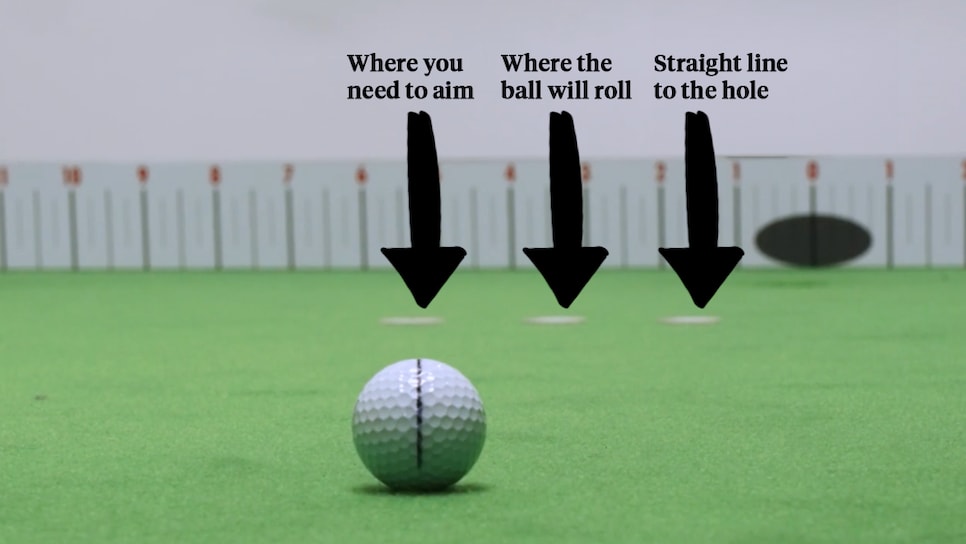
Kenyon says you can solve for this with the two-thirds formula. The way it works is pretty simple:
- Pick a spot where you want the ball to be rolling two-thirds of the way to the hole
- Double that distance – that’s where you aim
So, for example, if you have a left-to-right breaking putt, and in order to make it you want the ball to be five centimetres to the left of the hole two-thirds of the way there, you need to aim 10 centimetres outside the hole.
Why this helps
You’re budgeting half of the break for the first chunk of the putt, then another half for the final little bit. Most amateurs do the opposite: they ignore how much the ball breaks early, and even if they get the final part right, it’s already too late.
RELATED: What does the world’s leading putting coach know?
“Golfers often have an intuitive sense of where they want the ball to be two-thirds of the way to the hole,” Kenyon says. “Ask yourself two questions: where do you want the ball to be two-thirds of the way to the hole? And how is it going to get there?”