
The coach with the most players in the upcoming 2026 Masters field will be Phil Kenyon, and it won’t be close. The 2025 Ryder Cup at Bethpage Black offered a bit of a preview. On Sunday, I was there early, when it was still dark and hardly any fans had turned up. Some players were probably still in bed, but on the practice putting green you could just make out the silhouette of one bloke.
Kenyon was down on his knees, reading a spirit level he’d brought to measure the slope. By one hole he’d set up a line of tees, and at another he’d drawn a chalk line guarded by a tiny gate of two tees. Kenyon’s backpack was tossed off to the side of the green, open, with all sorts of training aids, strings, mirrors and other odd bits spilling out.
Tour pros like things just so, especially in the final moments before important rounds, and they appreciate that Kenyon is a stickler for detail. For each Ryder Cupper, Kenyon had sorted a specific way to warm up that they’d come to rely on. When you’re coaching players in six of the Sunday singles matches, it’s a hectic morning making sure each bloke gets what he wants. American and European golfers barely glanced at each other at Bethpage, yet they had to cope with sharing Kenyon.
Kenyon prepped Justin Rose, Matt Fitzpatrick and Tommy Fleetwood. Kenyon used to coach Rory McIlroy and Robert MacIntyre, too. For the Americans, Kenyon’s clients included World No. 1 Scottie Scheffler, Russell Henley and Patrick Cantlay. He also boasted Keegan Bradley, the U.S. team captain, as a student. Opposing vice-captains and current Kenyon students Gary Woodland and Francesco Molinari watched from the sidelines. Past Ryder Cuppers Brooks Koepka, Max Homa, Henrik Stenson, Lee Westwood, Martin Kaymer and Padraig Harrington have all worked with Kenyon, too.
Putting-specific coaching has a long history of smart pioneers, including Dave Pelz, James Sieckmann, Dave Orr, and Stan Utley. Today, Stephen Sweeney coaches Shane Lowry and Collin Morikawa, and John Graham helped Justin Thomas win a major. Yet Kenyon has found an edge through a combination of hard-to-define skills. And because success begets success, every player wants to hear what the top coach of the moment has to say about him, Kenyon has established a rare influence.
RELATED: Three principles for better putting, from the world’s leading putting coach
So what, exactly, does the world’s best putting coach actually know?
The origin story starts at Hillside Golf Club, which neighbours Royal Birkdale on the Merseyside Coast of northwest England. Kenyon’s parents were members at Hillside, and so was a man named Harold Swash.
Swash was a golf-mad car engineer who managed a GM plant in Teeside, North Wales. In the 1960s, he started tinkering with putters in a cluttered, chilly corner of his home workshop. By the 1990s, he’d come up with one of the most innovative designs ever: “C-Grooves” curved and milled into the putter face to hit more of the top of the golf ball, not just the middle or bottom. The idea was to get the ball rolling end-over-end straight away, reducing skid. High-speed cameras backed up the effect. Swash licensed this invention to the company that became Yes! Golf.
Of course, Swash was also keen on the stroke. How much should the putterhead rise at impact? How fast should it move through the stroke? Word got around about the obsessed scientist, and soon golfers didn’t just want Swash’s putters—they wanted his coaching too. He retired and set up the Harold Swash Putting School of Excellence, becoming known as “Britain’s Putting Doctor”.
At Hillside, Swash was easy to get to. Young Phil, keen to climb the junior ranks, took lessons from Swash, and he and his dad played a lot of golf with him. Young Phil also spent plenty of time hanging around, watching Swash teach.
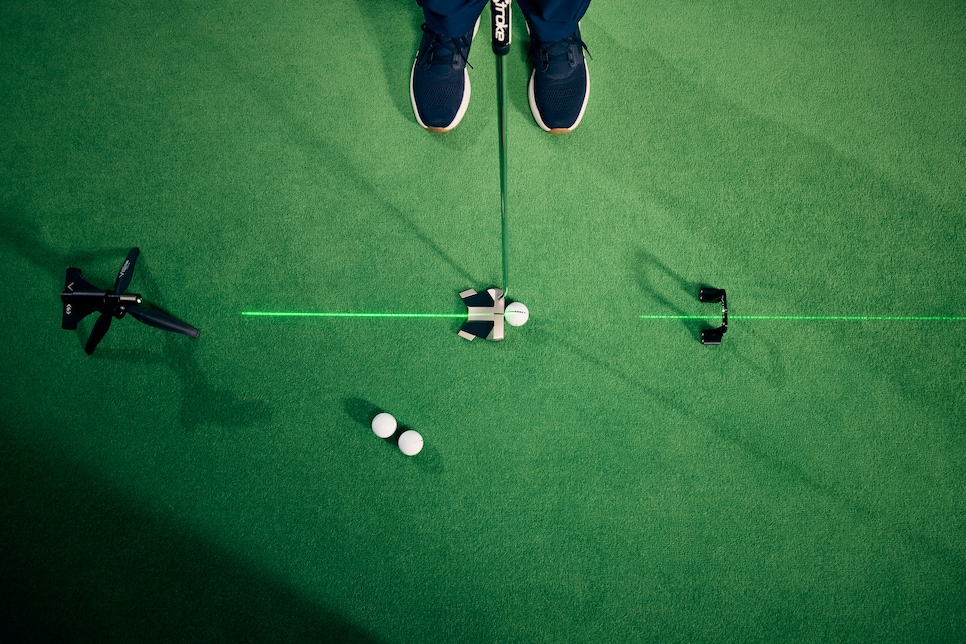
HEAVEN’S GATE:
To train a square face at impact, students roll putts through a set-up barely wider than the ball.
Getting up-close looks at Swash’s elite students, along with five years struggling as a tour pro himself, nudged Kenyon to a sober realisation: He wasn’t good enough. But as the proverb goes, with every door that closes, another opens. Swash knew he couldn’t do this forever. He was supposed to be retired, after all. In Kenyon, Swash found a full-time protegé.
“Failed golfer,” Kenyon says. “Like most coaches, I didn’t make it as a player.” It was a well-timed flop, because Swash had a heap of knowledge to pass on.
Swash had developed a series of principles designed to improve the quality of the ball’s roll off the putter. They’re the kind of things lots of golfers take for granted today, but we know them in large part because of pioneers like Swash:
• The putter face should be square at impact.
• The stroke should move on an arc.
• The putter face should stay square to the arc through the stroke.
• The putter should rise slightly through impact.
• The putter should accelerate smoothly during the stroke.
Kenyon’s genius wasn’t in copying and pasting Swash’s methods but in knowing how to modernise and apply them. At John Moores University in Liverpool, Kenyon began studying how biomechanics could affect these core putting principles and explored new three-dimensional technologies to pinpoint golfer deviations. Swash was in his 70s when Kenyon began working hands-on with Swash’s students, travelling and running the academy as Swash started to slow down.
Handing over students can be a tricky business. Players usually hang around for a bit out of a mix of loyalty, curiosity and giving the benefit of the doubt, before eventually drifting off. Kenyon bucked this trend. Darren Clarke’s shock 2011 Open Championship win gave Kenyon his first major as a coach.
As a former elite golfer dealing with elite golfers, Kenyon also mastered his bedside manner. Whereas Swash had more of an engineer’s mindset (“Follow these instructions because it’s the best way to do it”), Kenyon learned to operate with a softer touch.
“I’ve talked to people who say that when they have worked with Phil, it hasn’t been technical at all; I’ve talked to people who said maybe it was too technical,” Max Homa told PGATour.com in 2024. “He has a lot of range. I think that’s important.”
When Swash passed away in 2016, Kenyon took over his putting school, which still carries the Swash name today. That same year, Swash-turned-Kenyon student Henrik Stenson set the Open Championship scoring record. While two Open winners would’ve been enough to cement the reputation of any golf coach, Kenyon’s career was about to accumulate more and more such success stories. From each, we can glean something important about putting.
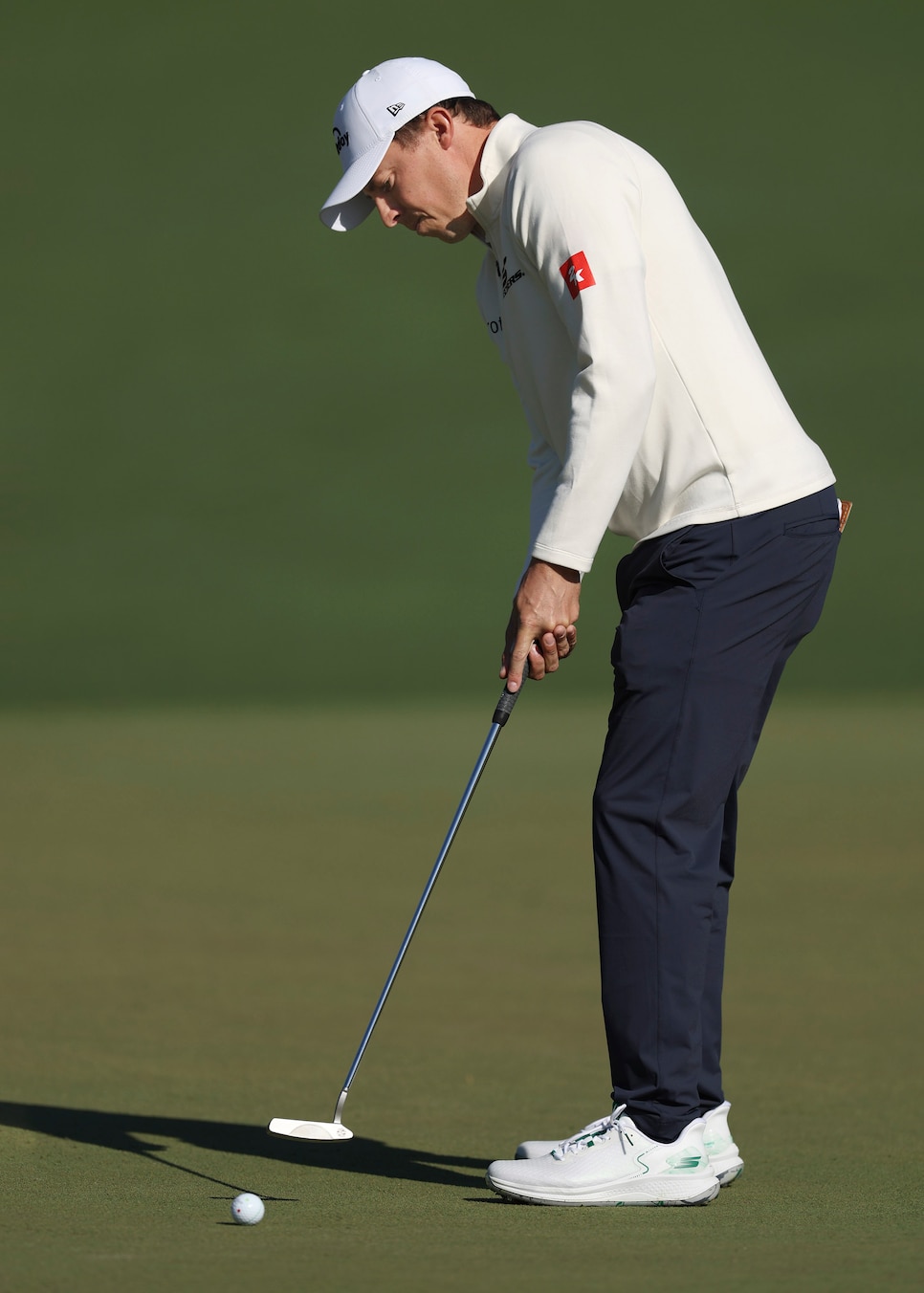
Made 52 per cent of putts from 10 feet (11th, PGA Tour, 2025)
[Photo:Richard Heathcote/Getty Images]
Fitzpatrick has a fast, up-tempo putting stroke and has worked with Kenyon since Fitzpatrick was a teen. For swing technique, he has worked extensively with coach Mark Blackburn.
“Trying to avoid decelerating is a big myth,” explains Kenyon, who reckons peak acceleration should happen at the end of the backstroke. “The best putters actually tend to decelerate the putter at impact. It’s much harder to control pace if you’re trying to belt it through impact.”
One of Swash’s key principles was smooth acceleration during the stroke. Kenyon built on that principle by quantifying it. He measured where in the stroke acceleration occurs and what changes in the body accompany it. It’s how he developed the coin drill. Place a coin on the back of your putter and try to heave it off on your backstroke. If you can do that, you’re applying the right amount of force at the right time. It’s a staple of Fitzpatrick’s putting practice. In seven full seasons on the PGA Tour, Fitzpatrick has ranked inside the top 30 in SG: Putting five times.
Tommy Fleetwood
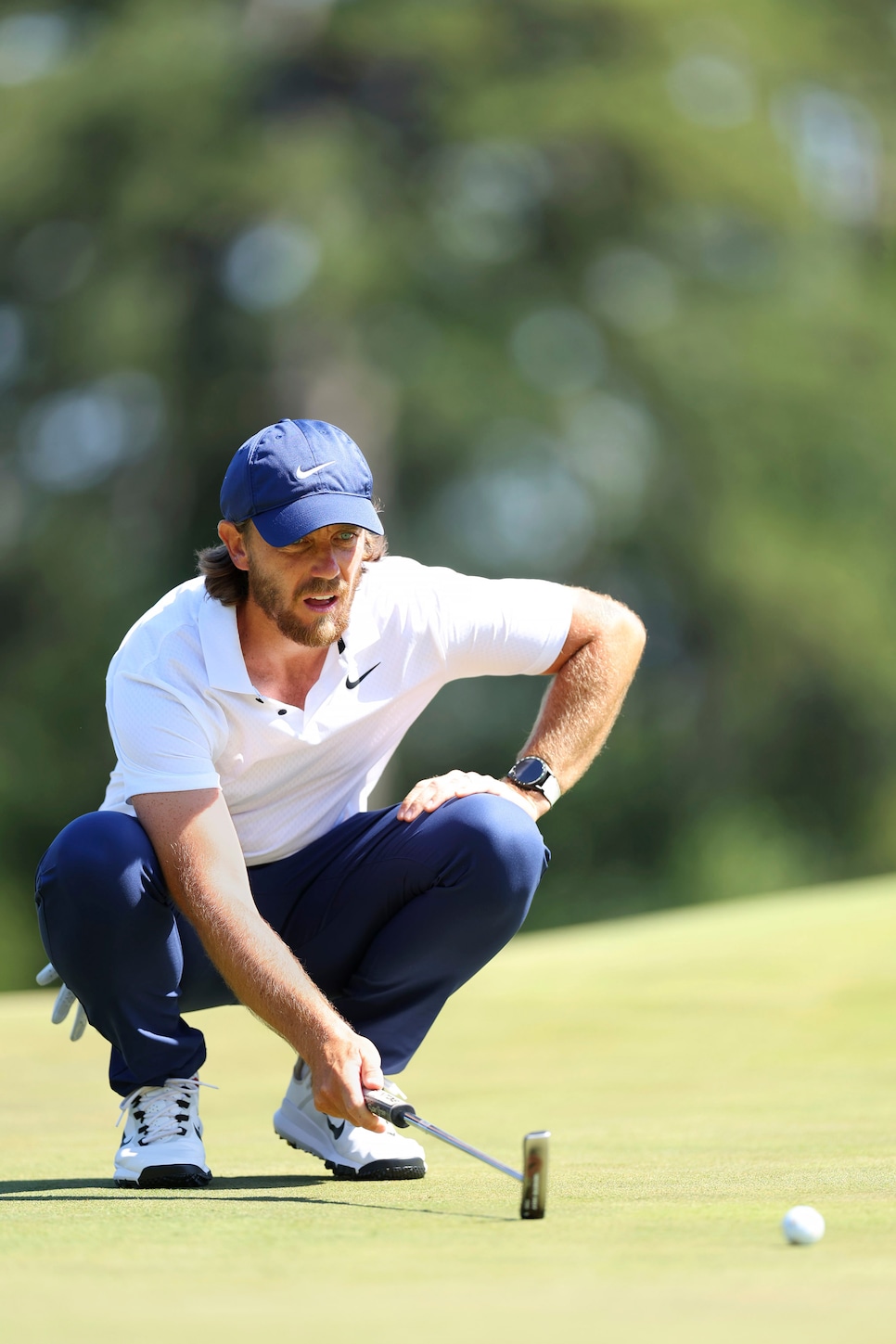
Sank nearly 10 per cent of putts from over 25 feet (second)
Andrew Redington
Fleetwood’s putting stroke was solid, but he needed help reading the greens. In 2016, Fleetwood had dropped to 188th in the world, largely because he overestimated how good his eye was. So, he got Kenyon on board, who taught him Aim-Point—a system developed by Mark Sweeney where golfers use their feet to work out how much slope is under them.
You’ll see Kenyon and Fleetwood perform an intricate dance with a level tool before many rounds. Fleetwood reads the putt, then heads to the ball. Kenyon checks it using the level, then follows him. Fleetwood then sets up. Kenyon gets behind him, using the level’s edge to see where he’s aiming. After Fleetwood hits the putt, he reveals his read and aim. Kenyon determines how correct he was. It takes about a minute per putt, and the pair usually do it for 15 minutes before the first tee.
For full swing, Fleetwood worked with Butch Harmon in the run-up to his 2025 season. He has finished inside the top 30 on tour in SG: Putting in three of his last four seasons, won the FedEx Cup, and ascended to World No. 3.
Justin Rose
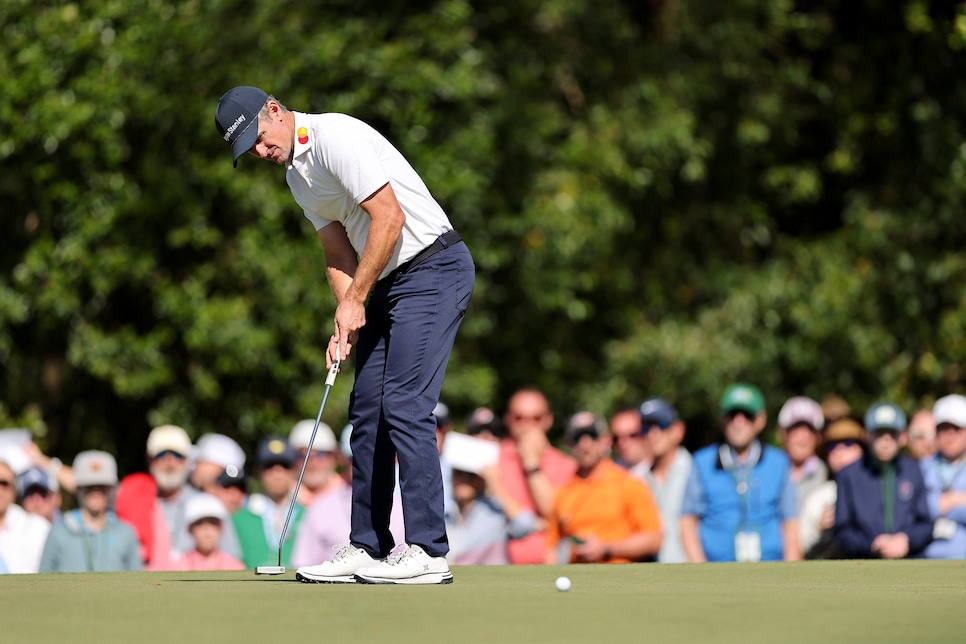
Converted 97.5 percent of putts from four feet and in (sixth)
Michael Reaves
Rose, a Blackburn full-swing client, hired Kenyon in 2016. Just prior to doing so, Rose had met with golf statistician Mark Broadie and asked him to reverse engineer a strategy to get him to World No. 1. Broadie looked at the numbers and found that while Rose could make marginal gains in all areas of his game, the biggest gain he could make was on the greens, specifically, on mid-range putts around seven feet. Rose ranked 122nd in SG: Putting at the time.
Kenyon discovered that the thumb of Rose’s right hand would move subtly towards his right forearm at the start of the downstroke, a movement in the wrist known as a radial deviation. It was a reliable feature of his full swing, but when he applied this force via his wrist on the greens, this subtle movement would twist the putterface open. Unlike with his full swing, Rose didn’t have time to roll his wrist back over, so he’d miss putts right because of an open clubface, or occasionally overcompensate and pull them left.
Kenyon convinced Rose to adopt a claw grip. With his hand position more on top of the club, any movement of his right hand towards his right forearm wouldn’t open or close the face as excessively, making the putter face stay squarer to the arc for longer.
With this problem movement sidelined, Rose ranked 17th and 21st in SG in the next two seasons and ascended to World No. 1.
“I think you can be a good putter when you know nothing and putt purely on instinct, and I think you can be a good putter when you know a lot about what you’re doing,” Rose said. “I found that when I knew just a little bit about what I was doing, I got worse. I didn’t understand enough. I had to go on a journey to truly become a master at the craft. Phil has been instrumental in that journey.”
Scottie Scheffler
Moved from 162nd in Strokes Gained: Putting to 22nd
Andrew Redington
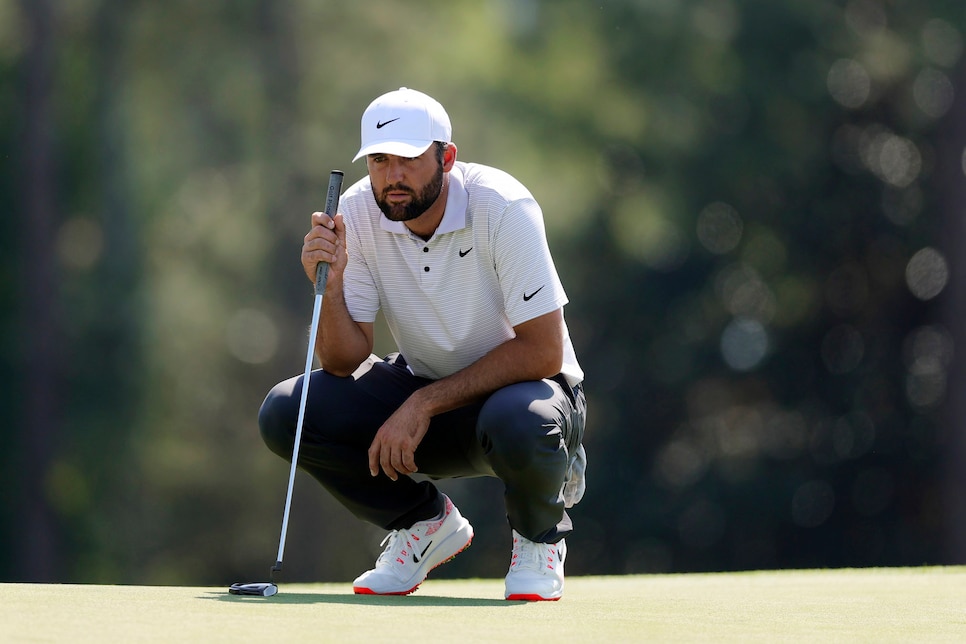
In 2023, Kenyon’s phone rang. On the other end of the line was Scottie Scheffler, statistically the best ball striker in golf since Tiger Woods. But the World No. 1 pupil of Randy Smith for now over 20 years, ranked 162nd in putting and had ended the season with no majors.
Kenyon flew to Texas for weeklong sessions with Scheffler ahead of the 2024 season. He noticed Scheffler tended to aim too far to the right, and that his right hand sat more on top of the grip which would cause it to take over. “Too much radial release” could significantly alter his lie angle during his stroke. Scheffler’s hands would compensate by dropping low and aiming his shoulders left. His stroke featured lots of wayward heel strikes. Short putts could become misery.
Kenyon began subtracting this complex set of compensations layered over each other. Under Kenyon’s watch, Scheffler widened his stance, straightened his alignment, changed his torso position, and raised his hands slightly at setup. This minimised excess face rotation. But as the changes were embedding, something still wasn’t clicking.
In a genuine effort to sort out his aiming issue, Scheffler started using the alignment stamp on his golf ball for the first time in his career. He did start aiming more accurately, but soon became “line-locked”. Whenever he saw that line wobble as the ball rolled, his confidence copped a hit.
“At the back of your head, you’re like, wait, did I hit that putt good?” Scheffler said.
The alignment line wasn’t a fit for Scheffler, so Kenyon said ditch it. Scheffler’s team started testing different putters to see which one their man could aim the best. They landed on a grey TaylorMade Spider Tour X with a white insert and a white alignment marking on the top with a thinner black line within. Scheffler aimed this new putter just as well with no line on the ball as with his blade-style putter with a line.
Scheffler said it “freed him up.” He won three of the next eight majors and finished inside the top 10 in four others. He had 13 wins across two seasons in all. In 2025, Scheffler ranked 22nd on tour in SG: Putting.
“I had watched Phil before and watched him coach players. I saw players he coached putt well in a variety of different ways,” Scheffler said. “Phil doesn’t have a big ego … I could tell that he was open-minded, and that’s the type of people I like to work with.”
Such anecdotes provide a messy answer to the question of what the highest-profile putting coach on the planet knows. He knows how to make small changes to isolate specific joints when they start causing problems. He knows how to use something as simple as a coin to make a nuanced technical fact feel simple. He knows when to guide a player toward a system when he needs one—and away from one when he doesn’t. Kenyon does it all in a way that gets the best players on the planet to buy in and trust him, even when the putts don’t always fall.
Kenyon’s mastery is like putting it all in; it’s a combination of hard and soft skills. Jeff Bezos once said his job, in simplest terms, is to get a small number of important decisions correct. The same might be said of Phil Kenyon.