What you need to know: Odyssey has noticed a clear shift in the putter market. Inserts have outpaced solid-body constructions by a significant margin, growing to roughly 65 percent of sales in 2025. As more manufacturers lean into face technology, Odyssey set out to create something distinct to complement its new Ai-Dual and Ai-Dual Square 2 Square families.
Using artificial intelligence as the primary design driver, Odyssey produced more than 15,000 virtual iterations and 72 physical prototypes before settling on the dual-layer urethane creation now featured in Ai-Dual putters – an insert designed with one primary goal in mind: improved speed control.
MORE: Callaway Quantum drivers: What you need to know
That insert appears across the Ai-Dual lineup, including traditional blades, mallets, and zero-torque offerings.
Pricing/availability: Odyssey Ai-Dual ($549.99; $NZ649.99), Ai-Dual Cruiser ($649.99; $NZ749.99), Ai-Dual Square 2 Square ($649.99; $NZ749.99) and Ai-Dual Square 2 Square Cruiser ($749.99; $NZ849.99) will be available January 23 at retail shops.
3 Cool Things 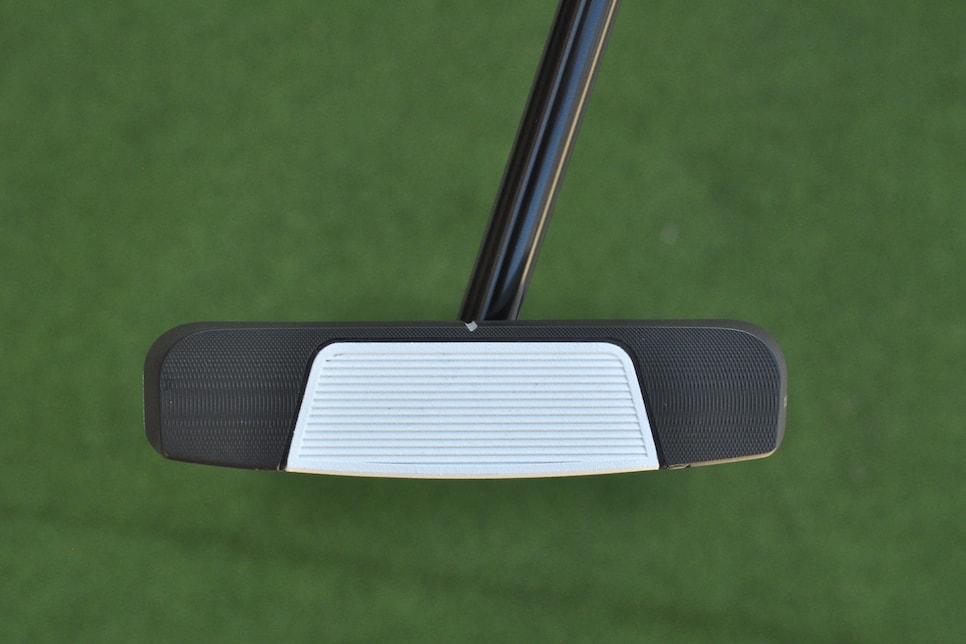
1. Blending feel and speed control: Odyssey’s Ai-Dual insert is built around a simple idea that’s surprisingly difficult to execute: deliver consistent ball speed without sacrificing feel.
Using artificial intelligence to shape both material distribution and face geometry, the insert pairs a soft outer urethane layer with a firmer inner core. The softer surface keeps impact from feeling clicky or overly firm, while the inner layer preserves energy transfer – particularly on slight mishits. According to Eric Stubben, Odyssey Golf’s R&D manager for putters, the overall insert hardness closely mirrors the original White Hot recipe.
What separates Ai-Dual from White Hot and other insert competitors is how it manages speed vertically, not just heel-to-toe. Many golfers miss high or low on the face more often than they realise, especially on longer putts. Odyssey’s testing suggests the Ai-Dual insert helps normalise launch and pace when contact drifts up or down the face. In practical terms, that can mean fewer putts that come up unexpectedly short – or roll well past the hole – despite feeling solid at impact.
The insert also works in concert with a deeper, more aggressive Forward Roll Design groove pattern. Cut at a 19-degree slope, the grooves engage the ball earlier and more decisively, helping promote quicker forward roll. The goal is a smoother transition from launch to roll, with less skid and reduced sensitivity to small loft or face-angle variations.
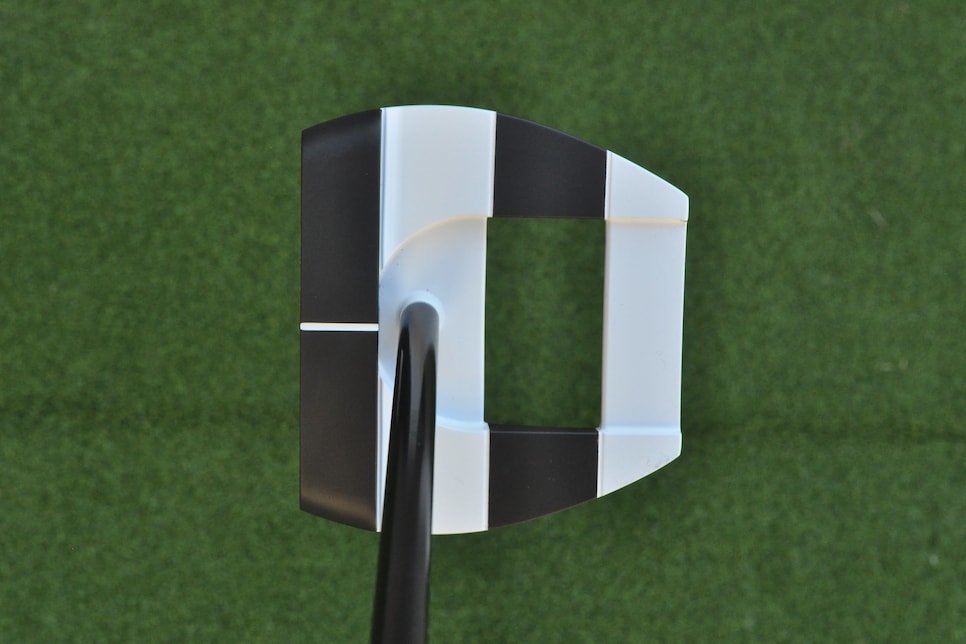
2. Point, click, shoot: The defining feature of the Ai-Dual Square 2 Square line is its modern centre-shafted design, with the shaft axis positioned directly beneath the putter’s centre of gravity. This causes the head to naturally rest with the toe pointing upwards – opposite of a traditional toe-hang putter – and places these models squarely in the zero-torque category.
When the shaft and CG are aligned, the head is more resistant to twisting during the stroke. For golfers who struggle with face rotation or timing, that stability can make it easier to return the face square without consciously manipulating the handle. Odyssey isn’t trying to force a specific stroke shape, but the design naturally favours a quieter, more repeatable motion.
MORE: Callaway Quantum Max, Max OS and Max Fast irons: What you need to know
Odyssey also addressed a common challenge with centre-shafted putters: forward press. Rather than asking players to create it on their own – often opening the face in the process – the Square 2 Square models are built with two degrees of preset forward shaft lean. That positions the hands slightly ahead while keeping the face neutral at address.
To prevent the setup from feeling awkward, Odyssey pairs the design with a reverse-taper grip that visually aligns the leading edge of the grip with the leading edge of the putter. It’s a small detail, but one that helps the setup feel intentional rather than imposed.
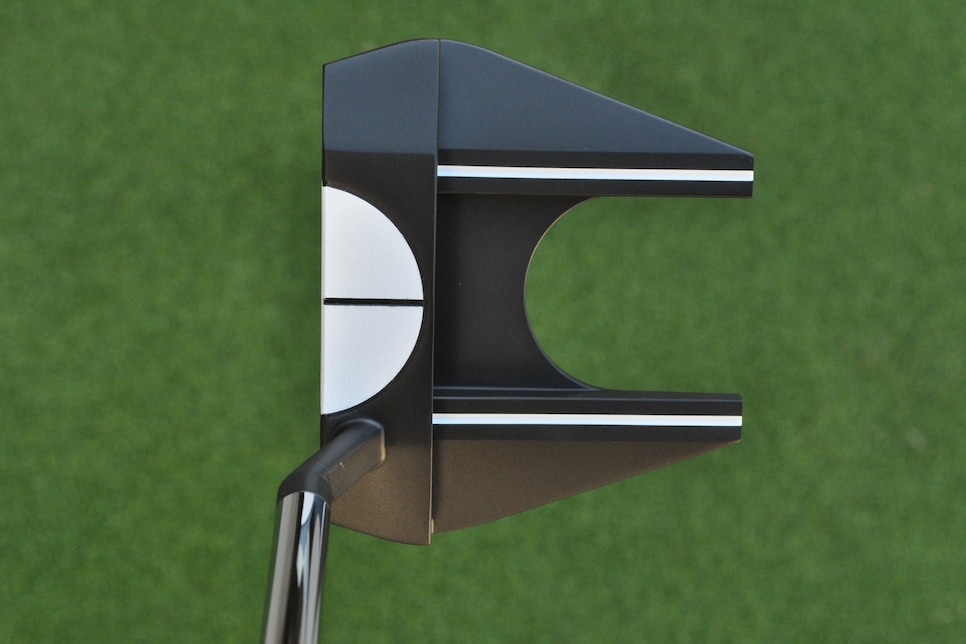
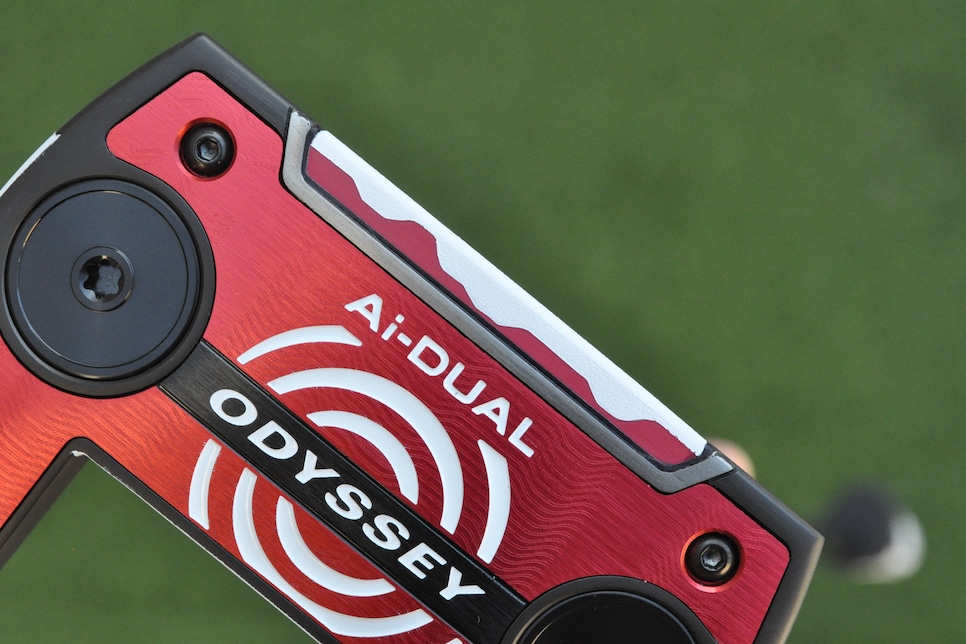
3. Visual validation: While most alignment systems rely on lines or dots that point towards the target, Odyssey’s 1/2-Ball alignment concept is built around framing – giving golfers a clear visual reference for where the face is relative to the ball itself. By extending the familiar half-ball graphic onto the topline, the design makes it easier to identify whether the face is square, open, or closed before the stroke ever begins.
What makes the 1/2-Ball approach effective is that it doesn’t ask golfers to process more information. Instead, it simplifies the picture. If the ball looks centred within the frame, the face is square. If it doesn’t, the error is immediately obvious. It’s a visual check that happens almost subconsciously, which is often where the most effective alignment aids operate.
Odyssey also went beyond internal testing to evaluate the concept. Partnering with researchers from Clemson University and Baylor University, the company studied the effects of 1/2-Ball alignment in controlled putting scenarios. The results showed a statistically meaningful improvement on 6-foot putts, a distance where alignment errors are magnified and confidence is tested. In randomised testing, golfers made an average of 1.13 more putts out of 10 with the 1/2-Ball design compared to traditional alignment schemes.
The findings reinforce the idea that effective alignment doesn’t need to shout for attention. When done well, it simply helps golfers aim better – and get out of their own way.