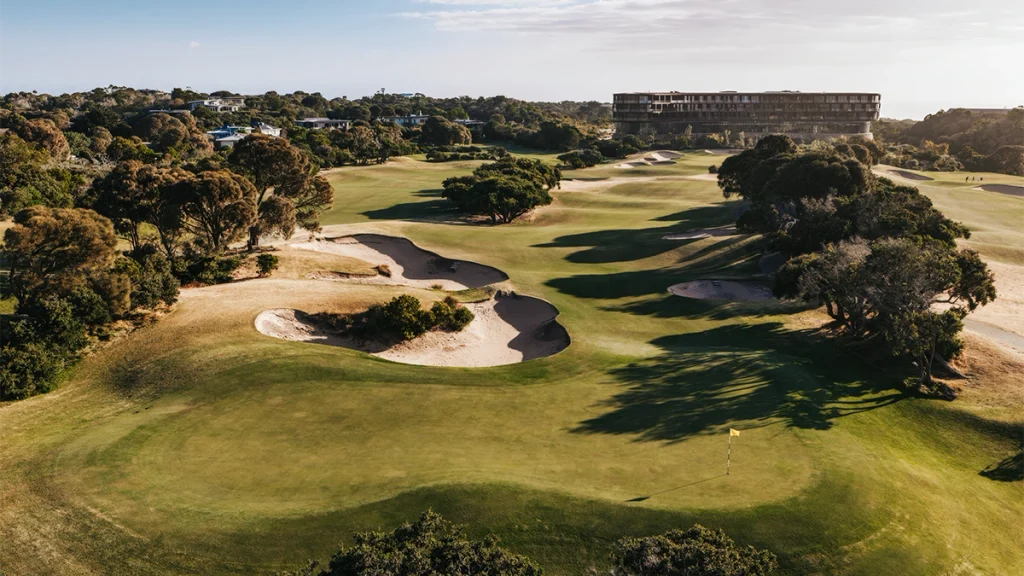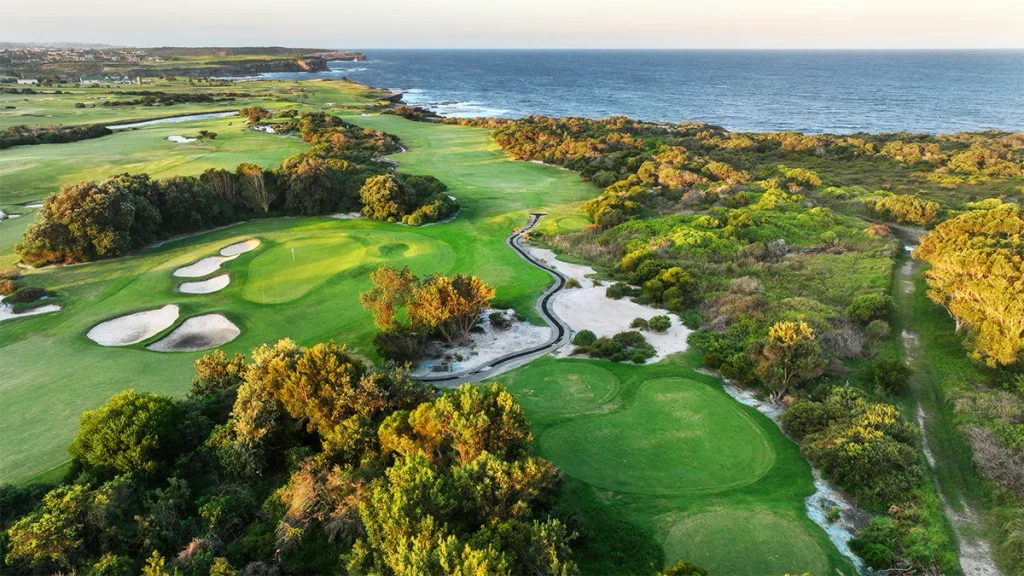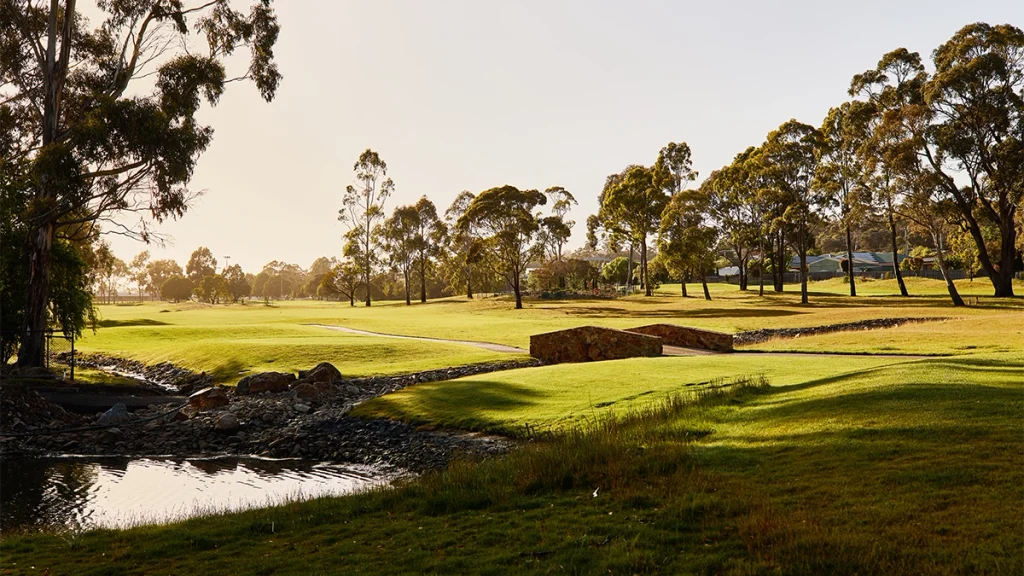
Our merged ranking of Australian and New Zealand golf courses highlights the exceptional quality of golf to be found on either side of the Tasman.
Presented by Lexus
Some marriages work better than others. Australia and New Zealand exist peacefully beside each other as independent nations and no one talks seriously about an official union, partly because we enjoy a healthy sporting rivalry. In golf, our professional circuits overlap to the point that these days we know it as the PGA Tour of Australasia. In the domain of Australian Golf Digest, we have been ranking the golf courses of Australia since 1986 and those in New Zealand since 2016. Never, however, have we attempted to ‘marry’ the two lists. Until now.
The process was incredibly simple and the betrothed required little in the way of a courtship. Both rankings use the same evaluation criteria and there is even some crossover among the panellists. To produce our newest course-ranking list, we simply blended the scores from last year’s ranking of New Zealand’s Top 50 Golf Courses with the latest list of Australia’s Top 100 Golf Courses, released in May this year. It was a match made in spreadsheet heaven.
One party brought more to the matrimony, though. Eighty Australian courses melded with 20 Kiwi layouts to provide our inaugural unified ranking. The disparity is intriguing. A statistical evaluation reveals our New Zealand panellists are slightly harsher markers, which partially explains the imbalance. Yet the Kiwis hold their own through the top 35, with nine courses, indicating that the quality tails off across the ditch faster than on our side of the Tasman. That’s understandable considering we have about four times as many courses in total (about 1,600 in Australia versus just shy of 400 in New Zealand).
While the Australian portion of this list is still fresh, the New Zealand component is more than a year old, which in this instance doesn’t allow for updates. For instance, The Hills course outside Queenstown is currently being renovated by OCM Golf, a project that began in late March. Rather than tweak the ranking and distort the process, though, we chose to honour the respective lists instead of updating them. The alternating-year cadence of the pair means one list will always be slightly out of date when combined.
IT’S TIGHT AT THE TOP
At the pointy end, the two nations’ leading courses – Royal Melbourne’s West course and Tara Iti – finished first and second. The two lists naturally retained the same order individually, as this became an exercise in seeing how the respective sets of scores lined up.
New Zealand waited until the No.8 spot to see its second inclusion, the gregarious Kinloch layout near Lake Taupo, but quickly followed with the sibling Te Arai courses in ninth and 11th place, respectively. Thereafter, it’s a sprinkling of Kiwi gems in among some steadfast Aussie favourites.
Both countries have newcomers in the pipeline that will impact any future merged lists. Australia has The Cliffs Kangaroo Island plus 7 Mile Beach’s North course and the nearby Arm End layout in Hobart to look forward to, as well as an array of significant course renovation projects. In New Zealand, Glendhu, Hogan Gully, Douglas Links and the new addition at Muriwai are all under construction in various parts of both islands. The quality of golf on offer in both countries will only improve.

SWING SISTERS
What do you do when you live on one side of the Tasman, your sister lives on the other and you both love golf? You feed your passion by touring the best courses of both countries.
That’s what Natasha and Katya Burgess do on a regular basis, and their trans-Tasman golf trips are about to ignite a new wave of women golfers doing the same thing.
“Golf is what brings us together,” says Sydney-based Natasha. “We both discovered the game later in life and since then golf travel has become a huge part of our lives. We are huge advocates of encouraging more women to play. Since taking up the game in 2019, I’ve played more than 70 courses around the world. Earlier this year, I spent a month travelling New Zealand, playing many of the country’s bucket-list destinations, from Queenstown through to Te Arai.
“What surprised us during those trips was how many women kept asking if they could join us. That observation led us to co-found Le Coup and create golf experiences that encourage women to experience golf travel. That’s how we plan to keep growing the game (not through the traditional path).
“This December we’re hosting our first event at Terrace Downs, a resort we know well and what we believe is one of New Zealand’s best-kept golf secrets. We are planning to bring 70-100 women from Australia and across New Zealand. Despite its reputation as a premier golf destination, it has never hosted a dedicated women’s golf event before. Most importantly the event has been designed around women, integrating wellness experiences, adventure and luxury. I truly believe the future of women’s golf travel is about to explode.”
Visit lecoup.com.au for more details.

PELICAN CHARM
Few golf courses on Queensland’s Sunshine Coast capture resort-style polish and coastal charm quite like Pelican Waters. Designed by Greg Norman and Bob Harrison in 2000 then augmented in recent years by Norman alone, the layout winds through sparkling lakes, native vegetation and features generous fairways that invite Normanesque bold driving while still demanding respect from the tee. The recent upgrades lifted conditioning to a premium standard, with slick greens and strategic bunkering that rewards thoughtful play. It’s a course that plays as good as it looks, particularly in the afternoon light when the water carries a coastal shimmer and seabirds drift across the fairways.
ROYAL TREATMENT
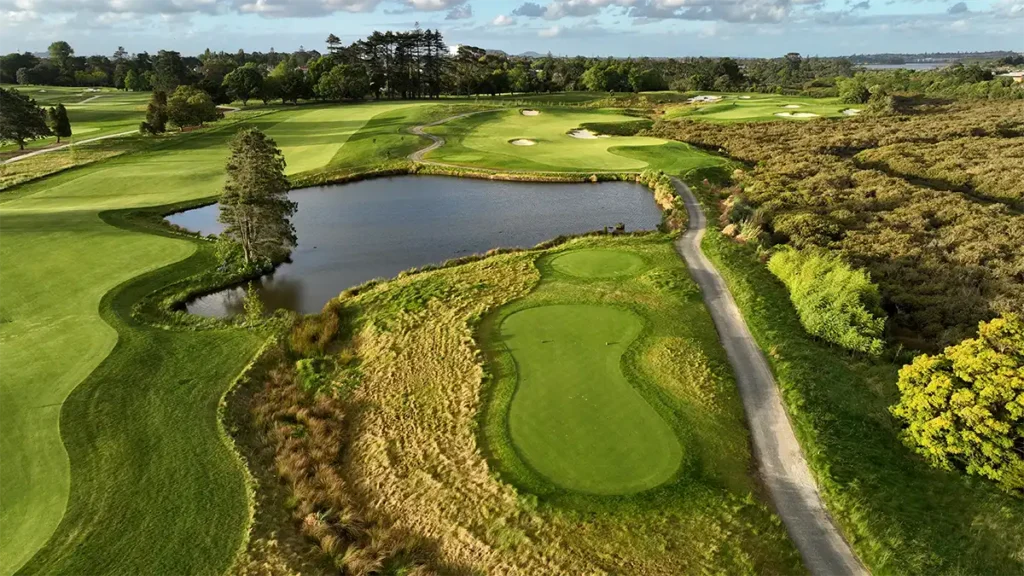
Royal Auckland & Grange Golf Club is a club where old meets new. The layout is a 27-hole foray designed by Chris Cochran from Nicklaus Design after the merger between the former Royal Auckland and Grange clubs. Which means that 232 years of combined club history now finds its home on a seven-year-old golf course. Familiar Jack Nicklaus design traits – bright, white bunker sand and undulating, segmented greens – are evident across the 27 holes, which are split into the Grange, Middlemore and Tamaki nines. The site’s waterways are frequently incorporated into the layout. Astute design highlights the land’s modest undulations, with oodles of built-in flexibility via six different tees and numerous holes where the teeing grounds alter the angles.

FAIRY TALES
Surely no golfer has ever made the journey to Port Fairy Golf Links and walked away disappointed with the voyage or unimpressed by what they found. A throwback golf course in many ways, Port Fairy challenges golfers through its exposed location along Victoria’s south-west coastline where the wind can blow off your cap, and through a petite but enchanting seaside layout. Short by modern standards, the 5,887-metre course punches far harder than its scorecard indicates, blowing many an unsuspecting golfer offline if they cannot manage their game in strong winds. Port Fairy is an ornament to the best aspects of playing golf along a volatile coast and would look equally at home on a remote part of New Zealand’s coastline. The fact that it’s in Victoria instead is another win we can chalk up for this side of the Tasman.
JOUST WITH JACK
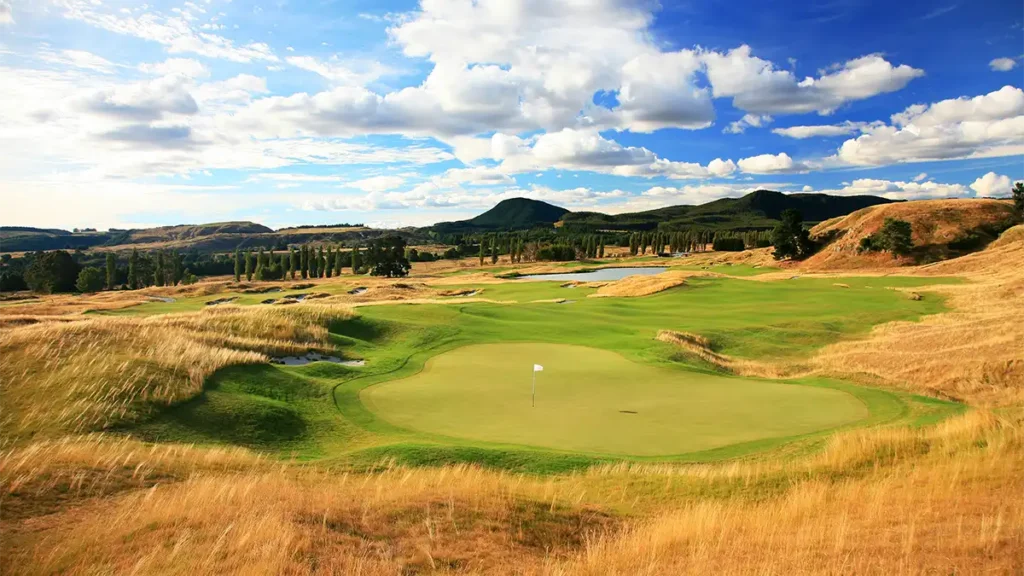
The Kinloch Club has rightfully earned a reputation as one of the toughest examinations in New Zealand golf. The country’s second-best layout sits a short distance from Lake Taupo in the heart of the North Island and uses a varied setting to great effect. Some holes on the Jack Nicklaus-designed layout are quite open and unimpeded, while others twist and turn or rise and fall with the undulating landscape. One thing that’s common across all 18 holes – a flat lie is difficult to find. Which isn’t to paint Kinloch as a brutal or impossible test of golf; rather, players just need to be smart about which tees they play from. There’s plenty to enjoy at Kinloch, and if the golf course gets the better of you, there’s always the magnificent scenery to soak in.
CURLY QUESTIONS
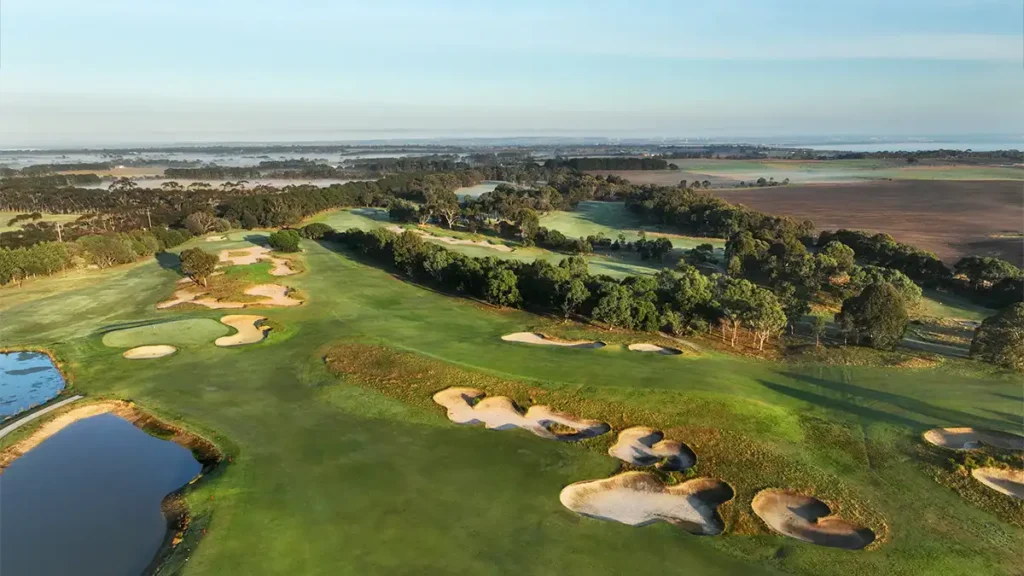
Curlewis Golf Club has demonstrated more progressive moves than almost any Australian golf club in recent years. Once a so-so layout with high potential that sat largely unrealised, it has morphed into a complete golf destination. Not only did the club renovate the golf course under the architectural direction of Mike Clayton, but it also expanded the total offering by rebuilding the clubhouse to include a spike bar and restaurant, added modern accommodation for up to 126 people – situated snugly between the first tee and 18th green – and unveiled a tech-led driving range plus mini-golf. It is now a destination for much more than just playing 18 holes. There are Sandbelt-esque qualities throughout the layout, which has a bushland setting and substantial undulations on the back nine in particular.
OCEANSIDE SPLENDOUR
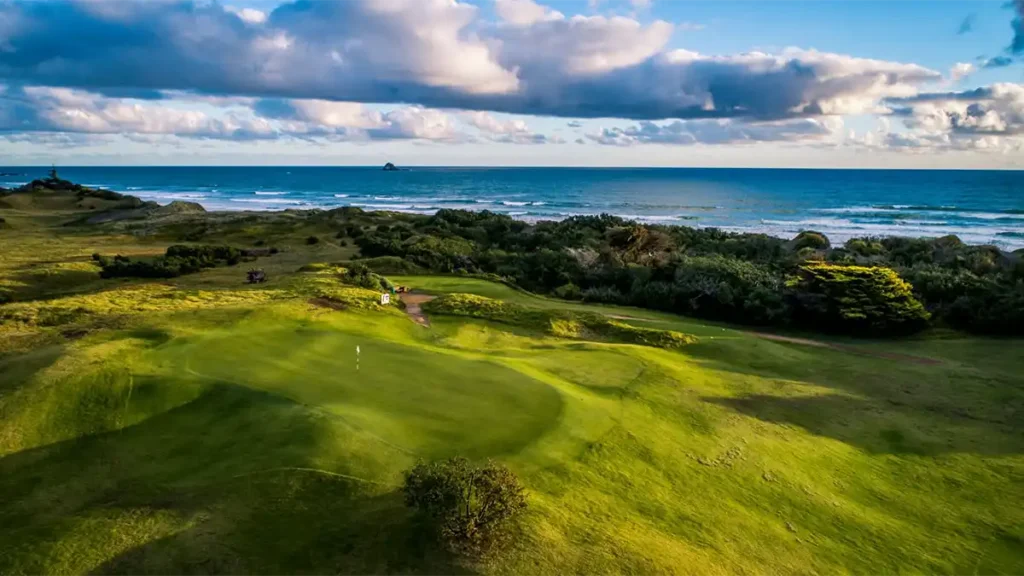
The rugged and delightfully ragged layout at Muriwai Golf Club overlooks the Tasman Sea and stares right across towards Australia. It’s a layout distinctive for its black-sand bunkers and outstanding drainage, which sees Auckland golfers flock there each winter when city courses are holding rainwater. Such an exposed site also favours good wind players, as it can howl at Muriwai – often several clubs’ worth. (The number of parasailers in view on the nearby beach is often your guide to wind strength.) Recent removal of several Norfolk pines has placed the focus more on the ground features at Muriwai, which are extensive. Scattered across the course are coffin-style depressions caused by felled trees rotting and the land around them sinking, making for a different style of hazard.
CONSTANT EVOLUTION
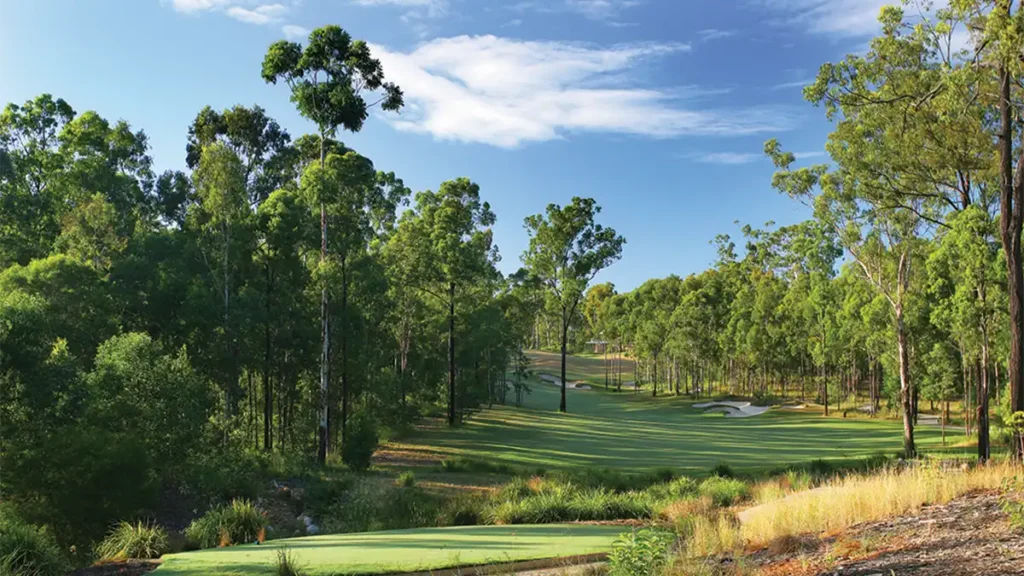
The evolution of Brookwater Golf & Country Club in many ways resembles the area it’s in. When the course opened in 2002, Brookwater was a far-flung and largely uninhabited section of Brisbane that many deemed not even part of the greater city. These days, it forms part of a vast growth corridor with a population and facilities to match. The golf course, meanwhile, quickly earned a reputation for difficulty. It was tough, yes, but not in an excessive way; you just had to play smart to score well. It’s a quality that shines through at Brookwater today, but a minor redesign a few years ago softened some of its harsher edges. The changes were made with playability in mind, but also maintaining the integrity of the original challenge.
DO BATTLE WITH HASTINGS
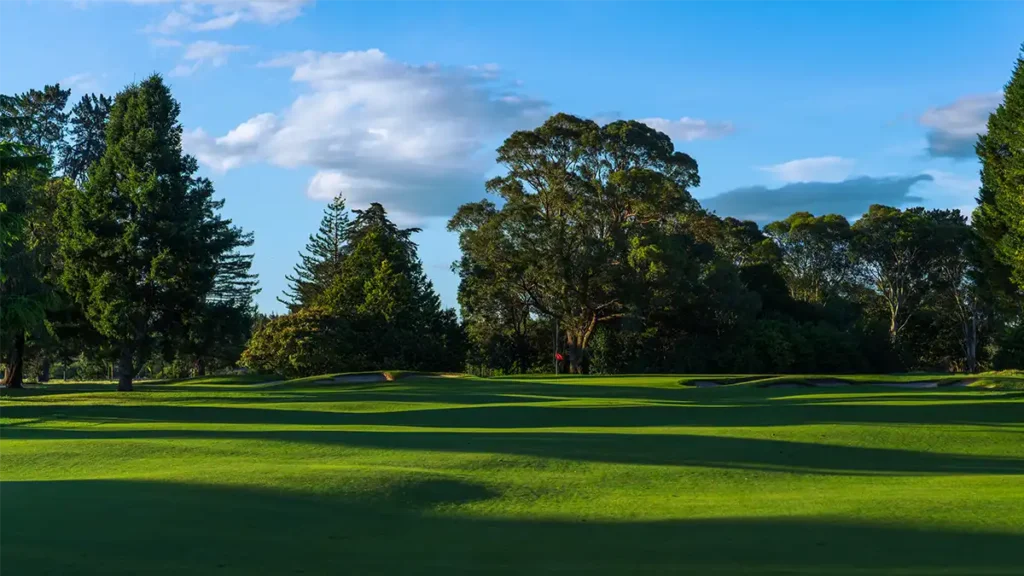
Hastings Golf Club in New Zealand’s Hawke’s Bay region sits on the fertile Heretaunga Plains where flat parkland fairways and mature trees create a deceptively strategic test. Often shaped by coastal breezes and seasonal firmness, the course rewards placement over power, with well-guarded greens demanding a sharp short game. The welcoming clubhouse reflects strong community ties, while visiting golfers enjoy a relaxed pace and Kiwi charm. Located a short drive from Cape Kidnappers, Hastings remains a favourite year-round stop for travelling golfers seeking an enjoyable round that blends accessibility with subtle shot-making interest across the 18 holes. With its blend of tradition, playability and regional character, Hastings remains a valued fixture in New Zealand’s provincial golf scene.
TOP 100 GOLF COURSES IN AUSTRALIAN AND NEW ZEALAND
1 Royal Melbourne (West)
2 Tara Iti
3 Kingston Heath
4 Cape Wickham
5 New South Wales
6 Peninsula Kingswood (North)
7 Barnbougle Dunes
8 Kinloch
9 Te Arai (South)
10 Victoria
11 Te Arai (North)
12 Barnbougle Lost Farm
13 Royal Melbourne (East)
14 Royal Adelaide
15 7 Mile Beach
16 The National (Moonah)
17 Metropolitan
18 Cathedral
19 Peninsula Kingswood (South)
20 The National (Gunnamatta)
21 Jack’s Point
22 Ocean Dunes
23 Huntingdale
24 Royal Sydney (Championship)
25 Cape Kidnappers
26 The National (Old)
27 Kooyonga
28 Lake Karrinyup
29 The Lakes
30 Paraparaumu Beach
31 Commonwealth
32 The Australian
33 The Hills
34 The Dunes
35 Kauri Cliffs
36 St Andrews Beach
37 Yarra Yarra
38 Glenelg
39 Joondalup (Quarry/Dune)
40 Barwon Heads
41 Woodlands
42 Royal Canberra (Westbourne)
43 Magenta Shores
44 Royal Queensland
45 Bonville
46 Mount Lawley
47 Hamilton Island
48 13th Beach (Beach)
49 Links Kennedy Bay
50 Lonsdale Links
51 The Cut
52 Brookwater
53 Sanctuary Cove (Pines)
54 Bonnie Doon
55 Arrowtown
56 Elanora
57 The Grand
58 Port Fairy
59 Grange (West)
60 Wairakei
61 Moonah Links (Legends)
62 Terrey Hills
63 Portsea
64 St Michael’s
65 Spring Valley
66 Millbrook (Coronet)
67 Moonah Links (Open)
68 Concord
69 Rosebud (North)
70 Grange (East)
71 Links Golf & Wellbeing (Hope Island)
72 The Vintage
73 Muriwai
74 Sorrento
75 Cottesloe
76 Sandy Links
77 Titirangi
78 Kalgoorlie
79 Royal Auckland & Grange
80 Tieke
81 The Western Australian
82 Avondale
83 Royal Wellington
84 Bougle Run
85 RACV Cape Schanck
86 Links Lady Bay
87 The Heritage (Henley)
88 Curlewis
89 Hastings
90 Meadow Springs
91 13th Beach (Creek)
92 The Heritage (St John)
93 Palmer Resort Coolum
94 Christchurch
95 Narooma
96 Pelican Waters
97 Brisbane
98 Mount Compass
99 Sanctuary Lakes
100 90 Mile Beach (Kaitaia GC)
KEY:
AUSTRALIA
NEW ZEALAND
Brought to you by