From high ones and low ones to spinners and runners and everything in between.
To be a good golfer, you need to have a system for controlling wedge shots. I don’t mean just knowing a go-to distance for each of your wedges. I mean being able to handle a variety of shots, like taking 10 metres off or playing to a front pin or a back tier. If you can’t dial in the shot with simple adjustments, you’re guessing – and guessing just doesn’t cut it. With your other irons, you probably don’t get a lot of ‘in-between’ shots. For example, if you hit your 8-iron 140 metres, I bet you feel fine facing a shot of 135 or 145. But if your gap wedge goes 90, and you’re looking at a tucked pin over water at 95 metres, you might be shaking. That said, if you’re satisfied hitting your wedge shots anywhere on the green, stop reading now. My guess is that your expectation with a wedge is to get closer to the hole. You might have to adjust the distance, trajectory or spin to achieve the precision you want. Let me show you the system I teach. You can take the parts that feel right and develop your own strategy, and start wedging it close!
Distance: Turn full or turn less
The first step to hitting your wedges closer to the hole is knowing your baseline distances. On a full swing, my 46-degree goes 135 yards, my 53-degree 110 yards and my 58-degree 95 yards. I create all of my distance adjustments off of those numbers. To accurately get your baselines, set up a practice session using the type of ball you normally play and hit to a real green. Slapping range balls towards the 100 sign won’t work.
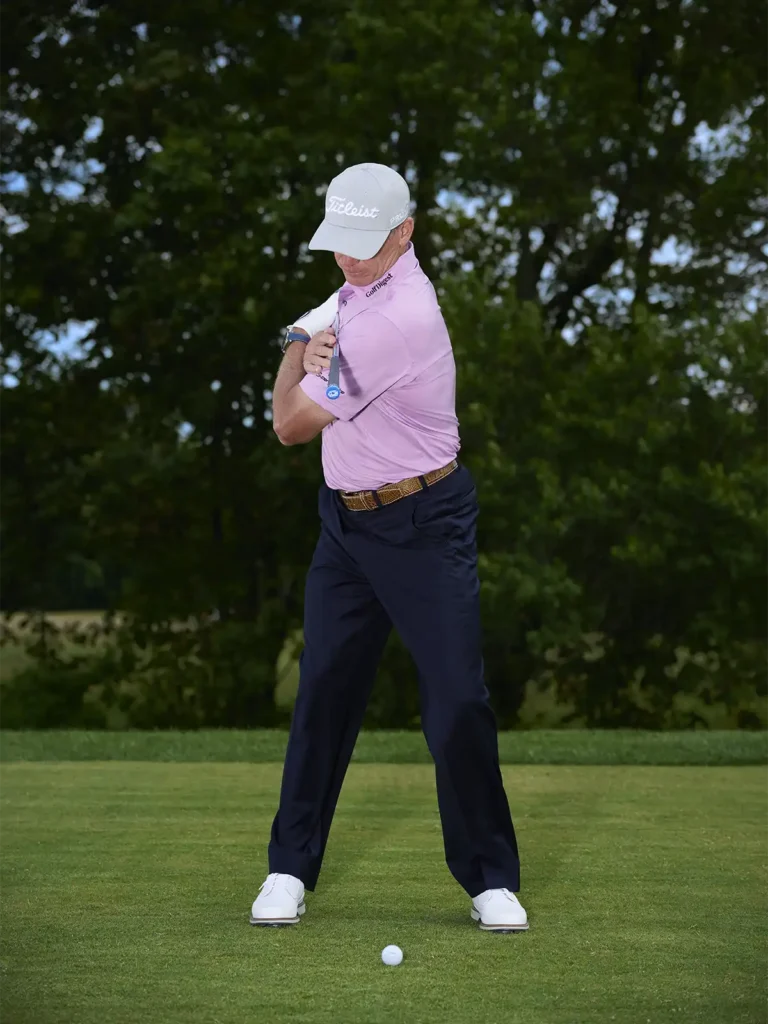
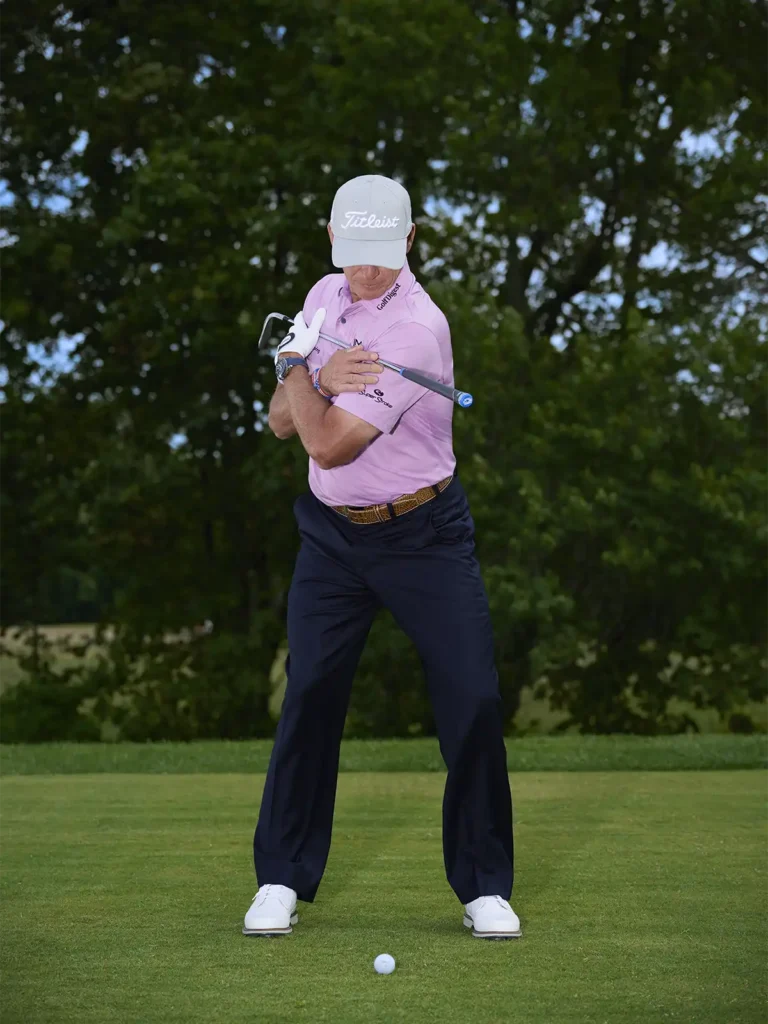
How do you adjust distance for shots that don’t match one of your full-swing distances? My favourite method is to vary how much you turn your shoulders on the backswing. Start with a full turn, call it 12:00 on an imaginary clockface, using a club across your shoulders to mark it [above left]. That’s your baseline. Then, develop at least one shorter shot, like a partial turn to 10:30 [above right], which will take off about 10 percent, depending on baseline. Regulating turn is a simpler way than trying to control the amount of wrist hinge or arm swing. Those methods are less reliable and harder to monitor.
I like using shoulder turn because you can see your lead shoulder in your peripheral vision, so it’s easy to check. Also, you can swing through the same on every shot and produce different distances with just this one change. You simply set the turn going back and make your normal through-swing.
I teach two other ways to adjust distance, which I’ll explain [below]. Mix and match any of them to add more distance versatility with your wedges.
Gripping down
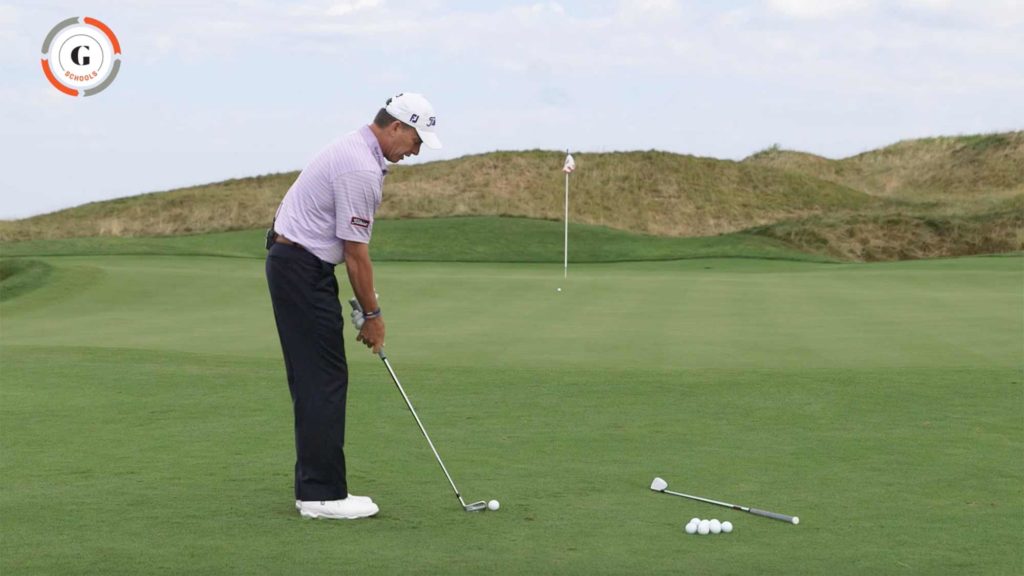
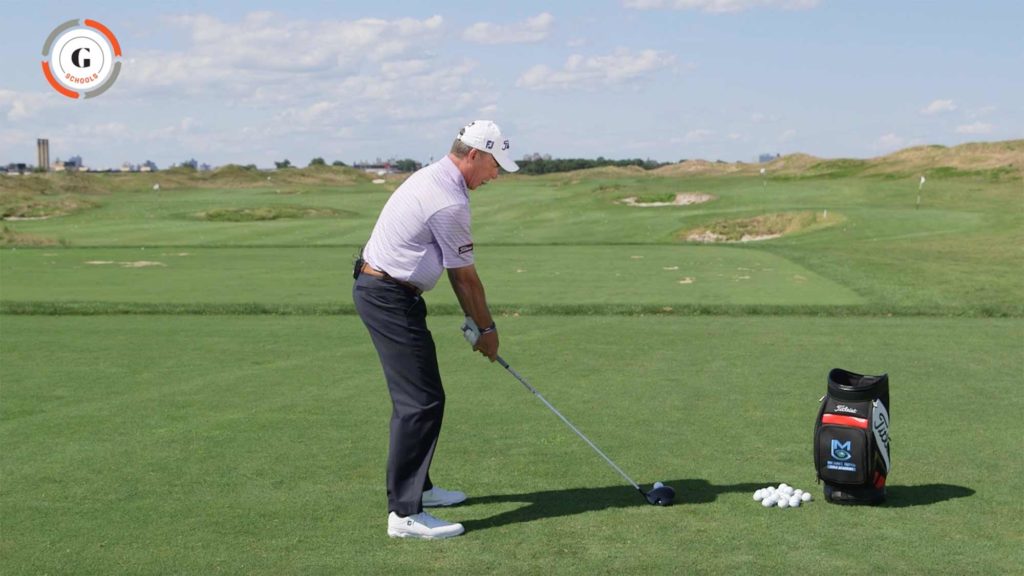
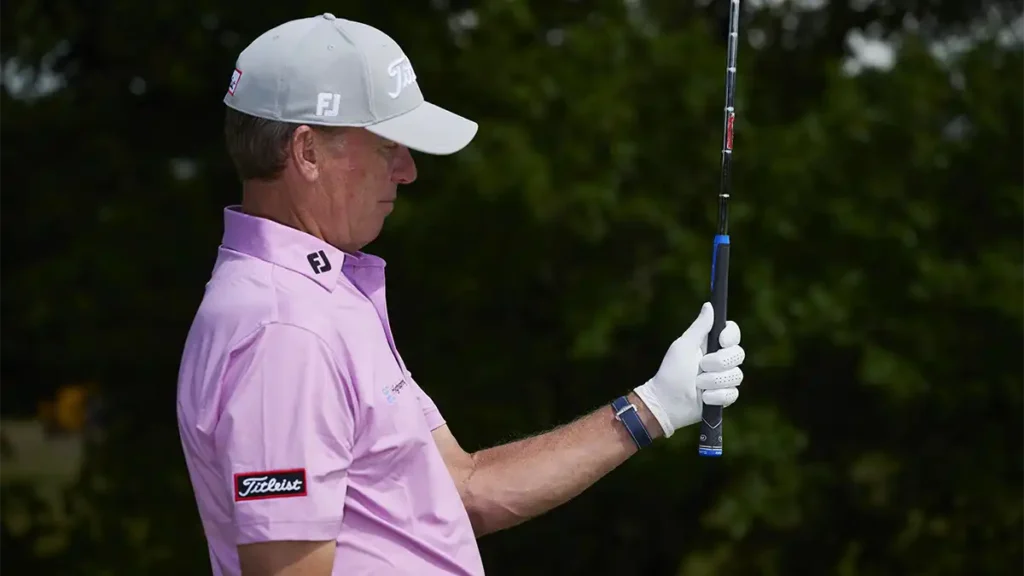
Shortening the club by gripping down [above] is an effective way to hit shorter shots. Moving your hands down two inches should take off 10 metres. I like this adjustment because you do it at address, which is the simplest place to make a change. However, you do have to make up for the shorter shaft, by bending more at the waist or standing a touch closer to the ball.
Opening the face
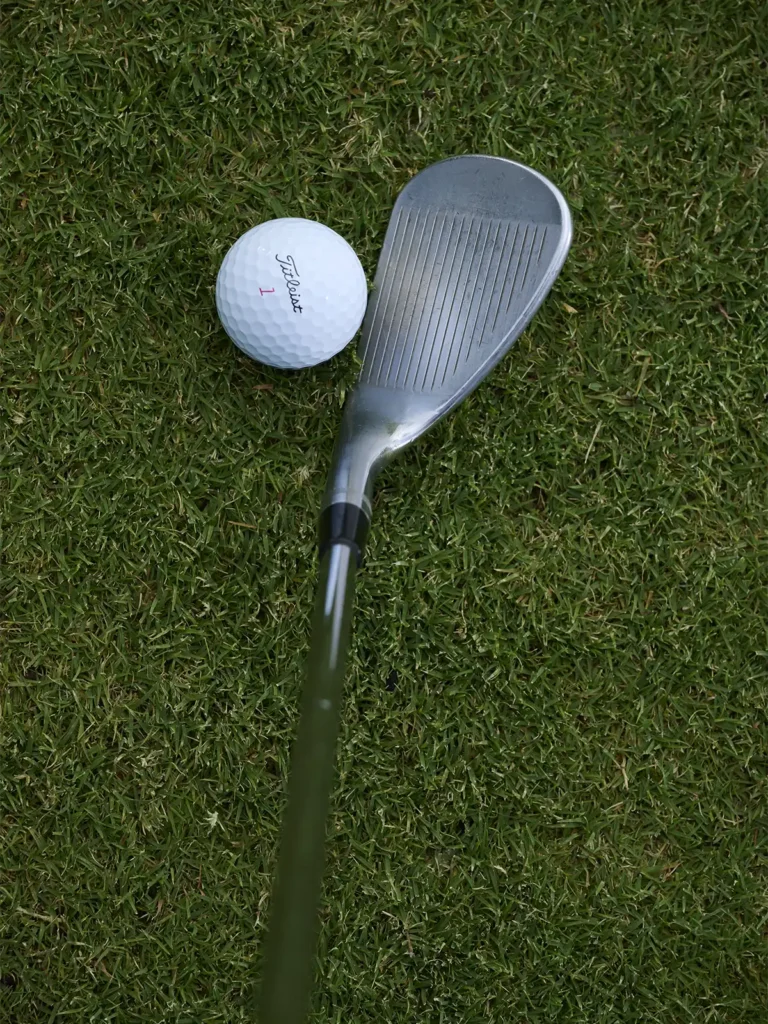
Setting up with an open clubface [above] reduces distance by adding more loft to the club. However, it makes some players feel like they’re going to push the ball or shank it. In truth, you’re adding loft more than you’re setting up for a push. That said, you should align your body slightly to the pull side to compensate. A word of caution: don’t just twist the face open after you grip the club. To do it correctly, open the face, then take your grip.

Trajectory: Hands in or hands out
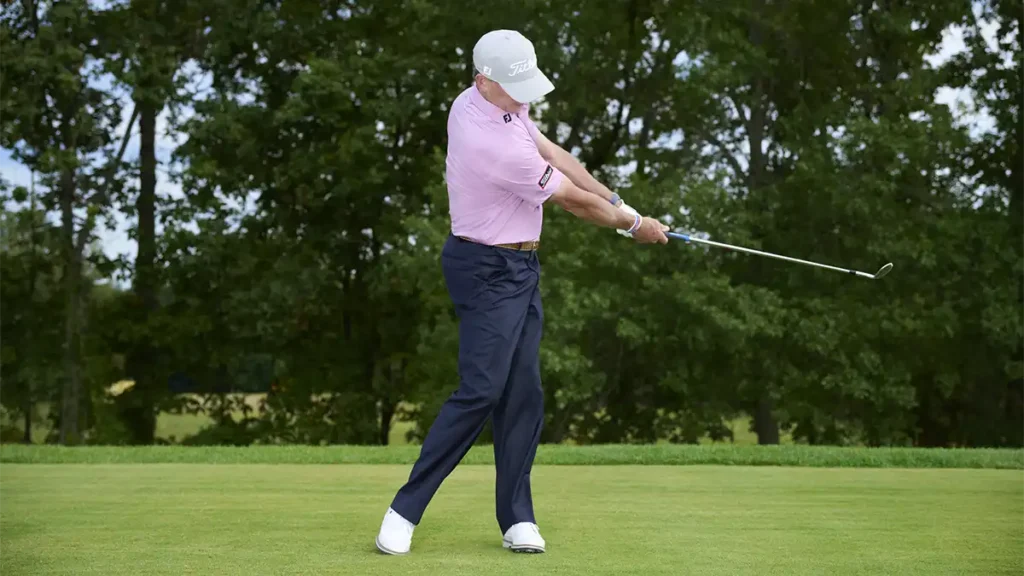
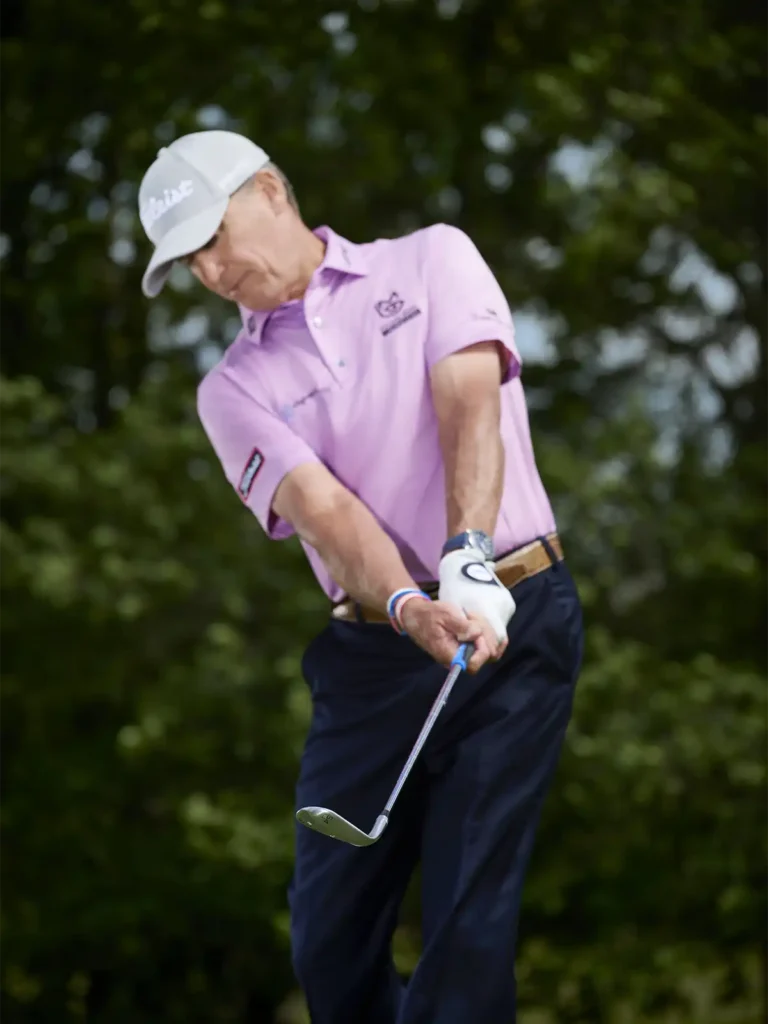
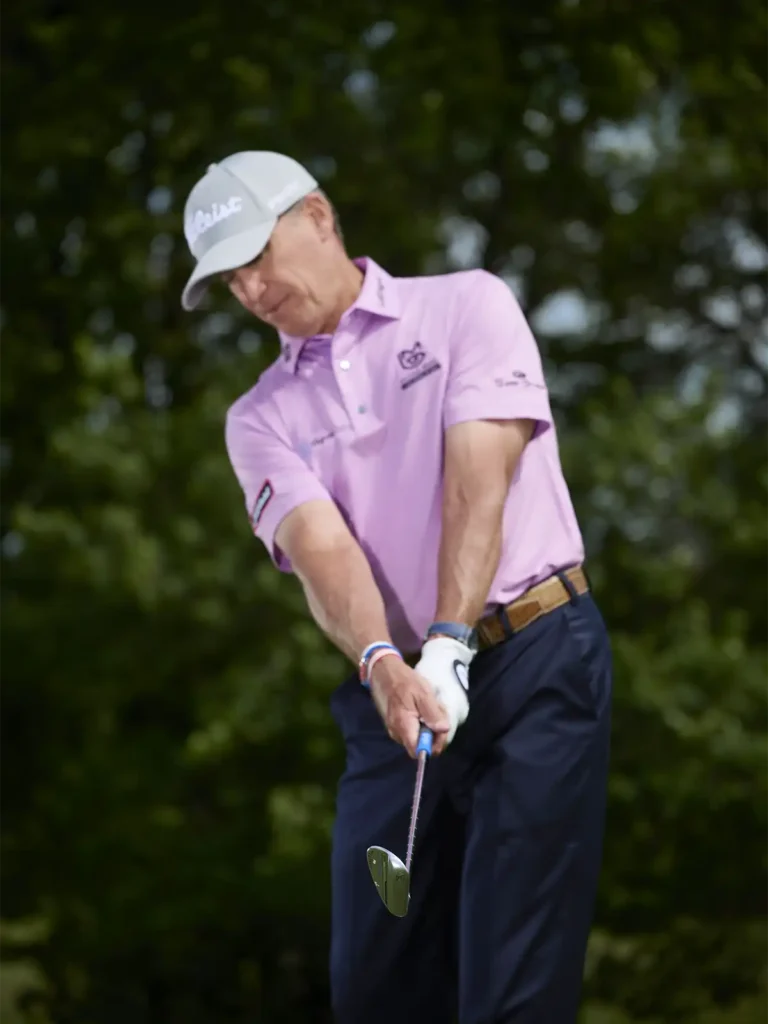
On wedge shots inside 50 metres, the best way to alter the trajectory is to focus on where your hands finish in relation to your body. When your hands stay in close, you’ll hit a higher shot. When your hands extend towards the target, you’ll flight it lower. Let me explain this further.
For the higher shot, swing the club through so the butt end of the grip finishes close to your lead hip [above left]. That creates a glancing strike with the club cutting across the ball from out to in. It also reduces shaft lean towards the target at impact. The result is more loft for a higher, softer shot- – great for front pins or to fly it over bunkers.
To hit it lower, extend your arms away from your body through the strike [above right]. That extension gives you more forward shaft lean at impact and contact lower on the face. You’ll deliver less loft for a lower, hotter shot. It works for back pins or run-up greens.
Spin: Hold the face open or close it
Adding or taking away backspin is another terrific way to expand your wedge game. Spin comes from what the clubface is doing at impact: an open face means more spin; a closing face reduces it.
To hit with an open face, you need the heel of the clubhead to be leading the toe through impact. A great feel is the palm of your trail hand facing the sky in the follow-through [left, top]. It’s like you’re making a karate chop with that hand. The open face will impart cut spin, so be aware that the first bounce might nudge the ball right (for righties). An open-face shot is better for fast greens or tucked pins.
For a closing face, the visual is the toe passing the heel through impact. The trail palm is more straight up and down in the follow-through, like a hitchhiker [left, bottom]. Opposite of hitting with an open face, the ball will pick up hook spin, so the first bounce likely will go left. This shot is great for slow greens or running up a back tier.
Start adding these shots to your bag, and you’ll want a wedge on every hole.
Based in the US state of Connecticut, Michael Breed is Golf Digest’s Chief Digital Instructor.
Photographs by j.d. cuban