
[Photo: Andrew Redington]
Leading into the 2026 US Open the questions were about the wind and the sun. On the opening morning, they were about the fog.
RELATED: Why Shinnecock Hills has resisted change – and remains golf’s most preserved masterpiece
Heavy fog rolled through Shinnecock Hills Golf Club, and threw an awkward wrinkle in players’ pre-round preparation. The horn blew at just about 7:11am; two hours later, they resumed play.
It was awkward, though, because players didn’t know the delay was going to be almost exactly two hours at the time. They were provided updates every 15 minutes, but clear estimates were hard to come by because, again, through no fault of anyone, nobody really knew how long the fog would hold.
In short it meant that a few players had to be fairly ready to go at any time, without working so hard that they would inadvertently tire themselves out.
I was milling around the driving range for most of the delay, and here were the different ways I saw players navigate it – and some insight the rest of us can glean.
Hold in position
When the delay came down a large group of players on the range chose to stay on the range, but when they did, these didn’t turn into practice sessions. They either shifted to hitting smaller, lower-energy wedge shots; or they just hung out on the range and chatted. Rory McIlroy was the most notable player to take this route.
When this is a smart idea
When your body is already warm-ish, and you expect the delay to be short.
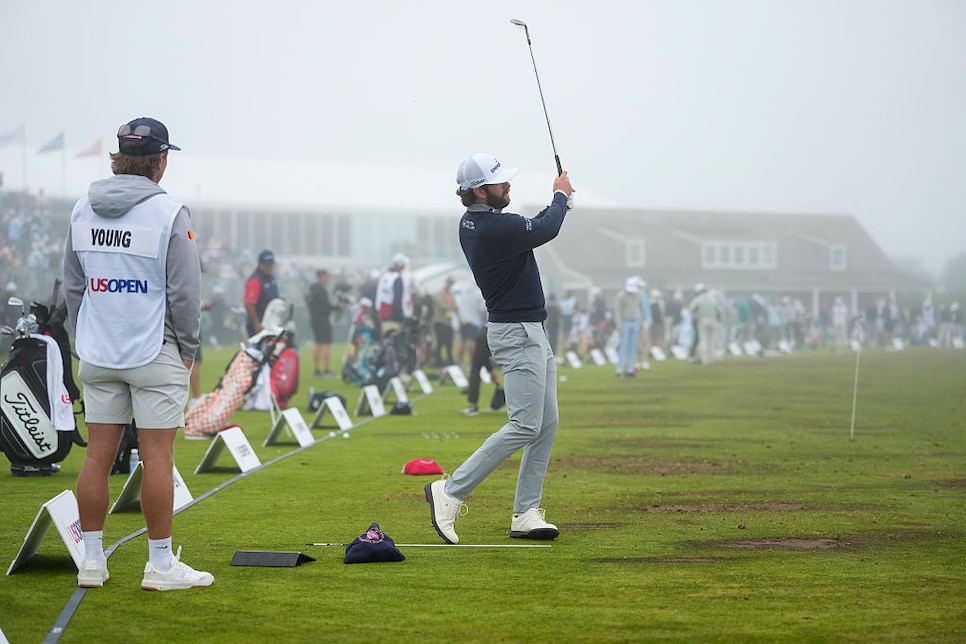
Photo: Tracy Wilcox
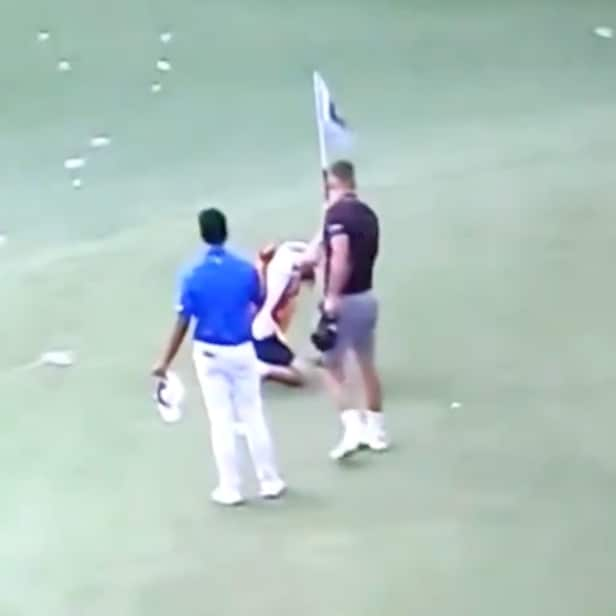
Impromptu putting green session
A handful of players went to the putting green and decided to camp there. You’re not going to expel a bunch of energy putting, but you can get lots of good work done in the meantime. Rather than warming up, the delay turned these more into longer practice round sessions. More time spent on speed-control drills and technical practice.
When this is a smart idea
When you expect a medium-length delay, and want to get some more reps in with your putter.
Quick reset
A handful of players went inside once news of the delay came down. McIlroy did, once he realised the delay was going to linger, and James Nicholas, who was two holes into his round when he was carted off the course. When they did, they had a brief rest, re-activated their key golf muscles in the gym, perhaps working in a quick study session on the shots upcoming before returning to the range.
When this is a smart idea
Done right, you’re resetting everything briefly. Rest, activate, warm-up. Best when you think the delay is going to be longer, but you still need to be ready to move in case it’s not.
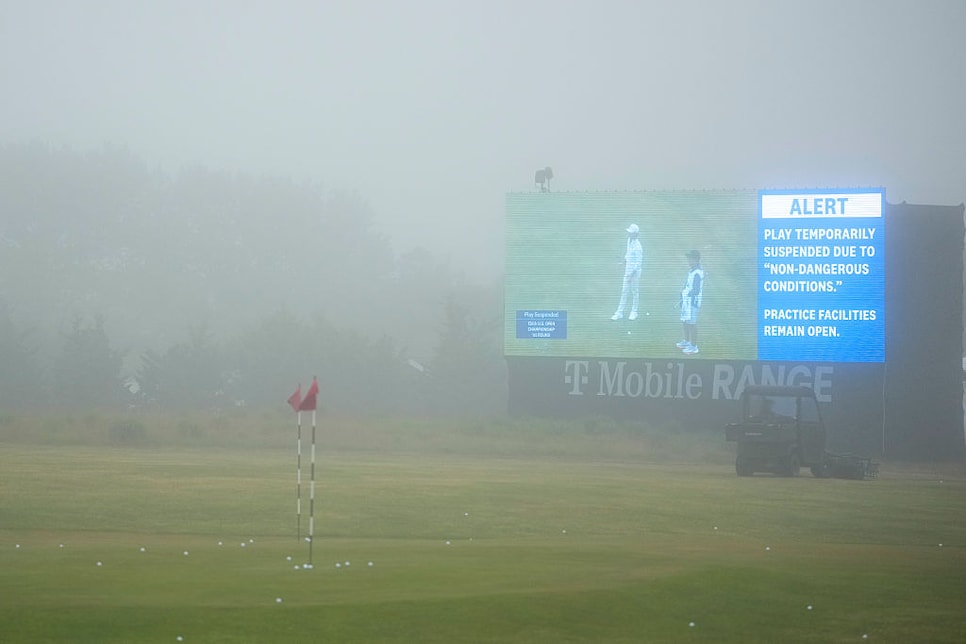
Photo: Tracy Wilcox
Embrace chaos
The problem with all of the above is that you need to make a loose prediction on what’s going to happen next. Some players just shrug their shoulders and focus on staying loose. Brooks Koepka was the prime example of this one; on the range when the delay came down, he went and got his son, Crew, and walked around the driving range with him.
When this is a smart idea
When the priority is staying loose. Something fun to take your mind off the moment, without going through a full reset.