
[Photo: Dom Furore]
The word “timeless” is probably overused when talking about most things, including golf courses. But it’s a concept that overlaps nicely with Shinnecock Hills Golf Club, where the US Open will return for the sixth time this week.
If taken to mean unmoved or unchanged by time, few major courses in American golf are as timeless as Shinnecock Hills.
RELATED: A closer look at the evolution of Shinnecock Hills’ iconic design
Unlike peers such as Augusta National or US Open tentpoles like Oakmont, Winged Foot, Pebble Beach or Merion, Shinnecock has changed little over the decades. The club has never found a reason to make major alterations to the design, or even very minor ones, and therefore had no reason to later restore or correct it for past mistakes. The club and its members deserve credit for their stalwart conservation of the golf course.

The par-3 11th hole in the late 1930s.
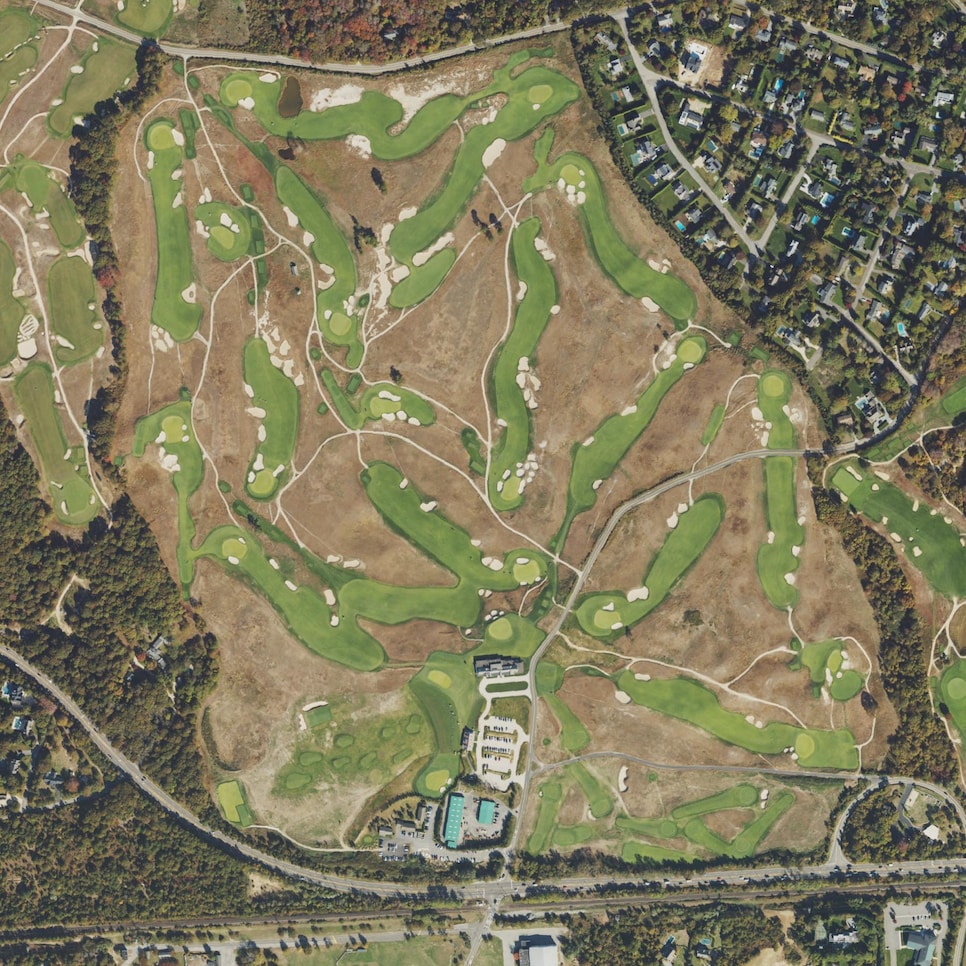
In photographs taken of Shinnecock beginning in the late 1930s through the 1950s and into the 2000s, the bunkering remains uncannily consistent in number, size and location, with minor edging evolution due to weathering and maintenance practices. Greens fluctuate in size, shrinking slightly as most do over time, though several were expanded back to their intended perimeters by Bill Coore and Ben Crenshaw in 2014 (Coore and Crenshaw also re-established the open sandscapes at the par-4 sixth that were also original).
In fact, the biggest alteration at Shinnecock Hills since 2000 is not architectural but rather aesthetic: the removal of hundreds of pines and scrub pine that stood in groves in the spaces between the holes. The trees are almost entirely gone, opening views across the site and beyond. The deforestation is not quite as profound as what was done at Oakmont, but almost.
Architect William Flynn completed Shinnecock Hills in 1931, but golf on the Southampton property precedes that date by 40 years. To understand what makes Flynn’s version of Shinnecock the long-time No.4-ranked course on Golf Digest‘s America’s 100 Greatest Courses survey, we need to rewind time.
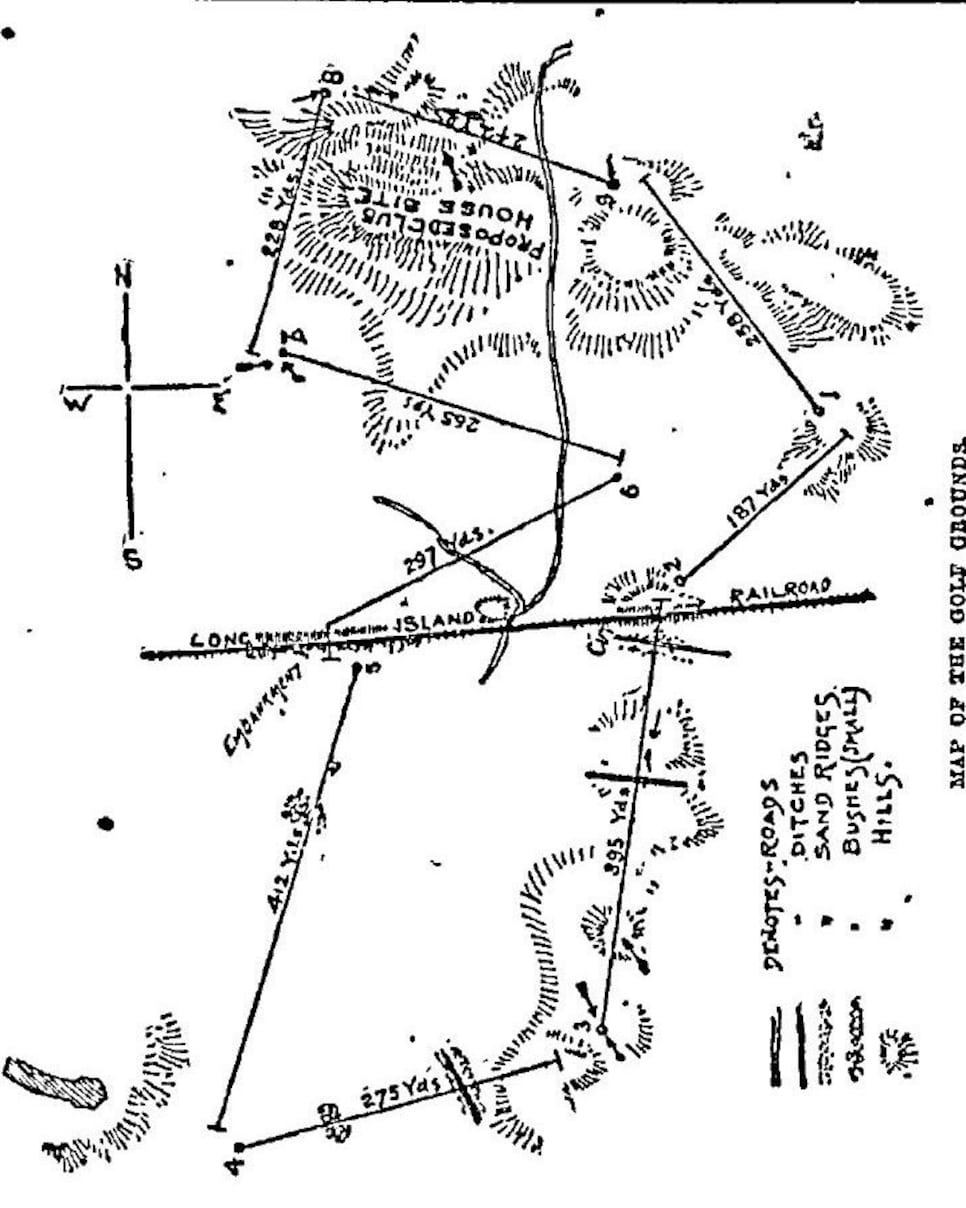
The map for Shinnecock’s original nine-hole course, laid out by Willie Davis.
ORIGINS OF SHINNECOCK HILLS
Shortly after Shinnecock Hills was founded in 1891, the club hired one of the first Scottish professional immigrants, Willie Davis, to lay out the first nine holes. Davis actually laid out two nine-hole courses, one designated for men and the other, shorter, for women.
Two years later, in 1893, the nine-hole men’s course was remodelled and made into 12 holes. There is some uncertainty about who was responsible for the second version of the course. Davis was still in the region competing in championships and would soon lay out the course at Newport, but it’s more likely that another Scottish professional émigré, Willie Dunn of the famous Dunn golf family, redesigned and expanded the Davis course.
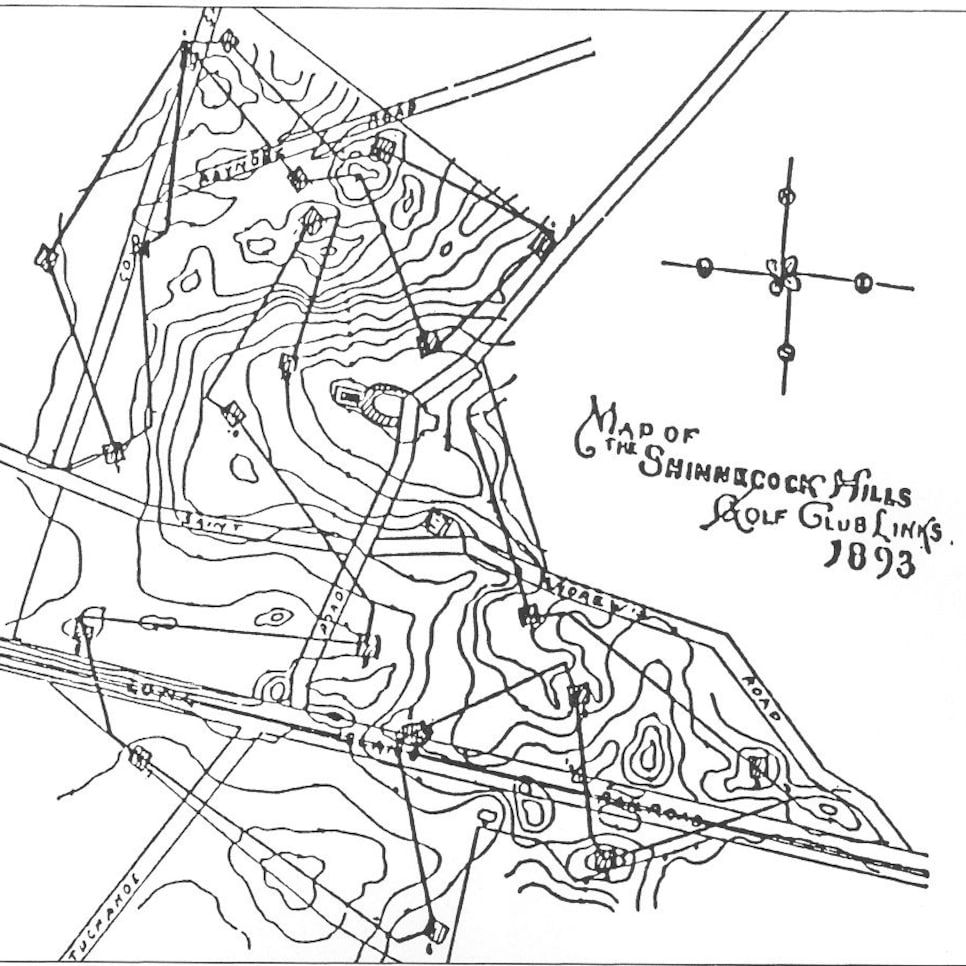
Willie Dunn’s 12-hole remodel of the course from 1893. The women’s course is at the top of the map.
That chronology makes the most sense since Dunn was hired as Shinnecock’s club professional around this same time. In both the original men’s nine and the remodelled 12-hole course, the majority of holes ran to the south of the Stanford White-designed clubhouse that was completed in 1892 and crossed back and forth over the tracks of the Long Island Railroad.
In 1894, with golf in the US gaining in popularity, Dunn expanded the 12-hole course once again by adding six new holes through the south-western section of the property, heading out and back along the railroad. The new Dunn 18 was ready for play in 1895, and it was on this new course that the club hosted both the US Open and US Amateur in 1896, just the second time the USGA hosted each event.

The 1895 expanded 18-hole course. It appears the women’s course was also redesigned.
This was the Shinnecock course for 20 years until 1916. By then, the game’s technology had advanced to the point that the course was too short for modern players. Nor was it tenable any longer, or safe, for golf holes to roam back and forth over train tracks.
THE MACDONALD/RAYNOR VERSION OF SHINNECOCK
To remedy this, the club hired C.B. Macdonald, the most significant golf course designer in the US (he was also a Shinnecock member), to revamp the course once again. Macdonald had completed his seminal design at National Golf Links of America just five years earlier on adjacent property to the west and was currently constructing the Lido about 75 miles towards New York City with associate Seth Raynor, who also assisted with the Shinnecock redesign.

This map, courtesy of the late historian George Bahto, shows the Macdonald-Raynor iteration of Shinnecock Hills from 1916.
Macdonald kept part of Dunn’s course including the out and back holes along the rail line. He and Raynor also pushed their design into the land north of the clubhouse where the women’s course formerly was and added a series of holes in the open meadow along the National boundary line that included versions of his ideal template concepts he’d created at National like the Eden, Long, Road and Cape.
HOW A HIGHWAY CHANGED THE COURSE
In 1927, the state of New York informed Shinnecock that the path of their new Highway 27 (Sunrise Highway) needed to be routed directly through a portion of the holes in the south-western corner, those along the rail line. So, the club responded by acquiring new land to the north and east for what would, once again, be a new golf course.
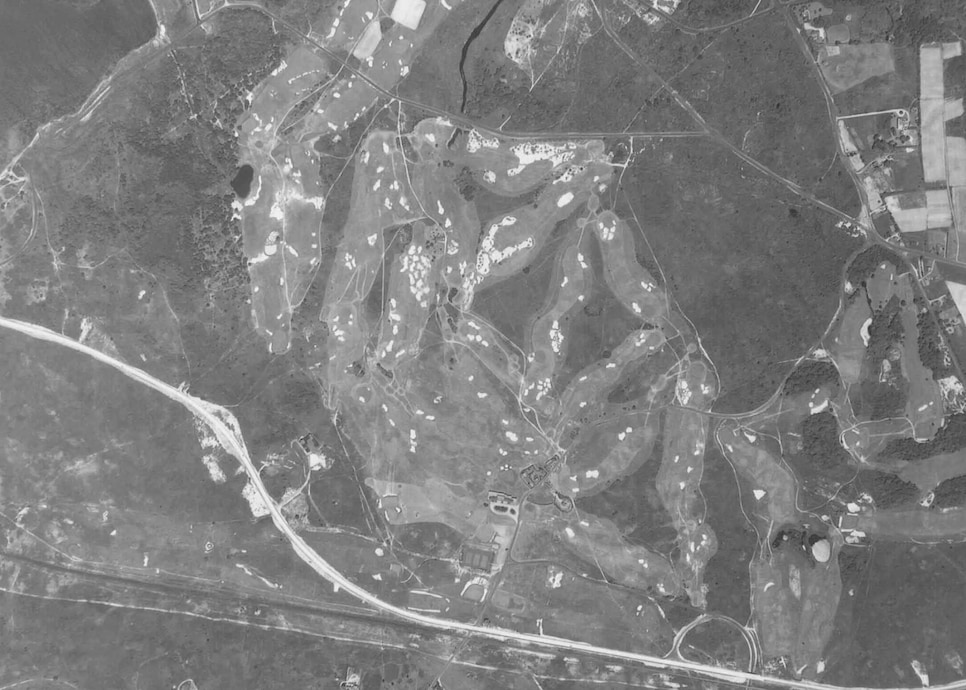
This photo from 1938 shows Highway 27 cutting through the old Dunn-Macdonald holes in the south-western corner.
Their choice of architect this time was William Flynn, of Philadelphia, and his engineering partner, Howard Toomey. Flynn’s routing utilised several of Macdonald’s holes: the first, the second half of the 12th, all of 13, 14, the general area of 15 and parts of the 18th. The current third hole remains very similar to Macdonald’s 13th, and Flynn retained Macdonald’s 14th, today’s Redan seventh, that continues to be one of golf’s most feared iterations of the hole.
Everything else was built over Macdonald’s 16th and 17th holes and into the new property to the north and east. The land in that area had rolling, dunes-like features that made it distinct – and more exciting – than the topography of the existing holes.
.jpg.rend.hgtvcom.966.1208.suffix/1780593530420.jpeg)
Flynn’s original routing of Shinnecock. Notice the area to the south-east where holes 10 to 13 now reside, is unused.
Flynn’s course is a tale of two themes. Holes one to eight have a lovely, rippling links-like character but are generally level overall, with the greens built up above the ground like pedestals. From the ninth to 14th, and then returning at 18, are adventurous, with the fairways tumbling over big sand hill movements towards greens situated into natural landforms.
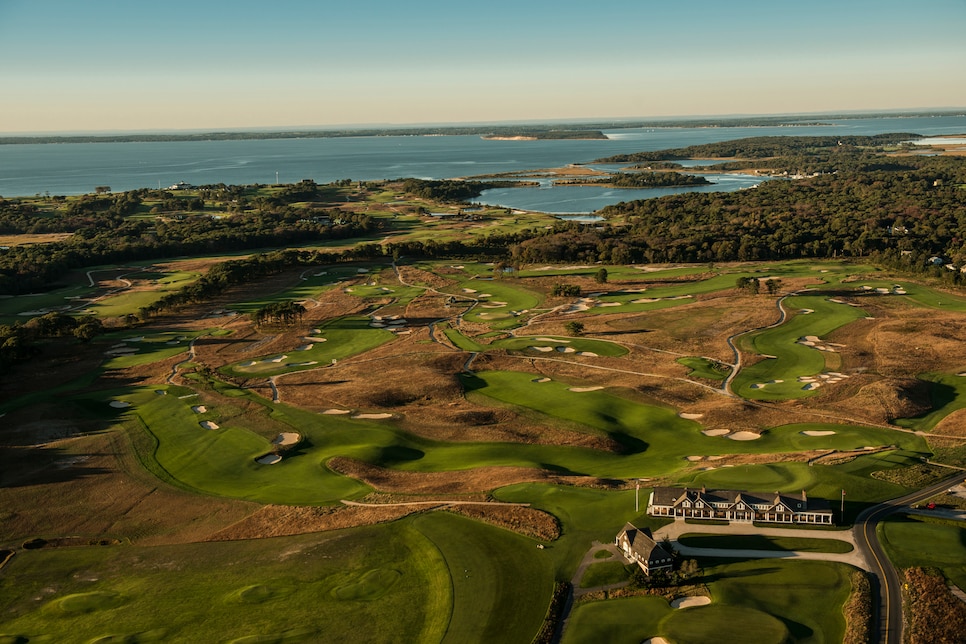
Photo: Dom Furore
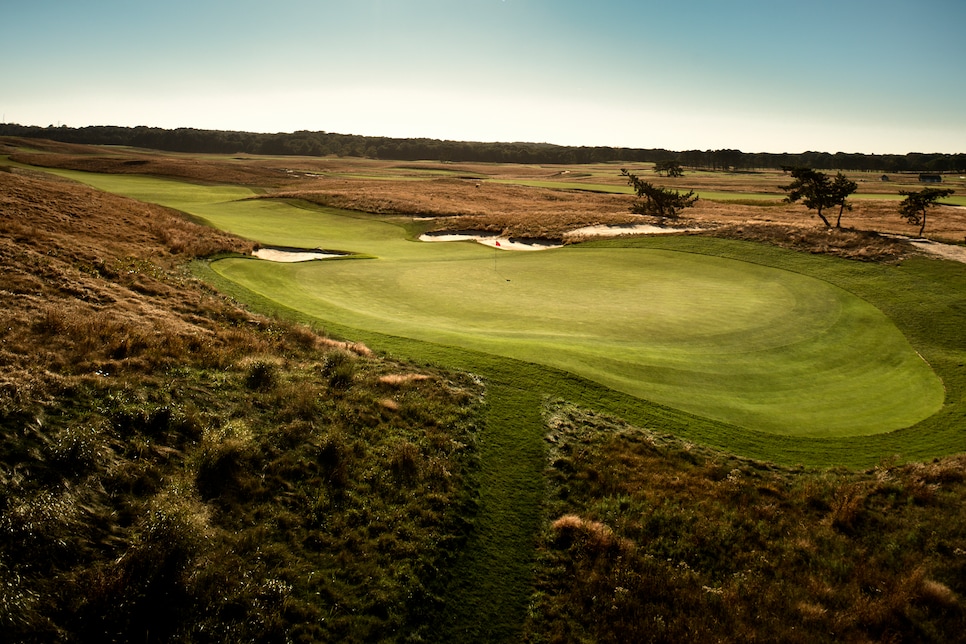
Photo: Dom Furore
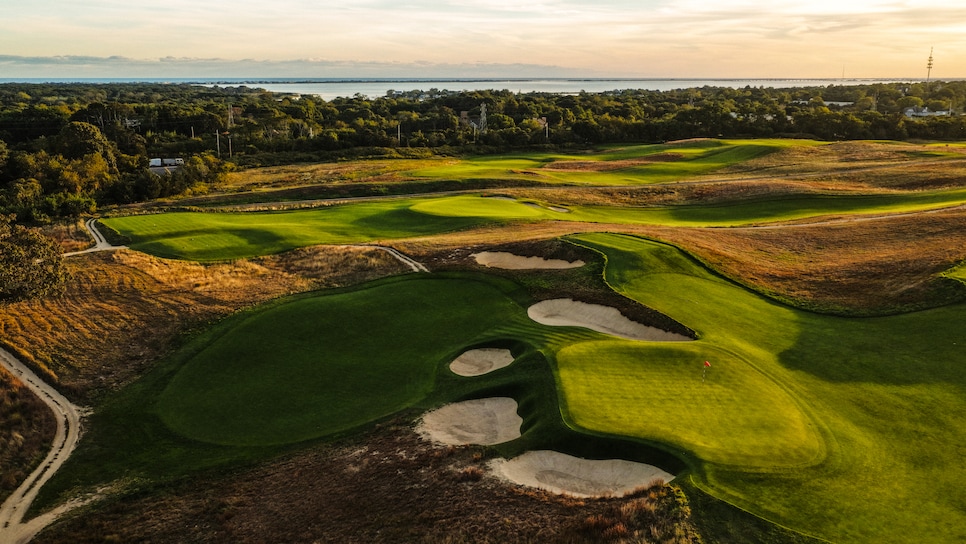
Photo: Carlos Amoedo

Photo: USGA/John Mummert
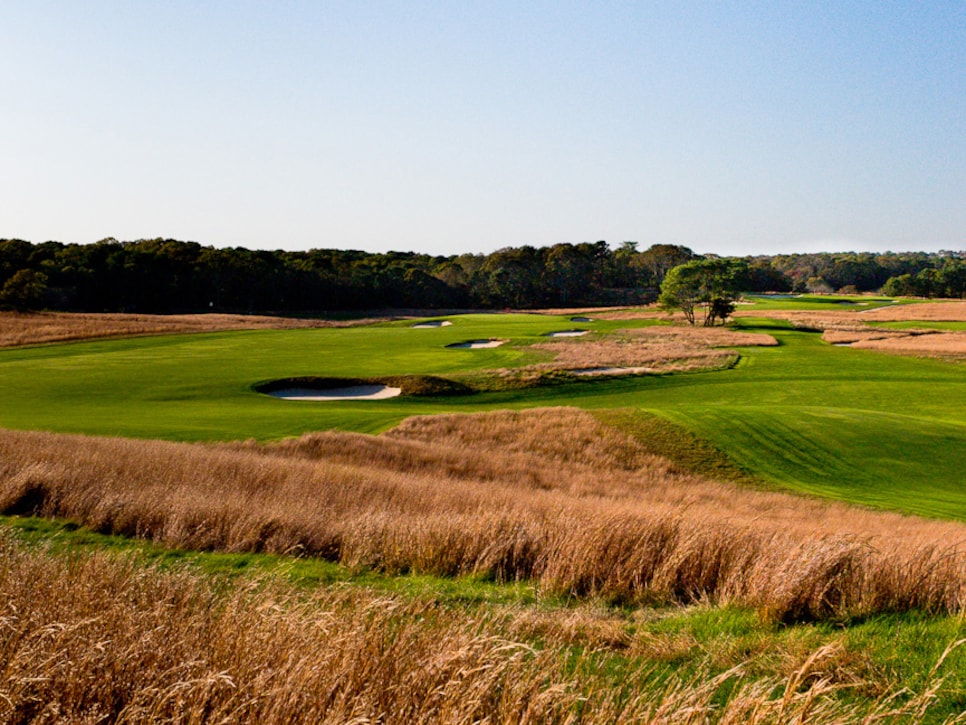
Photo: Joe Raynor/Courtesy of Shinnecock Hills Golf Club
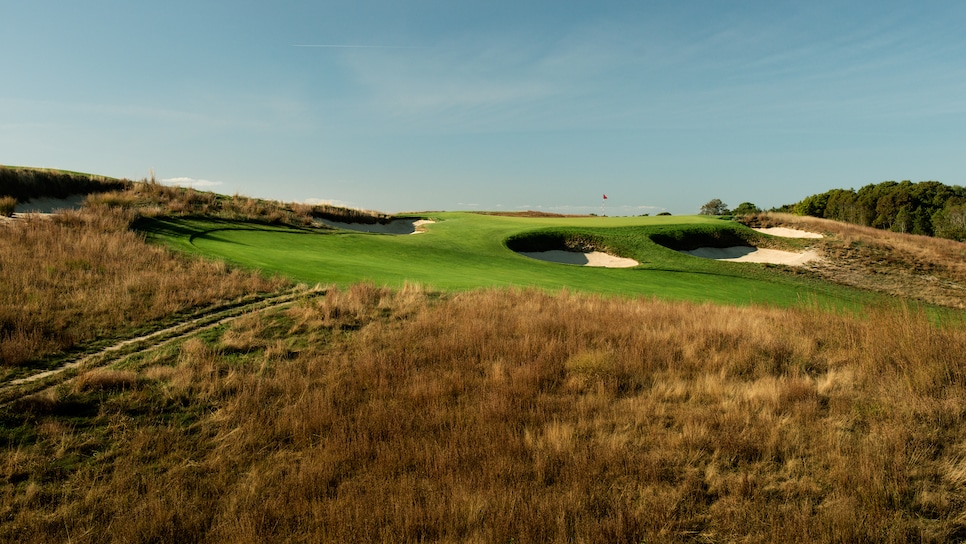
Photo: Dom Furore
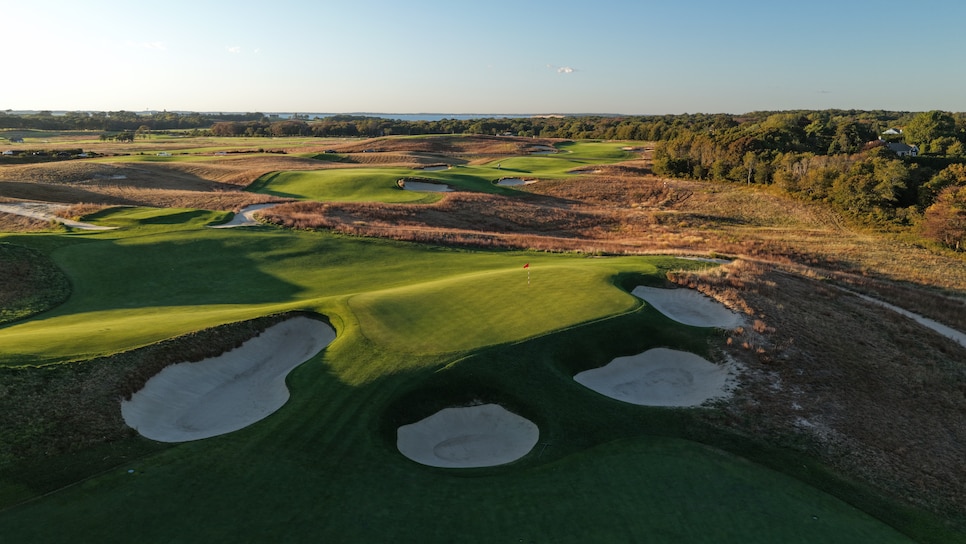
Photo: Carlos Amoedo
Shinnecock Hills is William Flynn at his finest, demonstrating his ability to route holes harmoniously into a dramatic landscape, but also to construct golf features where necessary.
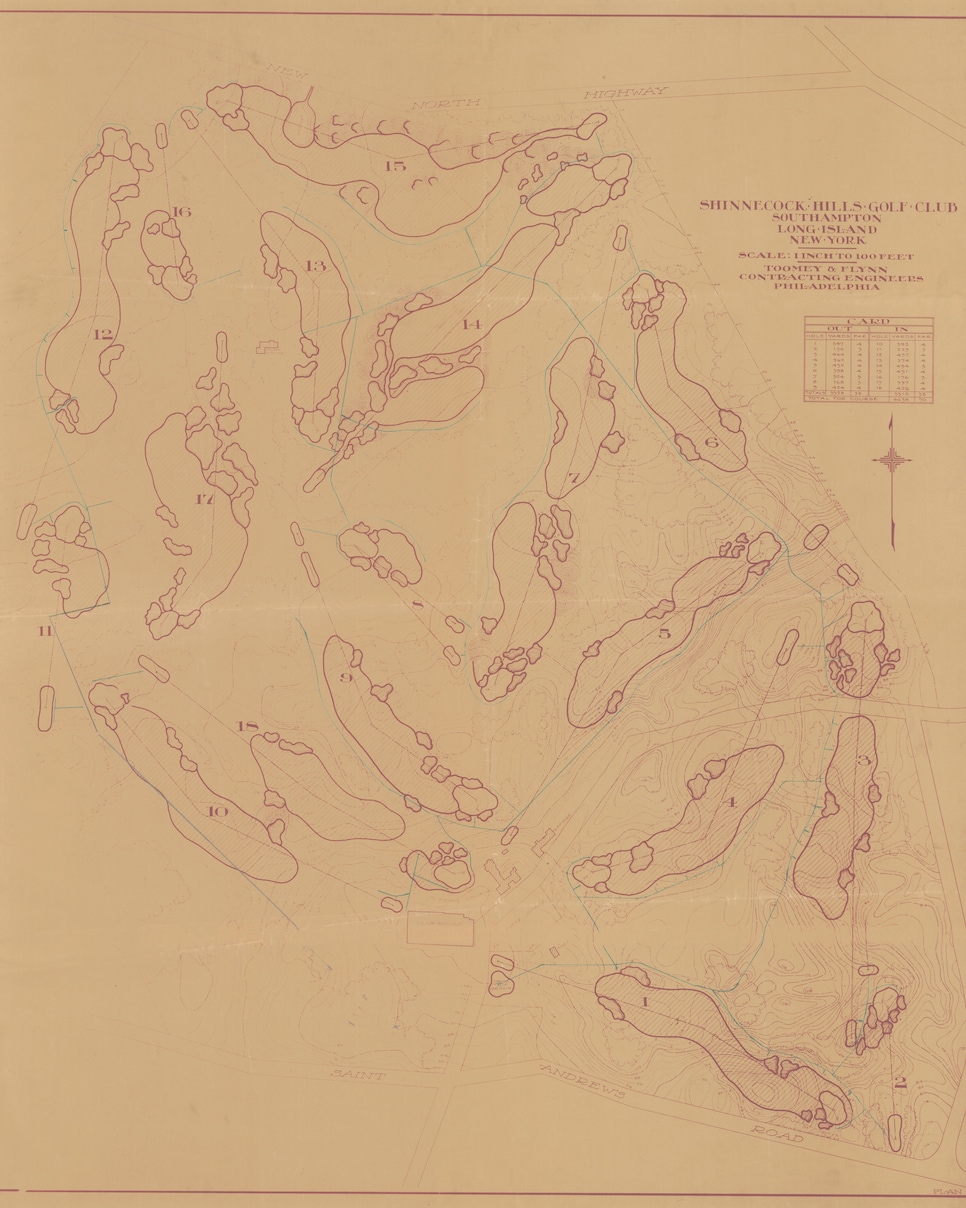
The final plan from Flynn looks incredibly similar to what exists today.
Its sum also descends from everything that came before it, the culmination of migration and maturity. Parts of the Willie Davis nine were ingested into Dunn’s 12 and then 18-hole course. That course was uploaded into Macdonald’s Shinnecock design, and then Flynn used important elements of that as foundation for his new course.
All of this genetic material is contained within the current Shinnecock Hills design. The architectural evolution to get it to what it is today was complicated, but once the course got it right, it stayed right.