Australian golf can’t erase Greg Norman from its history, even if parts of the sport would still prefer to keep their distance.
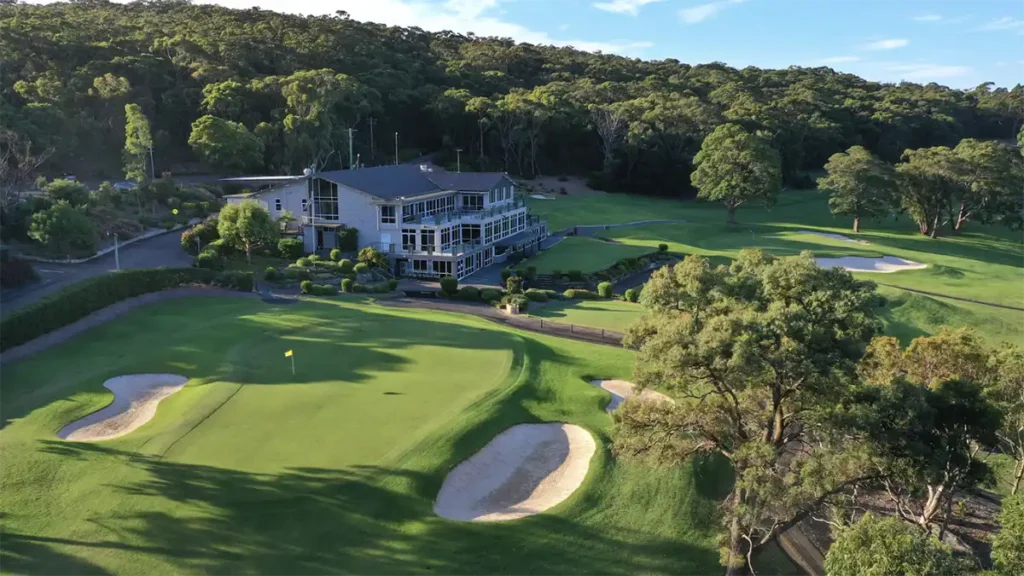
There is a plaque in the fifth fairway at The Australian Golf Club that commemorates one of those Greg Norman moments that seems slightly less believable with every passing year.
During the second round of the 1990 Australian Open, Norman sent a 3-wood rocketing towards the green on the par 5 from 255 metres out. The ball landed, climbed the tier, started taking the break and disappeared into the hole for an albatross.
As fate would have it, tournament broadcaster Channel 7 wasn’t televising the hole. “It was the only hole they weren’t televising,” Norman laughs today.
Of course it was. What survives instead is the story and Norman’s astonishing recollection of knowing, almost from impact, what was about to happen.
“I remember saying to my caddie, ‘Mate, that’s going in.’ I could read it like a breaking putt when it landed on the front-right of the green and was rolling up over the second tier. I knew the break was right to left. I said to myself, ‘That f–ker is going to go in!’”
Thirty-six years later, Norman still owns the 3-wood. A few years ago, he decided to clean out his golf room and sold off thousands of clubs from a playing career for charity. But that one stayed. “I kept that 3-wood. I’ll never forget it. I know exactly which one it is.”
It is a wonderful little window into Australian golf history. It is also what makes the present circumstances so peculiar. The 2026 Capital.com Australian Open will mark 30 years since Norman won the last of his five national championships. Yet when Australian Golf Digest spoke to Norman ahead of this year’s tournament, he said there had been no approach from organisers. No invitation to attend. No request to participate in any form of anniversary celebration.
“Yeah, nothing’s happened,” Norman says. “Nothing. Crickets…”
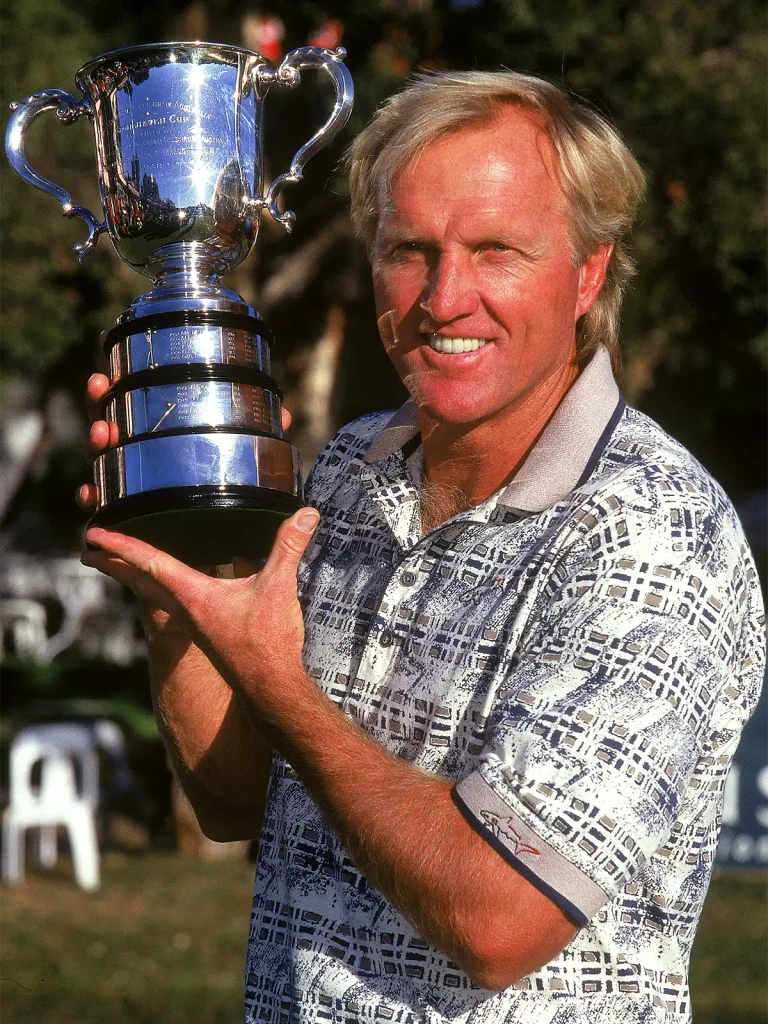
On the surface, it seems like a missed opportunity. There are few athletes in Australian sport whose relationship with their national championship is as significant. Norman hoisted the Stonehaven Cup five times. Whatever anyone thinks of the choices he has made since, particularly his starring and deeply polarising role in the creation of the now defunct LIV Golf, those five Stonehaven Cups don’t disappear. History doesn’t work like that.
Norman believes there is only one explanation for the continuing distance between himself and sections of golf’s establishment.
“It’s purely for my role in LIV Golf; 100 percent it is,” he says. “And to me, that’s always been childish. I never understood that.”
There is some hurt underneath the defiance, although Norman is hardly inclined to dwell on it.
“Has it affected my life? No. Has it affected me, personally, to some degree? Yeah, of course it has because they’ve taken it out on me. That’s pretty clear.”
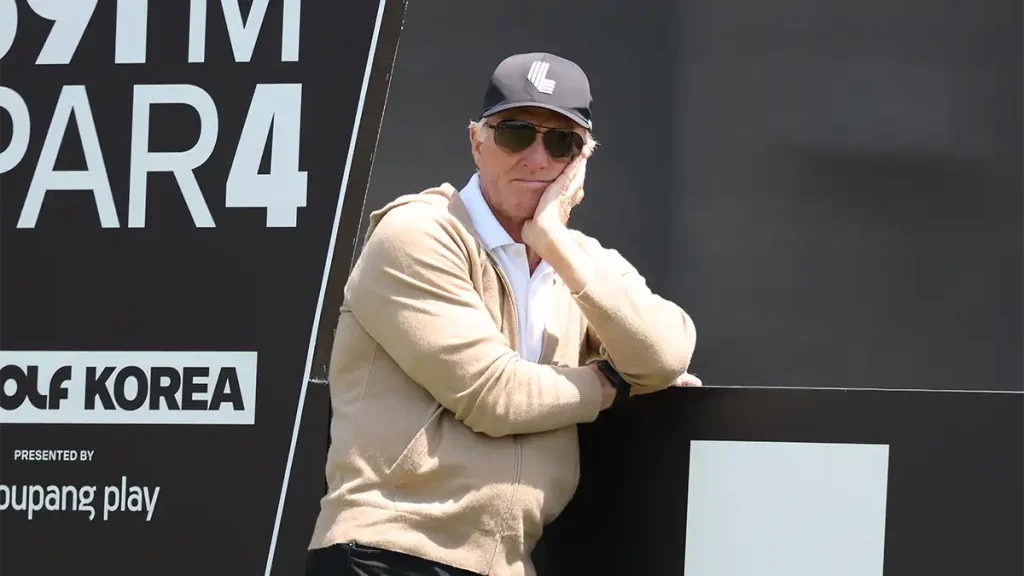
This is where the Norman story remains complicated. For three decades, Australian golf celebrated him as its global flagbearer. Then came LIV Golf. Norman became the lightning rod for the biggest rupture professional golf had seen in generations, taking the blows publicly as the breakaway league challenged the PGA Tour and the sport fractured around it. At the same time, it forced the PGA Tour to respond and re-engage with international markets like Australia that it had abandoned. The ‘strategic alliance’ was suddenly back with a force.
It’s been more than a year since Norman left his post as LIV Golf chief executive. Yet he believes many of the old battle lines remain drawn, even when the original combatants have reason to talk. His argument is not that everybody needs to agree with him. It is that, eventually, grown-ups should be able to sit in a room together.
“I’m happy to sit down and talk to anybody,” Norman says. He points to a private meeting around last year’s Australian Open at Royal Melbourne, when, he says, he sat down with officials and was “very open and helpful”.
That only makes the silence today harder for him to understand. Norman believes his experience inside LIV should make him particularly useful to the organisations that once regarded the league as an existential threat.
“I’m actually at a loss with the PGA Tour,” he admits. “If I was the PGA Tour, I’d be trying to hire every former LIV executive that I possibly could – to poach all the ideas, right? What’s wrong with taking me out for dinner and just saying, ‘Hey, how about an off-the-record discussion?’”
That is very Norman.
Now 71, the instinct to argue his case has hardly softened. Neither has his belief that LIV changed professional golf for the better: “We did the game of golf the world of good, particularly in Australia. It’s as simple as that.”
He points to the PGA Tour’s renewed enthusiasm for markets like Australia, increased player wealth, investment, innovation and changes in television coverage as part of LIV’s legacy.
“Players are getting more money, and players have got more say because of LIV Golf,” Norman says. “You won’t win a debate with me on that.”
Norman light-heartedly suggested a TV debate with his LIV nemesis, Rory McIlroy – the Australian Open’s drawcard this summer – would have made for a ratings bonanza.
Indeed, the fallen LIV Golf remains a subject capable of turning otherwise civil golf conversations into something resembling Question Time. But this anniversary begs a different question. Does any of that alter what Norman did for Australian golf? It shouldn’t.
The curious thing is that Norman is hardly detached from the country or its golf future. He remains actively involved in significant Australian golf course projects, including one directly involved with the Australian Open itself. Rather ironically, he’s the man charged with redesigning North Adelaide Golf Club, which will host the national open from 2028 under a long-term deal with the South Australian Government. The championship will alternate each year with the women’s Australian Open, meaning there will be at least three men’s and three women’s opens held in Adelaide between 2028 and 2034.
“I’m very proud of what we’re building at North Adelaide,” Norman says. “It’s going to be a very different golf course to anything I’ve ever built. I won’t reveal why just yet, but I’m so excited about it.”
There is also work at Melbourne’s Capital Golf Club, where the permit for a major redevelopment had arrived shortly before our chat. Add some upgrade work to Victoria’s Cathedral Lodge and Ellerston in the New South Wales Upper Hunter region, not to mention his monthly trips back home as a member of the board of directors for the Brisbane 2032 Olympic and Paralympic Games Organising Committee, and it is difficult to portray Norman as a man who has turned his back on Australian golf. Nor has his affection for its great courses diminished.
This year’s Open returns to Kingston Heath, a place Norman describes, without hesitation, as “one of my top golf courses in the world”. His praise becomes particularly animated when the subject moves to its par 3s. “It’s got the best set of par 3s, without a drop of water on them, in the world. You won’t find a collection any better than that, anywhere.”
Norman also believes the Australian Open needs what it has always wanted: great international players alongside the best Australians.
“You always need the international players to come down to Australia,” he says. “That’s where it was just before my time, with Jack [Nicklaus], Gary [Player], Arnie (Arnold Palmer) and Seve [Ballesteros]. The tournament needed those guys back then and it needs today’s top players now. Here’s hoping the momentum continues.”
Which brings us back to that plaque at The Australian Golf Club. Golf is unusually good at remembering. We put plaques in fairways, inscribe names on honour boards and preserve clubs in glass cabinets. We tell stories about shots decades after they were struck and argue about them over beers as though they happened yesterday. But remembering history also means accepting all of it, including the people who became inconvenient along the way. Greg Norman’s relationship with golf’s establishment is complicated. His relationship with the Australian Open shouldn’t be.
Decades removed from his halcyon days, Norman can still see that 3-wood approaching the fifth green at The Australian. And somewhere, safely stored among the possessions Norman decided mattered enough not to give away, is the club that hit it.
Perhaps that is the uncomfortable truth as Australian golf prepares to celebrate another momentous national championship. The history is still there. So, too, is the name Greg Norman. Sadly, for fans and the tournament itself, his invitation got lost in the post again.
MILESTONE MAN
This year marks 30 years since Greg Norman won the last of his five Australian Open titles. The Shark romped home in the 1996 edition by eight shots over compatriot Wayne Grady at The Australian Golf Club. It also marked Tiger Woods’ first trip to Australia, with the American finishing in a four-way tie for fifth. Incidentally, 2026 also marks 50 years since Norman’s first ever professional victory, which came at the 1976 West Lakes Classic.
“Oh, is it really?” Norman asked when we reminded him. “Jesus. Yeah, that’s right. You don’t think about that s–t at my age!”
Photographs by getty images/Chung Sung-Jun