Birdies Pro Shop at Seabrook Golf Club is run by two female operators who are transforming how golfers are playing in Tasmania.
The front door of Birdies Pro Shop swings open to the sound of laughter, locals popping in to say hello and the regulars reporting back on the misery and joys of their round. Behind the counter, Samantha Cotton and Hannah Mackay are juggling it all, serving customers, taking bookings and trading banter as easily as they once swapped stories in their old careers in HR and managing an operating theatre.
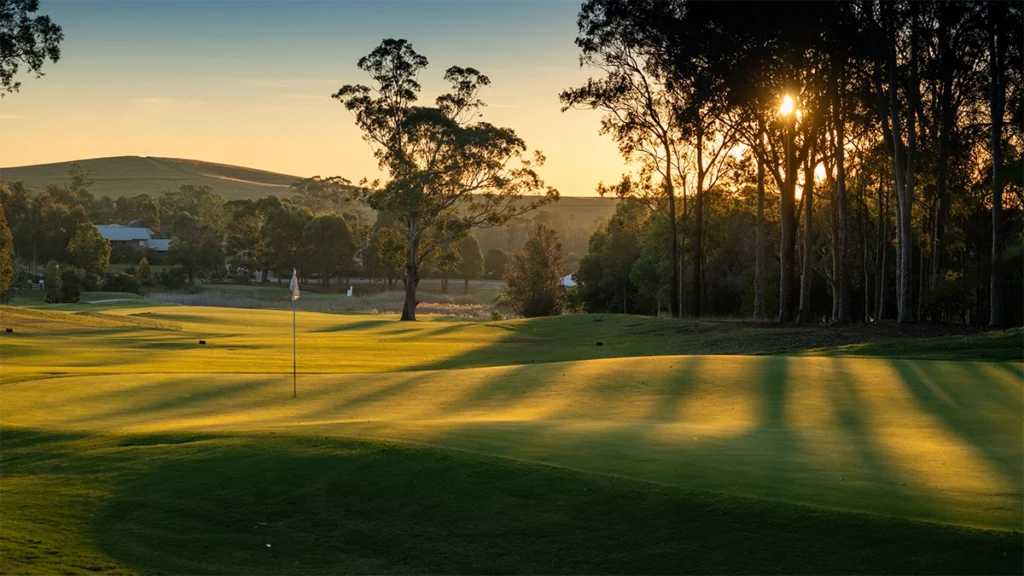
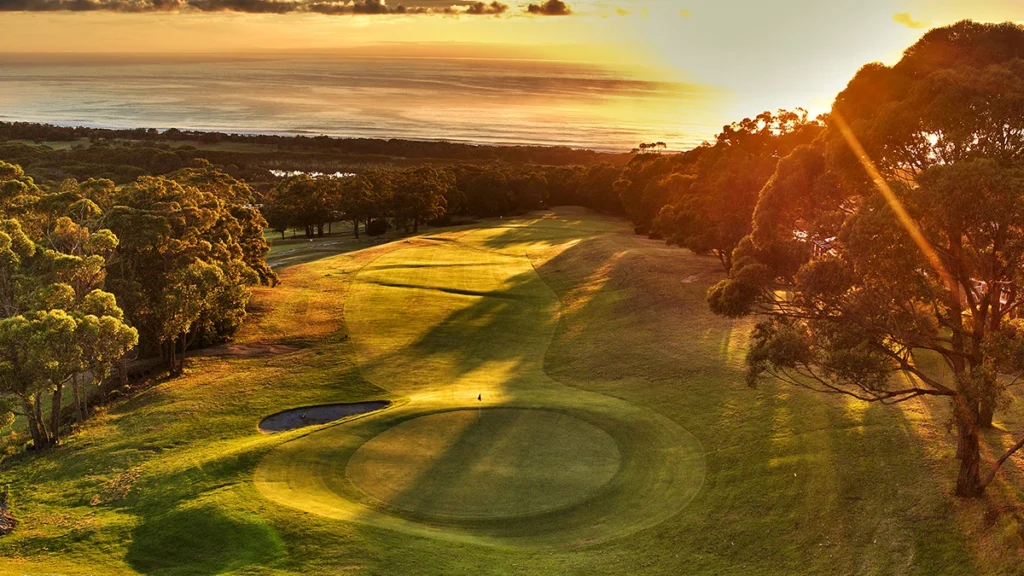
Two hours’ drive north-west of Launceston, a coastal pathway hugs the shoreline, waves crashing just beyond the carpark at the charming 11-hole Seabrook Golf Club. Inside, a quiet revolution is underway. Birdies isn’t your typical pro shop. It’s dog-friendly, pram-friendly and, most importantly, people-friendly. Here, every golfer is welcomed, whether they’ve turned up with just one club or are chasing scratch.

For Sam and Hannah, the pro shop at Seabrook Golf Club is more than a business. It’s a chance to reshape the culture of golf in one of the most traditional corners of the game. Birdies Pro Shop wasn’t born from a carefully calculated business plan. It started, as many of the best ideas do, over twilight golf and a couple of post-round drinks.
The pair first met at work, Sam in human resources, Hannah managing an operating theatre in nursing. Their careers collided professionally, but it was golf that drew them closer as friends.
“We started working together from that sense and then realised that we both were playing golf and we’re like, ‘Oh, well we’ll go play golf after work,’” Sam says. “And we both love it. The game – really passionate about it.”
For Hannah, who had been playing just a few years longer, those rounds after work became more than just a way to unwind.
“We started playing in summer and so it was daylight savings, we were just playing lots of golf,” she recalls. “And over a few beers we thought, Wouldn’t it be so cool if we could potentially do this for a job? Wouldn’t this be great fun?”
At the time, it was nothing more than wishful thinking. But that offhand dream quickly became something more tangible when the club’s resident pro resigned to take a job in Hobart. Suddenly, an opening appeared, and with it the chance to turn the dream into a bold new reality. Within two weeks, Sam and Hannah had gone from daydreaming to presenting a formal proposal to the club’s board.
“We were making a decision, putting a proposal to the board to say, we want to take this on and take this opportunity and here’s how we think that we can make sure this place succeeds,” Hannah says.
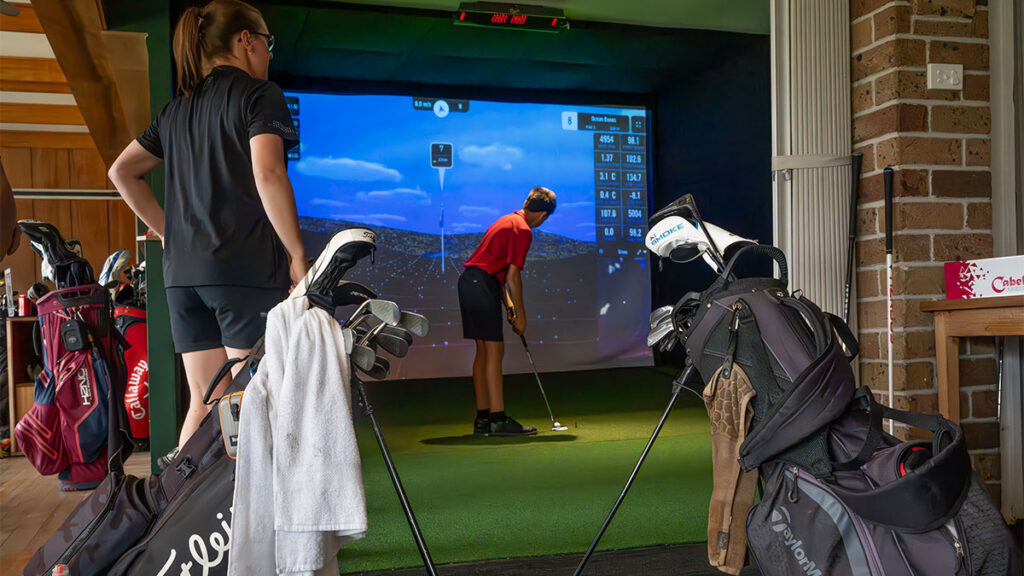
Their pitch was bold. Neither of them were PGA professionals, but they offered a fresh vision: move the pro shop into the clubhouse and install two state-of-the-art simulators, a significant financial investment with the aim to keep members engaged year-round and attract new people to the game. The board’s response was telling.
“They said they wanted someone who loves the golf club and is passionate about golf,” Hannah explains. “So they were more than happy despite us not being professional golfers… they kind of put their faith in us as well.”
It was a leap of faith on both sides: two women stepping into one of the most male-dominated corners of the sport, and a regional Tasmanian golf club betting its future on their energy and ideas.
From the outset, Sam and Hannah knew they were up against it. Golf shops in regional Australia are almost always run by PGA professionals, and the image of two women stepping into that world, without decades of tour or teaching experience, raised a few eyebrows.
“Elephant in the room,” Sam says frankly. “Two women taking on a generally male-dominated sport, especially in a regional area of north-west Tasmania. There were a few murmurs: ‘How’s it going to go?’ ‘Will guys be happy to chat to you?’”
Instead of shying away, they leaned in. Their backgrounds in HR and healthcare gave them transferable skills – organisation, problem-solving and people-first communication – that shaped the shop from day one. And with Aiden Withers, the former pro, showing them how to re-grip and repair clubs in late-night lessons, they quickly proved they weren’t afraid of the practical graft either.
Financially, the endeavor was no small gamble. From installing the simulators and refitting a brand-new shop, to bolstering the stock on hand to serve the local and broader community, for their first year, every cent went back into their passion project. Now, the investment is paying dividends, turning Birdies into something much bigger than a pro shop.
Once the doors opened, the learning curve was steep, but the results came quickly. Sam and Hannah weren’t content to simply run a shop. They wanted Birdies to feel alive, to be a place golfers came not just to buy balls or book a round, but to connect, compete and belong.
The simulators proved to be a game changer. Installed at a cost that would make most small business owners sweat, they became a lifeline for Birdies, keeping locals swinging through Tasmania’s wet winters and drawing in people who might otherwise never have set foot on the course. “The simulators go crazy in winter,” Hannah says. They provide a quick option for time-poor parents to play as well as getting kids involved, even welcoming school groups to hit the driving range.
They quickly found that their biggest strength wasn’t elite golf knowledge, it was relatability. “For us, the average golfer isn’t a scratch golfer,” Sam explains. “The average golfer plays off 25, comes around on a Saturday, has a great time… and they can relate to us because we’re the same.”
That approach built trust. Locals started seeing Birdies not as an intimidating pro shop, but as a hub where every player, from the weekend hacker to the low scorer, is welcome. The community is now well and truly buying in.
And then came the Birdies Super League.

SUPER-SIMS
If the simulators were Birdies’ boldest investment, the Super League has been their most playful innovation. Think of it as golf re-imagined, competition with a twist, designed to bring people together and make the game less intimidating.
“That’s my baby,” Hannah laughs. “We’re in our third season now. We had 22 teams in the two-person ambrose.”
The format is simple: weekly matches on the simulators, complete with a custom handicap system. It’s attracted everyone from casual, once-a-month golfers to players who had never joined a club before.
“I think almost the target market for that is the person who calls himself a golfer who plays maybe once a month with their mates on a Sunday or likes to go out for a hit every now and then,” Hannah explains. “This gets them in every week to play with their mates. We have a bunch of guys who don’t play golf outside, but they love sim golf.”
The competition has already created its own momentum. Players who started in the Super League are now signing up as full members at Seabrook. While others in the town of Smithton, an hour’s drive west, built their own simulator setups in sheds at home just to join the fun.
“It’s actually become a really good entry point for people,” Sam says. “Because sometimes if you don’t know, the course can be daunting. What’s the rules? Where can I go? How do I score?”
By turning golf into something social, flexible and fun, the Super League is doing exactly what Birdies set out to achieve: make the game feel open to everyone.
At the heart of Birdies is a mantra the duo repeats often: golf for all. It’s more than a catchphrase, it’s the lens through which they run everything, from stocking a wide range of gloves in women’s sizes to setting up school holiday programs.
“Our motto is golf for all,” Sam says. “We don’t care if you’ve gone to the tip shop and got a bunch of $2 clubs, you’re more than welcome to play on the course. Or if you’re a plus-2 golfer. Everyone’s treated the same.”
That belief filters through the club culture at Seabrook. Forget collars and rigid dress codes. “As long as you haven’t got your work boots on the greens, we’re pretty happy,” Hannah says.
The course itself is designed to be fair and flexible, with men and women playing the same pars, and the shift away from “ladies’ tees” towards short and long setups removing unnecessary barriers.
Inclusivity for them also means accessibility. From free junior memberships to discounted emergency services memberships, the goal is to widen the game’s reach. “It can tend to be a really old person’s sport,” Sam admits. “You’re 36 and you’re considered young. But here, we’re making sure there’s a home for everyone.”
That vision ties everything together, from the light-hearted banter in the shop to the competitive buzz of the Super League. Birdies is about building an environment where golf feels welcoming, not intimidating.
For Hannah, golf has always been more than a scorecard. As a former manager in an operating theatre in healthcare, she understands stress, burnout and the importance of resilience. “I thought, I need to do something for myself to help with balance,” she recalls. “I actually came out and bought a lesson package from the local pro. It was for stress. I didn’t want to be as stressed, and that’s why I’m passionate about it now.”
The beauty of golf, she explains, is that it switches the mind off. “Weirdly enough, you can play a whole round of golf and the only thing you think about is what the ball’s doing. That’s the benefit.”
Sam agrees, noting how the game’s flexibility makes it different from team sports. “Golf’s ready when you’re ready. It doesn’t expect you to be there unless you want to. And I love that. You put your phone in your bag, worry about the ball for four hours, and then return to life.”
For both women, the shop is an extension of that philosophy, a space where people can walk in and feel like it’s their happy place. Whether it’s a quick chat, or just being recognised by name, Birdies offers the kind of environment where wellbeing is built into the culture. That health-first mindset dovetails with Birdies’ role in strengthening its regional community. They also extend their support well beyond Seabrook.
“We support Wynyard, Penguin, Burnie, Ulverstone, Stanley…” Sam says. “Some of these clubs only have 20 or 30 permanent members, all volunteer-run.”
Inclusivity and accessibility are always at the core. Whether it’s a mum encouraged to take a swing while her kids try the simulators, or a newcomer easing into golf through the Super League, Sam and Hannah are quietly reshaping what golf looks like in regional Tasmania.
When the duo first floated the idea of running Birdies, plenty of people questioned whether two women without PGA qualifications could succeed in a space so traditionally male and so entrenched in habit. But that didn’t scare them.
“It was such a big backing,” Sam admits. “There’s no other girls taking this on down here, especially as a two-person operation.”
Yet that choice has proven powerful. By trusting their instincts, investing heavily and leaning on their transferable skills, the pair have built more than a pro shop. They’ve built a community hub, a safe space and a new model for what golf in regional Australia can look like.
They’re not finished, either. Sam’s applying for the PGA Pathway Program, Hannah’s vision for inclusivity, and their shared drive to reshape the culture of golf, all signal that Birdies is just getting started. Change doesn’t come easily in a sport bound by tradition, but at Seabrook, it’s happening.
From stress relief to junior programs, from simulators to Super Leagues, Birdies is proof that the game’s future doesn’t just belong to those who fit the mould, it belongs to those brave enough to challenge it. And despite the odds, Sam Cotton and Hannah Mackay are proving that from here their small ripple of change is being felt throughout the broader community.