Australian Golf Digest
Results for "Rules Review"
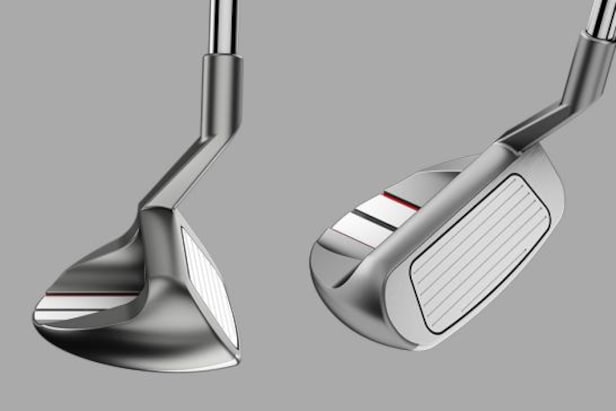
Rules Review: My friend still uses a ‘chipper’ club. Are they legal?
Chippers like the one you see here comply with equipment rules and can be used in competition. Where you might get confused is that it’s against the rules to use a “two-way” chipper.
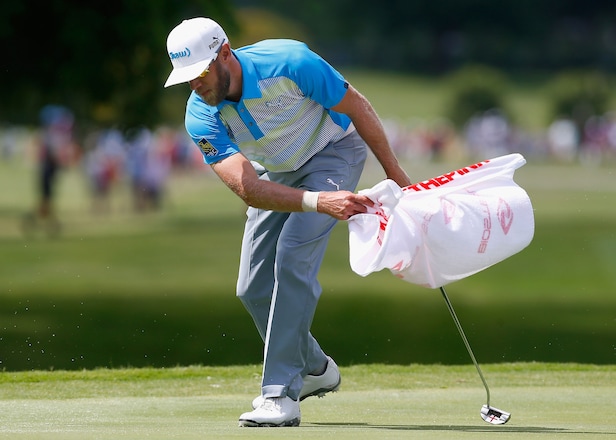
Rules Review: Is it a penalty to brush sand that’s on your line near the green?
Sand is not considered a loose impediment unless it’s on the green.
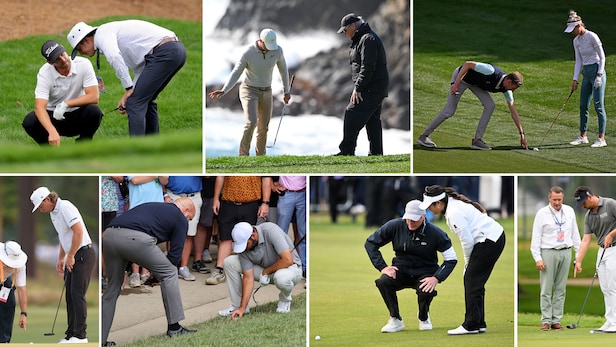
Rules Review: Are you allowed to do that? Take our latest rules quiz and find out
We’ve put together our latest 10-question quiz to take you through some potentially confusing but not uncommon situations on the golf course.
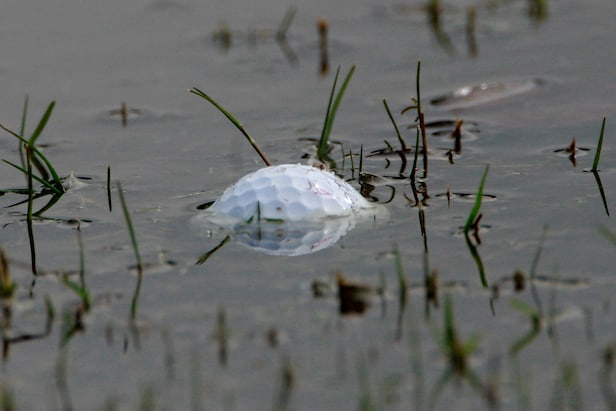
Rules Review: I want to grab a ball in a penalty area to see if it’s mine. But how do you mark a ball under water?
As always, there’s an answer in the Rules of Golf for this watery situation.
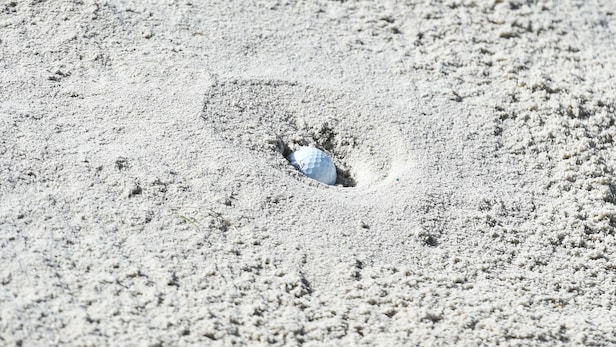
Rules Review: My ball plugged in the sand. Can I take an unplayable and drop outside the bunker?
A fried-egg or nearly completely buried lie might give you pause as to what to do next, especially if you have a high lip in front of you. Can you get under the ball enough with your sand wedge to loft it out of the bunker? It’s a dilemma that might leaving you wondering about your options.
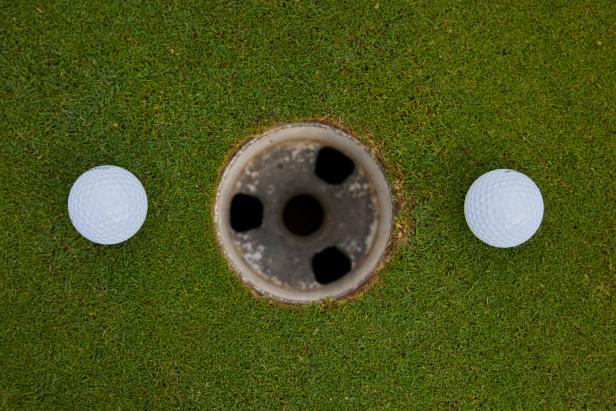
Rules Review: Who plays first when two balls are equidistant from the hole?
It’s actually not a big deal or something you need to call the pro shop to help make a decision.
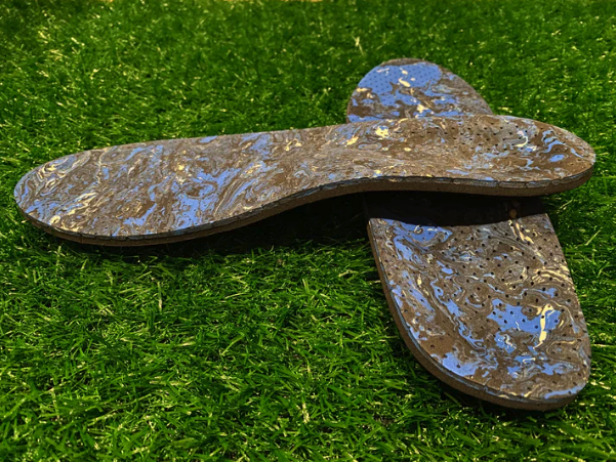
Rules Review: Can you be penalised for wearing orthotics?
Could a golfer put inserts in his or her shoes that would help prevent swaying or sliding during a swing?

Rules Review: I conceded a stroke thinking it tied a hole, but it gave my opponent a win. What now?
What happens when you concede an opponent’s putt thinking you tied the hole, only to find out he or she holed out in one fewer strokes than you? In short, it depends on what transpired leading up to the gaffe.
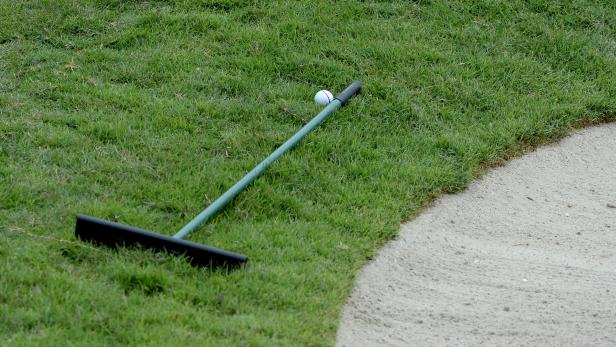
Rules Review: My ball is up against a bunker rake. Where do I play my next shot from?
Rule 15.2a covers this topic, as a bunker rake is considered a moveable obstruction.
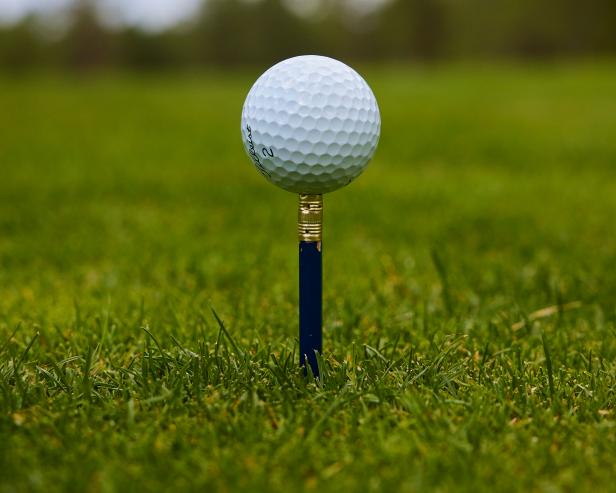
Rules Review: To get more height on his drives, my mate uses a pencil to tee his ball. Is that a penalty?
It’s within the rules to use any object to prop a ball up in the teeing area – provided it complies with the definition of a tee in the Rules of Golf and can be used in a way that complies with Rule 6.2(b) and the Equipment Rule outlined in Part 6 (1.).
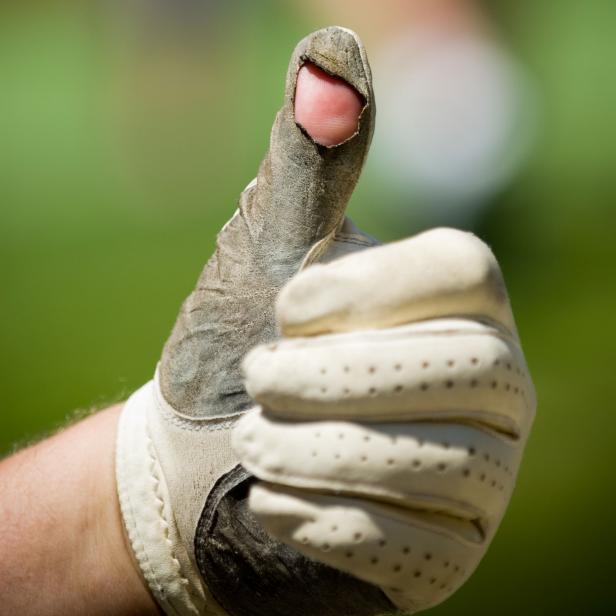
Rules Review: Can you be penalised for putting tape on a golf glove?
Under Rule 4.3a, you can’t use equipment (other than a club or ball) that artificially eliminates or reduces the need for a skill or judgment that is essential to the challenge of the game.

Rules Review: My opponent drove in front of me and I hit his golf cart. Who gets the penalty stroke?
While you get a pass if you accidentally deflect or stop a golf ball, the same is not true if you do it on purpose.
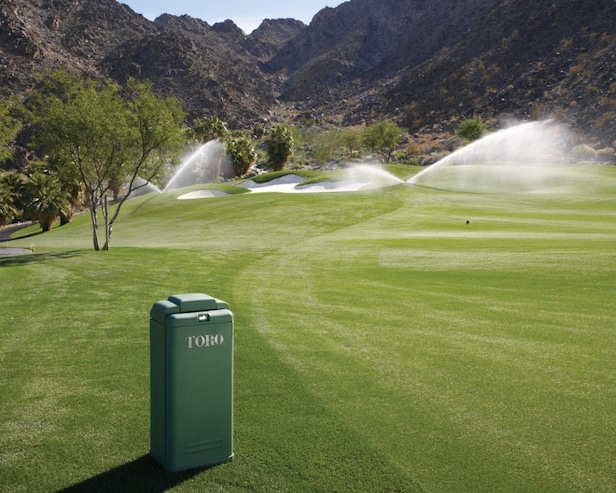
Rules Review: Tour pros get relief from grandstands all the time. So why can’t I move my ball when it’s behind an electrical box?
Rule 16 outlines relief from abnormal course conditions. It covers what you can and can’t do when encountering immovable obstructions on the golf course.
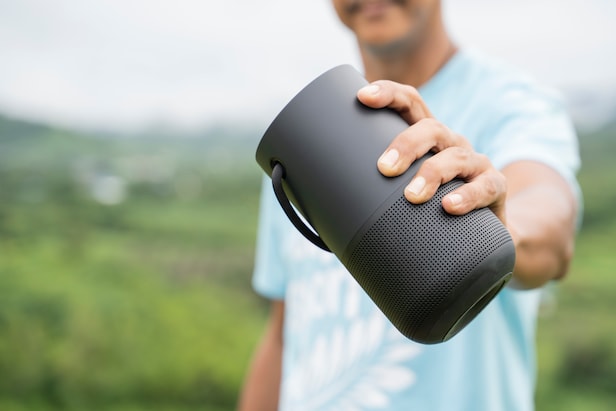
Rules Review: Can you be penalised for playing music on a golf course?
Setting aside any annoying aspects of hearing music on a golf course, especially when it’s a genre of music you don’t like, you might be wondering if it’s ever in violation of the Rules of Golf to listen while playing a round.

Rules Review: It’s one of the most loathed rules in golf. So why can’t you take free relief from a divot hole?
Although the R&A and USGA, golf’s governing bodies, have considered on various occasions handling divot holes in another manner, there is no “practical solution” other than to leave it as just a part of the game.

Rules Review: Our match is going to extra holes. How do handicap strokes apply now?
Rule 3.2c (2) in the Rules of Golf covers this scenario.

Rules Review: If I narrow my stance, I’ll be stepping on a sprinkler head. Can I take relief?
Be prepared to defend your intended choice of club, stance or swing when trying to take relief from a drain, sprinkler head or any artificial objects such as cartpaths, irrigational control boxes, etc.

Rules Review: I took a drop the old way from shoulder height. Is that a penalty now?
What happens if you forget to drop from knee height? The good news is that as long as you catch yourself before you go on to play your next stroke, you can correct the mistake without penalty.

Rules Review: My ball is just outside a ‘no-play zone’. Can I stand in it to hit my shot?
As golf courses have become more eco-friendly, there is a good chance you’ll soon encounter, if you haven’t already, an area marked as a “no-play zone”. The term was added to cover a number of marked areas of the course where your ball is not out-of-bounds, yet you’re not allowed to hit a shot.

Rules Review: How can I possibly know ‘exactly’ where my ball crossed into a penalty area?
Here is what the Rules says about it – and the good news is you get some benefit of the doubt.