Australian Golf Digest
Results for "Rules Review"

Rules Review: If you tell your match opponent how you intend to play your next shot, can you change your mind?
Are you required to declare what type of shot you are going to play when asked? Here’s a scenario that you might find interesting.
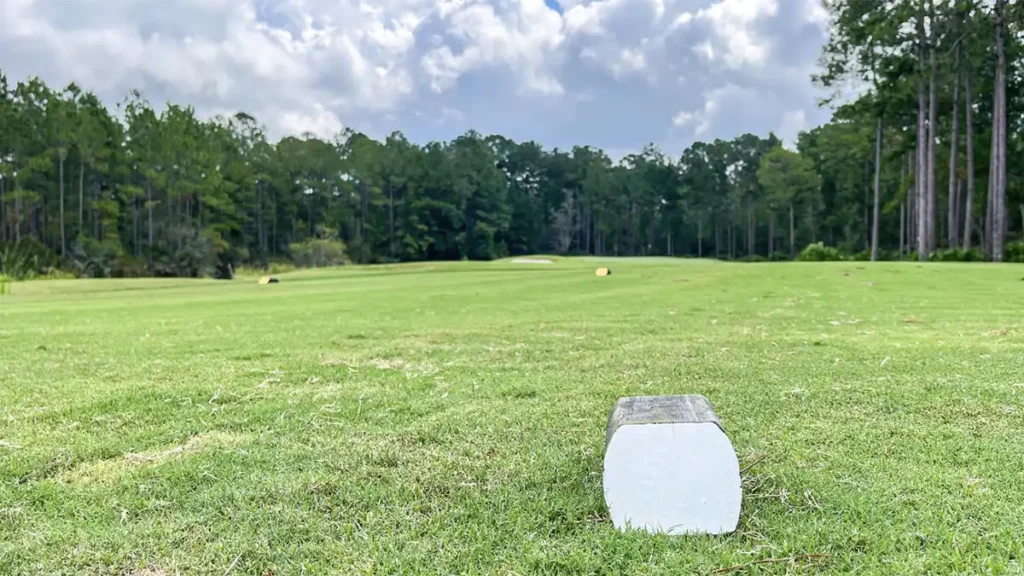
Rules Review: Can you improve conditions in the teeing area before hitting your drive?
Unlike after you put your ball in play on a particular hole, you are allowed to alter the surface of the teeing ground to your benefit in one of four ways.

Rules Review: In foursomes, can a player purposely miss so his or her partner can hit?
A clarification to Rule 22.3 covers this scenario.
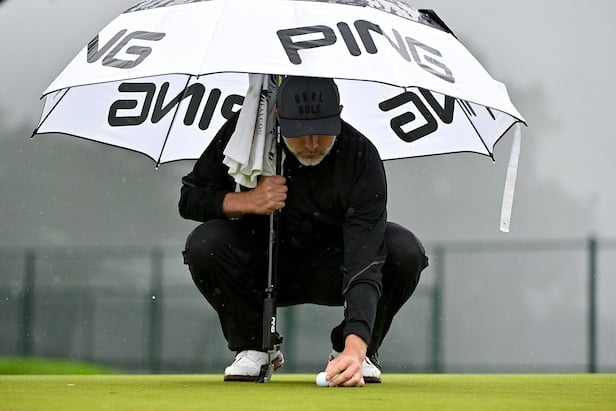
Rules Review: Before replacing my ball, I checked to see how wet the green was with my palm. Is that a penalty?
There are things that are OK to do on the green even though it’s considered testing the surface.

Rules Review: If the ball doesn’t move, can you rotate it on the green without marking it first?
A clarification within Rule 9.4 (9.4b/1) says you can’t deliberately touch a ball even if it doesn’t move from its spot.
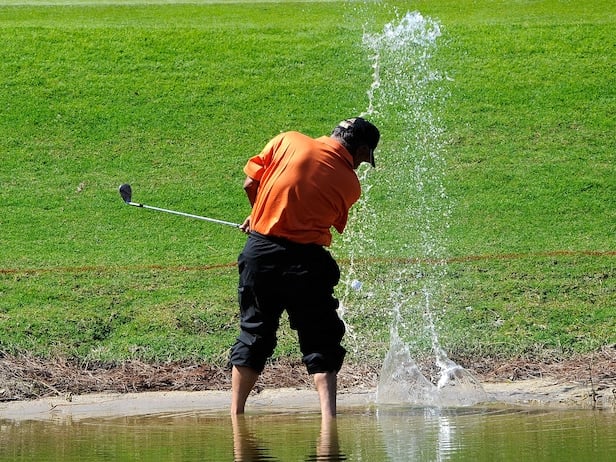
Rules Review: You played from inside a penalty area and hit it OB. Do you have to play again from the same spot?
Assuming it was your tee shot that landed in the penalty area, let’s play the what-happens-now game and walk through your options and what your score would be.
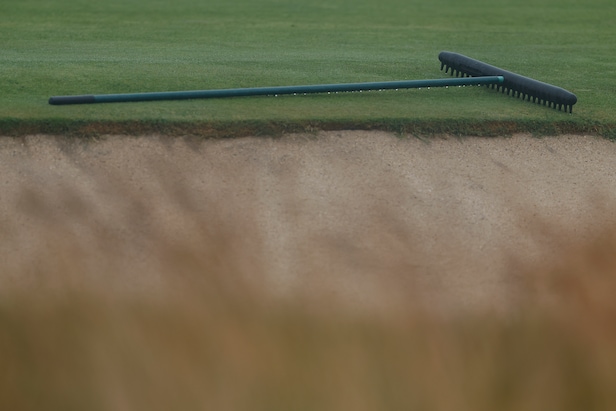
Rules Review: You know a rake will stop your ball from going in a bunker. Do you have to move it?
Whether you’re in line for a potential penalty or not in this situation, it comes down to who left the bunker rake in the position where it could be used as an advantage.
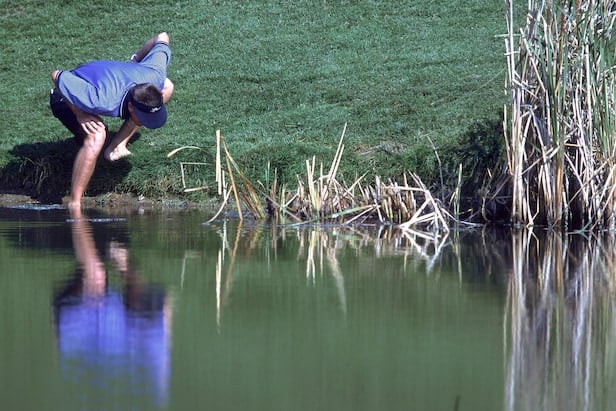
Rules Review: My ball is on the edge of a pond with no penalty-area markings. Is it in or out?
What do you do when you hit a ball on the bank of unmarked penalty area? What do you do when you hit a ball in the middle of an unmarked penalty area? What do you do when your ball is sitting in a dry creek bed or ditch? We answer all three with a review of what is and what isn’t a penalty area.

Rules Review: My opponent just broke two rules before hitting his ball. How do you handle this?
What do you do when someone breaches a rule and then breaches another rule as part of their next stroke? It depends on the format, but this scenario is not as egregious as it might seem.
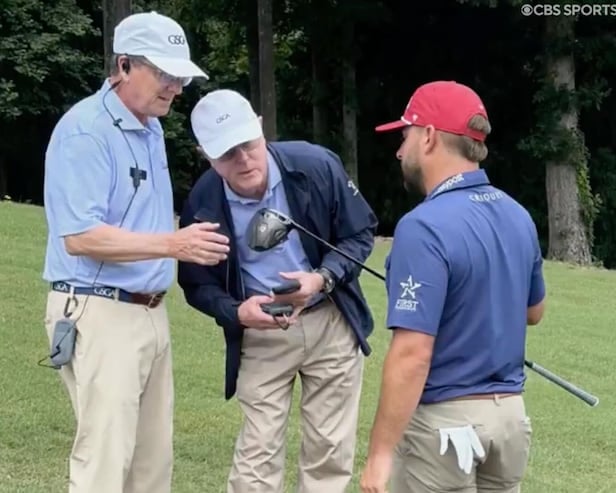
Rules Review: My driver started rattling. Can I replace it during a round?
When Stephan Jaeger’s driver started acting up mid-round at US Open qualifying, officials ruled he couldn’t swap it, the damage wasn’t obvious enough. Here’s what actually counts as “damaged” under the Rules of Golf, and what you can and can’t do about it mid-round.
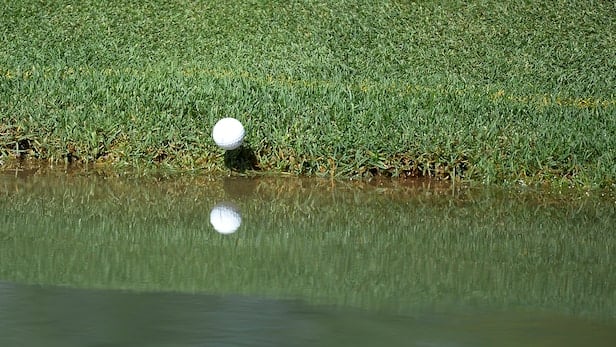
Rules Review: Before chipping my ball, a wind gust blew it into the water. Do I have to take a penalty?
This situation falls under a term that became new to golf’s rule book from 2019: “natural forces”.

Rules Review: He didn’t use a club to move his ball marker. Is that legal?
It’s crucial to get it right when you’re asked to move your ball on the putting green or elsewhere. It’s so important, the Rules of Golf has specific recommendations on how to do it under Rule 15.3/1.
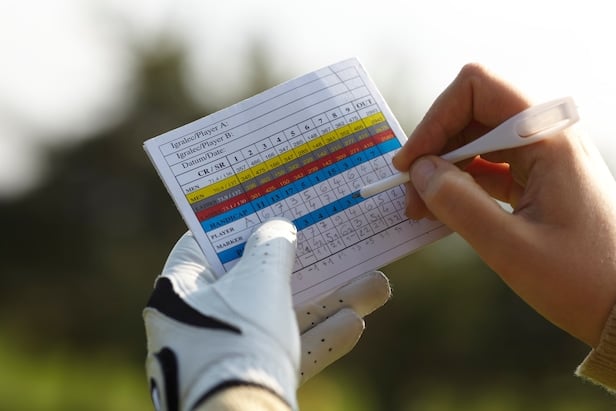
Rules Review: What happens when someone reports an incorrect score and it impacts a match?
What happens in matchplay when the wrong score is given on a hole or holes and it impacts the outcome? Here’s what you need to know about Rule 3.2 and how to proceed if it happens to you.
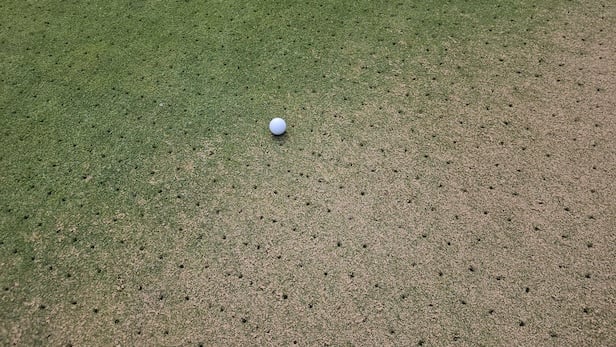
Rules Review: They just aerated the fairways and greens. Can I take relief from all these core holes?
If your putt is bumpy as a result of cored greens, or your chip takes a sideways bounce on its way onto a green, unfortunately, that is just part of the game.

Rules Review: His dropped ball rolled closer to the hole. He claims it was a legal drop and played on. Was he right?
Dropping correctly can still catch out golfers who don’t know the intricacies behind the rules involved.

Rules Review: His partner was late for their match but acted as a caddie on the first hole. Can he do that?
His partner was late to their four-ball match but jumped straight into caddie duties, cleaning clubs, reading putts, giving advice. Is that actually allowed under the Rules of Golf?

Rules Review: You’re on the green in regulation (congrats). Here’s a quick guide to putting-green rules
You might know some rules on the green, but did you have the right answer to all these questions?

Rules Review: My ball ‘might’ be in a pond, but I can’t find it. Can I just take a drop, add a penalty stroke and move on?
Rule 17.1c covers this common scenario.
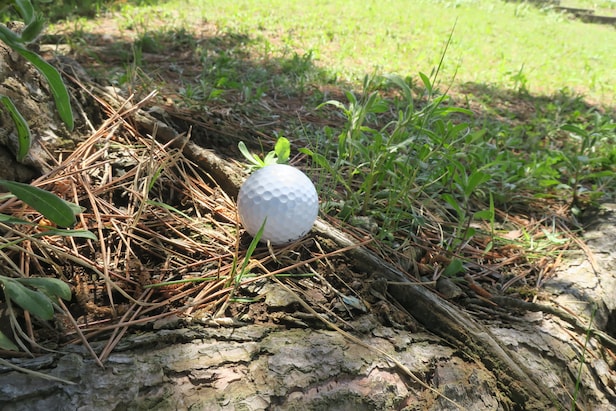
Rules Review: A tree is in ground under repair, but my ball is next to a root outside the marked area. Do I get relief?
When it comes to hitting a shot off or next to a tree root, the decision to try definitely boils down to motivation.
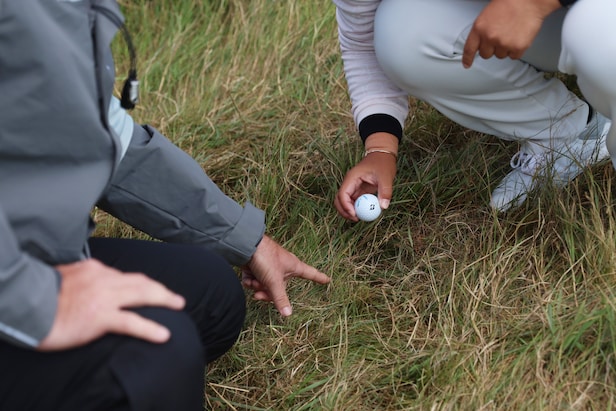
Rules Review: We asked the pro for a ruling and he got it wrong. Can we correct the mistake if it impacted our match?
What if that decision led to a different outcome than would have happened if the correct ruling was applied? Here’s what happens.