Rule 8.1 in the Rules of Golf is pretty clear in what constitutes a penalty for “improving conditions affecting your next stroke.” The underlying principle is that the rules makers want you to play the course as you find it in most cases.
For example, if you’re about to chip on a green and there’s a weed growing between your ball and the fringe on your line of play, you’re not allowed to rip it out. If it happens to make your ball bounce off line, that’s just a tough break. Similarly, you can’t move an out-of-bounds stake if it interferes with your stance or swing, and you can’t press down with your club in a way that removes interference or improves the conditions of your next shot. Remember Bryson DeChambeau at the 2026 Open Championship at Royal Birkdale? Or how about just last week and Rory McIlroy at the DP World Tour event in Abu Dhabi?
It’s also a big no-no to adjust a tee marker for your benefit—even one that is not aligned properly with the fairway has to be left untouched. You should, however, let the pro shop know it needs to be corrected for players who are following your group.
More Rules Reviews from Golf Digest  Rules Review Rules of Golf Review: He rotated his golf ball without marking it. He says it’s OK because he didn’t lift it. True? Ron Kaspriske – Jun 10
 Rules Review 6 commonly misunderstood rules you should know Ron Kaspriske – Oct 29
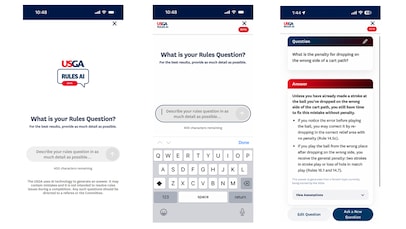 Technology Got a rules question? The USGA is harnessing AI technology to get you fast, accurate answers Ryan Herrington – May 27
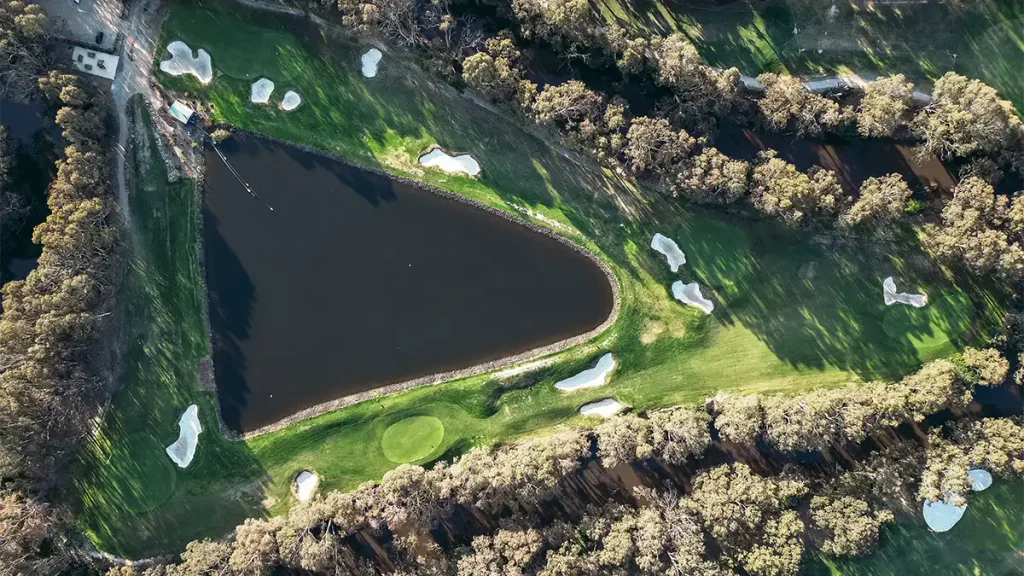
Speaking of the teeing area, you’ve probably encountered your fair share of boxes that are pretty chewed up or otherwise poorly maintained. It’s why the pro tours often put netting down on areas of tee boxes during practice rounds to help preserve their quality.

Warren Little/R&A
When you encounter a teeing area that leaves a lot to be desired, you might wonder if Rule 8.1 comes into play. For example, if a divot hole is right where you want to stand to hit your drive, could you fill it with sand before teeing off to help improve your stance? What about un-cut grass that’s too high or weeds? Can you rip them out? What if it just rained and it’s wet and muddy, and you’re afraid you might slip when you swing (you should have worn your golf shoes with cleats)? Can you attempt to soak up the water with a towel or spread some divot sand down for better traction?
The answer to all of this is yes, and it’s outlined under Rule 6.2b(3). The difference is that unlike after you put your ball in play on a particular hole, you are allowed to alter the surface of the teeing ground to your benefit in one of these four ways:
(1) Alter the surface of the ground (such as by making an indentation with a club or foot).
(2) Move, bend or break grass, weeds and other natural objects that are attached or growing in the ground.
(3) Remove or press down sand and soil.
(4) Remove dew, frost and water.
If you were to do anything else that would improve conditions affecting your tee shot, however, you would be in violation of Rule 8.1 and that comes with a two-stroke penalty. Just ask Bryson and Rory.
MORE GOLF DIGEST RULES REVIEWS
What do I do if my ball just hit another ball on the green?
What happens if my three-minute search for a lost ball gets interrupted?
I hit myself with my own ball. Is that a penalty anymore?
My ball ‘might’ be in a pond, but I can’t find it. Can I drop, add a penalty stroke and move on?
What exactly is an embedded ball?
Can you get relief from aeration holes?
Does a ball have to be unplayable to declare it unplayable?
I accidentally hit my ball with a practice stroke … does it count?
I’m on the green. My opponent is not. Who’s away?
My opponent dug his feet in a bunker, got another club and did it again. Is that legal?
I bent my putter and it actually works better. Can I still use it?
This article was originally published on golfdigest.com