Like jury duty, colonoscopy prep and collabor-dating, we find ourselves again at the “if we must” major, the PGA Championship. Fortunately, it returns this year to a course with what they used to refer to as “character,” as in cheesesteaks, soft pretzels and “wooder ice.”
Just outside Philadelphia, Aronimink Golf Club will host for the first time in 64 years, reintroducing major championship golf to its beastly self. Back in 1962 it played at 7,045 yards, which probably seemed like 26.2 miles to eventual champion Gary Player, the hero of our story and the source for the feckless tomfoolery that makes up my usual major championship prediction.
Because I don’t have a logical system for predicting the winners of majors (my woeful record reflects that), I’ve naturally decided that the only real way to predict the future is to microdose the past, specifically the ancient past of Gary Player, the man the Associated Press so capably described in 1962 as “a precise little South African who thrives on brains, wheat germ and unbelievable putts.”
To find inspiration, I dug into a little book buried in my hall closet that had been excavated for an upcoming house move. Gary Player’s Positive Golf conveniently included a subscription card for “the magazine that creates conversation wherever golfers congregate.” Just as true of Golf Digest then as it is today, that annual subscription ran you $3 back in 1962, which in 2026 dollars is about the price of your Golf Digest+ subscription. Name something else that’s held its value like that since the 1960s. That’s right. Gary F-ing Player.
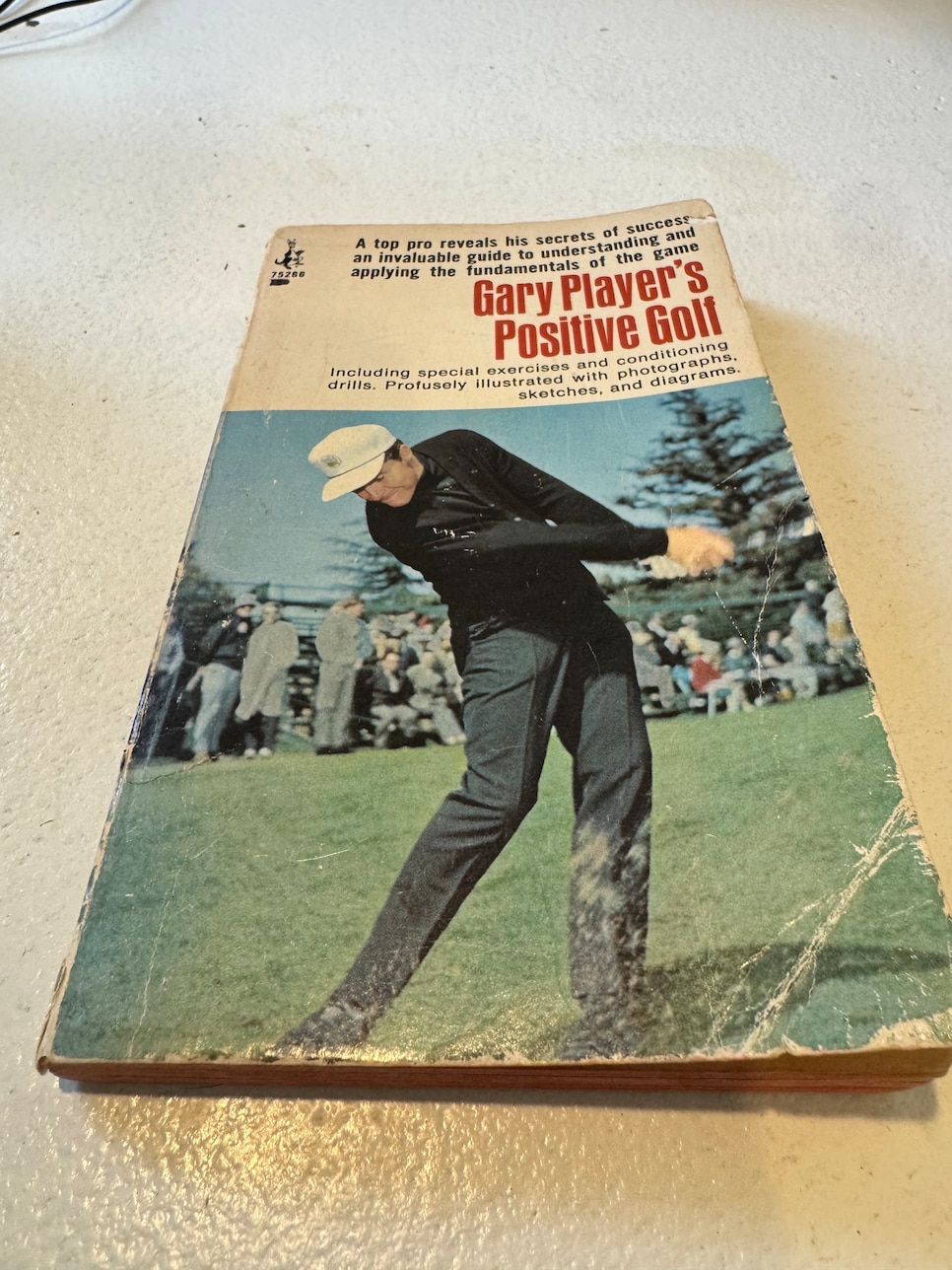
There’s a lot of instruction pabulum in the book because that’s what golfers, and particular golf editors in the 1960s, thought was important. Position of the left thumb, squared right foot, straight takeaway, blah, blah, blah, along with this pearl, “The idea in developing a golf swing is to do as many things correctly as you can, progressively. One good move leads to the next. And one bad move can ruin the whole thing.”
(Thanks for the tip. I’d suggest that’s good relationship advice and good personal growth advice, as well. Never stop doing as many things correctly as you can. Or you’ll end up on a pickleball court in your mid-50s, questioning the direction your life has taken you, wearing shorts that long ago stopped being the right size and reaching quickly for your Achilles. Not naming names, as Dr. Phil, might say, just taking inventory.)
But I digress.
While Players’ physical optimization is legendary, what interests me most is the way he thought. He barely hit driver all week at Aronimink, choosing instead to hook his 4-wood or slice long irons around trees, which is what he had to do on the 72nd hole to preserve his victory. But think about this: Playing a 7,000-yard course in 1962 with a 4-wood off the tee is the equivalent of climbing Cerro Torre in a slicker and a borrowed pair of PF Flyers. Winning the tournament that way is next-level grit, which pretty much was Gary Player’s middle name. (OK, it was Jim, but really it should have been Next Level Grit.)
Who else can say things like “The truth is that nobody has enough natural ability to become a real champion” (page 9), “Standing on your head encourages good blood circulation in your brain” (page 13) or “I strongly suggest you cut out all white foods” (page 16) and not merely believe it, but see it as a personal call to action and an unrelenting commitment to, for lack of a better phrase, “go without the ice cream I really want” (page 25).
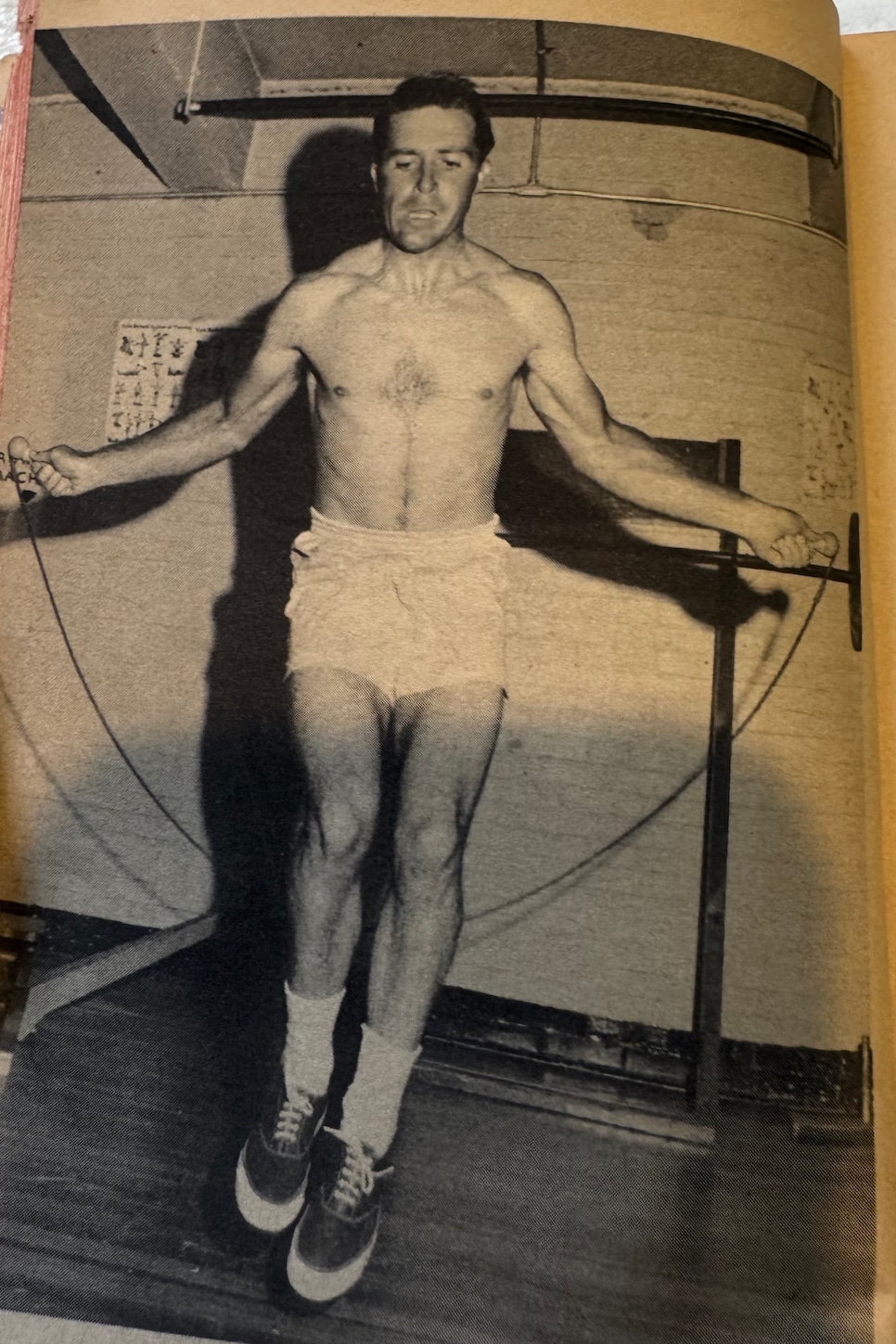
As I ponder all the white foods I need to cut out (specifically Marshmallow Fluff, Ghost Poofs and several varieties of meringue), I thought about the most Gary Player-ish way to find a winner at Aronimink 64 years from its last PGA. There were numbers that made sense, including recent wins, major titles, relative shortness off the tee and the trendline of his year going into Philadelphia. Instead, and obviously given how inept my predictive powers might be, I focused on a bit of science that was developed in the 1830s but seems like the very defining statistic for Player’s career: Body Mass Index.
The validity of BMI as a measure of fitness and general health is more than a little overstated. Which makes it a bit like Player’s partially correct total of “over 160” worldwide victories (among them, the “1955 Egyptian Match Play,” the “Liquid Air Tournament of 1963” and the “1974 La Manga International Pro-Am,” which he apparently won with a score of 42 under, including, er, a second-round 54). Technically, BMI is calculated by a person’s weight divided by his height squared, multiplied by 703, which is one of those formulas devised by a dandy with sumptuous waistcoats and excessive sideburns. It’s a theory, as we say in the medical community today, about as laughably irrelevant as the theory of the four humours.
Nevertheless, what I wanted was a player trending like Player this year. Someone with a major championship pedigree, a minimum of one victory in the runup to the PGA Championship that was at least as significant as the 1962 Transvaal Open, someone longer than he should be but shorter than elite and someone above all with a BMI equivalent to that of the 5-foot-7, 153-pound Player. That current manifestation of Player is the one who’s transformed his game with the same approach to maximizing distance from his sleight frame, one with non-Signature victories and a BMI right at Player’s 24, or what’s known as “Normal” (as opposed to my designation, which is technically known as “Mall Cop”).
Matt Fitzpatrick checks all the boxes. He’s recalibrated his swing speed in a Player-esque way (see below) and won a major, two if you count the U.S. Amateur (which is at least as difficult as the PGA Championship). He’s won the Valspar and the Zurich this year on the PGA Tour (as Transvaal-ian a pair as there is on the current schedule) and most importantly his BMI is less than one-tenth of a point different than Player’s.
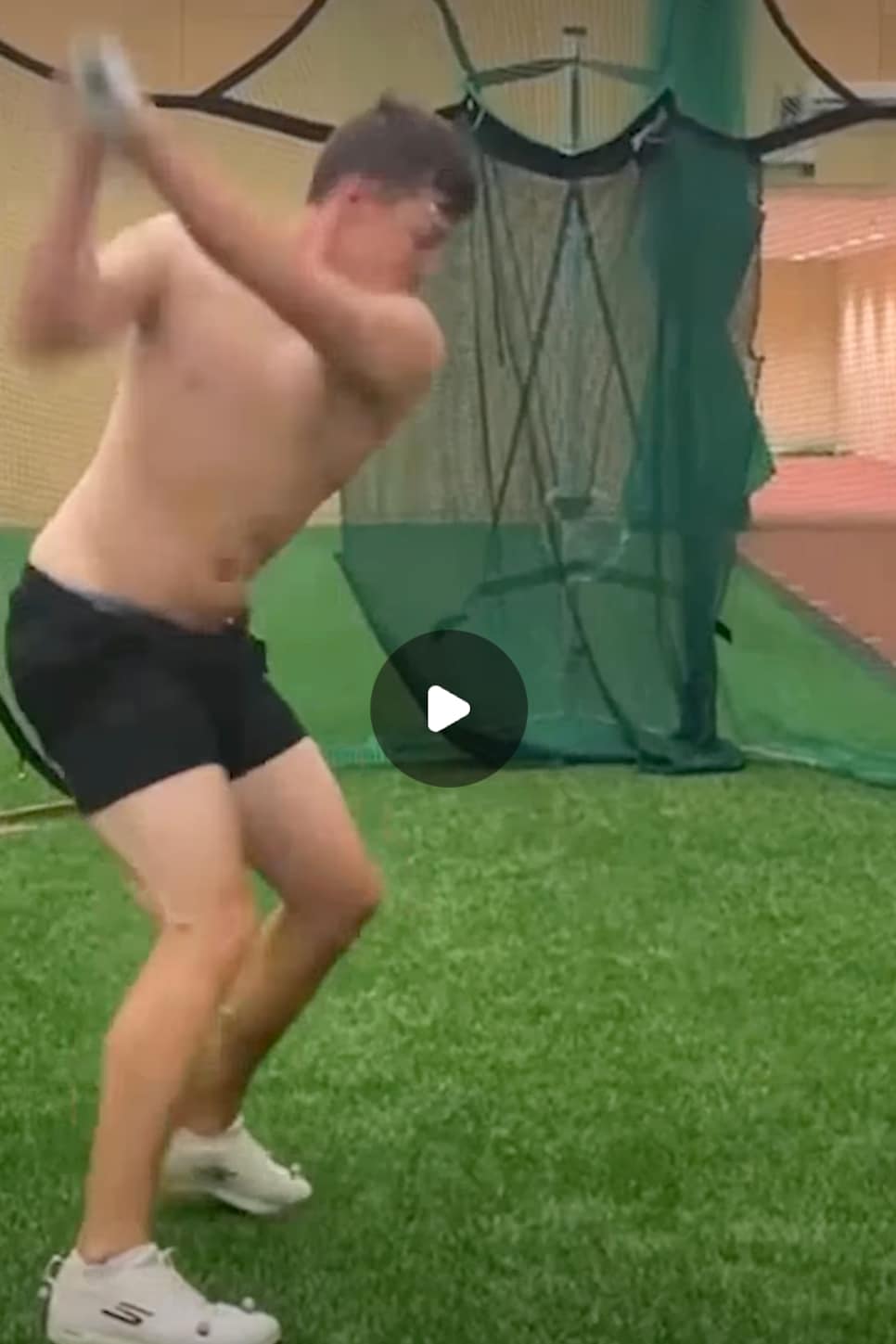
And, as if he were re-writing page 33 in Player’s book, Fitzpatrick said recently of his own power of positive thinking, “I just feel that the biggest thing is I back myself in those moments. I don’t feel overawed by the situation or who I’m playing against. If anything, that’s what you practice for. I want to be in those moments and take advantage of those moments.”

Chris Graythen
Only thing missing is the QR code for a discounted Golf Digest+ subscription. Check back next week.
This article was originally published on golfdigest.com