Recalling the wacky-yet-wonderful finish to the 2006 US Open.
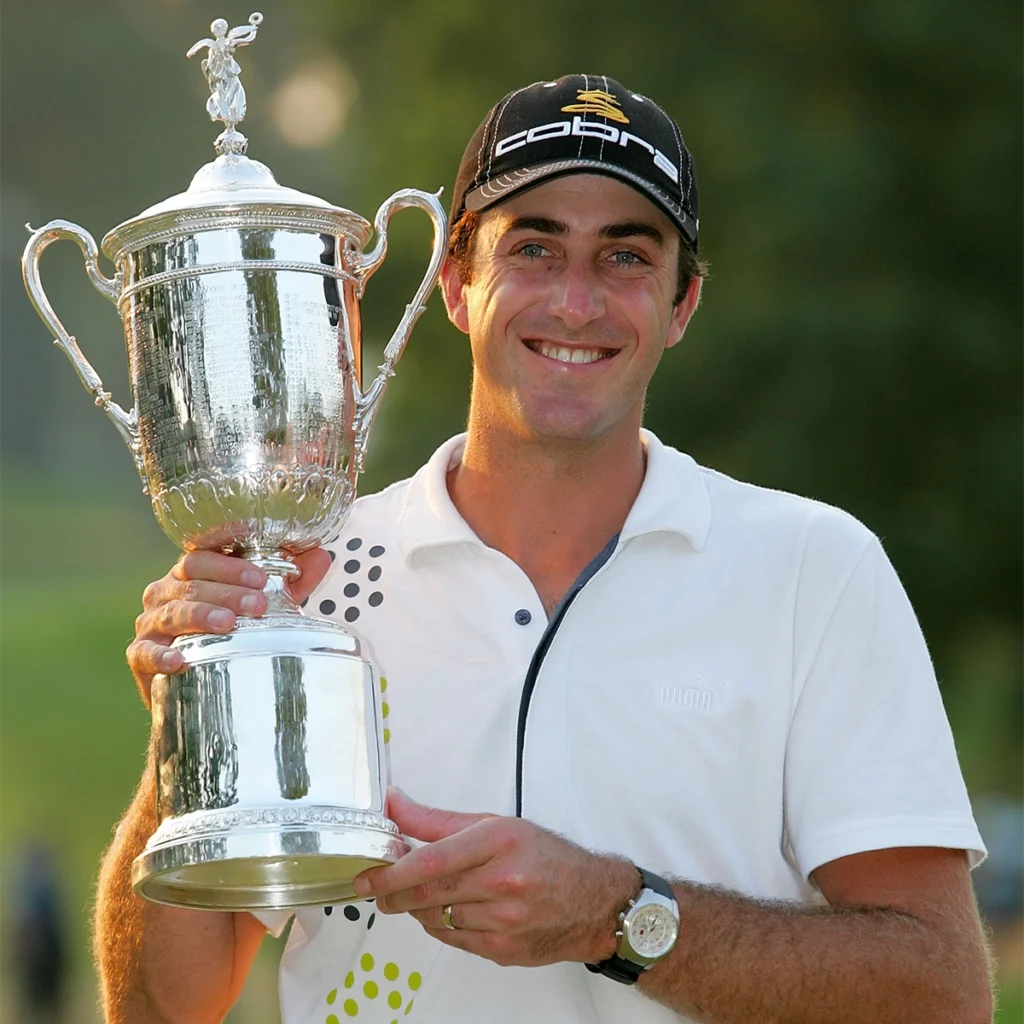
It’s been 20 years, which is hard to believe. But winning the 2006 US Open at Winged Foot is the highlight of my professional career and remains the event I am asked about most. Which is no surprise. That week – especially what transpired on the 72nd hole – is quite a story, albeit fans I talk to invariably seem to remember everything that went on in a variety of ways.
Hard-core golf followers always want to hear about the chip I hit from an awkward spot short of the 18th green on Sunday afternoon: “How difficult was it?”
Then there are those who vividly recall the double-bogey Phil Mickelson made on that same hole (strangely, very few bring up the corresponding 6 Colin Montgomerie made a few minutes earlier): “Did I know what was going on as it was all happening?”
From my perspective, the sequence of events starts with me watching Monty – who was in the group ahead – make his double on the last. Which initially had me confused. I didn’t know he had made a 6 rather than a 5 until I made it to the green.
As for Phil – in the group behind me – I didn’t see him hit his drive on the 18th. But I did see his second shot on the television in the scorer’s hut. When I walked in there, I thought I had finished second in the US Open. Walking out, I thought I might be in a playoff. And when I got to the locker room, it looked like I was actually going to win.
The story I relay to those who want a longer version of the day is that I don’t actually remember much of the round I played. But every shot I hit over those last four holes will forever be with me. I’ve told the tale a lot over the past two decades. And usually I tell it backwards, starting with the 18th.
That chip on 18 was really difficult, but not as tough as it would have been maybe three years earlier. It was then that my coach, Dale Lynch, told me my pitching was “no good”. Essentially, I was hitting those short shots too flat with too much spin. So Dale challenged me to be more versatile.
I thought he was wrong, but stubbornly I set out to show I could do what he was asking. Every day for the next two years, the first place I went to was the chipping green. And the last place I visited was the chipping green. The vast majority of my practice time was spent there. Even during practice rounds I neglected to putt. I picked up my ball and started chipping. Just to prove I could pass Dale’s test.
Anyway, I arrived at my ball on Winged Foot’s 18th, just after I had chipped in for par on the previous hole. Holing out there was obviously key to my eventual victory, but it was really just a straightforward shot that happened to find the bottom of the cup. The chip on the last, from a tight lie, was way harder. But I knew what to do. The shot I hit – the ball finished maybe five feet away – is one I couldn’t have produced without all that practice over the previous two years. I didn’t have to think about what I was doing and my expectations were high. So Dale was right. He’s a great coach.
To be fair too, my short game had been off-the-charts good all that week. Winged Foot was so difficult that missing greens was inevitable, no matter how well you played tee-to-green.
Playing alongside Ian Poulter, I had started that last round two shots off the lead and was one-under-par after six holes. I learned later that television commentator Johnny Miller had announced to the world as I walked to the seventh tee that “at least now Geoff can tell his grandkids he led the US Open”. Clearly, Johnny didn’t think much of my chances.
At first, it looked like he might be proved right. I made a few ‘soft’ bogeys between the seventh and 15th tees. The last of those was on the 14th, which left me two shots back. Maybe three. And a few guys – notably Jim Furyk and Padraig Harrington, as well as Phil and Monty – were in the mix. For the first time all week I felt a bit flat and had a moan to my caddie, Alistair “Squirrel” Matheson. I thought I had messed up my chances.
At that point, Squirrel stepped up and showed what a great caddie he is. As Dale had done, he challenged me. “Make pars on the last four holes and you might win,” he said. “No one is going to do that.”
It was genius caddieing. At just the right time, Squirrel used just the right words. And, for whatever reason, they resonated with me. Suddenly, I had something concrete to play for, outside of winning the championship. That thought was no longer in my head. Perfect.
After a routine par on the 15th, I drove into thick rough off the 16th tee. A hack-out was my only option, but I got up and down from 80 yards or so for my 4. Two pars down, two to go.
On the 17th, I hit my worst drive of the week, way right into the trees. All I could do was pitch the ball forward, still in the rough. Then I missed the green with my third. Making par was looking unlikely at best. Which is when Squirrel stepped up again. “Just chip it in,” he said. And with his suggestion in my head, I did just that.

At that moment, I again thought I had a chance to win. But only if I made a birdie on the last. I gave myself a chance of that too, hitting what was my best drive of the week off the 18th tee. It was perfect, other than the fact that the ball finished in a divot. That fact led to my 9-iron second shot – again hit well – coming up short. Which led to the now famous chip and the fourth par in my ‘mini-tournament’. Initially, I was pleased with just that.
As I said, I watched most of what Phil did on the 18th while sitting in the scorer’s hut. After his drive, I thought I might be in a playoff. But when he hit a tree with his second effort, Poulter gave me a nudge. With a big grin on his face, he said: “This is going to go very well for you.” Which it did. When Phil’s third shot plugged in a greenside bunker – leaving him an almost impossible up-and-down – things started to get a bit weird.
The next three hours are a bit of a blur, but I do recall looking at Phil at the prizegiving. He looked like he was somewhere else. His head was clearly spinning. Which I guess is understandable. The previous hour had been filled with an amazing series of events. And no, I will never get tired of being asked about it all.
Getty Images/jamie squire, robert beck, sam greenwood