
[Photo: Keyur Khamar]
Question: What’s the one thing I need to consider before buying a new set of irons?
Answer: Ask most golfers what they pay attention to when buying new irons, and you’ll hear the usual suspects: loft, shaft flex, maybe even swingweight. But there’s one spec that quietly influences everything from start line to dispersion – and too often gets ignored until the divots start telling the truth.
It’s lie angle, and it might be the most overlooked measurement in your bag.
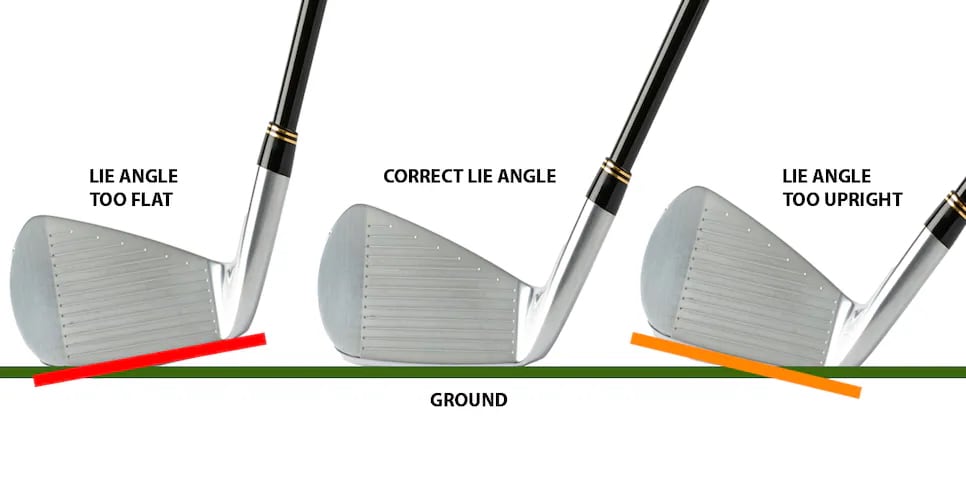
Lie angle refers to the angle between the shaft and the ground when the sole of the club sits flush at address. It sounds technical, but the result is simple: when it’s right, the sole meets the turf evenly and the ball launches on your intended line. When it’s off, even by a degree or two, your club’s geometry starts fighting your swing.
A lie angle that’s too upright causes the heel to strike first, closing the face and sending shots left of target. Too flat, and the toe digs, leaving pushes to the right. You can have the right shaft, perfect length, and a head design that matches your game, but if the lie angle doesn’t fit, your iron set is basically tuned to someone else’s swing.
That’s why a proper fitting isn’t just about finding a shaft that feels good. It’s about building a setup that allows you to swing freely without manipulating impact. Height and arm length factor in, sure, but so does your delivery – your posture, attack angle and where the club bottoms out through impact. The only way to really know what works is to have a certified fitter watch your ball flight and turf interaction.
And if you’ve never checked your lie angles before, don’t assume all your inconsistencies are swing-related. Plenty of solid ball-strikers unknowingly play irons that are a degree off – sometimes more – because specs can shift over time. Repeated hits off range mats, in particular, can actually accelerate how an iron head sits at impact.
The good news? You don’t need a launch monitor to spot trouble. A few strips of impact tape and some range time will tell you plenty. If your marks cluster on the heel or toe, it’s worth a trip to verify what’s going on with a fitter.
Dialling in your lie angles won’t suddenly turn you into a scratch player. But it will ensure that every shot you hit is a fair reflection of your swing – not your equipment’s flaws.