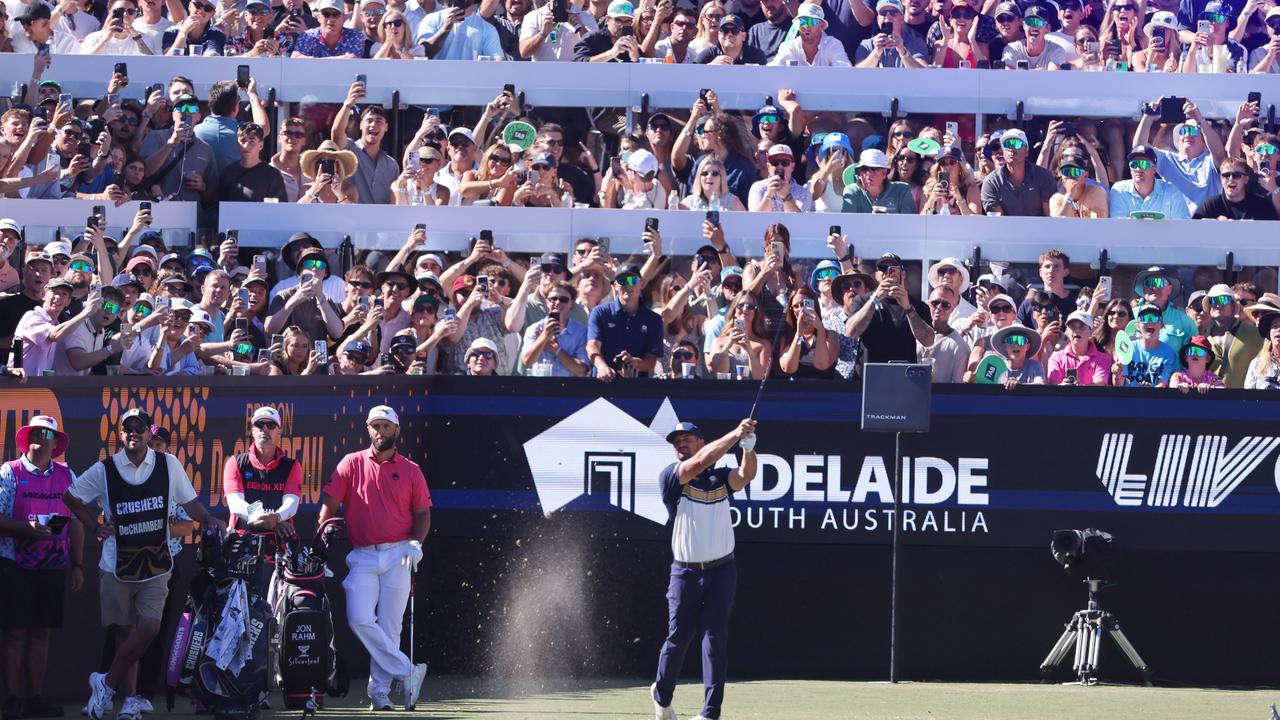
In 2022, Mito Pereira stepped to the last hole of the PGA Championship at Southern Hills with a one-shot lead, his first time contending in a major. Then everything got quick—his takeaway, his follow-through. His ball went into a creek, as did his major championship hopes.
Compare Pereira’s finish with how Cameron Young navigated the 72nd hole of this year’s Players Championship. Tied for the lead on the final hole of a tour event for the first time in his career, Young’s tee shot featured his signature pause at the top—a brief hesitation he relies on to maintain proper sequencing—which this time resulted in a 375-yard drive and a one-shot win.
One golfer moved too fast and stumbled; the other slowed down and won. If we were just talking about the tempo of backswings, there wouldn’t be much more to discuss. But experts say golfers’ pace extends to ways that often lead to hasty mistakes. More than just quick at the top, they make rash decisions, even walk too fast—all in moments when they really need to take a beat.
“Anyone who’s ever played a bad round is aware that everything speeds up because you’re either trying to fight it or flee,” says Dr. Stephen Ginsberg, a sports psychologist based in Denver who works with golfers. “You’re just trying to get through it as fast as humanly possible.”
When explaining his final tee shot at TPC Sawgrass, Young said he committed to a specific line before hitting. According to Dr. Scott Wylie, a cognitive neuroscientist and the co-founder of S2 Cognition, that strategy is important beyond simply picking a target. When golfers study a hole and visualize the shot they want to hit, they create a “mental map” that gives the body instructions on what to do. The more vivid the picture, Wylie says, the easier it is to swing athletically. Conversely, the more distracted our focus, the greater variability in how we move.
“If you’re feeling pressured and your thoughts are scattered, speed is not going to be helpful,” Wylie says. “In fact, you need to slow down.”
Even a golfer’s pace between shots matters. Rory McIlroy said he used to bolt ahead and then wait when a playing partner found trouble. But he learned that disrupted his rhythm.
“I just tried to hang back, so I could get to the ball and go through my normal routine and not be waiting up there for what I would feel like is forever,” McIlroy said.
Another subtle tactic is eating or drinking, which players continue to do even late in rounds. It’s not because they’re hungry or thirsty. Since our stress responses were designed largely to thwart physical threats, eating or drinking communicates we’re not in imminent danger.
“The number one job that we have in moments of perceived stress is to signal to the body that we are not under siege,” Ginsberg says.
MORE MIND GAMES
This video series explains mental game topics and tactics. Search “Mind Games” on Golf Digest’s YouTube channel.
This article was originally published on golfdigest.com