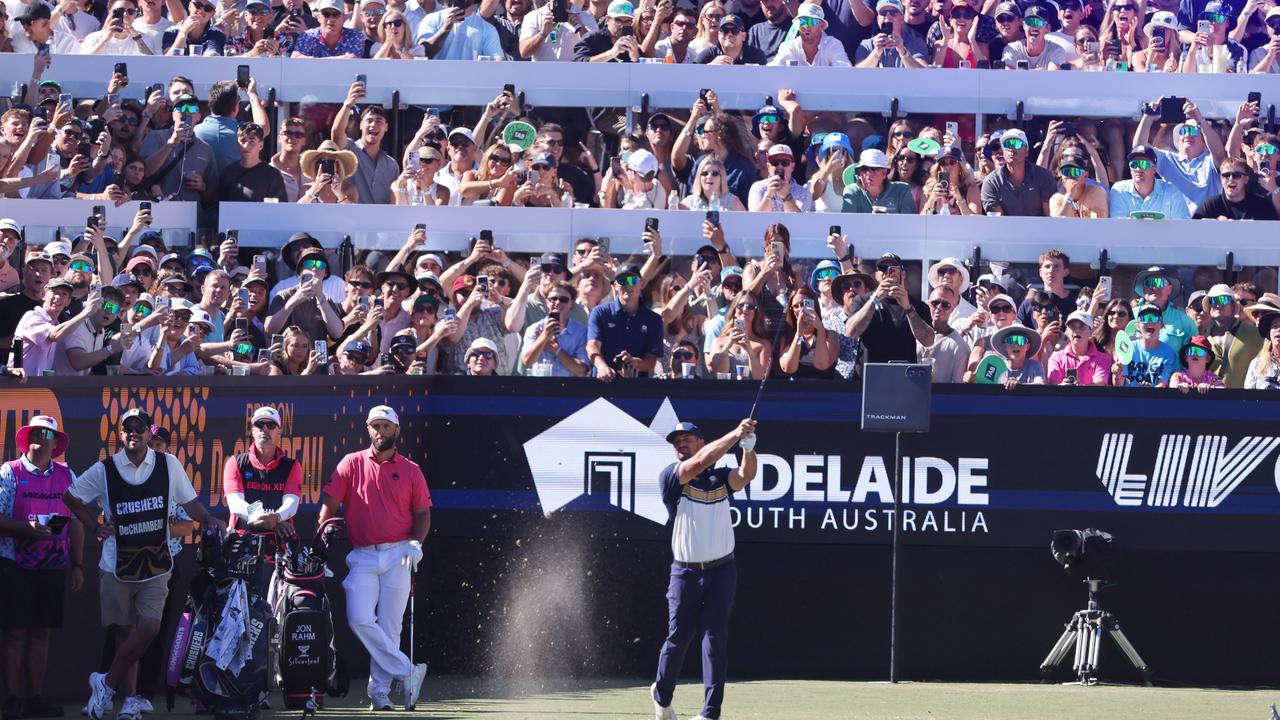
AUGUSTA, Ga. — Football players can hit harder. Basketball players can run the floor faster.
When a golfer senses he’s lagging in a tournament, what does it mean to try harder?
This was a worthwhile question on the first day of the Masters, when some players could look at a leaderboard and fear they were already losing ground. In other sports, a sense of urgency can be motivating. In golf, it risks making things worse.
“Ideally, you would shift your focus to trying to be more present and trying to go through your process better, but I think typically we try and hit the hardest shot,” Max Homa said after finishing at even par. “So you try to force a birdie instead of knowing you could maybe make a 40-footer or chip one in.”
Watch the highlights after a golf tournament and there will likely be one of the winner pulling off a low-percentage shot under pressure. That it worked out well for one player is different than saying it was the smart decision. “Because someone that day also tried that,” Homa said, “and it blew up in their face.”
Remember Rory McIlroy’s hook shot around the trees and onto the green on the 15th hole of last year’s final round? Rasmus Neergaard-Petersen recalled it while walking to nearly the exact spot during Thursday’s opening round. But a similar shot resulted in a regrettable result, his approach catching the creek en route to a bogey.
The 26-year-old Dane explained how this can be his downfall. At the time, he was three over par and trying to kickstart his first Masters round. But after signing for 77, he said the golf version of trying harder can be forcing an outcome, which is particularly dangerous at Augusta National.
“Sometimes it’s trying to will it too much instead of letting it go,” he said. “Especially out here putting-wise when you have big slopes and stuff, you can try too hard to make a putt instead of just saying, ‘that’s my line, that’s my read, that’s the speed I want to hit it.’”
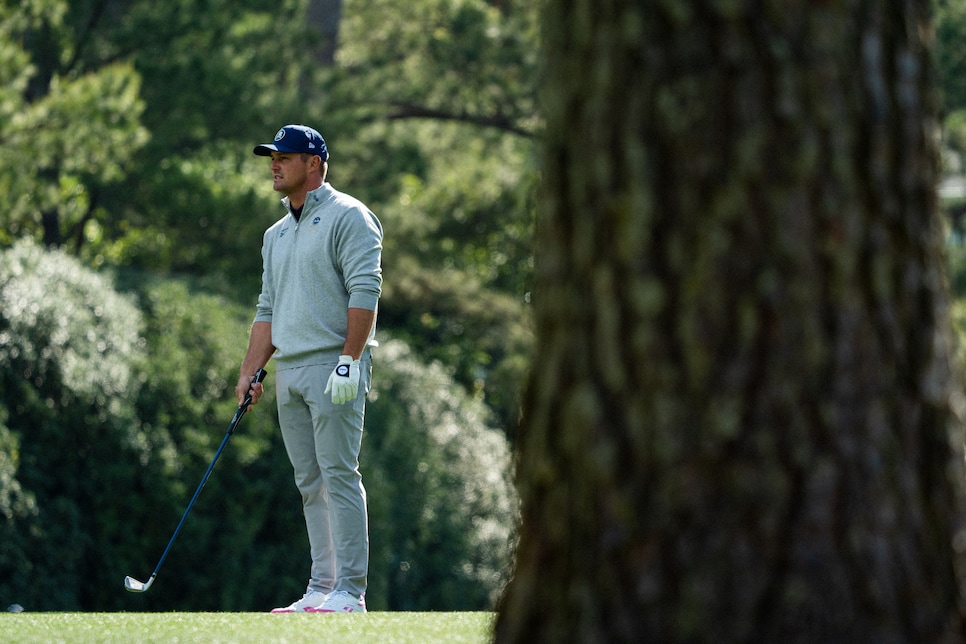
J.D. Cuban
These types of lessons don’t always come quickly. Asked about the type of mistake he avoided in 2025 that he would have committed earlier in his career, McIroy cited the two double bogeys he made in the opening round, followed by his sluggish start on Friday. A younger McIlroy would have started taking on flags in hopes of a turnaround, missed in the wrong spot, “and then all of a sudden the round starts to get away from you, especially around here.”
Last year, though, McIlroy’s response felt counterintuitive. He did nothing.
“I feel like that patience was rewarded,” McIlroy said. “I played a 14-hole stretch at 10 under par after that, and that was literally the stretch of golf that won me the golf tournament.”
So is the answer to always play it safe? Not necessarily. The sports psychologist Julie Elion, who works with several players in this week’s field, said her message is different depending on the player. More often, the two will arrive at a plan for the week, and when a player is struggling, she wants the player to return to that. Given the precision required at Augusta National, she said patience comes up often for a reason. But there are occasions to audible.
“I have had many a client when their backs are against the wall they can turn another gear on, but that’s usually when their attention or focus gets better. It’s usually not mechanical,” Elion said. “It might be a time when a player finds something, but then my theory would be, ‘Let’s kind of peel that away and try to dig in why you weren’t that way to start.'”
Masters 101: Answering all your frequently asked questionsHow to watch the 2026 MastersPower Rankings: Every player in the Masters field, rankedTee times for Round 1 and Round 250 defining Masters Moments, rankedThe most memorable Rules issues in Masters historyEvery course change ever made at Augusta NationalA brief history of Masters prize money payouts15 people who ended up in the Masters penalty boxThe Champions Dinner Tell-All, from those inside the room
This article was originally published on golfdigest.com