
[Photo: William Purnell]
You stand over so many golf shots each season, it’s understandable if you take your address posture for granted. Same goes for how you set up for a putt. But if you’re experiencing lower-back pain, it’s probably worth doing a posture check to see if you’re putting unnecessary stress on your spine, says Chris Cooper, a Golf Digest Certified Fitness Trainer.
“The lower back’s main movement is bending forward and backward, but it is safest when it’s about halfway between those two extremes – in a position we call ‘neutral spine/pelvis’ in the rehab setting,” says Cooper, who works with golfers at Therapeutic Associates Physical Therapy in Bend, Oregon.
“The three movements that aggravate a lower back the most are bending, lifting and twisting. Unfortunately for golfers, the golf swing incorporates two of them – bending and twisting. If you carry your bag when you play, it could involve all three! I don’t believe that should keep us from playing golf, but we do have to be careful – and find and maintain a neutral pelvis from setup to the top of the backswing. In order to find the middle, you have to know how to move through either extreme.”
Cooper has some low-back strengthening exercises he’ll demonstrate in a moment. But first, it’s important to understand that there is more than one “unhealthy” way to stand over a shot.
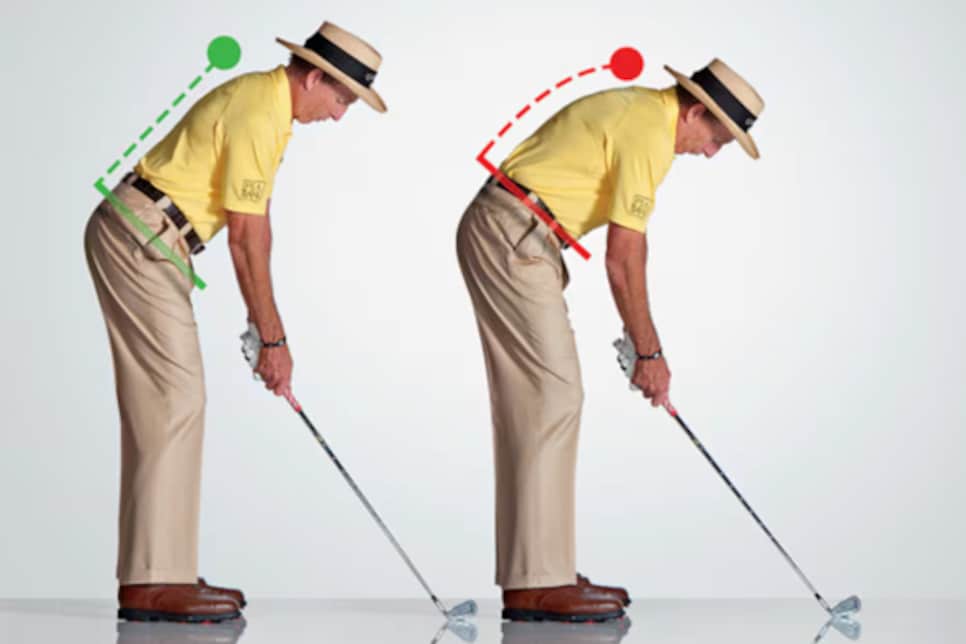
The first is an “S-posture” stance, where you put an arch in your lower back. When someone gets your stance on a smartphone pic or video from down the target line, you will notice an S letter look to your back. The second is a “C-posture” stance, where the golfer is bending forward more from the waist than the hip joints, often reaching out noticeably with the arms. The spine will have the look of a letter C, hence the name.
In putting, the length of the club plays a big role with being bent too far forward to keep the spine in a neutral state, Cooper says. That might not be a big deal if you’re only hitting 30 putts a round, once a week. But try staying in that posture on the practice putting green for any length of time, and you’re probably to feel the lower back get “hot” as those muscles, especially the latissimus (lats), get overstressed.
When you bend from the hip joints to set the club down behind the ball, as Golf Digest Teaching Professional David Leadbetter is demonstrating [below], you take a great deal of the load off the lumbar vertebra.
In putting, the solution might be a long putter, but if you think that’s “cheating”, spend some time in the gym or your living room strengthening the muscles of the low back with these tips and exercises from Cooper.
 FINDING NEUTRAL
“You can do this while standing in golf posture with arms across your chest. First try to sway your back as far as you can by sticking your tail bone out while keeping the rest of your torso still. Then try to slouch by tucking your tailbone under while keeping the rest of your torso still. You could do this a couple of times so you can feel the total amount of motion you have, and then find the middle and plan to keep it there at set up to the top of your backswing. You do this by lightly engaging your deep and low abdominals. This is achieved by pulling your belly away from your waist band in about 30 to 40 percent of your maximum voluntary effort (that’s not very hard).
“For each of the following exercises, find neutral first, then lightly engage your lower abdominals. It shouldn’t make you hold your breath or cause tension anywhere else in your body,” Cooper says.
Single-arm pull-downs 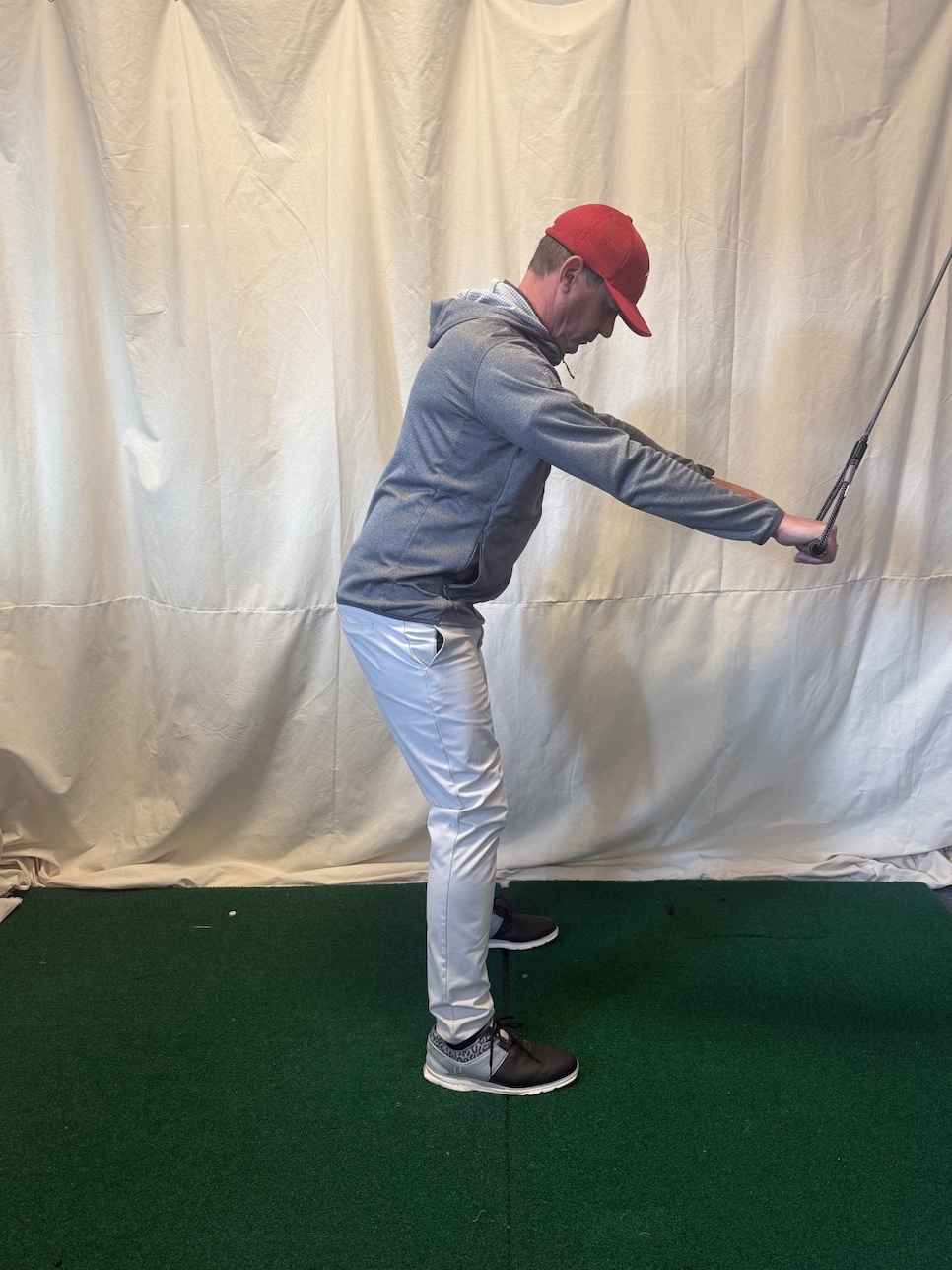
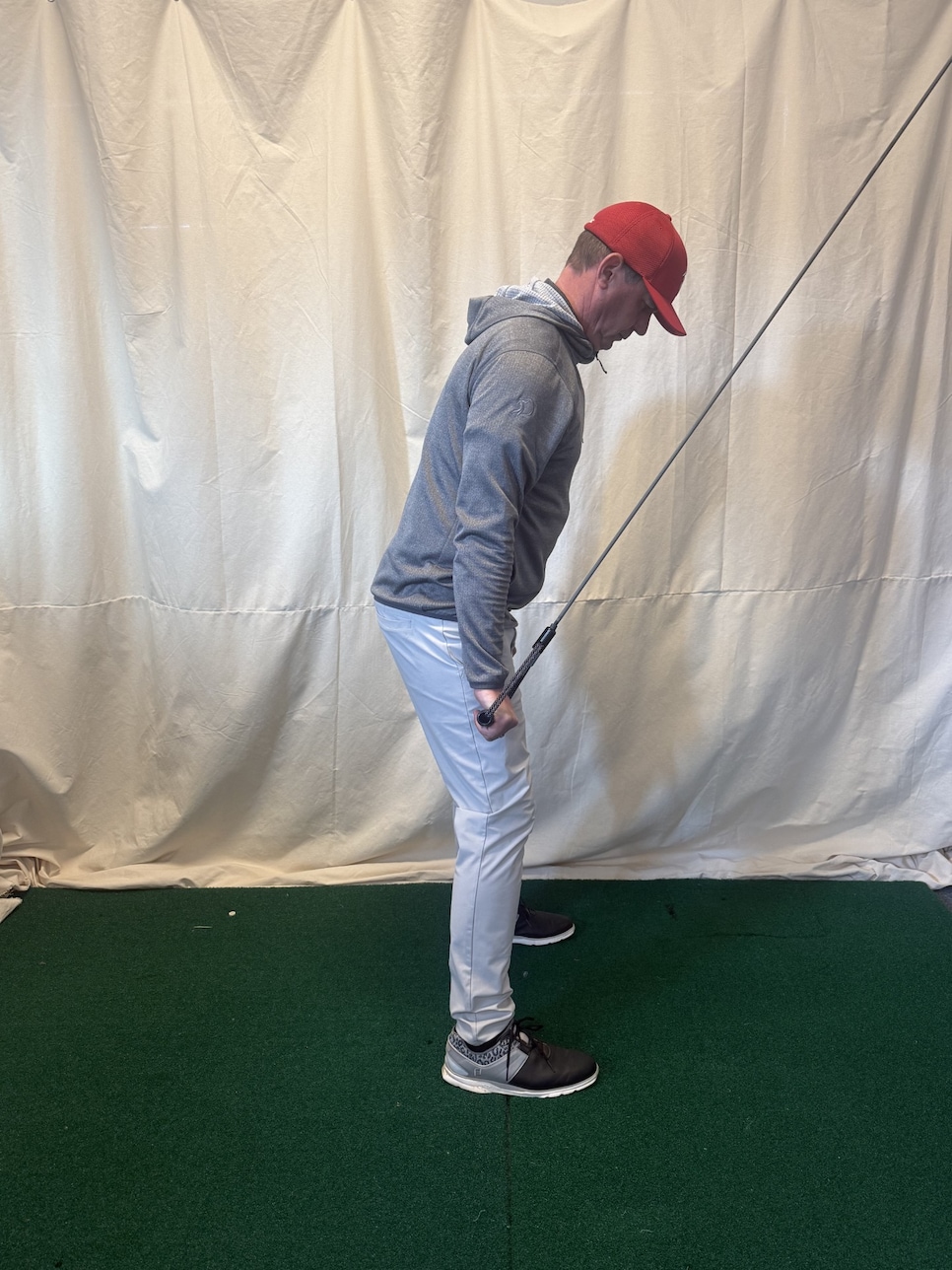
“This exercise will help you engage your abdominals additionally beyond your baseline setup as you pull a straight arm down to your pocket without moving anything else. Use a band anchored high. Since resistance is only coming from the side, there is a rotational-torso-stability component, too, which is helpful armor for your lower back. Feel yourself pulling down with your shoulder blades and your abs. The initial ab engagement will intensify as you pull down (2-3 sets of 12-15 reps).”
Bent-over kettlebell/dumbbell rows 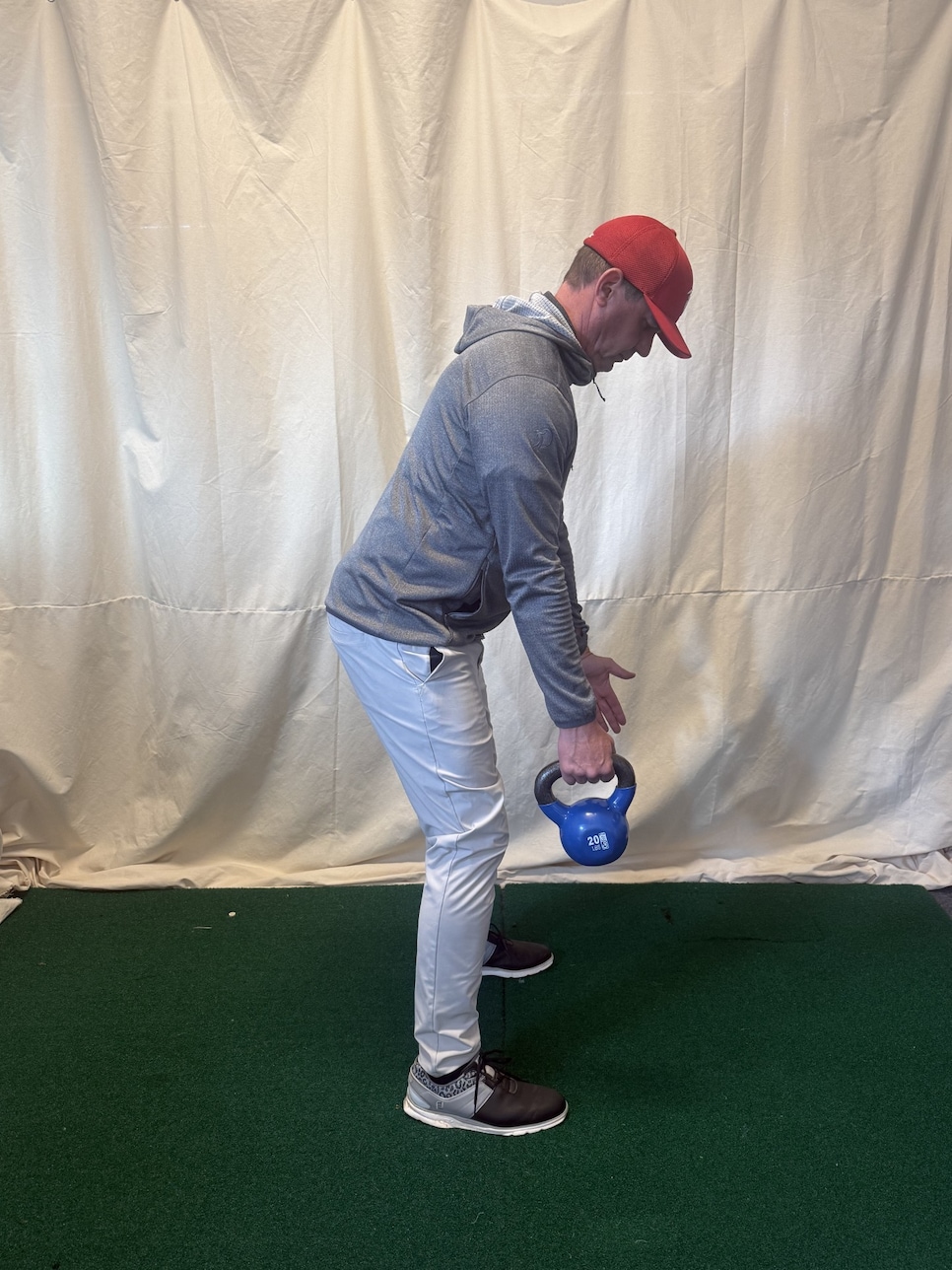
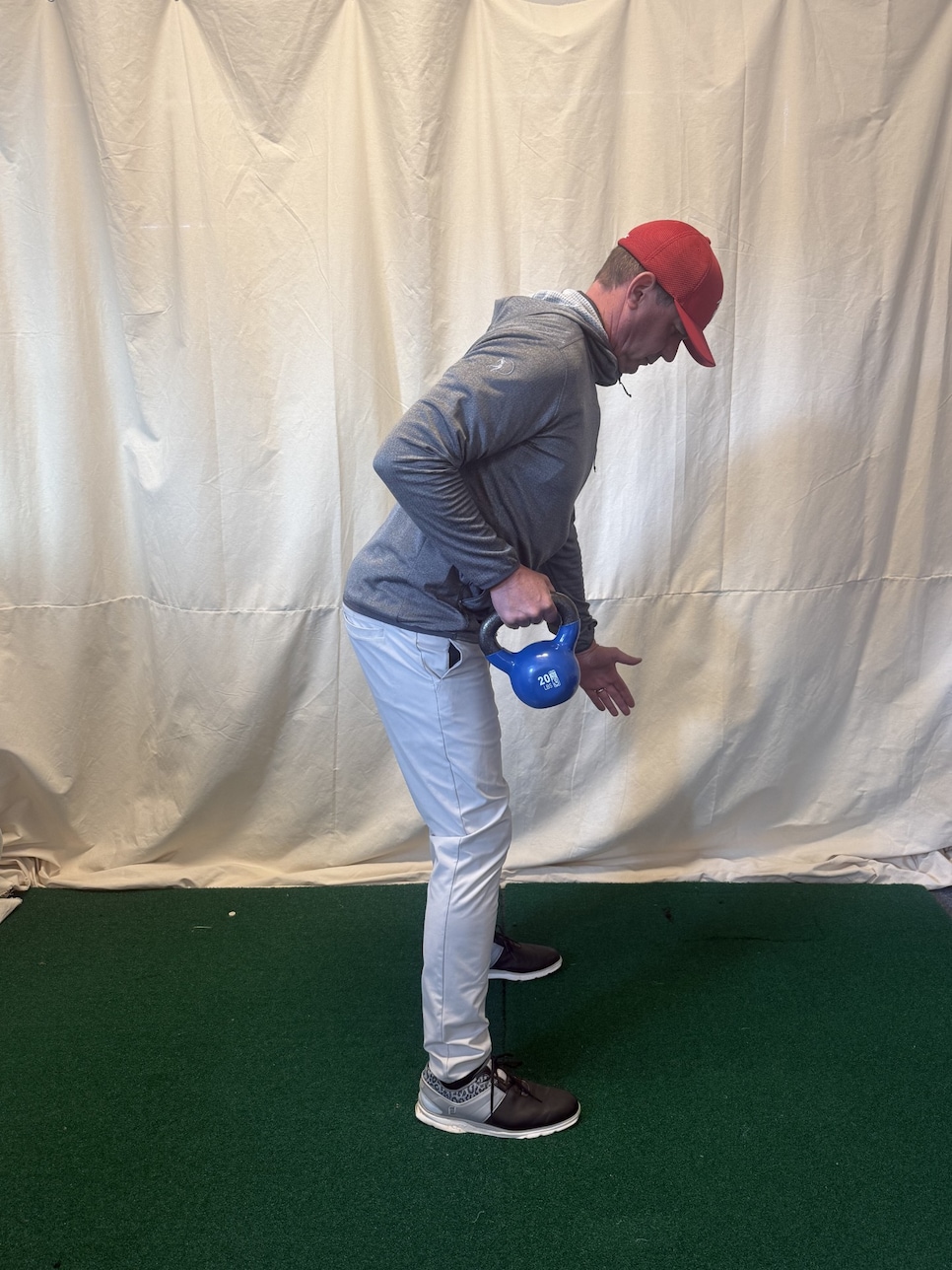
“This exercise will engage the pulling muscles of your trunk and shoulder while you maintain backside engagement of your torso. Get into your neutral posture and engage your core. Slowly row the weight straight up while maintaining neutral posture. Feel the pulling from your shoulder blade and your abs. Place the other hand/arm mirroring the exercising side (2-3 sets of 12-15 reps).”
Bridges with leg extensions 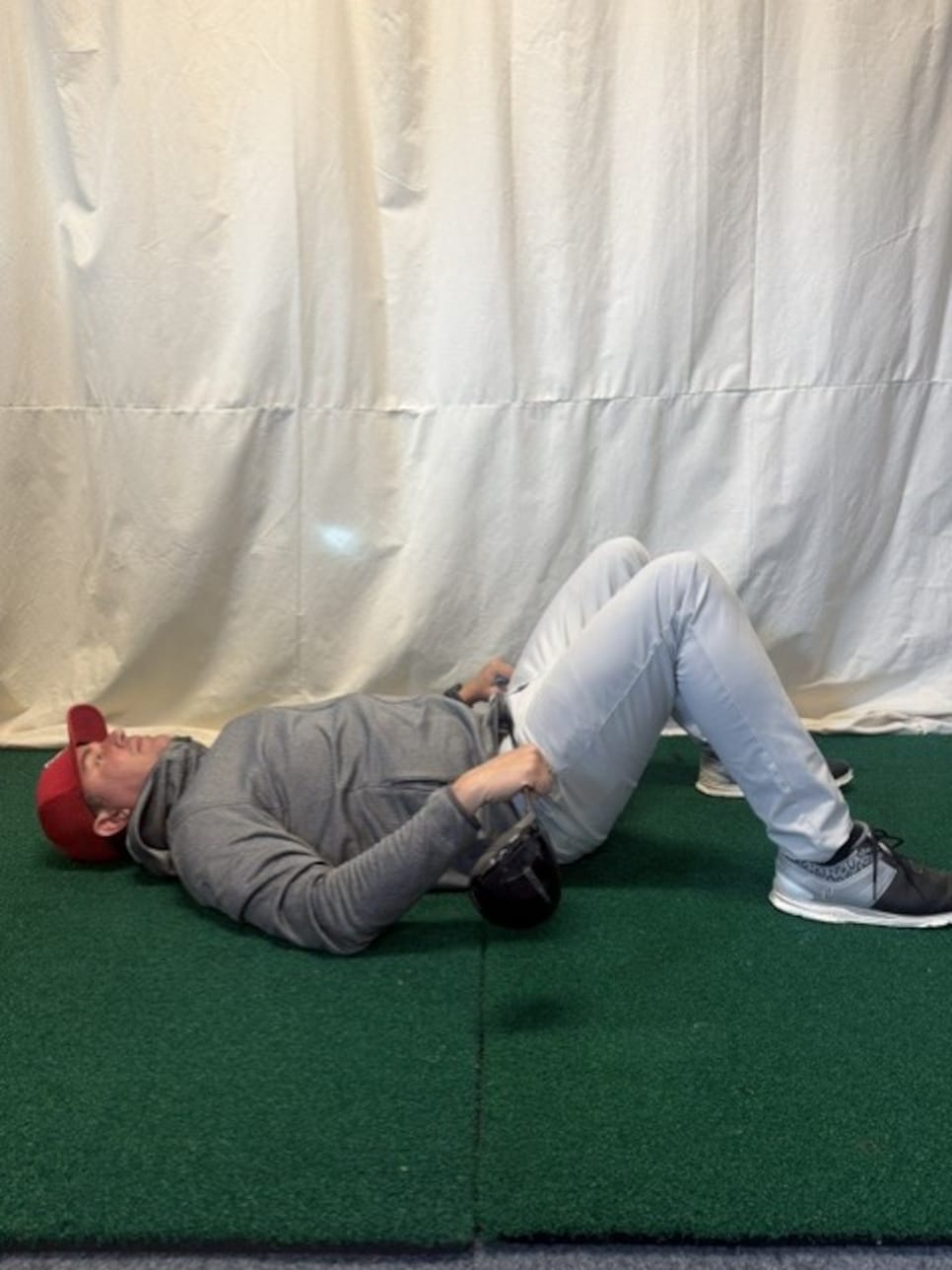
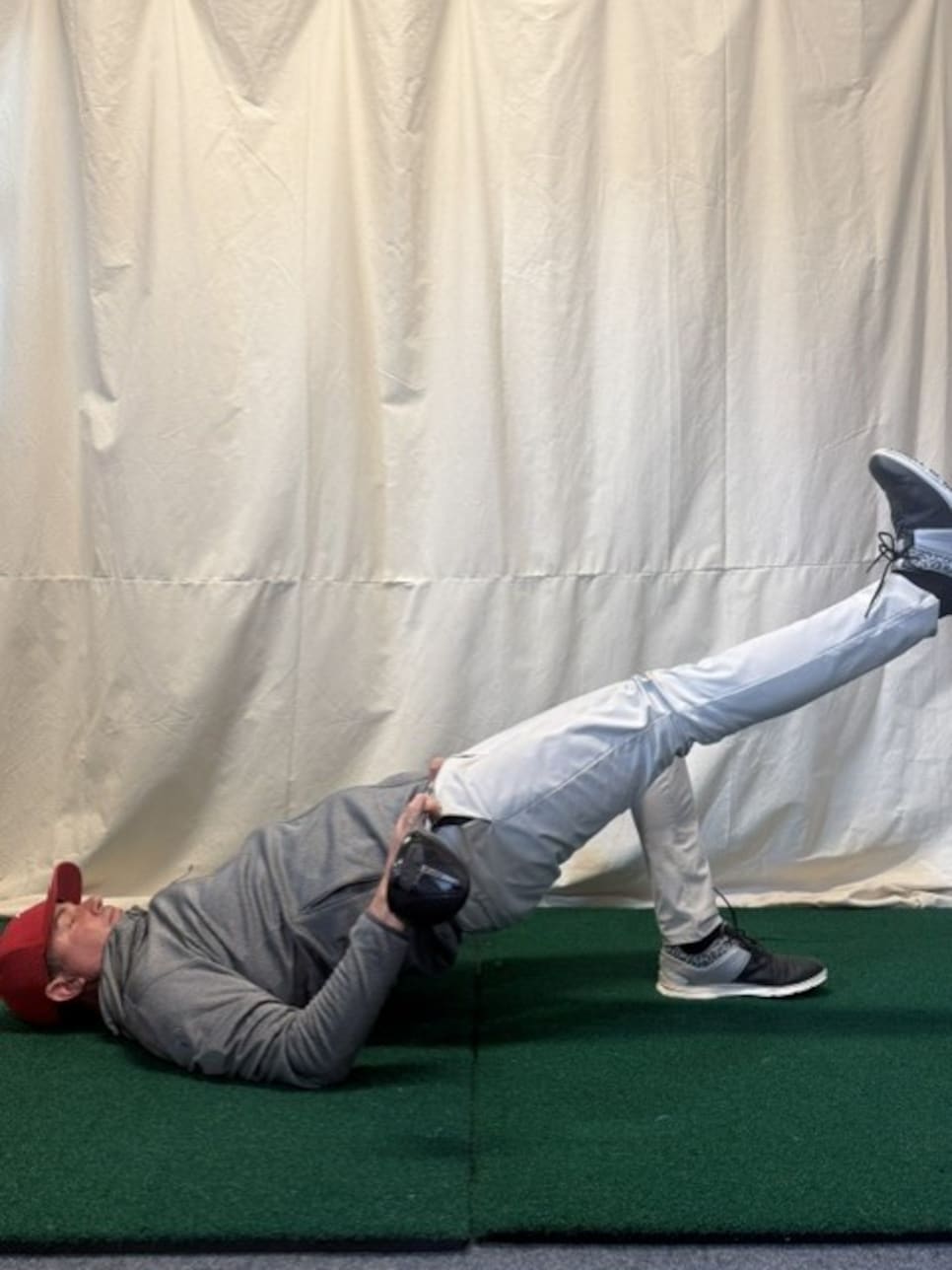
“Lying down with your knees bent will nearly automatically put your low back and pelvis in neutral. You will want to engage the lower abs, push through your heels and engage your glutes pinched tight together. I call this the ‘$1,000 squeeze’, which speaks to the intent of how hard I want the glutes engaged at the top of this motion. Place a golf club across your pelvis and try to keep it level with the floor as you push up. Try not to push the hips past a straight line from your knee to your shoulder so you don’t overextend the lower back. Straighten one leg while keeping the club parallel. Pause for 2-3 seconds and then place it down and do the same on the other side. Lastly, lower your pelvis back to the floor, relax and repeat. This will work the backside of your body and your abs as well as work on the rotational stabilisers that are so important for protecting your back while swinging a golf club (2-3 sets of 10-15 reps).”
Tall planks with shoulder taps 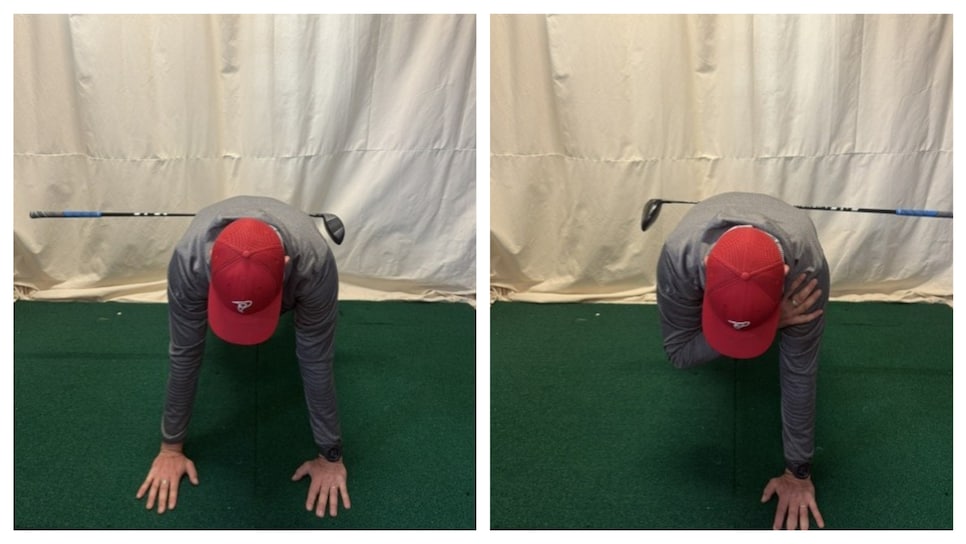
“From a push-up position, find neutral with a slight bias toward pelvic slouch – tucked under. Have someone place a golf club along your waist or simply imagine one there and keep it parallel to the ground. Engage your lower abs and slowly take one hand off the floor and tap the opposite shoulder. Maintain a steady position as you then bring it back to the floor. Repeat on the other side. Consider holding your hand tapped at your shoulder for a few seconds to feel the front-body activation (2-3 sets of 10-15 reps).”