Luke Walker
Q: I’m fed up with the cost of new equipment. What are the things I should be aware of when looking at used clubs instead of new?
A: You’re not alone. As drivers have reached $1,000 or higher and irons routinely go for $300 or more per club, the sticker shock is real – and the cost-benefit analysis can become an issue. It’s a main reason we hear from many outlets dealing in used equipment that there is no such thing as too much inventory.
MORE: 7 clubfitting myths that stop golfers from getting better
The used-club market enjoyed a boom during COVID, when new product was the victim of supply-chain issues. Plus, there was an influx of new players looking for a less-expensive entry into the game,
“People who were coming back into the game or were new to the game probably saw the value in shopping pre-owned,” said Ed Byman, CEO of used-club giant GlobalGolf.com. “They didn’t mind that the clubs were a year or two old. Then the supply chain for new product got pretty stressed. That brought in a different kind of consumer: Golfers who couldn’t get what they wanted in a timely manner. We definitely benefited from that.”
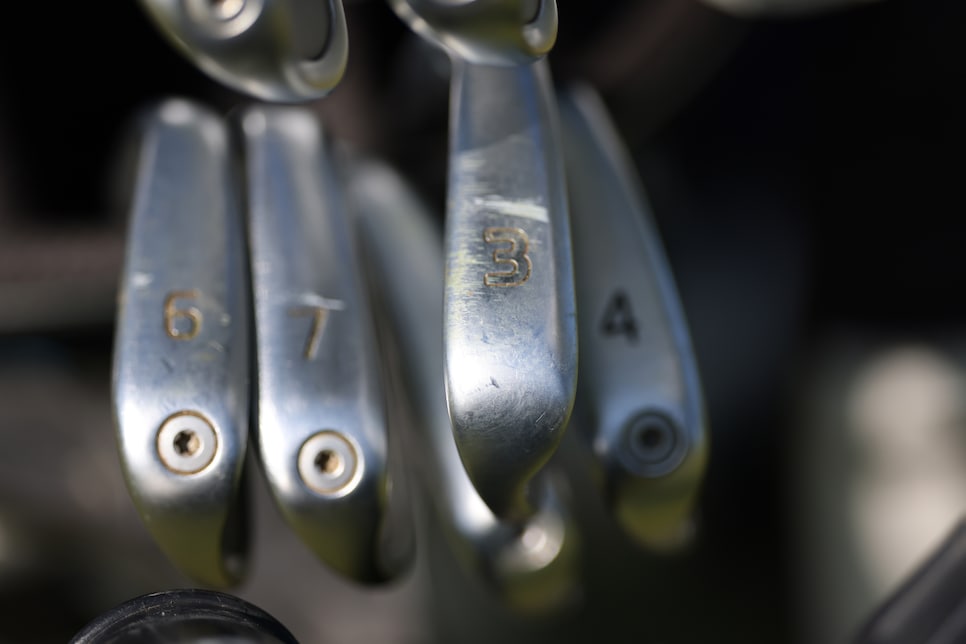
For those unfamiliar with the used-club market, understand that these transactions are not for clubs that look like they’ve been dragged behind a car. In many cases, these clubs are in very good condition. As such, the prices, while below the cost of new equipment, is far from dirt cheap. Think of it as the golf-equipment equivalent of shopping for a certified pre-owned car.
Which brings us to factors you should think about when shopping for used clubs, namely sticking to authorised dealers. While the temptation of auction sites such as eBay or the convenience of Facebook marketplace might be appealing, they can be a haven for counterfeiters. Even if the seller is legit, you rarely know the true condition of the clubs until you get them – and by then, it’s often too late. Also, do your homework. Make sure features like the shafts, lofts and set makeup match what you’re looking for.
One overlooked aspect of the used-club market is that those seeking certain specs are not out of luck. Many listings, particularly for irons, detail the specs on lie angle or length or both. A customer seeking irons that are, say, a half-inch long and one-degree upright can be satisfied by pre-owned. In short, you can be “fit” for used clubs.
All of which makes the used-club market a viable option, whether as an avenue for those frustrated by the price of new product or an introduction for newer golfers interested in mainstream brands at a fraction of the cost. Happy shopping.