It seems we’ve written entire books over the years on how strong iron lofts have gotten and how widely diverse they are and even whether they matter or not when picking the right model iron for your game. It would almost feel like a drinking game (my 7-iron loft is stronger than yours!), if it weren’t one of those things that so often can play an over-inflated role in how we decide which iron to buy.
It seems obvious: This 7-iron goes farther than that one when I’m hitting shots in the fitting bay’s indoor launch monitor. I certainly should choose that iron then, right? Never mind that one iron might be one club stronger in loft than the other. In practical terms, though, the right iron isn’t so obvious. And it isn’t obvious, either that strong lofts are bad or good. Out recent robot testing story from Jonathan Wall and Gene Parente of GolfLabs showed that how strong your 7-iron loft isn’t going to hurt you when it comes to distance or dispersion. Its lone problem area might be whether shots land with a steep enough angle to stay on the green, and even then that only might matter depending on your swing speed.
Of course, that was with a robot who never misses a shot. What happens when we put a range of 7-iron lofts in actual golfers’ hands, like we do every year during the annual Hot List Summit? Our takeaway from an analysis of the data was similar as the robot, with one caveat: Our top performing irons in carry distance and apex height were equally spread among lower-lofted 7-irons and slightly higher-lofted 7-irons.
Short answer: There’s more to determining the best-performing iron than how strong (or weak) its loft might be.
In our test, we reviewed launch monitor data from 12 players with handicaps ranging from 10 to 17. The data covered eight iron models in the Super Game Improvement category, where lofts ranged from 27 degrees to 32.5, the largest spread of 7-iron lofts in any of our four iron categories. All data, which among other things included ball speed, launch angle, spin, apex height, descent angle and carry distance, was tracked by Rapsodo MLM2 Pro launch monitors, which were set up at every player’s hitting station.
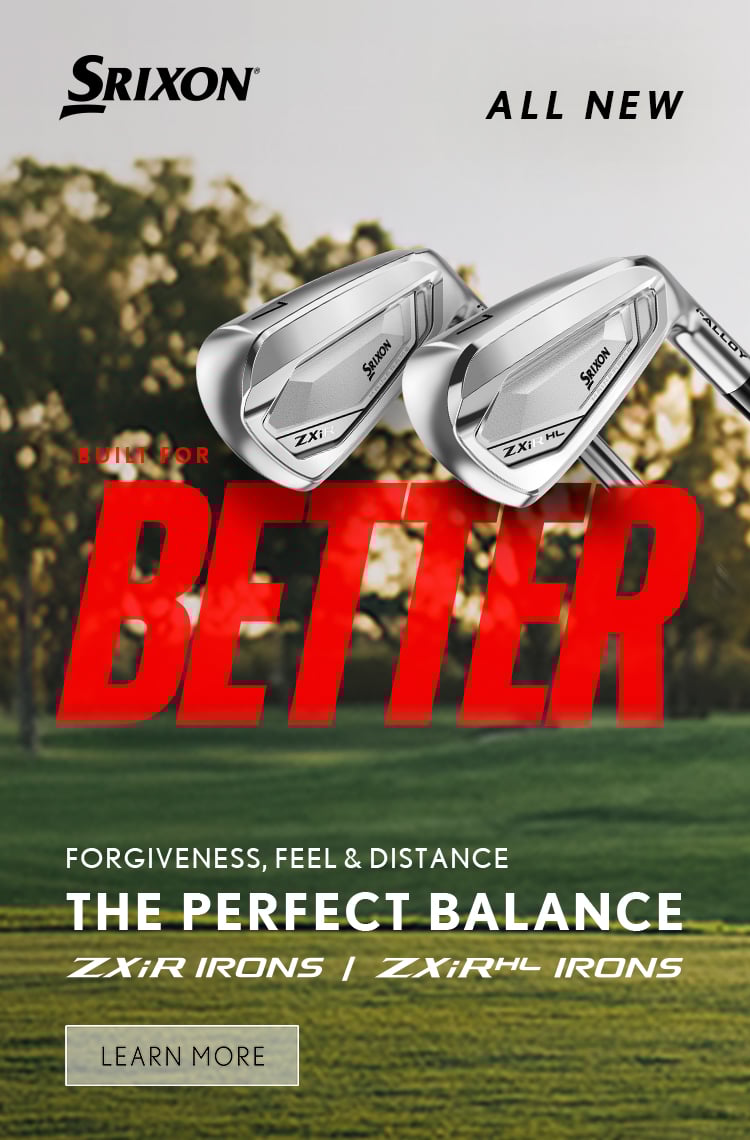
Perhaps not surprisingly, we found that the 7-iron with the highest loft, the Srixon ZXiR HL at 32.5 degrees, tended to produce the highest flight and the steepest landing angle. That could be very helpful to moderate speed golfers who struggle to get the ball in the air, but it might not produce the optimal 7-iron flight for those with faster swing speeds.
But when you look at the irons that tended to produce the longest average carry distances, they actually cover the spectrum of lofts. The three irons that across all players averaged more than 90 percent of a player’s best carry distance represent two of the strongest-lofted irons in the test (Callaway Quantum Max OS at 29 degrees and Honma Beres 10 at 27 degrees), and one with nearly the weakest (Mizuno JPX 925 Hot Metal HL at 31 degrees).
What gives? Well, for one thing, the Beres 10 irons used a shaft that weighs just 45 grams, or half the weight, and decidedly more flexible than most irons in this competitive set. That lighter club is one way to help average players hit the ball higher, regardless of your baseline swing speed. In fact, the Beres 10 produced among the longest carry distances for both our slowest and fastest swing speed players in the test.
But in terms of all the performance metrics that matter in an iron (carry distance, apex height, landing angle), our players found almost no direct correlation between 7-iron loft and performance. An iron produced positive results whether it was strong-lofted or weaker-lofted. The three consistently longest irons covered three distinct loft groups (27, 29 and 31 degrees). Meanwhile, the three irons with the steepest landing angles (in other words, the landing angles most likely to hold the green) also represented three different loft groups (27, 31, 32.5 degrees).
In the end, we think what this shows is that the right club for each golfer is an individual question driven by the particulars of your swing. Loft matters, yes, but it’s only one component driving overall performance.
One final thing: Don’t forget that whatever your 7-iron loft might be, it impacts how the rest of your set will perform. An aggressively strong-lofted 7-iron might get you excited in the fitting bay, but it also may lead to much more difficult to hit 5- and 4-irons, for example. A good fitter will get you thinking about how all the clubs in your bag complement each other, not just the one club that won the 7-iron home run derby, said Chris Marchini, Dick’s Sporting Goods/Golf Galaxy director of golf performance and innovation.
“You have to ask, ‘Is the longest iron, whatever it is, producing the most playable ball flight,’” he said. “Players should stop thinking about what the number is on the bottom of the club and more about how the ball is flying with one club vs. the next one in the set.”
This article was originally published on golfdigest.com