
Royal Birkdale has long been a special hunting ground for Australians during Open Championships. Here’s why.
The late, great Peter Thomson had a way with words. The Australian golf icon, a winner of five Open Championships, had a cachet of wisdom he often delivered in the form of poignant one-liners.
According to former European Tour pro winner and now course designer, Mike Clayton, Thomson once remarked that, “If you miss the first fairway at Royal Melbourne, you should hand in your PGA membership.” Thomson also famously told 1983 Australian Open winner Peter Fowler – years earlier when he was struggling to break through professional golf’s ranks – that the key was to “shoot lower scores” before promptly hanging up the phone.
When it came to the subject of Royal Birkdale Golf Club, Thomson had a perfect summation of how the links in north-west England differed from some of the other venues on the Open Championship rota.
“[He said] it had ‘more of a sense of humour’,” Thomson’s son, Andrew, recalls of his father’s characterisation of Birkdale. “That was his way of describing the absence of needless penal features.”
Indeed, Royal Birkdale ranks high – sometimes the highest – among tour pros’ favourite Open Championship venues for its “fairness”. Further north, in the town of Gullane in Scotland, Muirfield is praised for its design quality, superb green sites and the sheer variety of the direction of the holes. The Old Course at St Andrews is renowned for several risk/reward blind shots, a series of double greens and a dramatic back-nine march towards the town that includes a thrilling finish of the Road Hole 17th and driveable 18th. Royal St George’s is known for its ruggedness, topography and unpredictability, prone to the odd bad bounce here and there. Birkdale is the opposite.

“It’s seen as a very fair test of golf; that’s why the pros love it. Everything is right in front of the golfer, although ‘fair’ is not something I love when talking about golf courses,” Clayton says.
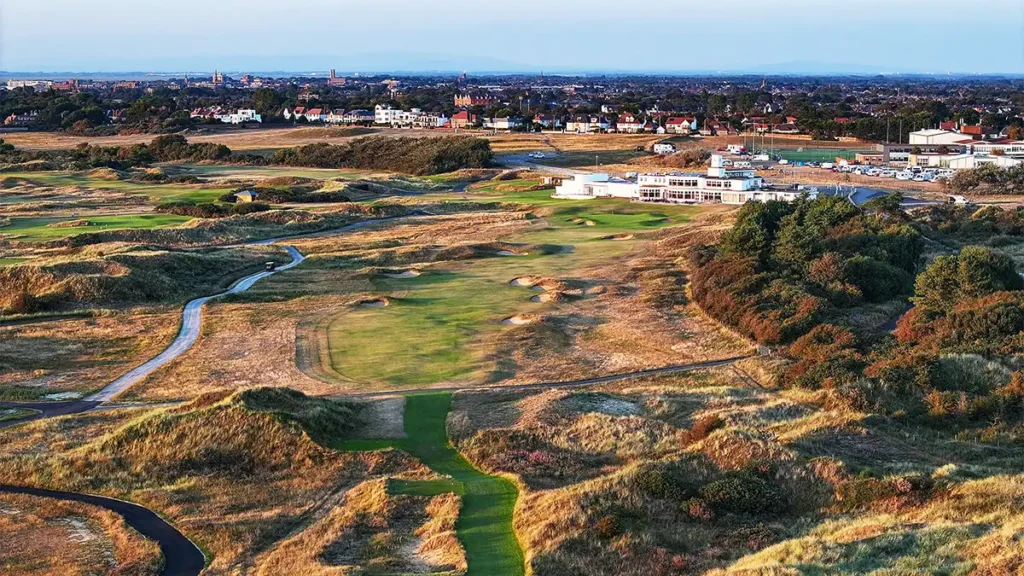
Royal Birkdale was carved between the dunes along the West Lancashire Coastal Plain by three generations of the Hawtree family. It was designed to allow for whipping winds from the Irish Sea, Birkdale’s truest defence. As such, the layout does not attempt to overly punish well-struck shots with horrible bounces or blind hazards.
It is also a course that has historically treated Australian players well. “No Open venue has been kinder to Australians,” Australian Golf Digest editor Steve Keipert and Tony Webeck wrote in their 2022 book, Aussies At The Open.
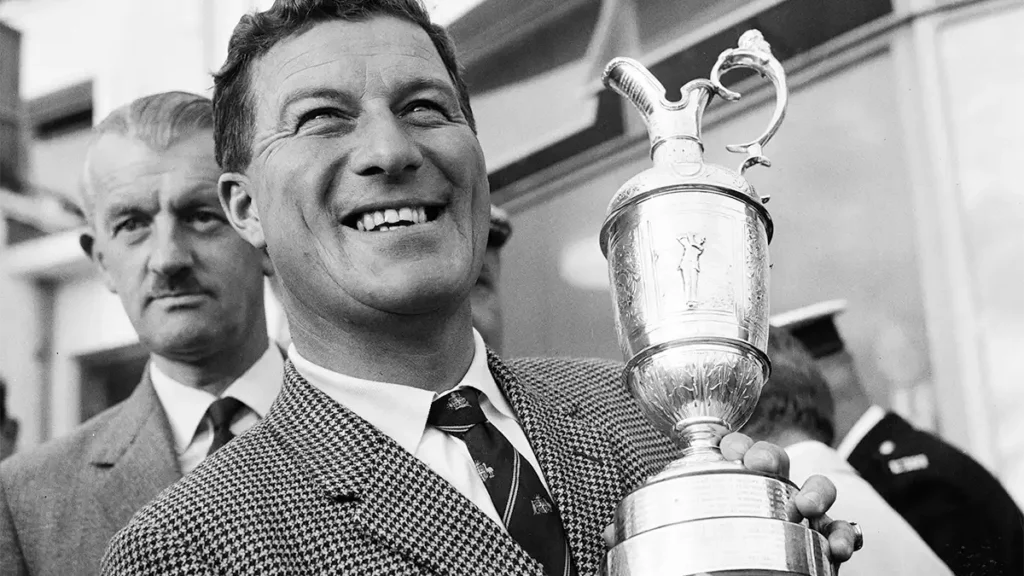
Indeed, the record of Australian golfers at Royal Birkdale is remarkable. Thomson won the first of his five Opens at Birkdale in 1954 and his final claret jug there in 1965. Ian Baker-Finch captured his lone major at Royal Birkdale in 1991. The only other venue on The Open rota that has seen three Australian victories is the Old Course at St Andrews, which hosts the championship more frequently than other sites.
When Thomson won in 1965, Kel Nagle and Bruce Devlin also finished in the top eight. For Baker-Finch’s victory, Mike Harwood was runner-up and Craig Parry and Greg Norman featured in the top 10. When Arnold Palmer won at Birkdale in 1961, Thomson and Nagle finished in the top seven. Thomson also tied for ninth behind winner Lee Trevino in 1971. Graham Marsh finished fourth at Birkdale in 1983, just two strokes behind champion Tom Watson. “Marshy had a great chance to win in 1983; he shot 64 on the final day but the wind died down and Watson played the back nine with almost no wind,” Clayton recalls.
The last time The Open was held at Birkdale – in 2017, site of Jordan Spieth’s thrilling third major victory – Marc Leishman shared sixth place.
“I think that the Aussies love the links style of golf, but they also love the fact that the wind protects that golf course,” Baker-Finch tells Australian Golf Digest. “We have all had to become good wind players growing up in Australia.”
It also helps that between the 1950s and 1990s, Australian golf enjoyed a rich depth of talent. “It was that era, wasn’t it? There were 10 Australians in the top 50 in the world,” Baker-Finch says. “With every major, there were two or three or four Australians in the mix every time we played [in The Open].”
KINDER THAN MOST
What hasn’t hurt Australian chances is the fact that, even at 6,543 metres, which measures among the shorter of The Open venues, Birkdale can’t be overpowered. The past four Open champions there – Spieth, Padraig Harrington, Mark O’Meara and Baker-Finch – were not bombers. Birkdale brings the mid-distance drivers into the equation and rewards accurate tee shots to optimum sides of the fairway, instead of sheer length.
“It’s not a course you can overpower. It’s strategic,” Baker-Finch says. “You’ve got to think your way around, plot where you’re going. The mounding and the sand dunes are on the outside of the holes. That means the holes play beneath the sand dunes. I just think it sets up perfectly for [Australians] and when you think about the fact that the first time The Open was ever held at Royal Birkdale, in 1954, Peter Thomson won. He won again in 1965. I won there in 1991. I think it just has a great affinity for Australians and there’s something about it that just sets up well for us.”
But what is that “something”? Perhaps it’s the topography of Royal Birkdale, which Baker-Finch alluded to. While some links courses play over massive dunes – like Royal Portrush, which has not been kind to Australian golfers at The Open – Birkdale’s routing meanders through valleys between the dunes. That allows each fairway to have greater definition, perhaps making it easier for players to visualise their tee shots.
It certainly inspired Baker-Finch in 1991, when, after consecutive rounds of one-over-par 71, the Queenslander roared back into the championship on the third day.
“In 1991, it was the largest cut ever,” Baker-Finch recalls. “Two-under-par led. That was back in the days when the 10-shot rule counted [those within 10 shots of the lead made the cut regardless of what the cut-line sat]. I think there were 113 players who made the cut. Pretty amazing. Everyone had a chance. I shot 64 on Saturday. I was four behind and shot 64 to share the lead going into the last day at four-under-par. I shot 66 on the last day for eight-under to win.
“The golf course doesn’t give you much. It’s a tough golf course. With a par 70, it [plays] pretty long. You have to drive the ball well. It’s not like golf these days – it’s not about how far you drive it [at Birkdale], it’s about how straight you drive it. It’s about keeping it in play and putting it in the right place off the tee for the right angles into the greens. And there’s a lot of really difficult par 4s. If you don’t make any mistakes, and if you can drive the ball well there, you have a lot of opportunities for birdies. Towards the end, it offers the opportunity for anything to happen because you’ve got those two par 5s which come late [at the 14th and 17th]. Everyone in the field can reach the 17th, and then you’ve got the par-4 18th, which is 506 yards. Tough par 4 to finish it off where you’ve got to get it done.”
Another secret was unlocked at the 2008 Open when Norman was nine holes away from producing one of the great Cinderella stories in sport at Royal Birkdale. Norman proved that the Southport links rewarded “feel” above all.

You may recall Norman’s captivating first three rounds that year. A former dominant world No.1 and two-time Open champion, Norman was a somewhat ceremonial presence, aged 53 and ranked 646th in the world. As detailed in Aussies At The Open, The Shark came close to withdrawing before the tournament. Norman had travelled to Skibo Castle in the Scottish Highlands, which was a pre-Open tradition from his prime, to practise. But he was swinging the club poorly.
“That week at Skibo, I was practising, I was hitting the ball terrible, the weather was terrible,” Norman told Aussies At The Open. “I looked at the long-range forecast and it was going to be the same down at Birkdale. I actually nearly withdrew from The Open because I thought, Oh gosh, I’m playing so bad. I really don’t want to take a place away from a young kid and give them a chance at doing it.
“On the Sunday I was going to leave, I almost picked up the phone to say, ‘Hey, I’m going to withdraw. I’m going to head back to America.’ When I looked at the forecast that Sunday afternoon at Skibo, I went out and played without a yardage book. That turned me around because I started playing by feel. It was an extremely windy day that day. I think it was around 30 [miles per hour]. The golf course was playing tough. I played without a yardage book. Played on my own. Played by feel. Lo and behold, everything just came flooding back to me. I thought, OK, let’s just go down, the weather conditions are going to be the same up until Thursday. Let alone to just stay the same all week.
“When I went down there and I played my practice rounds, I was hitting 5-irons from 90 yards, 110 yards. I was doing these little bump-’n-runs and everybody was looking at me like, ‘What are you doing?’ I said, ‘I’m just feeling my way around the golf course.’ Then, come Thursday, I felt really good because I was playing it by pure feel. It was all about feel and trust.”
Norman conjured up hopes of pulling off a miraculous victory, demonstrating for a new, younger generation of fans why he had been a truly global superstar. At 53, Norman became the oldest golfer to hold at least a share of the 54-hole lead at The Open (it lasted just one year, as Watson led after three rounds in 2009 at age 59). With extreme winds, there were no under-par rounds. For the first time since Norman himself in 1986, The Open’s 54-hole leader was not under par. Norman stumbled on the final day, with eight bogeys during a 77 that relegated him to a tie for third place behind Harrington. It was nonetheless a universally admired story.
“Now, I’m a very physically fit guy,” Norman told the authors. “It’s a testament to how I’ve looked after my body, to be able to get into that position in the 50s. So your 53 is a 43, maybe even a 40 in my situation because I hadn’t lost much distance – I still had power and flexibility. It’s a testament to what you do off the golf course, not what you do on the golf course. That is part of the parcel with the technology with equipment.”
THE 2026 VERSION OF BIRKDALE
Royal Birkdale will look a little different this year, however, in its 11th time hosting the links major.
Open Championship-preferred architects, Mackenzie & Ebert, renovated the fifth and seventh holes, did away with the par-3 14th, and moved the par-5 15th to the right. It plays to a more raised green and is now the 14th hole. The 15th now is a new par 3 that tips out at 216 metres and is positioned in a different direction to the other par 3s. There are new greens at the fifth and seventh, although in their existing locations.
Baker-Finch will be back at Birkdale this month, seeing if any of his countrymen in Adam Scott, Jason Day, Min Woo Lee, Cameron Smith, Lucas Herbert, Travis Smyth, and Elvis Smylie (with potentially more qualifiers to come) can become the fourth Australian to triumph at Birkdale. If not, he’ll enjoy his favourite UK links.
“Birkdale in my mind – not just because I won there – is the best course on The Open rota,” Baker-Finch says. “Obviously, St Andrews is the Home of Golf. It will always be the most revered and the greatest of all the golf courses. But apart from St Andrews, I think Royal Birkdale has it all. For me and most Australians, what excites us the most is true links golf.”
Photographs by getty images/david cannon, getty images/R&A Championships, getty images: andy lyons, mirrorpix
Brought to you by