
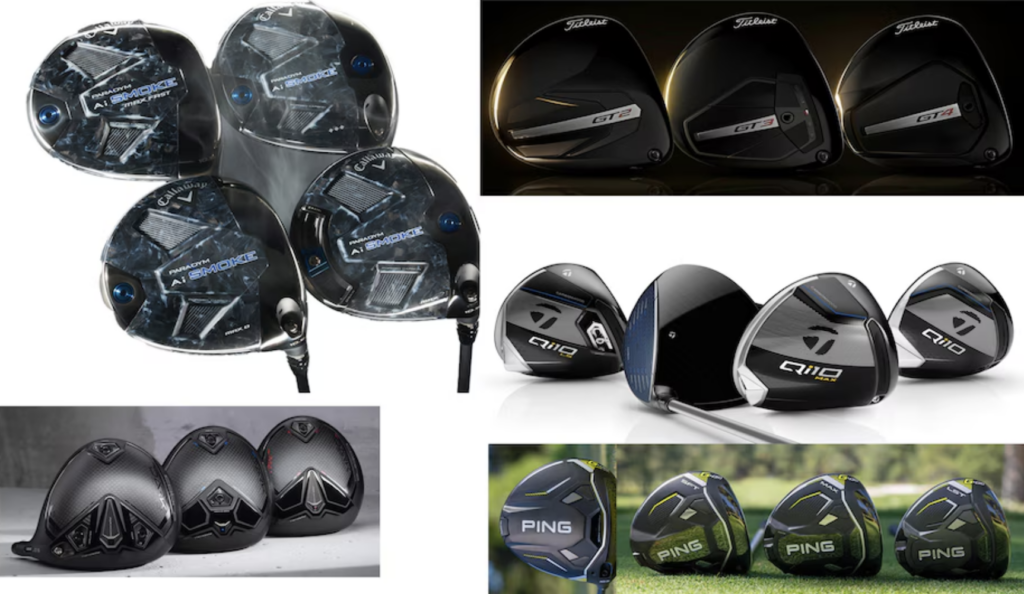







The five different Callaway Quantum drivers may look like the most complex array of offerings for a new driver family, but it’s the three-piece face design that heralds a complexity that easily is the most ambitious in the company’s four-decade history.
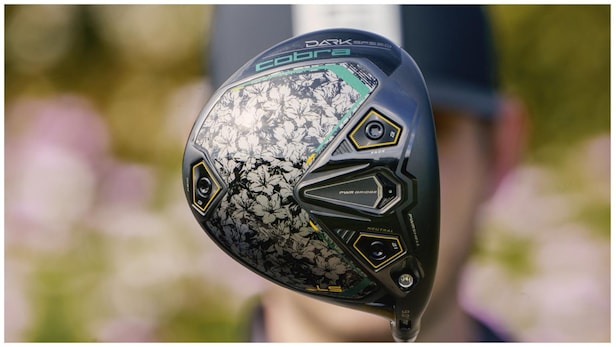
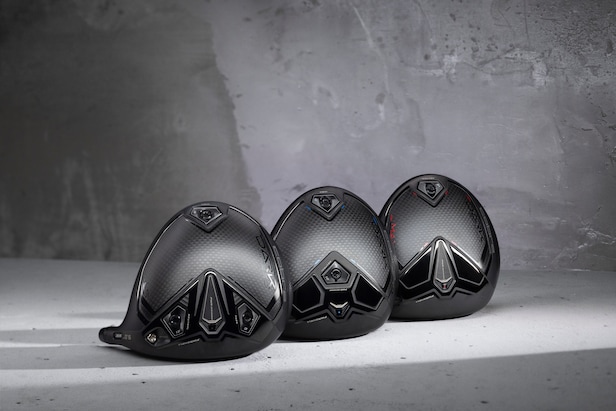
The Cobra OPTM family of drivers looks to take a new step toward enhancing stability and forgiveness through special shaping and balanced internal weighting for more consistent distance and dispersion.
Cobra’s King Tec-MD is built to bridge the gap between driver and fairway wood, offering a smaller, more controllable option off the tee and a playable alternative from the turf.
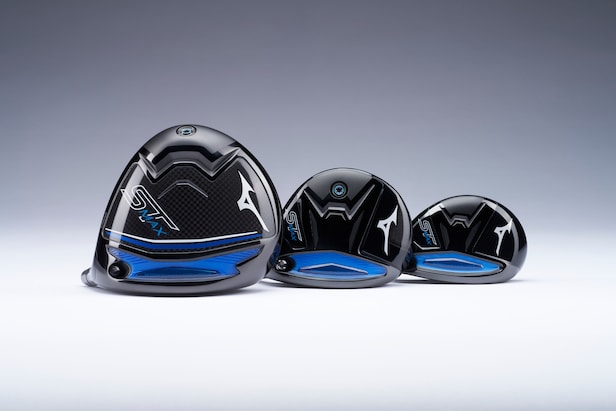
The new Mizuno JPX One drivers find a way to generate more ball speed by combining a thinner titanium face with a polymer “nanoalloy” coating that increases the strength and bending properties of the titanium at high-speed impacts to create better resilience than typical titanium face inserts for better energy transfer.
The new XXIO 14 line-up of woods and irons, again with a lightweight construction geared to those with moderate swing speeds and smoother tempos, is the company’s most expansive yet.
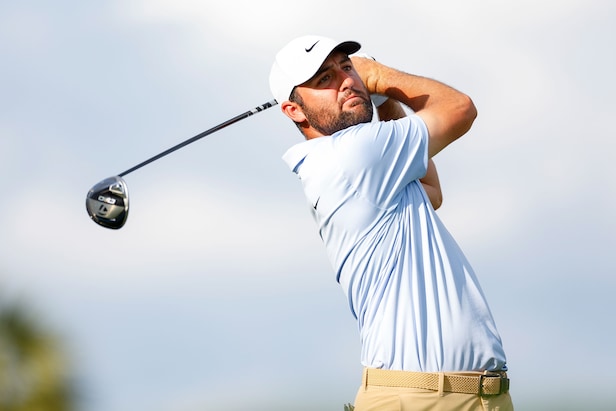
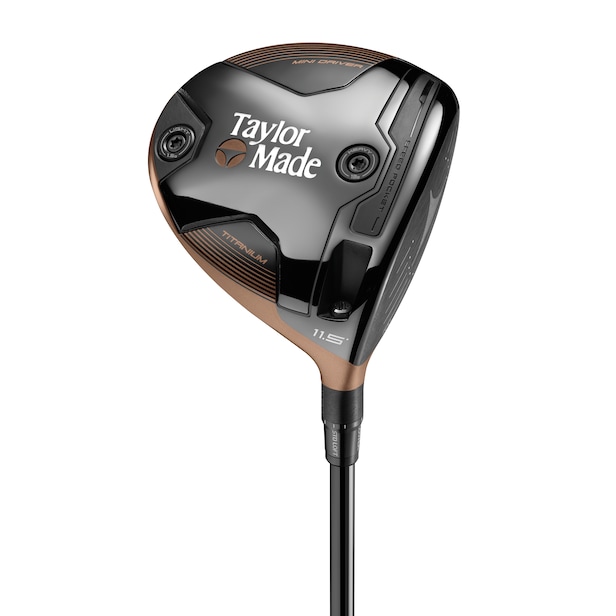
The Hero World Challenge is sometimes chastised as “not a real event”. Don’t tell that to world No.1 Scottie Scheffler, the two-time defending champion who is using the competition as a proving ground for a new TaylorMade driver.
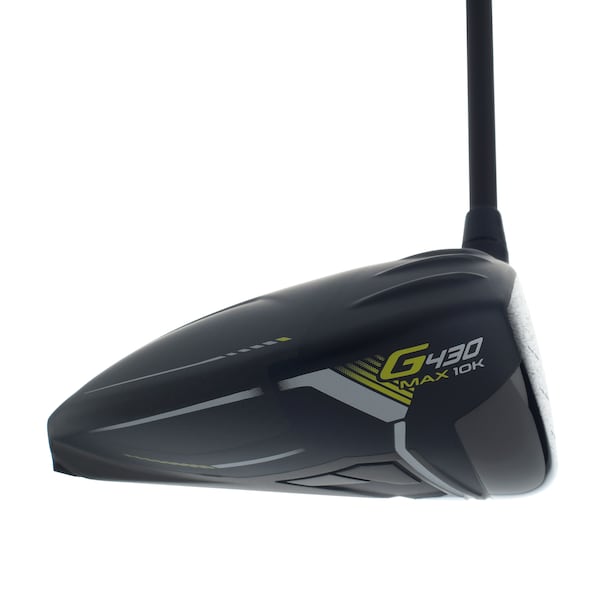
One of the benefits of independent robotic testing is its ability to validate insights that might initially seem implausible. For example, the most forgiving driver in this year’s crop (at 95 mph/152km/h) was actually a low-spin model — Ping’s G440 LST.
Recent R&D efforts have zeroed in on beefing up ball speed retention around the sweet spot, and thanks to the precision of Golf Laboratories’ swing robot, we’re able to see which drivers are actually walking the walk.
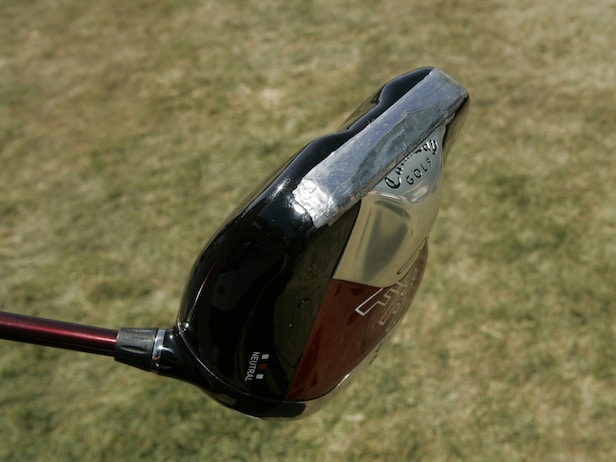
According to TaylorMade tour rep Adrian Rietveld, Scheffler wants “absolutely nothing inside” his driver’s clubhead that might alter performance in any way.
As a longer shaft creates a larger swing arc, there is the potential for more speed being delivered to the ball at impact for more distance. Practically, according to most clubfitters, that is rarely what happens.