What you need to know: Pros have been embracing high-lofted fairway woods at a rapid clip in recent years – and amateurs have taken notice. Demand at the retail level has seen manufacturers expand their fairway wood lineups to include additional lofts beyond 18 degrees, in an effort to give golfers multi-purpose alternatives at the top of the set.
But not everyone can generate enough spin with a high-lofted fairway wood to hold a firm green, which is the chief reason why Callaway created the Quantum Mini Spinner.
The club initially came about in response to a request from a JLPGA player who wanted to compete with longer hitters on firm greens without switching to a long iron she couldn’t control. Her ask wasn’t for more distance, but rather more spin, a steeper landing angle and something she could reliably stop on the green.
Callaway’s answer already sells well in Japan – it’s the No.1 fairway wood in the market – and the Quantum Mini Spinner now arrives Down Under, aiming to capture a market with similar wants and needs.
Pricing/availability: Callaway’s Quantum Mini Spinner fairway wood is available in right-hand only, and comes in 7-, 9- and 11-wood lofts. $649.99 AUD | $789.99 NZD
3 Cool Things
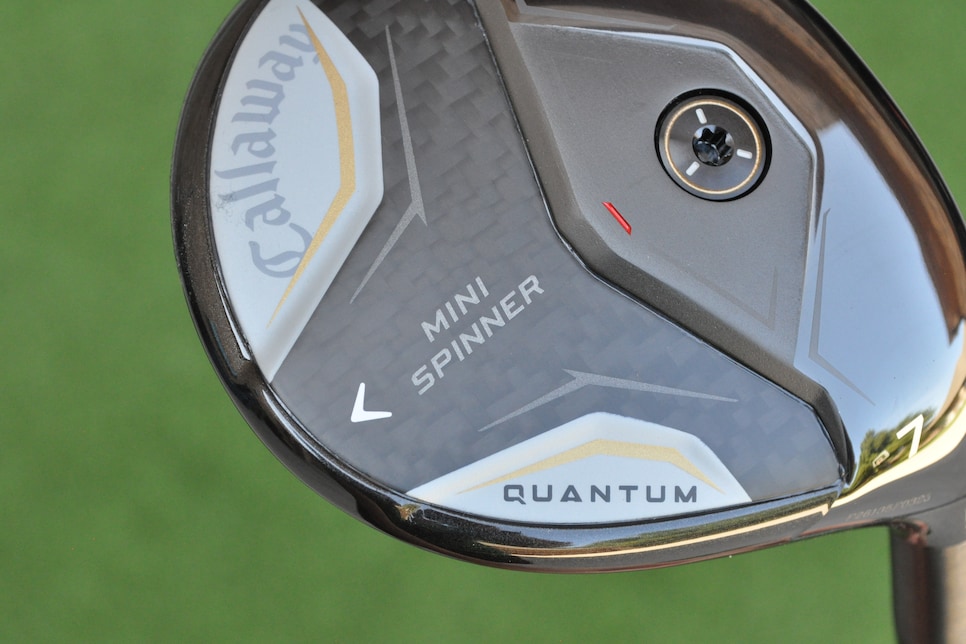
1. Swapping places: Callaway typically builds its fairway woods with a composite crown and a steel sole, a combination meant to pull weight low and keep the centre of gravity down. The Mini Spinner, however, flips the script with a steel crown and composite sole. The result is a higher CG, which is unusual territory for a fairway wood; that’s normally a wedge or short-iron design goal.
A higher centre of gravity (CG) paired with a deeper face gives the club more spin at impact, since most players’ contact point sits slightly lower to begin with. Move it up, and the gap between the contact and the CG increases, which generates the added spin.
“We wanted a high centre of gravity to generate more spin,” said Evan Gibbs, Callaway’s senior R&D director of metalwoods. “The deeper face helped with spin as well, because players’ impact locations are a little bit below the centre of gravity. So it tends to generate a little bit more spin when you hit it there.”
Callaway says the number lands between 500-800 rpm higher than its standard 7-wood, enough to meaningfully shorten rollout once the ball lands.
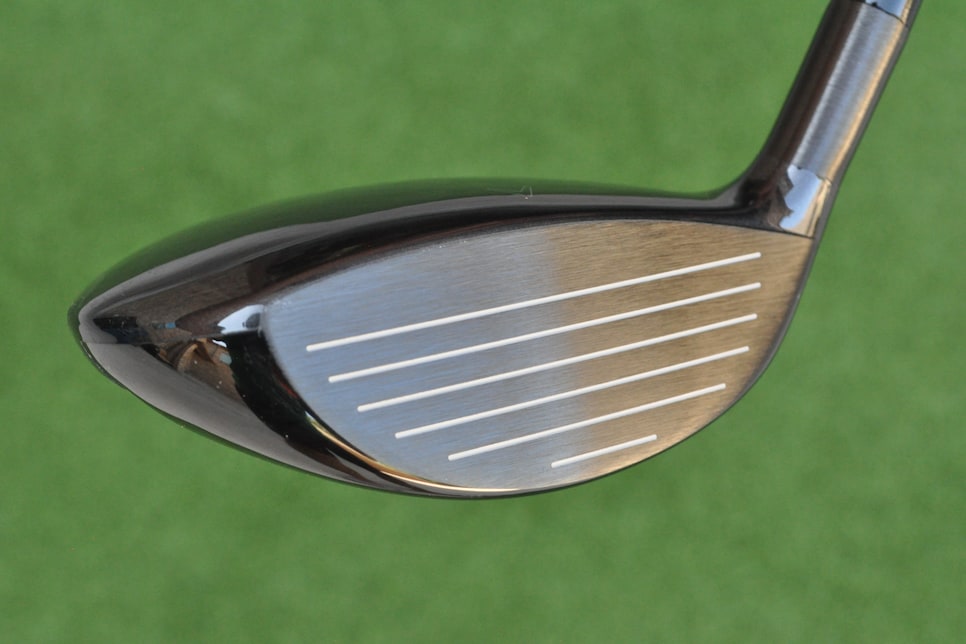
2. Not the same: At 21 degrees, the Mini Spinner carries the same loft as Callaway’s standard Quantum 7-wood, but the shaft is nearly three-quarters of an inch shorter and the lie angle sits two-and-a-half degrees more upright. Shorter and more upright is designed to create more of an iron motion – a steeper angle of attack instead of the sweeping motion a longer, flatter fairway wood encourages.
That matters for consistency more than the numbers on a launch monitor. A shorter shaft is meant to be easier to control through impact.
“We wanted something that was a little bit more repeatable, a little bit more consistent,” Gibbs said. “The way that this club sets up with a shorter length, it’s more approachable. Impact locations are going to be a lot more consistent. Players are going to tend to hit a little bit more down on it and feel that they can do that with a deeper face.”
That’s the opposite priority of most new fairway woods, where added ball speed is usually the headline.
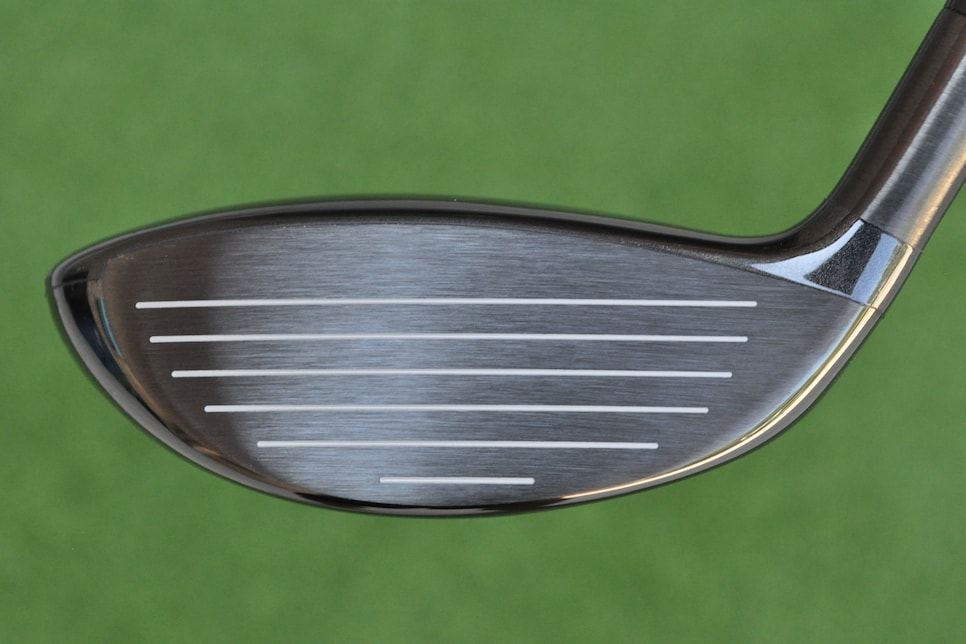
3. Return of the GBB: Instead of starting from scratch, Callaway engineers took a page from the past and used the Great Big Bertha-era 7-wood as the design reference. More specifically, the deeper face and heavy camber on the leading edge that helped it perform out of the rough as well as the fairway.
The current version keeps that camber and deep-face profile, which is also part of why the higher CG works. More face depth afforded the R&D team the freedom to push mass upward without sacrificing the low-face stability a fairway wood still needs off tight lies.
“This particular player was using a GBB fairway wood from many years back, and we used that as sort of the starting point of the head shape,” Gibbs said. “It had quite a bit of camber on the leading edge. [The JLPGA pro] felt that it was a very versatile shape – she could hit it out of the rough as well as the fairway.”
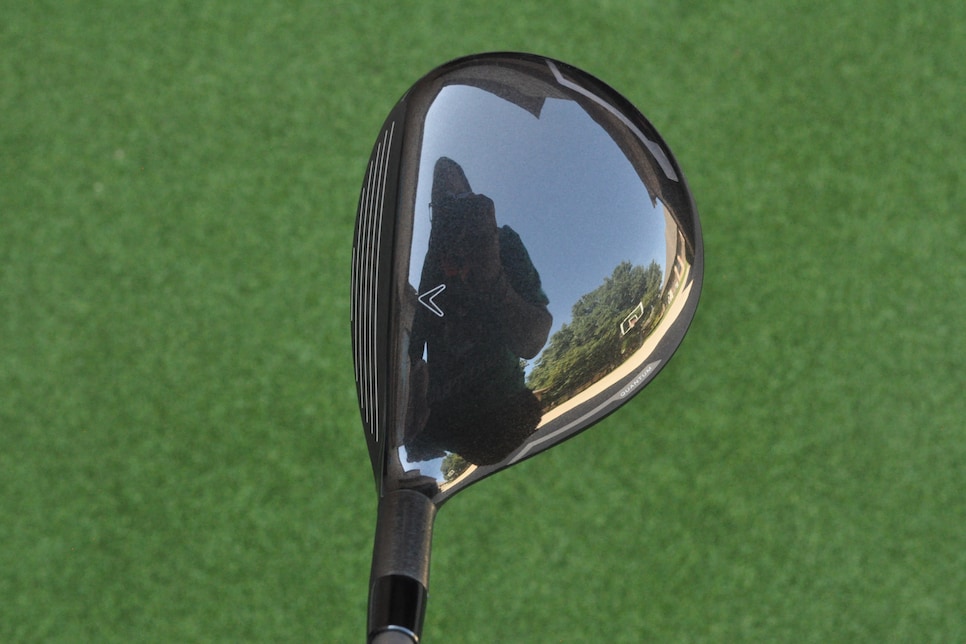
It’s also a fixed-hosel design with no adjustability. That’s a tradeoff in service of the same goal: locking the CG location in place rather than letting an adjustable hosel introduce variables the design is trying to eliminate.
“There was no limitation on the design – from loft, from lie, from head shape,” said Jacob Davidson, Callaway’s VP of global product strategy. “Normally you’re taking spin out of things, and now, reverse to that, you’re saying, let’s see what it looks like to add spin.”
Where this actually lands in the bag is the more interesting question. It isn’t pitched as a replacement for a 7-wood or a 4-hybrid; it’s positioned as a third option in that gap, for a player who wants hybrid control with more launch, or a fairway wood launch without the rollout.