
There are few shots that amateur golfers hate more than bunker shots, and for good reasons. There are few shots in golf that bring more disaster shots into play than bunker shots.
According to Shot Scope data…
- 14 handicaps hit more than double the amount of bunker shots over the green long (32 percent of all their shots) than they do bunker shots to inside six feet (13 percent). Worse yet, they leave their ball in the bunker another eight percent of the time.
- 5 handicaps aren’t much better. They have an almost even split between bunker shots that finish long of the green to bunker shots that finish inside six feet (21 percent to 19 percent), with another four percent remaining in the bunker.
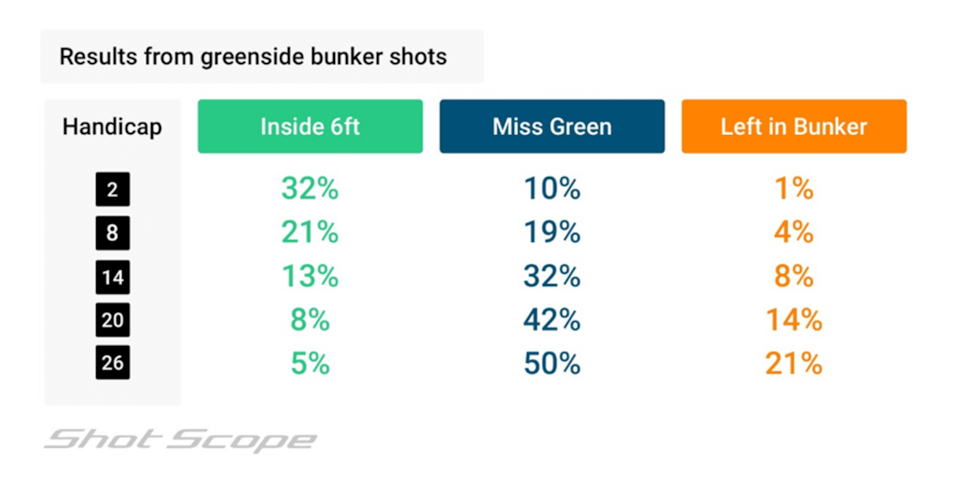
The cause of these ugly numbers is the kind of ugly shots we know too well: Skulls and thins.
And the reason for those, according to Joe Mayo, the no. 6-ranked teacher in America, is that golfers don’t have enough shaft lean in the bunkers.
When shaft lean is a good thing 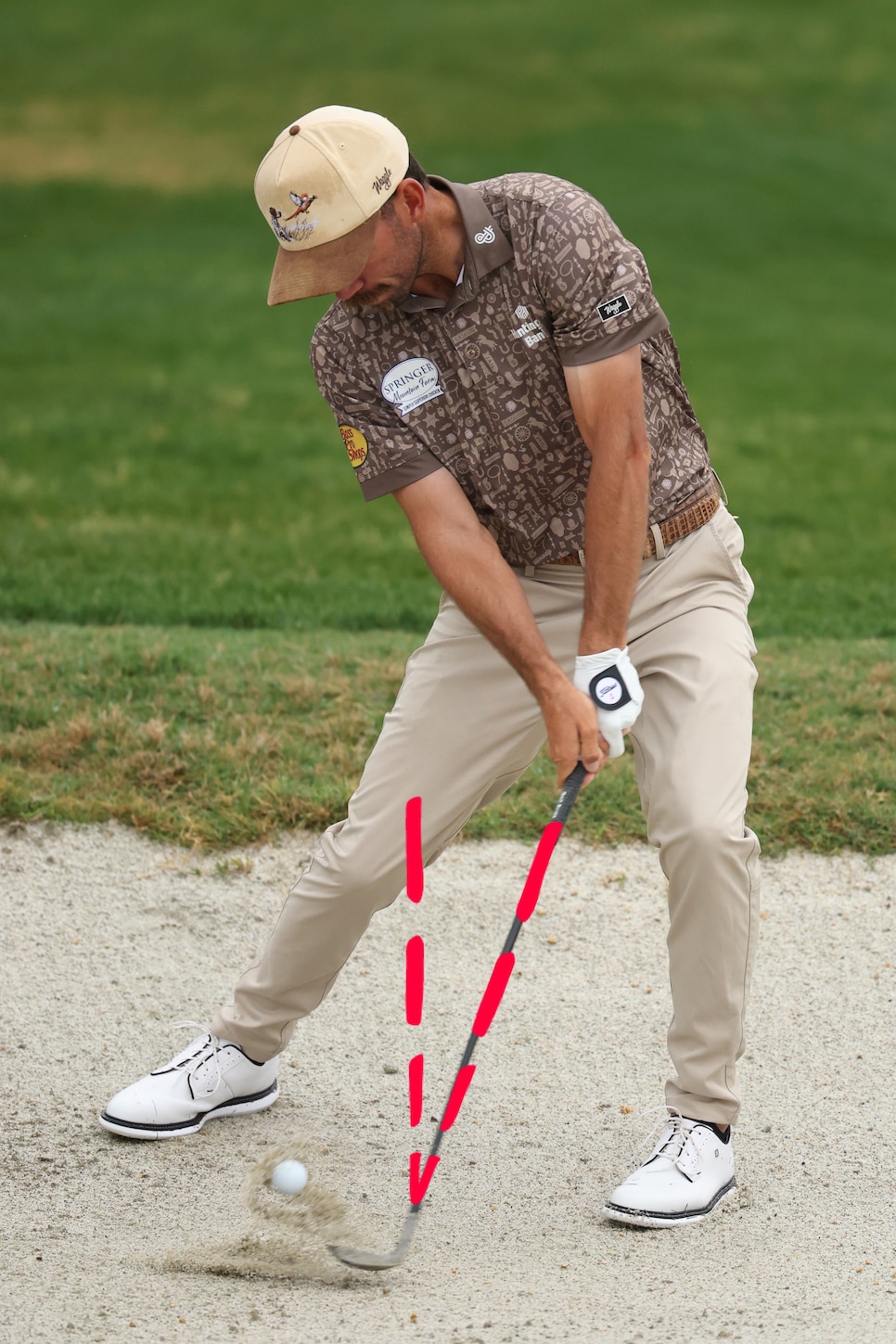
Stacy Revere
Now, like everything in golf, too much of anything can turn a good thing into a bad thing, but Mayo says the issue he often finds is that golfers with too little shaft lean by the time the club enters the sand.
Often, golfers hands are even or even behind the ball, which causes the clubhead to bounce up out of the sand and into the middle of the golf ball—that’s where the skulls come from.
Bunkers with hardpan sand become impossible, ones with overly soft sand are hard work to move through.
According to Mayo:
“Mid to high handicappers have little to no shaft lean with every club in the bag. So when they get into the bunker, the same thing applies. They have little to no shaft lean, which causes them to hit the sand way too soon, and then the leading edge bounces right out of [the sand]. That’s where the thins, blades, and shanks come from.”
Shaft lean in the bunker, in simple terms, can be a very good thing for most golfers. It helps the clubhead dig down into the sand.
A few ways he explained to me:
- Open the clubface and set up with your hands more forward at setup with more weight on your front leg
- Feel like your hands are slightly ahead of the ball by the time the clubhead enters the sand
- Get aggressive down and through the sand. The clubhead will stay down, and the ball will come out high and fluffy.
https://www.instagram.com/reel/DXfqwUcj8IX/?utm_source=ig_embed&utm_campaign=loading
This article was originally published on golfdigest.com