Twelve months ago, electric-buggy giant Motocaddy made the big decision to go direct-to-customer in Australia. Was it the right call?
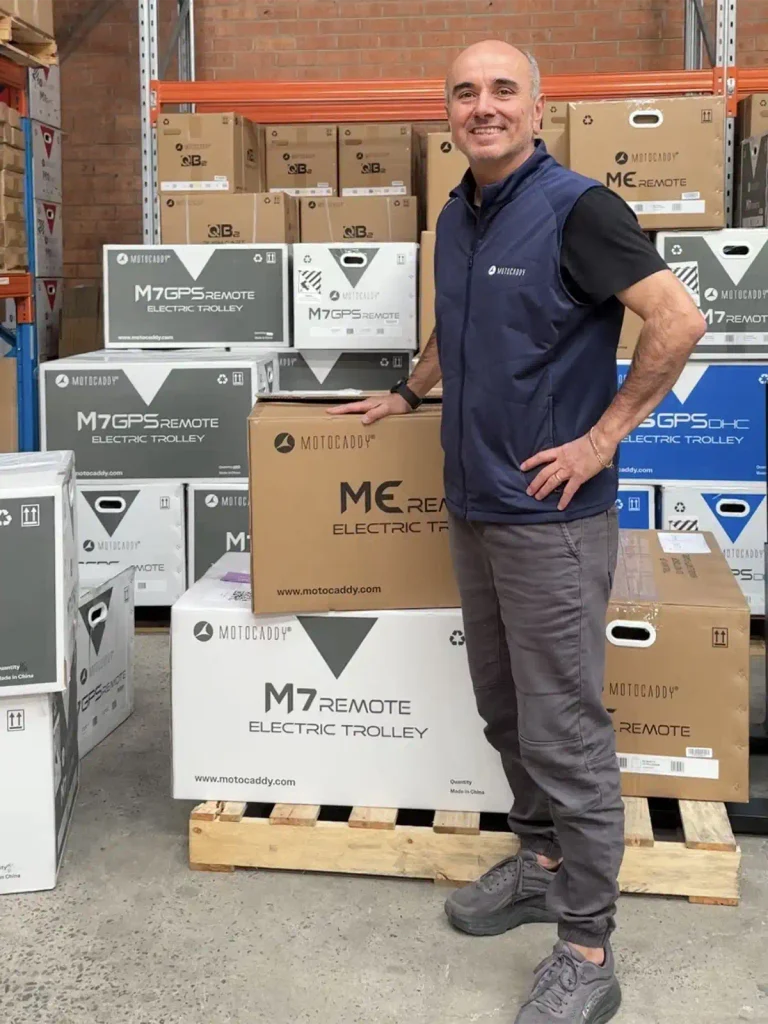
When a global brand takes control of its own business in a foreign market it has served via distributors for more than 15 years, the obvious question is whether it can sell more product. A year into Motocaddy’s direct-to-consumer gamble in Australia, operations director Catherine Arkoudis [right] believes the more important question is what the company has learned along the way.
The British buggy giant entered 2025 with an established reputation and a proven range. But going direct Down Under meant taking responsibility for everything, from stock and fulfilment to customer service before and after sale, all while building a closer relationship with the golfers using its equipment.
It was a significant shift, and one not without its challenges. Yet Arkoudis says the first 12 months have reinforced the value of something that can be difficult to quantify on a spreadsheet: understanding the Aussie golfer on true-blue Aussie terms.
“I’d say it’s lived up to it and then some,” Arkoudis says with a huge grin. “At the time, ‘huge milestone’ felt like the right way to describe it, but you don’t really know the full weight of a decision like that until you’re a year deep into living it.
“Being able to speak directly with golfers, hear their feedback in real time, and act on it has been hugely beneficial and rewarding. That’s been the biggest shift from what we had before. We’re not guessing what customers want; we’re hearing it direct and adjusting as we go. Building out a support team, refining logistics, keeping up with stocktake – that’s exactly the kind of ‘control your own destiny’ opportunity we were hoping for when we made the call to go direct.”
As Arkoudis explains in more detail below, “A year on, we know it was the right decision.”
▶ ▶ ▶
Australian Golf Digest: What does success look like for Motocaddy Australia? Are we talking units sold, market share, revenue, customer data, brand awareness – or something less tangible?
Catherine Arkoudis: It’s a bit of all of those, but if I had to point to what’s mattered most this past year, it’s brand awareness. Going direct meant we had to introduce ourselves all over again, providing golfers more choice that they might not have known they had. A lot of our focus has gone into making sure people know we’re here and that we’re a solid option worth considering. The flow-on effect from that has been really rewarding to watch. As more people recognise the brand, that naturally translates into units on the ground. Once you start seeing more Motocaddy buggies out on course, it sparks conversation. Golfers ask each other about their gear all the time, so every buggy out there is doing a bit of marketing for us just by being seen. It all feeds back into the same cycle: awareness drives sales, sales drive visibility, visibility drives more awareness. We’ve also been intentional about getting involved in initiatives that matter. Being part of the Cancer Council’s ‘The Longest Day’ was a proud moment for the team.
▶ ▶ ▶
What did Motocaddy underestimate about the Australian market before it went direct? And what have you learned over the past 12 months that you simply couldn’t have learned from overseas?
Motocaddy has dominated the electric buggy category globally, so there’s a temptation to assume a winning formula just travels, but we have been somewhat pushed – in a positive sense – to look at the Australian market from scratch. This time, we’ve done it from the inside rather than through a distributor’s lens. Having a local team on the ground has made all the difference. Australians shop differently, respond to different triggers and expect a different tone altogether. Our marketing here can afford to be more light-hearted and relaxed than what might work overseas, and that’s not something you can pick up from a head office on the other side of the world. You must be here, living it, to really get it. We’ve leaned heavily on order analysis to understand these patterns properly, looking at what Australians are buying, when and why, rather than assuming their preferences mirror any other market we operate in. Even the climate plays a role in how and when people play, which naturally shapes buying behaviour in ways that just don’t show up in overseas data. Success hasn’t come from importing a strategy. It’s come from listening to our customers directly and taking their feedback seriously. That has helped shape the business.
▶ ▶ ▶
You had been selling here for more than 15 years through distributors. What made 2025 the moment to change the model?
It really came down to timing. Golf has grown so much in recent years, and the demographic of the everyday golfer has shifted with it. To meet that change, we needed to hear directly from the people out there playing the game. Motocaddy has grown enormously across other markets, and watching golf boom the way it has here in Australia over the past few years, it felt like exactly the right moment to step into the market and put real focus on Australian golfers specifically. Fifteen years through distributors gave us a solid foundation, but going direct to the golfer gave us the chance to build on it properly, on our own terms. At the heart of it, it’s about giving golfers here the ability to get their hands on a genuinely great product at the best possible price. That’s what 2025 represented for us: less about disruption, more about finally being in the right position to do things properly.
▶ ▶ ▶
Going direct inevitably means taking on more responsibility – warehousing, fulfilment, customer service, warranty and after-sales. Has that been harder than expected?
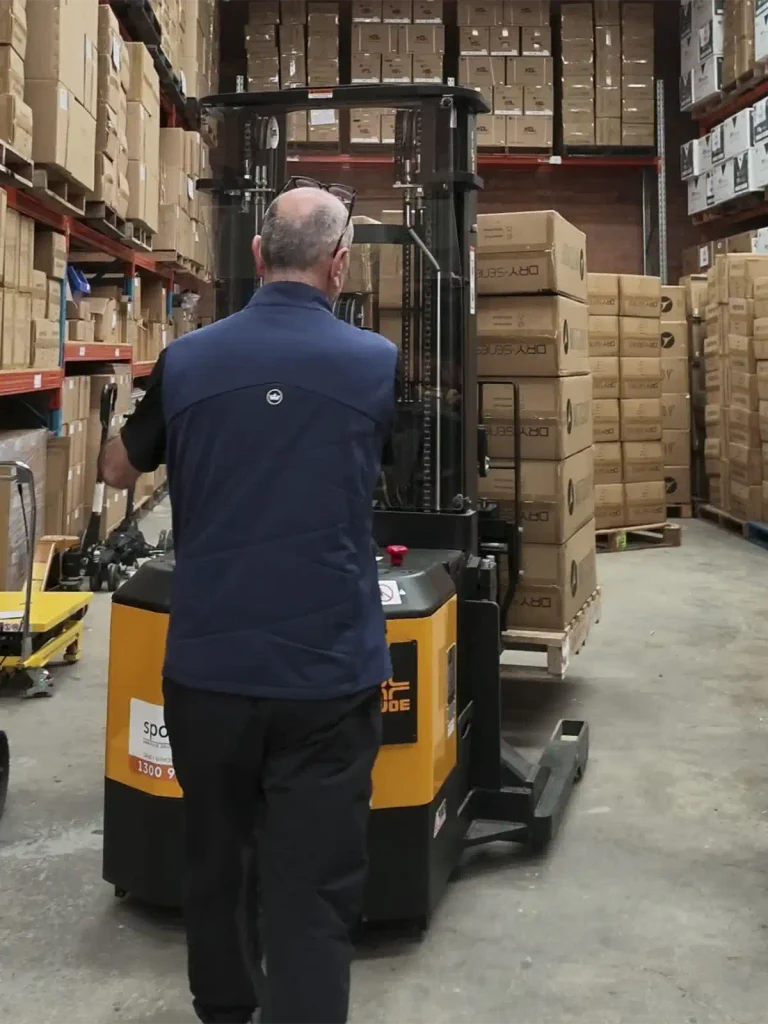
Honestly, the hardest part has been holding ourselves back a little and letting the growth happen at a natural pace rather than rushing it. There’s a temptation when you go direct to want everything scaled up immediately, but we’ve been very conscious of building this in a sustainable way rather than over-extending ourselves early on. Warehousing was probably the trickiest piece of the puzzle. Figuring out how much space we’d actually need – and more importantly, getting a real read on what stock Australian golfers wanted – wasn’t something we could just assume from day one. It’s been very much a step-by-step learning process, working through what moves well here, what doesn’t and adjusting our stock levels accordingly rather than guessing based on other markets. It’s one of those areas where you can plan as much as you like on paper, but you only really learn the rhythm of it once you’re in the thick of it, month by month, order by order.
▶ ▶ ▶
Has this move genuinely changed the relationship between Motocaddy and the Australian golfer?
Completely. And honestly, it’s been one of the most rewarding parts of this whole shift. We’re hearing directly from the customer now and they don’t hold back, which I mean as a sincere compliment. We get the good, the bad and everything in between, and that honesty is exactly what we need to keep improving. Being able to take that feedback on board in real time means we can mould the business around what the customer wants, rather than working off assumptions or second-hand information. Giving our customers immediate answers is a huge plus. They’re not left waiting or wondering who to contact. For us, it means we’re constantly learning and adjusting, which has made the relationship with Aussie golfers feel far more personal than it ever could have been under the old model.
▶ ▶ ▶
One of the promises at launch was “more choice and better value”. Has the Australian golfer seen that benefit?
Most definitely, yes. As our brand-awareness campaigns keep gaining traction and we become more visible out on course and online, we’re finding that golfers naturally start to look a little closer and compare what’s out there. Once they do, the value in what we’re offering becomes pretty clear. That’s really the heart of what going direct was meant to deliver: giving golfers a genuine alternative and making sure the price reflects that.
▶ ▶ ▶
What have Australian golfers told you they want that differs from golfers in the UK, Europe or North America?
Probably just how relaxed and social golf is here. A lot of Australian golf happens on public courses, in twilight rounds, without much of the clubhouse formality you might find overseas. Golfers here want something that fits that easy-going lifestyle, rather than a product that feels tied to tradition or status. It’s less about prestige and more about enjoying the game on their own terms. The second is price sensitivity. Aussies are famously savvy shoppers and that holds true in golf as much as anywhere else. Good gear at a fair price genuinely lands better here than a premium positioning ever would. Golfers want to know they’re getting real value, not just paying for a name, and that’s shaped how we talk about and position our products in this market.
▶ ▶ ▶
Is Australia a fundamentally different electric-buggy market?
In some ways, yes, and one of the clearest signals we’ve seen is just how much Australian golfers love the remote models. That’s genuinely been our biggest winner since going direct and it tells us a lot about how the Australian golfer wants to play the game. It’s not about needing assistance or convenience for its own sake. It’s about wanting golf to feel easier and more enjoyable, without pushing, carrying or even walking behind the buggy. Golfers here seem to want the freedom to focus purely on their game, their swing, their thinking, without the buggy being something they must manage at all. The remote essentially disappears into the background, and that seems to resonate strongly with how Australians want to spend their time on course.
▶ ▶ ▶
Where does the next generation of growth come from?
We believe the biggest growth opportunity lies with golfers moving from push buggies to electric. Australia has a notably high percentage of golfers still pushing their buggy around the course, far more than we see in other countries, and that gap represents real opportunity for us. What’s been consistent in the feedback we’ve had from customers who’ve made that switch is just how positive the experience has been. They’re finding they’re less exhausted, more focused and genuinely improving their game as a result. Once someone makes that move to electric, they very rarely go back.
▶ ▶ ▶
What has surprised you most about the Australian customer in the past year?
They have really embraced our golf bag range in a way we didn’t fully anticipate. Once golfers see the quality up close, at a genuinely affordable price, it’s an easy decision. They look great, we’ve got a strong range of waterproof options and the PROTEKTA bag has really led the way. It’s got individual slots that protect the clubs from knocking around and making noise on course, which sounds like a small thing until you’ve played with a bag that doesn’t have it. It’s durable, fully waterproof and built to handle whatever the Australian conditions throw at it. What’s told us the most is that golfers aren’t just buying a buggy and moving on. They’re interested in the whole setup, wanting quality gear that works together properly. It’s been a great insight for us and it’s shaped how we think about the wider range moving forward, not just the electric buggies that got us here.
▶ ▶ ▶
What is the one thing you now know about the Australian golfer that has changed the way Motocaddy thinks about this market globally?
The Australian golfer doesn’t want to be sold to; they want to be listened to. That sounds simple, but it’s changed how we approach not just this market, but how we think about direct relationships more broadly across the business. Australians are practical, value-driven and refreshingly honest in their feedback. That’s pushed us to think differently about product development and service – not just here, but potentially in how we approach other markets too. It’s also reminded us that a market’s size doesn’t dictate its influence. Australia is smaller than some of our other territories, but the insight we’ve gained here – about listening properly, building real community relationships and letting customer feedback shape the business rather than the other way around – is something we think has real value well beyond our borders.