
How keen golfer Scott O’Neill turned smart property plays into early retirement, and why commercial real estate could be your next winning play
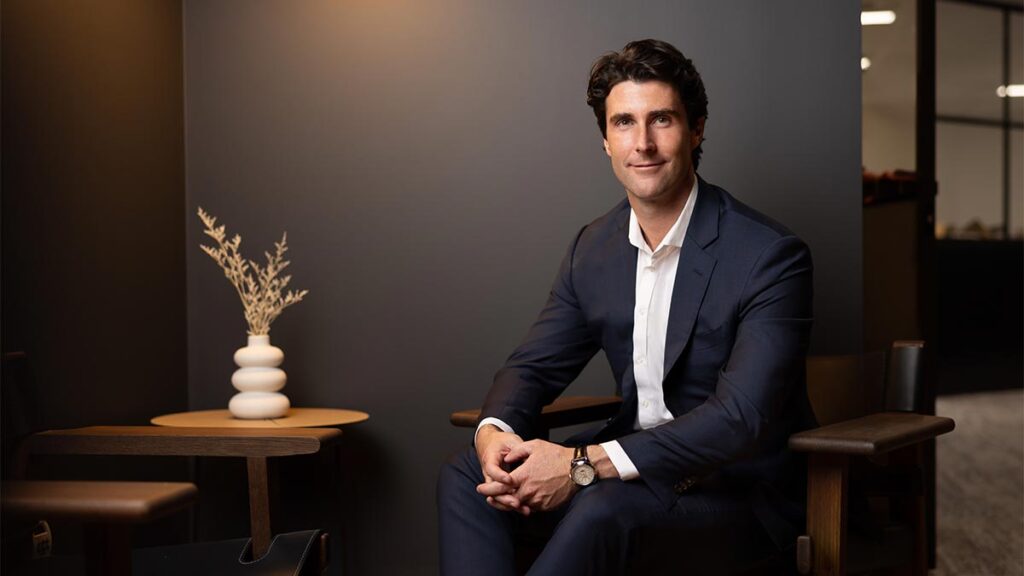
Scott O’Neill knows how to read a green – and a market. A keen golfer and former civil engineer, the Sydneysider made the leap from the corporate world to commercial property investing, achieving financial freedom by age 28. O’Neill, now 38, founded Rethink Investing a decade ago with a bold mission: to challenge traditional property strategies by focusing on high-yield, cashflow-positive commercial assets. While most investors stuck to the residential lane, O’Neill saw a bigger play. Today, Rethink Group is Australia’s largest and most respected commercial buyer’s agency, with more than $5.75 billion in acquisitions and further expansion plans in the pipeline.
In this exclusive Q&A, O’Neill shares the journey behind his remarkable success, and why Australian Golf Digest readers – particularly those chasing early retirement or long-term wealth – stand to benefit from his company’s sharp insights and tailored service. Just as on the fairways, O’Neill knows that smart strategy and specialist guidance can be the difference between average returns and a winning result.
▶ ▶ ▶
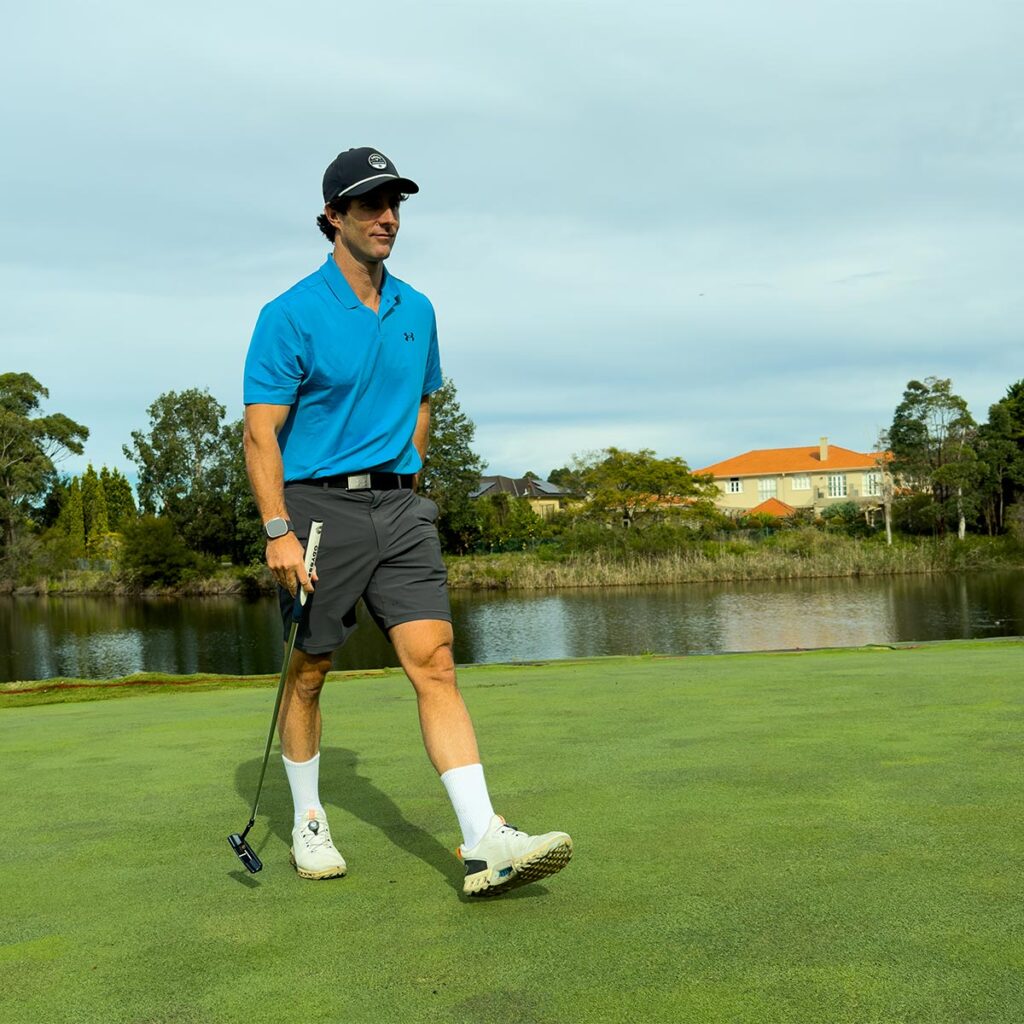
Australian Golf Digest: Scott, the way you stripe your drives, it’s clear you’ve spent some time on the fairways.
Scott O’Neill: Yeah, I grew up in the Sutherland Shire and played golf with my dad at Cronulla Golf Club for maybe 10 years as a kid, then stopped playing for probably 15 years after that. I’m starting to get back into it now, which is good fun. Dad was an enthusiastic player, a member at Cronulla Golf Club, and I used to just tag along down there. I also played cricket, so that took out Saturdays, and then I took up surfing and tennis. So, I just shared it between many sports, but I feel like golf’s the one that’ll stick because you can play into your older age quite well and it really is a community sport
▶ ▶ ▶
I understand you haven’t always been in commercial property investment…
As a profession, I was an engineer. I studied civil engineering at Sydney University. I used that degree to get a job with contractors and worked a few years building railways before I moved into the concrete and quarries game. And that was my first exposure to business – running P&L statements and managing large numbers of staff across different business units. But I was always investing on the side, mostly because I didn’t love my job and I thought any investing is a good thing because it’ll bring retirement a little bit earlier. Even if it was five years earlier, it was still a win. Things escalated quickly. I built a residential portfolio of around 19 properties and the equity that created was outpacing my income, with barely any time commitment. By 26, I’d replaced both my wife’s income and mine. We travelled Europe for six months, but I got bored sitting on beaches once the weather turned. That’s when I got into the buyer’s agency world. Fast-forward to now, we’ve handled close to $6 billion in transactions and have about 100 staff across our business units. We’re now the largest commercial buyer’s agency in the country.
▶ ▶ ▶
You mentioned different business units. What else do you specialise in?
We’ve built a vertically integrated model to make life easier for our clients. Rethink Property Lawyers handles both commercial and residential transactions, protecting clients’ interests. Rethink Insurance offers tailored coverage, especially important when you’re insuring complex assets like cold storage or shopping centres. You can’t just jump online and grab a policy, you need a broker who understands the asset, otherwise you risk insuring incorrectly. We’ve also got Rethink Wealth, our financial planning division, and Rethink Renewables – our fastest-growing business at the moment Here, clients invest in green energy by installing solar panels and batteries on commercial property roofs. It benefits the tenant through cheaper electricity, but also delivers additional income for the landlord by leasing the roof or battery space – which boosts equity. It’s a win-win. We’re launching other businesses too, so there will be nine in total by the end of this year, all designed to make the investment process simpler and more seamless for our clients.
▶ ▶ ▶
Is it fair to say there’s a huge crossover between your clients and golfers?
It is. Our average client age is probably 45 to 50, but we also work with first-time investors in their early 20s, all the way up to 80-year-olds. It’s a similar demographic to golf because they are people that have done relatively well in life, especially in commercial property. You need a minimum of a $500,000 deposit to invest in commercial property right now, so these people are successful in their career, or financially established and it just so happens that many of them have golf as a hobby.
▶ ▶ ▶
You’re a specialist in investing but how much do you invest in your golf game?
Not so much [laughs]. I actually installed a TrackMan simulator in my new house, which I don’t use as much as you’d think, but it’s funny – when you hit off astroturf, it’s so different from playing in the real world. You get fixated on a screen and then you go out on an actual course and it’s a completely different mindset.
▶ ▶ ▶
An indoor simulator at home – that’s every golfer’s dream!
I dug the floor a bit deeper to ensure the roof height was safe for play [laughs]. It’s good fun.
▶ ▶ ▶
Back to investing, what’s the biggest mistake people make with this caper, particularly first-time investors?
Probably buying where they live. With today’s prices, if a young investor buys their home first, it’s often a two-bedroom unit rather than the house they really want. Over the next decade, they trade up to a three-bed townhouse, pay stamp duty again, agent commissions, and repeat the process. By the time they get their ideal home, they’ve made three purchases, paid three rounds of stamp duty and worse, they’ve locked themselves into an owner-occupier loan. That becomes a boat anchor. It’s pretty hard to invest after that, so they just don’t invest. And that’s the big mistake. But other than that, if they get that first investment wrong, that changes everything. You have to get the first one right, otherwise you’re five years behind, minimum. Seek advice or do a hell of a lot of research so you know what you’re doing.
▶ ▶ ▶
What are the benefits of commercial investment as opposed to residential?
Well, it produces an income. That’s the difference. With residential, you’re there only for growth. It’s negatively geared if you’re using debt. With commercial, even with debt, it’s positively geared. So, for a lot of Australian Golf Digest readers who are at retirement age or beyond, commercial investment should be front of mind these days because you can buy something with 7 or 8 percent net yield. And, even if you have an interest rate of 6 percent – even with 100 percent debt – that’s still positively geared because the tenants pay all the outgoings. At Rethink Group, we like buying things like warehouses, medical centres, small supermarkets, childcare facilities – stuff like that. These assets are largely recession proof and require very little input. I’ve got numerous tenants, ranging from Aldi to Chemist Warehouse to independents, and you barely hear from them. The properties just hum in the background.
▶ ▶ ▶
What’s the future hold for you? Presumably plenty of golf?
I’m trying to step away from the day-to-day operations of the business a lot, and it is happening as we grow bigger. There are more people managing the different businesses and looking after it. So, yeah, definitely trying to get out of the day-to-day side of things and have a bit more time for other stuff. We’re rapidly growing, so it’s still going to be all-consuming. The next five years we might double twice in that period, so there’s going to be a lot of extra staff and management issues that come with all of that. But they’re good growing pains.