
What you need to know when it’s time to replace your grips
Should I pick a grip based on the size of my hands or how I swing the club?
The short answer is that both matter, but hand size should be the first thing you consider. Your swing tendencies can influence fine-tuning.
Proper grip size is tied to the length and width of your fingers and palms. A grip that’s too small recruits more finger pressure, leading to tension in your hands and forearms. That can throw off swing mechanics and cause fatigue. On the flip side, if a grip is too large, it can lead to looser grip pressure, which can cause you to lose control of the club.
Start by measuring both your hands. Take the distance from the tip of your longest finger to the crease in your wrist. Standard grips are typically for players with hands measuring 7¼ to 8 inches from the crease to the tip of the middle finger. Players outside of this range generally need either a smaller or larger grip to ensure comfort and control.
Once you dial in your grip size based on hand dimensions, your swing tendencies can offer additional insights. For example, players who tend to hit hooks might benefit from a larger grip to reduce hand action, helping to keep the clubface square at impact. Players who struggle with a slice might opt for a slightly smaller grip to promote a more active release of the hands through the ball, helping to rotate the face and straighten out the slice.
That said, these adjustments should be subtle. Using a grip that’s too large or too small to try to correct swing flaws can have unintended consequences. It’s a good idea to see a qualified clubfitter to avoid drastic changes that might hurt more than help your game.
▶ ▶ ▶
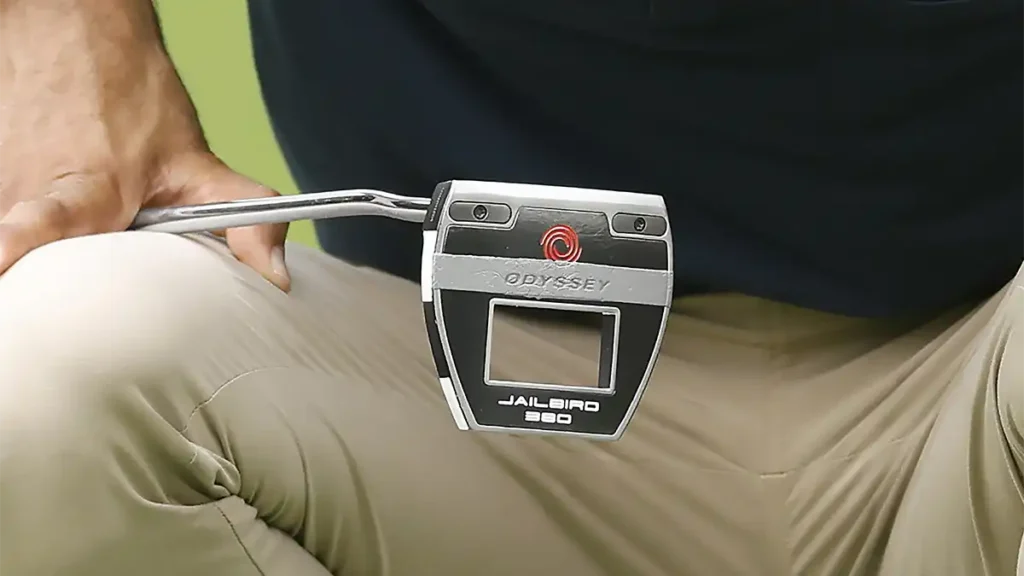
A guy I recently played with had lead tape on the back of his putterhead. Does that really do anything?
Yes, it does. At the pro level, where feel reigns supreme, lead tape remains a go-to solution. Players use it to beef up the heft of their putters, particularly when green speeds are on the slow side. The thinking is, more mass equals more roll with less effort.
Chris Marchini, Golf Galaxy’s director of performance and innovation, says there’s one spot on the putterhead to add lead tape that makes the most sense: the sole. “The location of the lead tape can change feel and sound but not so much ball speed,” Marchini says. “Place the tape on the sole and spread it out evenly.”
Even distribution on the sole doesn’t mess with the centre of gravity much, which is critical if you already like how your putter feels. It does, however, give you a heavier head feel, which can help smooth out your tempo or promote better control on slower greens.
What about the back cavity? Sure, but there’s a catch. Unless you’re piling on the tape, you won’t significantly shift the centre of gravity. What you might alter is feel and acoustics, especially if the tape sits directly behind the face. That can be good or bad, depending on what you’re trying to achieve.
Answers by Golf Digest equipment editors Mike Stachura, E. Michael Johnson and Jonathan Wall
Photos by getty images/Michael Reaves, Johnnie Izquierdo