
Four ways to stay sharp in the colder months.
While it might be a bummer to stare out the window at leafless trees and frosty fairways, if you want to get better at golf, there is a positive side to being stuck inside more often during the cooler months. This is when your swing without being distracted by what the ball is doing. Your purpose is boiled down to, how efficiently can I move? Over time, as those movements become subconscious habit, you can take them back out to the course and simply let the ball get in the way of your newfound skills. I’m going to give you a handful of indoor drills to work on this winter. If you do each of them for only a few minutes per day – you can even tack it on to your normal gym time – I think you’ll be pleased with how much you’ve improved by spring without any on-course work.

Stepping in: Groove the perfect preshot routine (for you)
The goal of the following drills is that when you do get back on the course, you’re in more of a “flow state”, meaning the mechanics of the swing aren’t your focus. Instead, you’ll be thinking about how to get the ball from A to B. One way to get into this flow state is by always doing the same, fundamentally sound preshot routine. What you do can vary based on your preferences, but it should always be the same in terms of your grip, posture and alignment to the target. This is part of the game you have 100 percent control of, so it would be a big miss to not make your routine actuall routine. Build an alignment station similar to this one [above], and work on the steps of grip, posture and setting up squarely to your target as much as you can. Make it automatic.


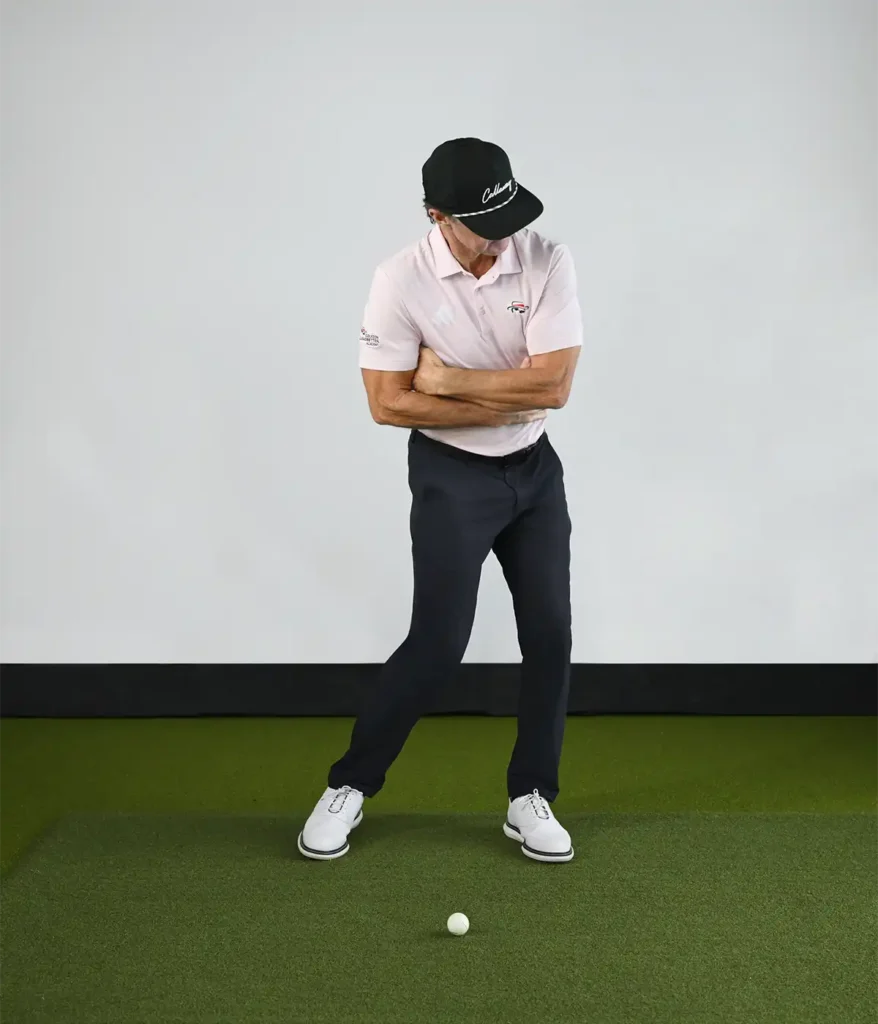

Pivot drill: Train your body movement without a club
Looking at recreational players for decades, the one thing I’ve noticed that depreciates the quickest once they start hitting shots on the golf course is how their body moves. Often, the player is too consumed with trying to strike the ball, versus letting it get in the way of a good motion. The swing becomes virtually all arms. The coiling and uncoiling of the body during the golf swing is so easy to practise, especially when you’re not distracted by the result of a golf shot. Just cross your arms and grab your core and pivot back and through as I am [below]. Feel how your body winds and your weight shifts between the feet. I like to think of it in three parts: 1) Wind up coiling your back to the target. 2) Push into the ground for energy. 3) Use that energy to unwind with your chest facing the target.
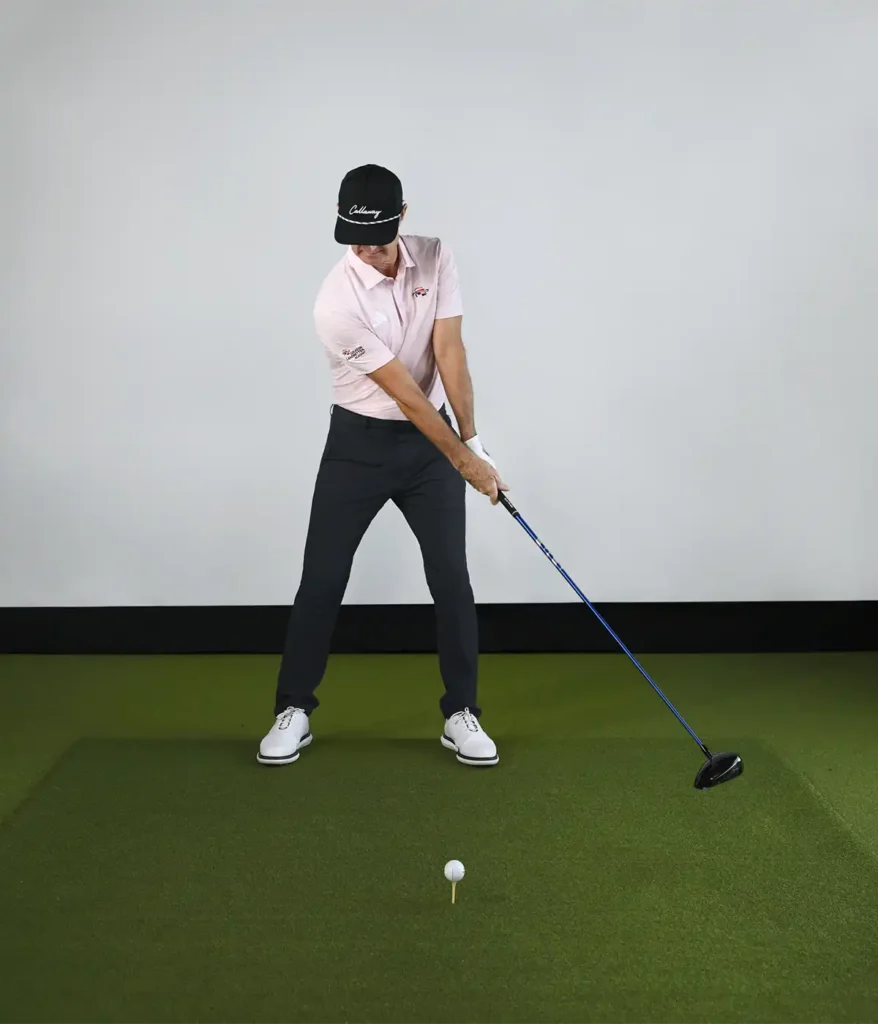
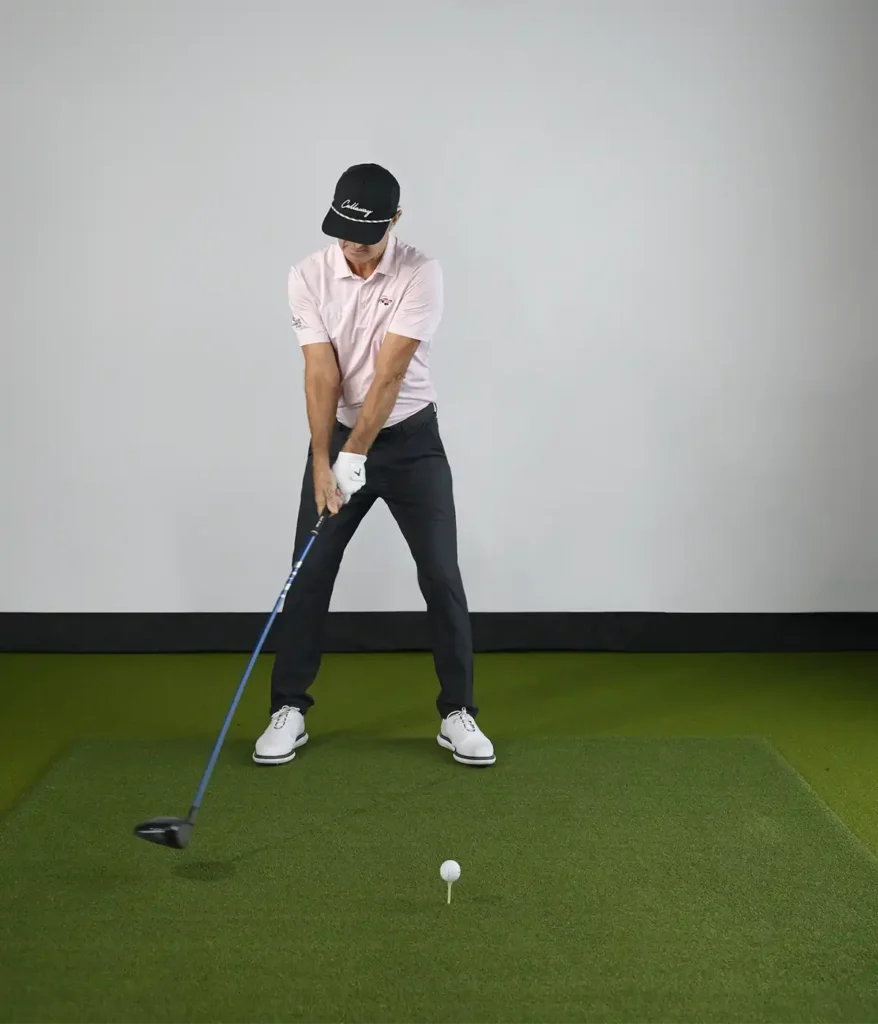

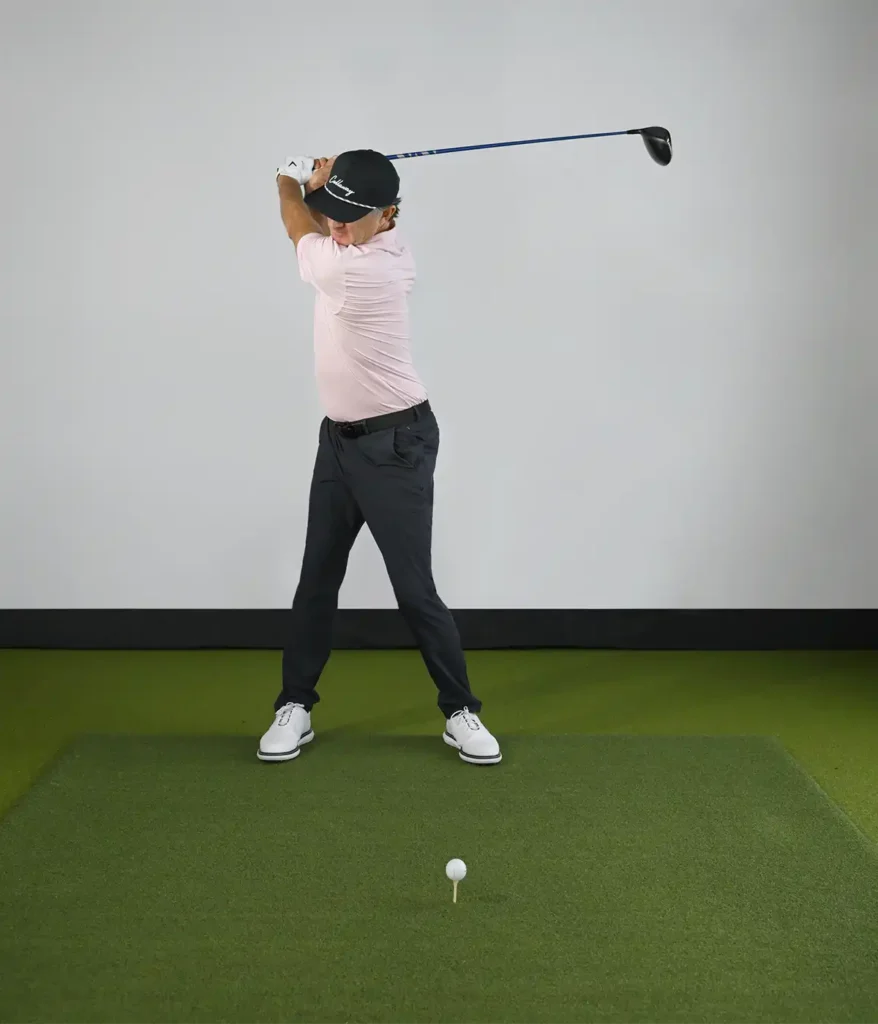
Dynamic speed: Free up your swing to create and store more power
A fault you might suffer from is being “ball-bound”. In short, your swing becomes restricted and jerky as a result of simply trying to make solid contact with the ball. What I’ve found is, when I ask a ball-bound golfer to make a full practice swing, it looks nothing like what he or she does when it’s time to hit a shot. If you can free up your swing without regard to where the ball is going, it’s going to do wonders for the dynamic speed you can create. A great way to train for a fully loaded backswing is to address a ball (one that you’re not going to hit), but set your driver head out in front of it on the target side like I’m doing
[top-left photo]. This is the starting point of your training swing. From there, use that extra distance to make a full-but-free backswing, really feeling wound at the top. The momentum of starting with the clubhead in front of the ball will give you the feel you need to avoid your restricted, ball-bound takeaway.
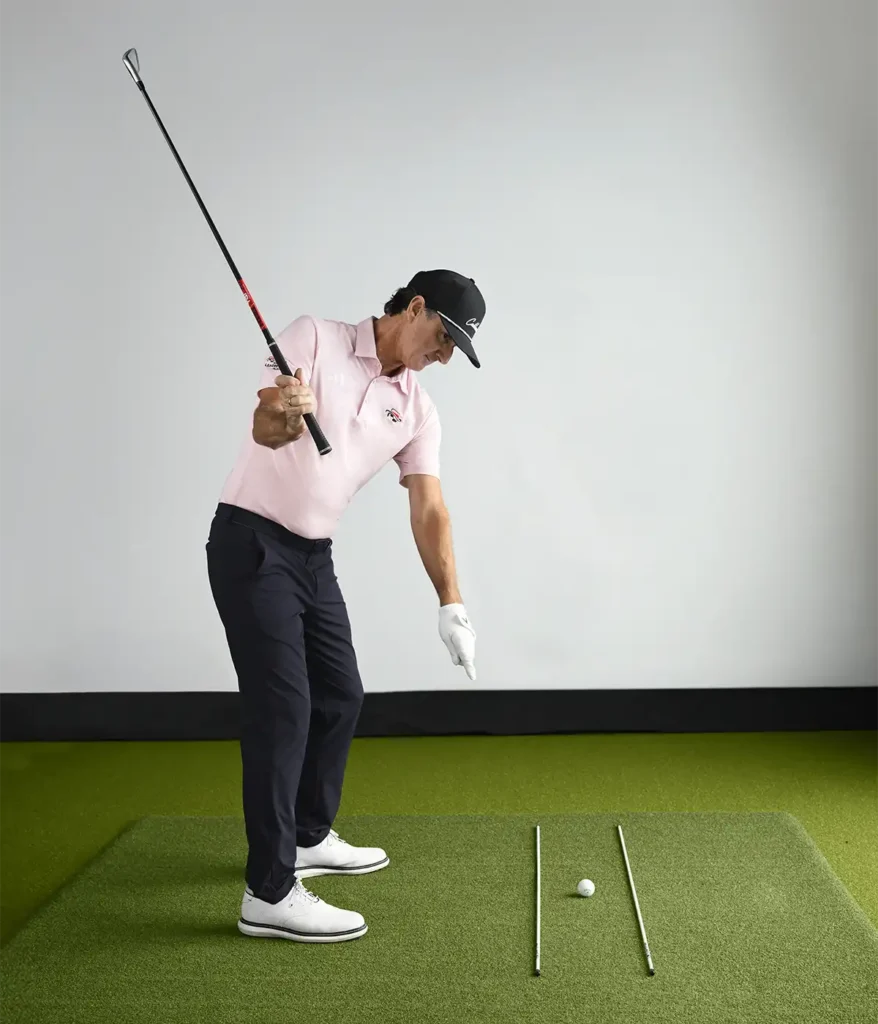
Swing plane: Improve your Awareness of the club’s orbit
Now’s the time to really get a better understanding of the geometry of the swing. Knowing where the club is in relation to your body pivot is going to make it so much more efficient and easy to repeat. Getting into a great position halfway into the backswing, with the club on-plane, is easy to hone if you put a ball between two alignment rods or similar on the ground and use that station for reference. The idea is to take the club back so the butt end of the shaft is pointing down towards the rod closest to your body. You’ll need a mirror or someone videoing this position to verify it, but it’s important to really remember how it feels to get the club in this great position going back. If you can get the first few feet of your swing on auto-pilot, I promise you’ll start spring in a real groove.
Photographs By J.D. Cuban