Most gym-goers are well educated on concentric training, which is exercise that requires muscles to contract to perform the movement. Think of a dumbbell arm curl. It’s the opposite of eccentric training, which is the lengthening of muscles to perform a movement. Using the same dumbbell curl as an example, the lowering porition of the curl, if done slowly, is an example of eccentric training.Both are useful in gaining strength, power, mobility, etc., but they also increase risk of injury, especially as the person doing them increases external loads or pushes his or her body to its maximum capability. You might be able to jump on a box that is 24 inches high. Then you try a 30-inch jump and, bam, you end up on your back.The point is, golfers can greatly benefit from strength training but also risk cutting golf season short if they get injured. That’s why Jonathan Avalos, one of Golf Digest’s Best Fitness Trainers in America, says isometric training is a great alternative.If you’re not familiar, isometrics are exercises where there is no movement, but the muscles needed to perform it are firing like crazy. Think of a plank. You’re not doing anything but holding the position and yet, your abs feel like someone set them on fire. Your shoulders, too.”I’m a big fan of isometrics because they let golfers produce a lot of force without a lot of moving parts,” says Avalos, who trains golfers at Athletic Golf Fitness in Charlotte and is a Golf Digest Certified Fitness Trainer. “That means fewer chances to lose form when effort goes up—and you can target strength and stability in key positions without feeling wrecked the next day.”Avalos divides isometric exercises into two categories and offers some examples of each—all of which are beneficial to golfers.The first category is “overcoming isometrics,” which are short in duration (5-10 seconds, maximum effort, 3-5 reps) and require the golfer to push or pull against an object that won’t move. An example is pushing laterally against a wall or similar with the foot closest to the wall off the ground.
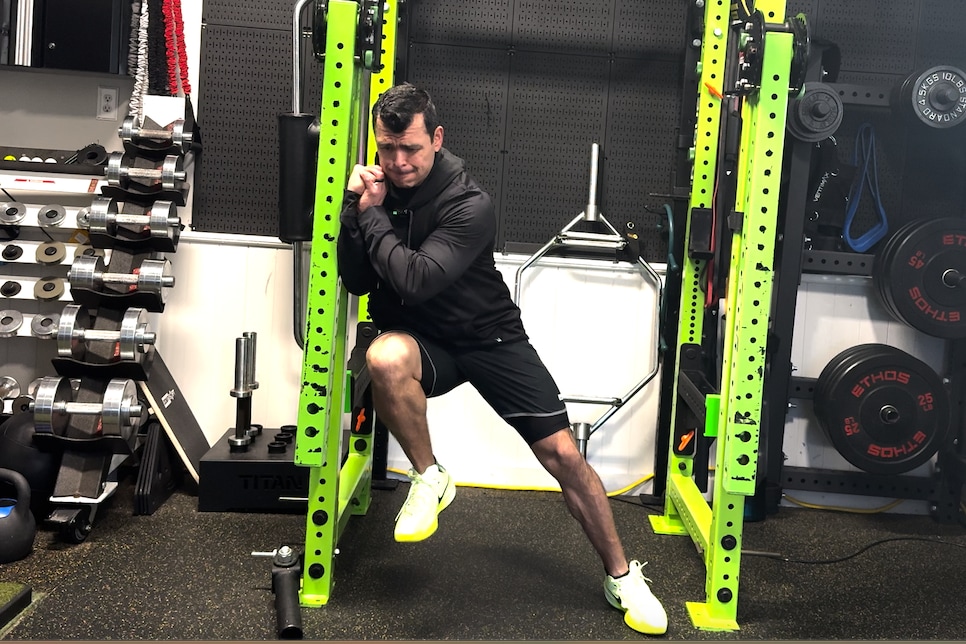
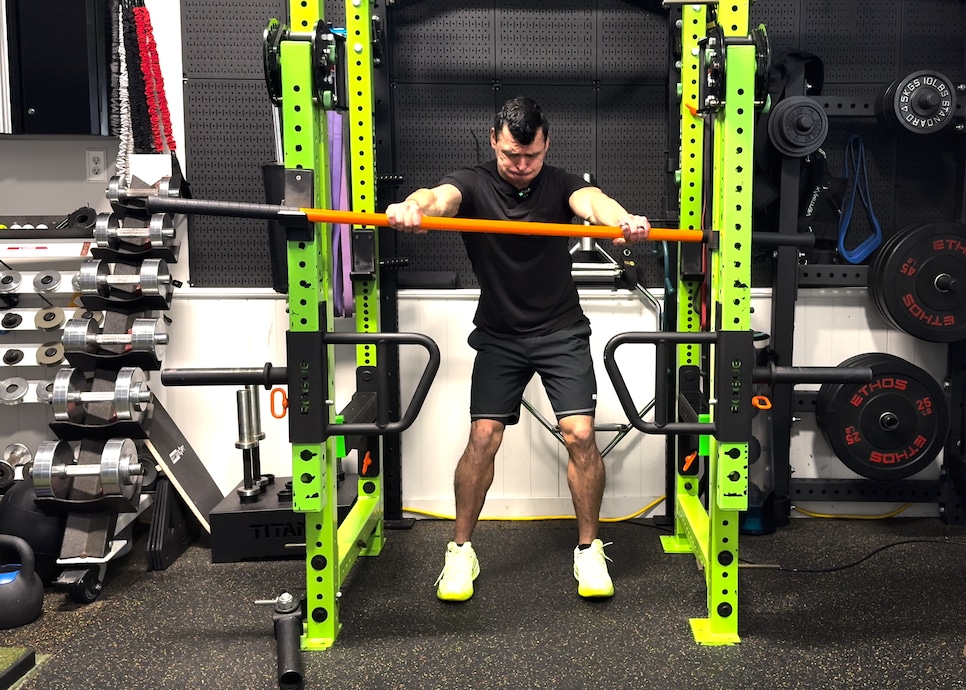
Another example of overcoming isometrics is a push-pull exercise where you suspend and brace a bar or similar against something and push as hard as you can with one arm while pulling with the other.
The other category is “yielding isometrics”, which a person does for 30 to 60 seconds with slightly less than maximum effort for up to five reps. Yielding isometrics challenge you to control “demanding positions,” Avalos says. “They help golfers get stronger in ranges of motion they typically avoid because of pain or instability. “They’re especially useful for golfers who are rehabbing an injury, stiff from working long hours at a desk or travel frequently and don’t always have access to a full gym.”Here are three examples that are great for golfers, he says.Isometric wall squat
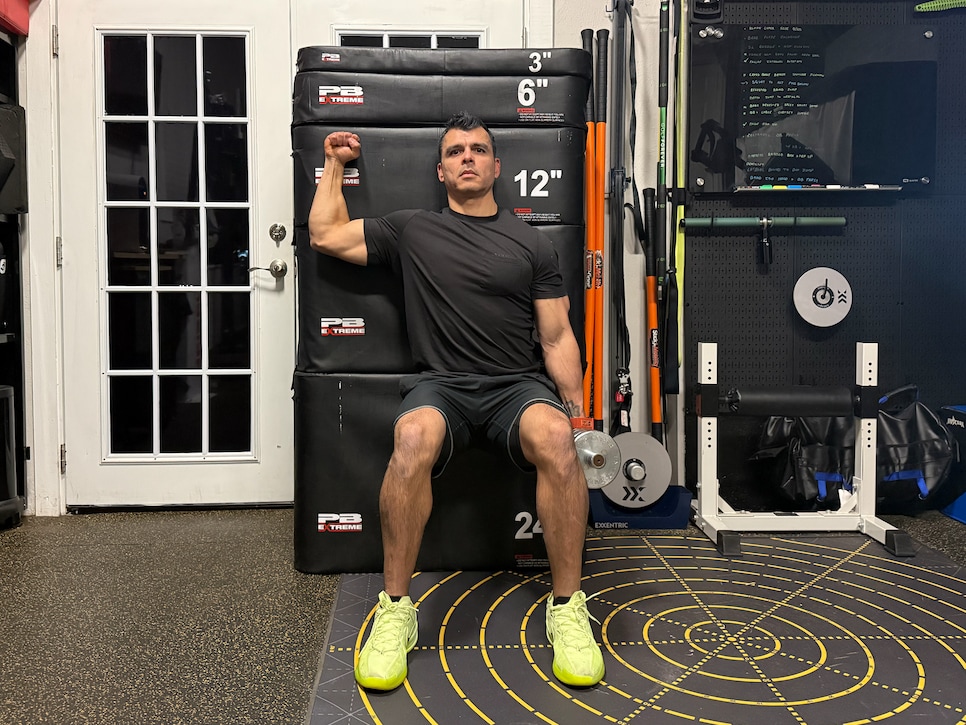
- Back and shoulders against the wall, feet shoulder-width apart. Slide down until your knees are about 90 degrees.
- Keep steady pressure through your back into the wall. One arm at 90 degrees, elbow up, push your forearm hard into the wall (external rotation) while the opposite hand holds a dumbbell.
- Maintain full-body tension without leaning or losing position.
- Hold for 30–60 seconds and perform on both sides.
Isometric hip thrust

- Upper back on a bench, heels on a same-height box.
- Push through your heels and lift until your body it forms a straight line from shoulders to heels.
- Squeeze your glutes hard at the top and engage your core (ribs down) to avoid overextending from your lower back.
- 60-second hold (you can do it for less time if you lift one leg off the box).
Isometric dumbbell fly
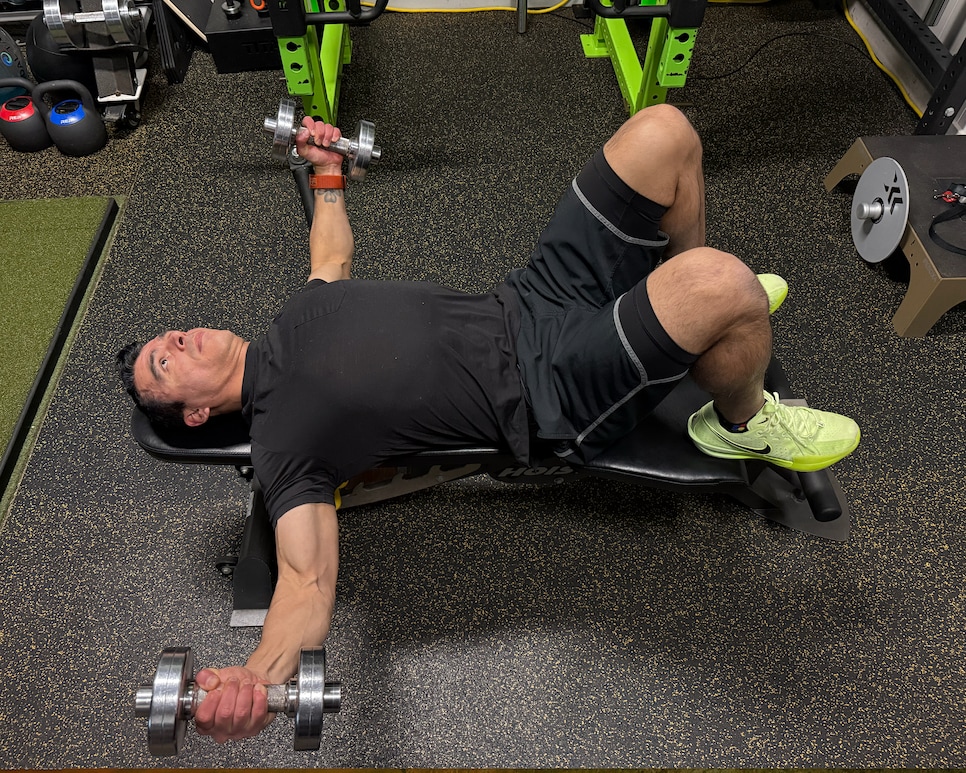
- Lie on a bench with light dumbbells and lower into the bottom of a fly exercise, keeping a slight bend in your elbows.
- Retract your shoulder blades and keep your chest tall as you control the weight.
- Maintain the position for 30-60 seconds, feeling a deep stretch through the pecs without losing the shoulder position.
Click on this link if you’re interested in becoming a Golf Digest Certified Fitness Trainer.
This article was originally published on golfdigest.com