These days, just seeing Tiger Woods on a golf course with a club in his hand is enough to catch the attention of most golf fans. However, when Woods is imparting knowledge, it’s not enough to simply rubberneck. You pull up a chair, sit down and listen.
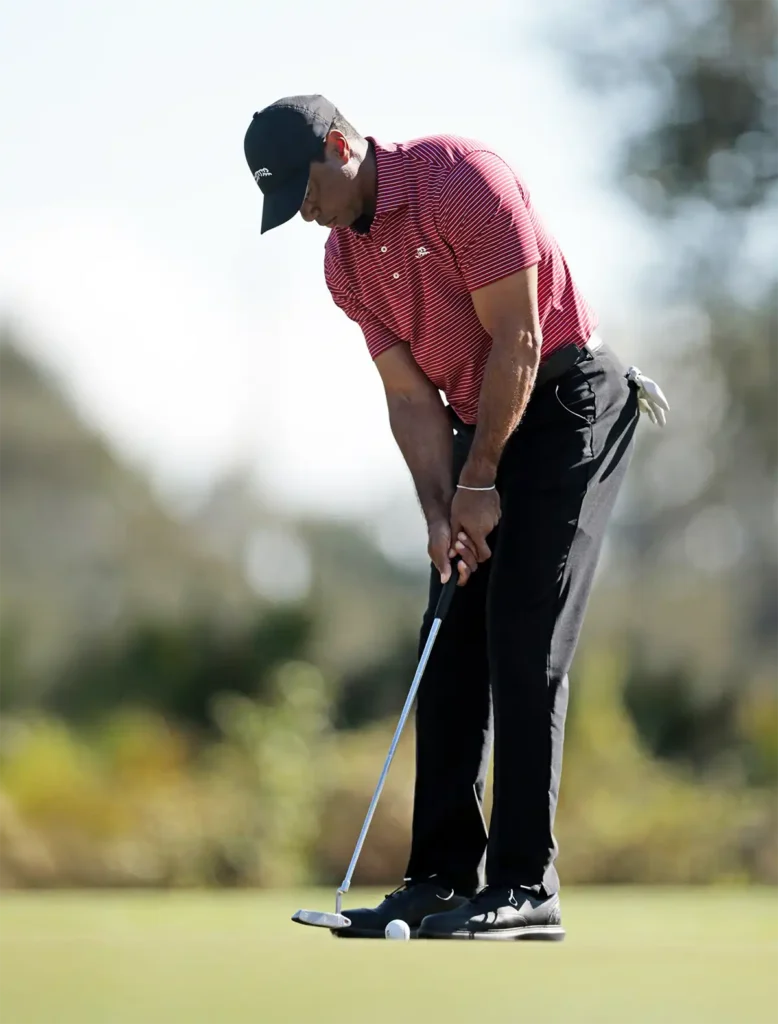
That was the scene in the Bahamas late last year as Woods offered a brief putting symposium before his Hero World Challenge event. Woods, who had recently been cleared by doctors to begin chipping and putting after his latest back surgery, explained how he uses the mass of the golf ball to naturally control his putter speed and shorten his follow through.
“I’m just putting all the energy into the ball, and the ball ends up slowing the putterhead down,” Woods explained. “You see some players have a follow through like that,” he said as he demonstrated an elongated follow-through. “I don’t understand that. If you see a guy hit a punch shot, his swing’s gonna be shorter on the follow through versus a guy hitting up on it… it’s the same kind of concept. You have the weight of the ball stopping the putterhead and the momentum is going to be slower on the front side.”
Woods explained that while it may look like he’s punching or pushing his putts because of that, that is an illusion created by a heavier object in motion – the putter – naturally slowing as it comes into contact with a lighter object at rest – the ball. In other words, Woods is letting his equipment do the work, maximising the energy transference between his putterhead and the ball. This is where it gets interesting.
If you feel like you don’t see that kind of putting motion on tour these days, Woods says there’s a reason for that.
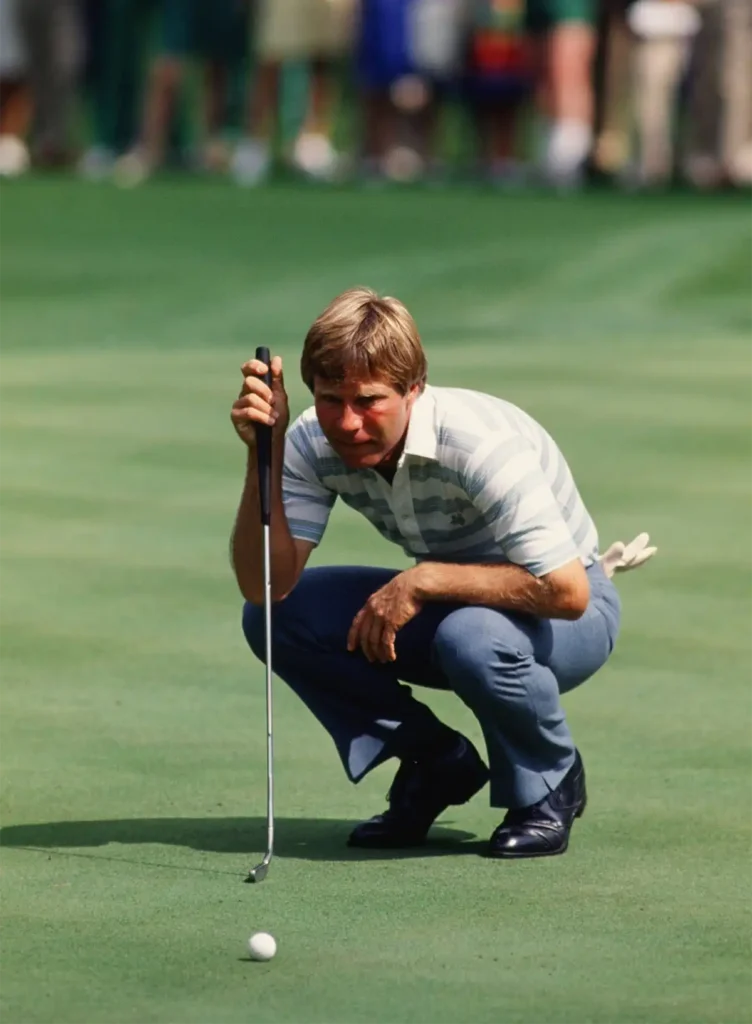
“My overall mass of a putter is much lighter. And because it’s much lighter, it’s much more affected by the weight of the golf ball than these newer putters. Putters with bigger grips, bigger heads, more mass, it’s going to go through more than my putter does. Ben Crenshaw’s little 8802 [inset]? It stops right away. There’s no mass to it.”
It’s a fascinating distinction that shows how equipment advances and trends don’t just impact performance, but the way golf is actually played. As Woods explains, the mass of modern putters renders this putting technique practically obsolete. That’s a reality check for any golf fans who watched Woods evolve the sport at an unprecedented rate throughout the late 1990s and 2000s. His continued impact as a personality and executive, combined with his rampant success, make Woods feel current despite his age, but as a player, he is part of a bygone age – one when technique and nuance always beat bomb and gouge.
It’s hard to argue with the success of modern players like Scottie Scheffler, who became the dominant golf force on earth after transitioning to TaylorMade’s Spider Tour model in early 2024, and
J.J. Spaun, who the won the 2025 US Open with a cutting-edge LAB putter in his bag. But as Woods demonstrates, the old ways still have a place in golf for those brave enough to embrace them.
Photographs by getty images/mike ehrmann, douglas p. defelice, Augusta National(crenshaw)