
Basketball Hall of Famer grant hill shaved 11 shots from his handicap with the help of instructor Shaun Webb. Here’s what you can learn from it.
Grant Hill never thought he’d play golf. In fact, he used to sledge his NBA teammates for spending time on the course. “Any activity where you wear pants isn’t a sport,” he used to say.
But once retired and settled into a home at Isleworth Golf & Country Club in Windermere, Florida, Hill found that golf was a way to have fun with his friends, stay active and get the competitive juices flowing again. There was only one problem… he wasn’t any good.
“I was more used to playing out of the pinestraw than being in the fairway,” Hill says. “I remember being on the range one day with [two-time US Open champion] Retief Goosen, and he’s looking over at me taking these huge divots that are going further than the ball. I was so embarrassed.”
It was time to make some changes, Hill says, which reminded him of his NBA career. He came into the league with some “really bad shot mechanics”, and enlisted a coach to help him fix them, ultimately sparking a 19-year career. This time, he called upon instructor Shaun Webb, one of Golf Digest’s 50 Best Teachers in America. It took some hard work, but in less than two years Hill’s handicap dropped by nearly 11 shots (his current handicap index is 11.2).
What did Webb do? He got Hill to nail four swing positions that helped him tap into his inner athlete. You can do the same if you copy Webb’s advice. These moves are designed to help golfers like you, just like they did for Hill.
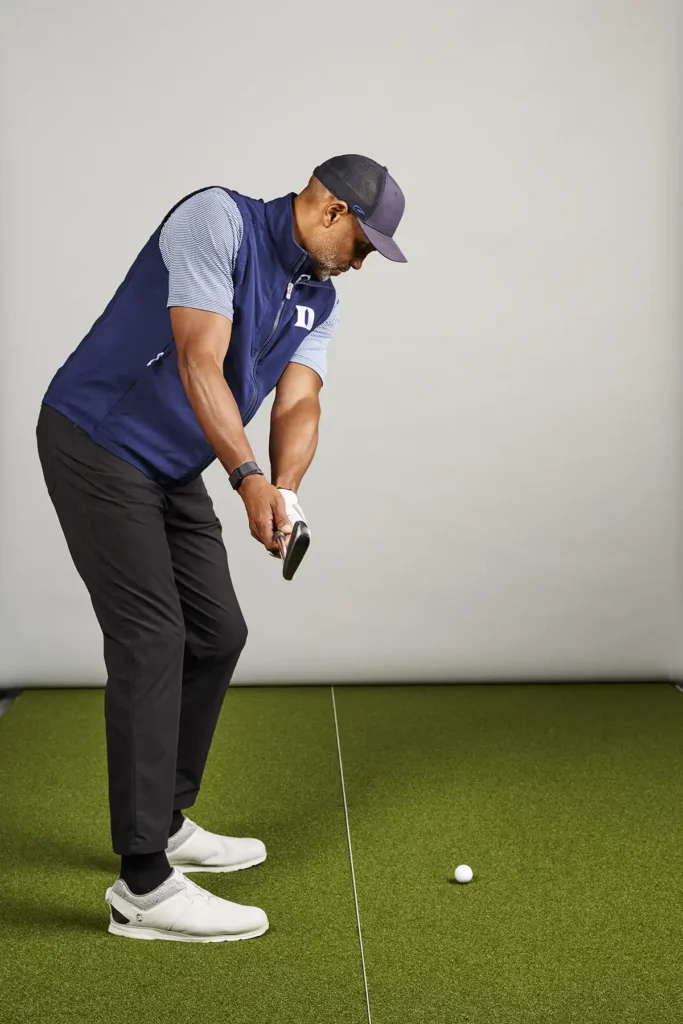

Turn and shake hands
Hill’s old move off the ball was to lift his right arm up while making a big dip with his left shoulder. He wasn’t maintaining the width of his swing by incorporating body rotation into the takeaway, and that armsy move led to poor ball-striking. Now his arms and hands are more level on the takeaway [left], which helps him turn back and through with his body. “It just feels so much easier now,” Hill says.
Webb’s take: “I wanted him to feel like he was turning his body and shaking hands with his right hand to somebody to the right of him on the takeaway, then turning to the left and shaking hands with the same hand on the follow-through. I would even have him make swings keeping the palm of his right hand open on the club like a handshake [above]. He was all arms before; now he’s rotating his body much better.”

Get the right elbow down
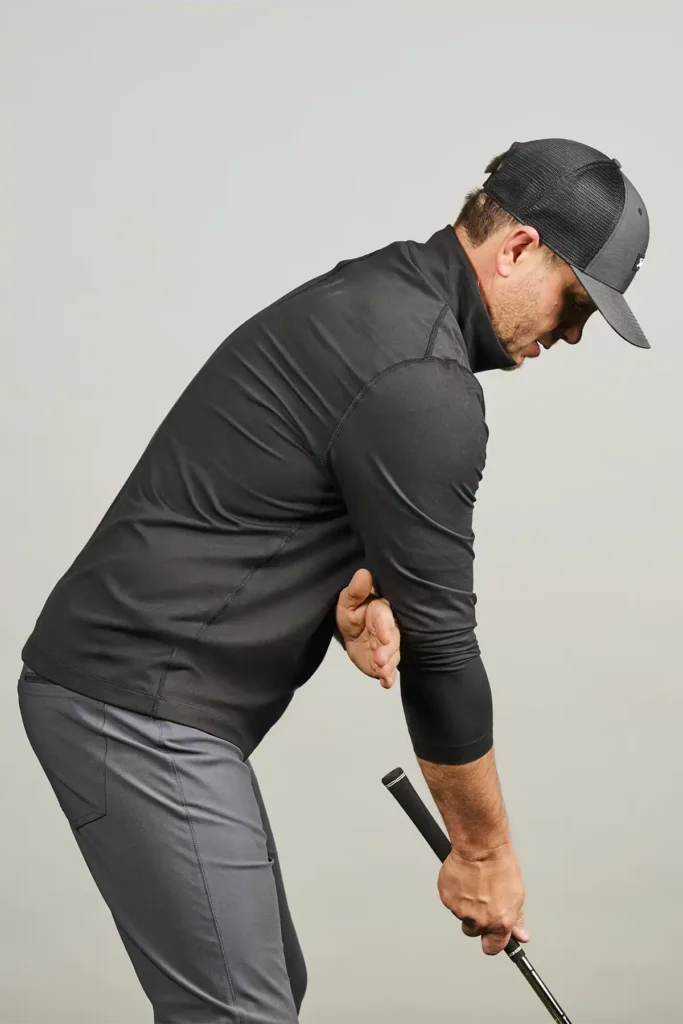
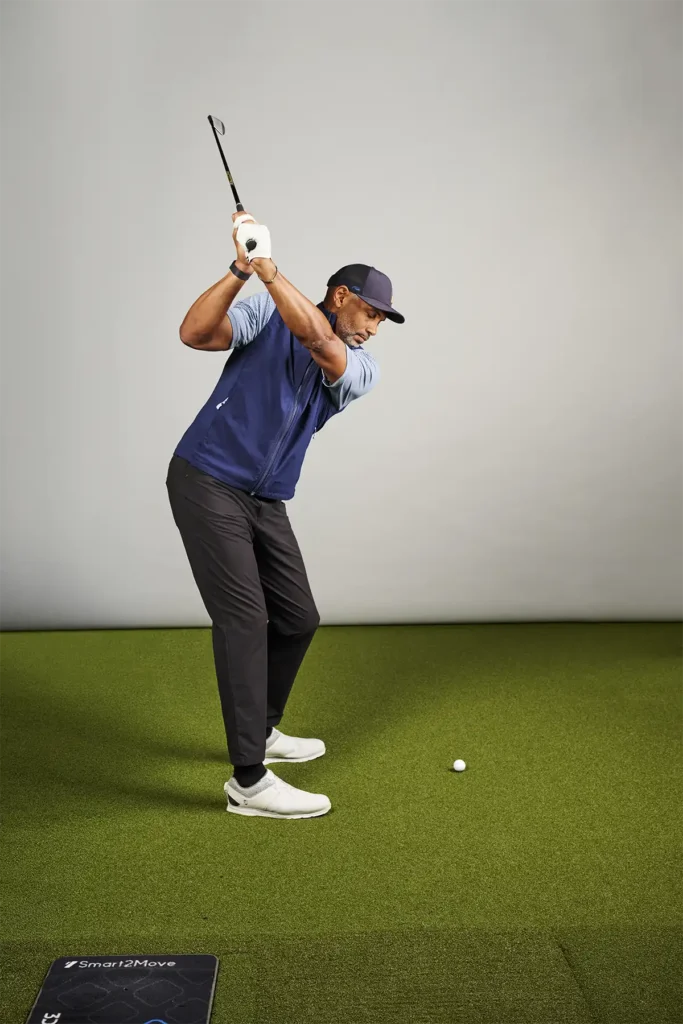
Hill’s right elbow tended to stay high in his old backswing, with that arm’s palm facing the ground. That mistake made sense for Hill – keeping your palm down is how you dribble a basketball. But in a golf swing, that causes the swing path to be too steep and produces poor contact. Webb got Hill to keep the right elbow down at the top of the swing, so his palm points more towards the sky and that forearm more closely matches his spine angle [right]. “Now I almost feel like I’m throwing a baseball,” Hill says.
Webb used this drill to correct the elbow issue: “Place the back of your left hand under your right elbow [above right], then make some swings. The pressure from your left hand will stop your right elbow from getting high, which gets that right arm in a better spot at the top [above left].”
Work the lead shoulder around the body
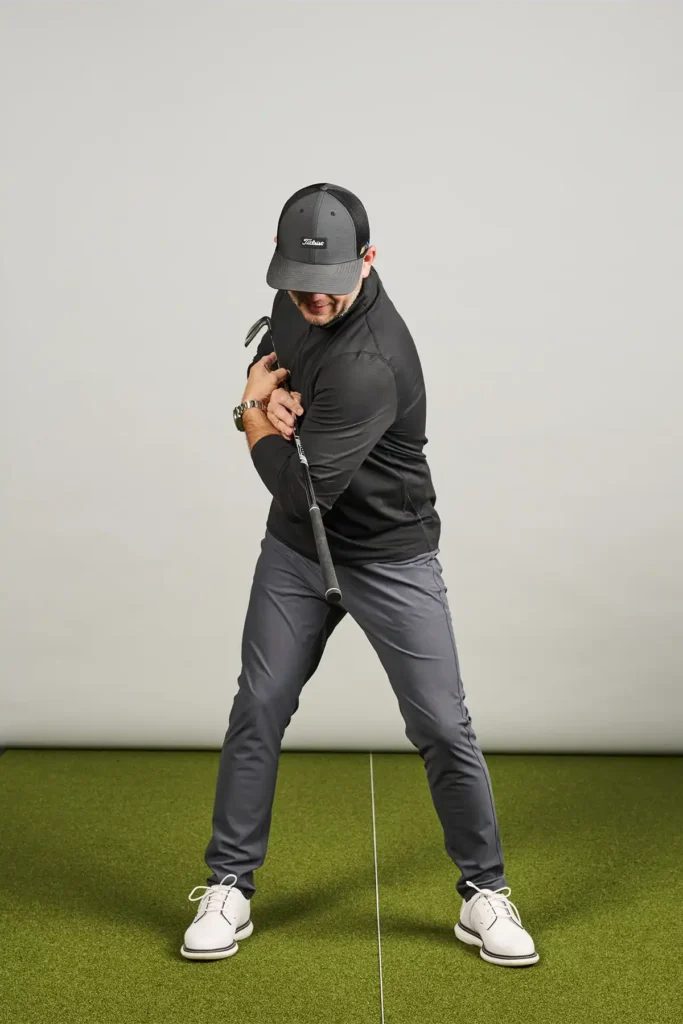
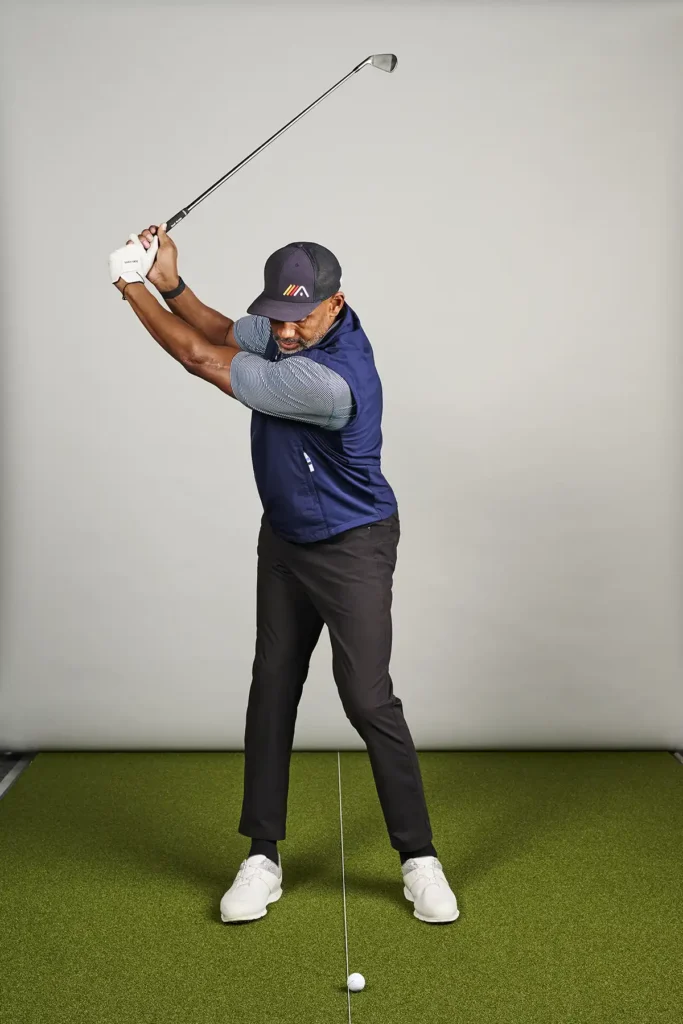
Webb says Hill came to him doing two things that are the “kiss of death” in a backswing: (1) He kept his head locked in place. (2) He had his left shoulder pointing at the ball. That combination prevented him from fully coiling going back. “I thought I wasn’t allowed to shift away from the target, so I just stayed down,” Hill says. His new top-of-swing position is much better [left], Webb says.
He corrected Hill’s swing with a drill that allows for some movement of the head and a more level rotation of the shoulders. “Find a line on the ground, put a club across your shoulders and then turn back, trying to match the club with the line [above],” Webb says. “Your head shouldn’t move a lot, but it’s fine if it moves a few inches. The goal is that your left shoulder should go twice as far across your body than it moves downward.”


Shift left and rotate in the downswing
All the bad habits that Hill had in his backswing resulted in a downswing that was one big compensation, Webb says. To create the space he needed to get the club back to the ball, Hill would spin out with his left heel and fall back onto his right foot during the downswing.
Contact was poor and weak. Now he’s turning his left hip around and shifting towards the target as the club starts down into the ball [below left]. “I was basically moving backward as I was trying to hit the ball,” Hill says. “No wonder I wasn’t very good.”
A drill Webb often uses for the common amateur mistake of spinning out was great for Hill: “I have my students hit balls with a water bottle set just inside their left heel [below right],” he says. “If you spin out on the downswing with your front foot, you’ll knock that bottle over. Grant had to stay solid on his left foot and use his hip motion to turn on the downswing. That was a huge breakthrough for him and can really help a ton of golfers with their ball-striking. Give it a try.”
Photographs by j.d. cuban