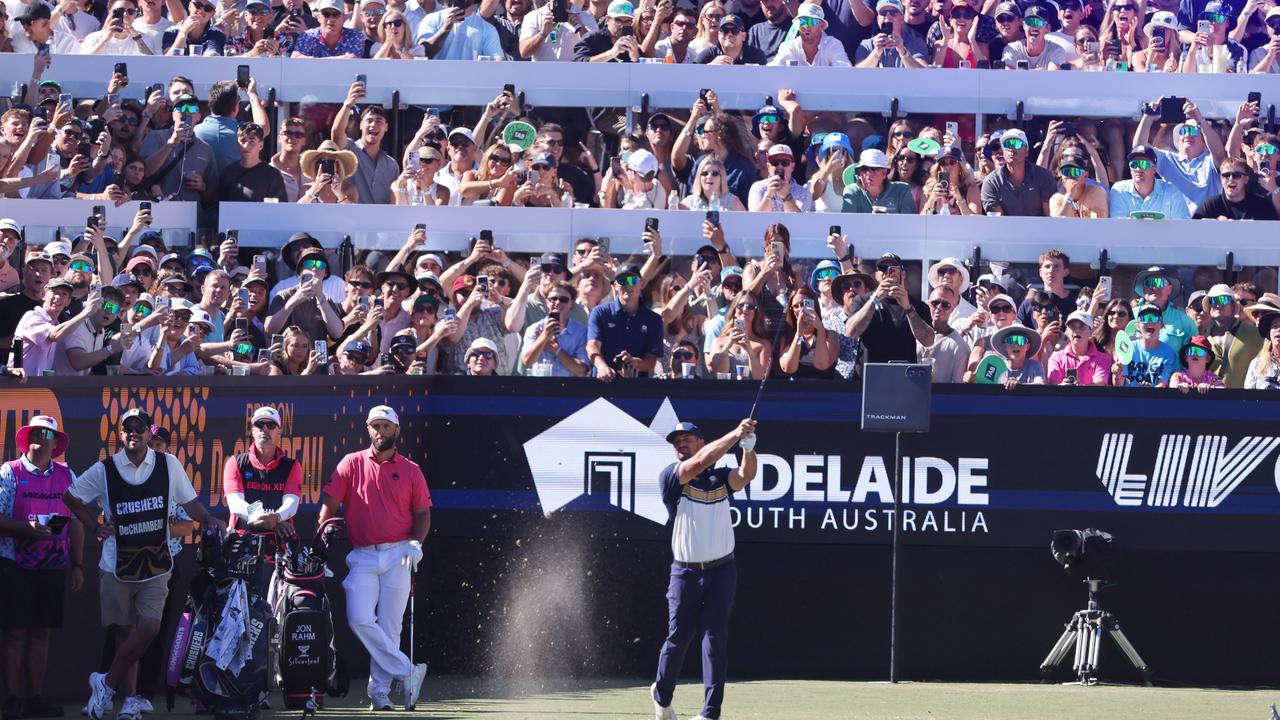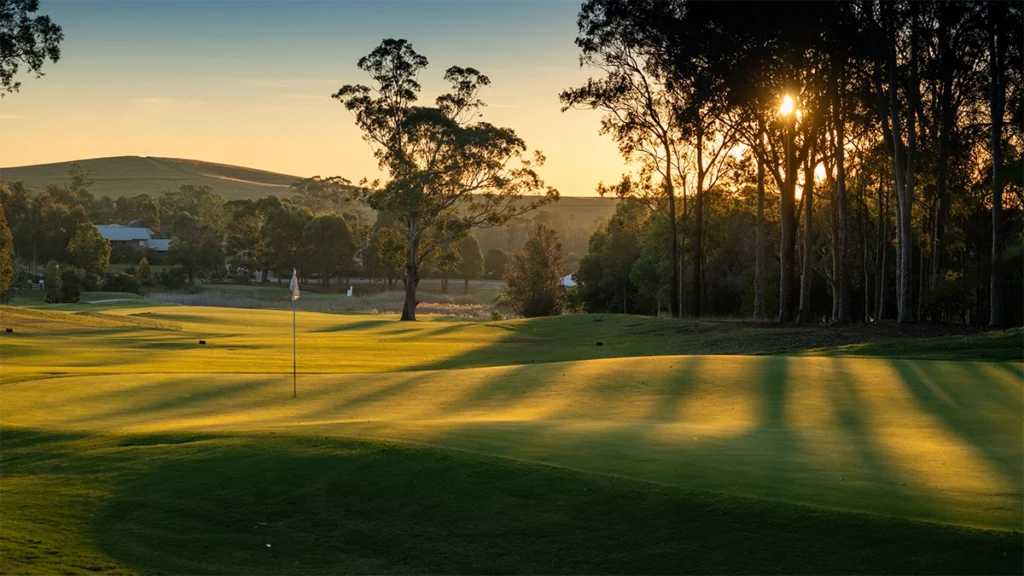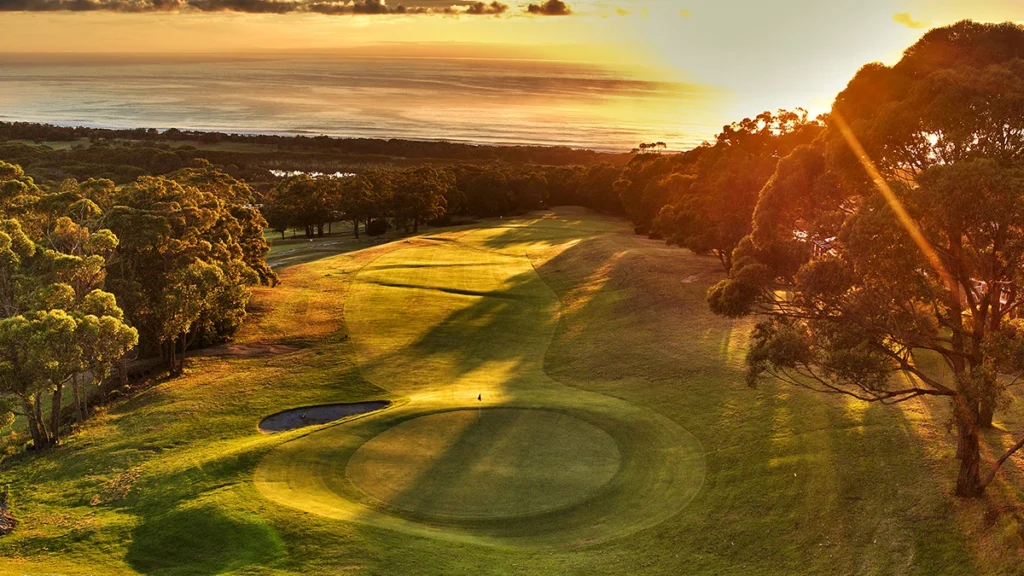

The course has been hard. The golf has been good. The crowds have been loud and occasionally hostile, poor Scottie Scheffler serenaded with constant “Go Birds!” calls. All the ingredients are here at the 2026 PGA Championship. And yet, through two days outside Philadelphia, something is missing, the current that should be running underneath all of it, animating the whole thing. Aronimink Golf Club has met every standard a major venue demands – and produced almost none of what a major championship should.
RELATED: Justin Thomas questions why his group was put on the clock
The predictions coming in were nearly unanimous that players would pummel this PGA. Those predictions have been, charitably, hilariously wrong. The reason lives in Aronimink’s green complexes, which are sophisticated the way Independence Hall is – austere, load-bearing, indifferent to whether you appreciate them. Most weeks on tour a green’s primary defence is speed. Here it is slope and shape and the cold logic of angles. The approach shot matters, but so does the tee shot that preceded it, because being in the wrong side of the fairway forecloses the right line in. The rough has been gnarly and penal for any errant shot.
At its best, Aronimink rewards the entire architecture of a hole, start to finish. Good, Golden Age architecture. That principle is present this week. The problem is the course hasn’t been allowed to operate at its best.
Through 36 holes, the defining skill at the 2026 PGA Championship has been lag putting. Not the kind of high-wire shot-making that major championship galleries pay to witness, but the art of getting a 30-footer close enough to avoid catastrophe. The culprit has been pin placements so severe, particular on Friday, they’ve effectively removed aggression from the equation. Players aren’t attacking flags. They’re finding safe landing zones and grinding through the card without incident.
“Most of the pins today were, I mean, kind of absurd,” said Scottie Scheffler after shooting a one-over 71 in the second round to sit at two-under for the championship and in contention to successfully defend his title. “This is the hardest set of pin locations that I’ve seen since I’ve been on tour, and that includes US Opens, that includes Oakmont. I did ask, I asked Fooch, who caddies for Justin Rose. He’s been around a long time, and I asked Teddy [Scott] too, have you seen anything like this before? They said maybe Shinnecock is the only place they have seen that has pins that could compare to this.”
But Scheffler then added to the observations with more context.
After shooting an opening 67 to co-lead a major after the first round for the first time in his career, Scottie Scheffler shot a 1 over par 71 to currently be T8 in his PGA Championship defence. After the round he said the pins at Aronimink are the toughest he’s ever experienced:… pic.twitter.com/yeuLZzIpnU
— Flushing It (@flushingitgolf) May 15, 2026
“But it’s different in a sense on this golf course. Because Oakmont, their greens are extremely severe, but they’re extremely severe in one direction,” Scheffler said. “Here, it’s like the green may slope all this way and then we put the pin down here and then there’s also a slope this way. And like it’s not as, how would you say, natural to the slopes that are there. There’s a bit more, I think, that’s manufactured into the greens, and it’s just very difficult.”
Others echoed Scheffler’s concerns.
“A lot of the holes feel like they are, like with the wind, you have no margin for error,” Chris Gotterup said after authoring a 65 this morning. He brought up the 12th hole as an example. “[The pin] was four paces on the green and a shelf, and it’s straight downwind. I mean, no one’s going to try to skip it up there and stop it on the shelf. You’re just going to have 25 feet, which is fine, it’s not unfair, but you’re not going to see a lot of shots that are hitting next to the pin and spinning back there.”
Occasionally, that’s appropriate. Major championship golf is supposed to be hard, and difficulty is not a flaw. But when every flag demands retreat, when no pin position invites commitment, the setup stops rewarding good shots and simply punishes bad ones. Half the equation is missing. The bite is there. The bark is gone.
Wind has compounded things. Cold, gusting conditions across both Thursday and Friday have made attacking even theoretically inviting pins feel reckless. When weather and pin locations conspire to make aggression irrational, players adapt. They simplify, survive, move on.
“There’s a couple fairways out here where I’m just not really sure how you’re supposed to hit the fairway., No. 10 and No. 15 are two of those examples,” said Alex Smalley, who finished at four under par after 36 holes and will have a late tee time on Saturday. “I mean, the wind was going the same direction as the contour of the fairway, so you almost had to slice it up into the wind on 10 and 15 to be able to keep it in the fairway. And the fairways are running out, so I’m just, you know, I’m kind of perplexed on how you’re supposed to hit either of those fairways.”
A course playing mean can be compelling – the US Open has built an entire identity on that premise – but only when pars feel earned against a field of landmines. Here, everyone seems aware of the danger without anyone truly detonating.
The leaderboard confirms it. As the second wave teed off Friday afternoon, roughly 70 players – nearly half the field – sat within six shots of the lead. That reads as wide open. It plays as undifferentiated. The great and the very good and the merely good have all arrived at the same address by slightly different routes. Instead of separating them it has brought them together, which is the opposite of the assignment.
RELATED: Career low earns Min Woo Lee a share of the first-round lead
“I’ve never seen a leaderboard like this in my life, so bunched,” Justin Thomas said. “I was laughing last night looking at it … it would have been 148 people that wouldn’t have made the cut if there was a 10-shot rule.”
That compression has produced a secondary problem in pace. The first group Friday took five hours and 40 minutes to finish its round. Groups that followed approached six hours. With pins that demand prolonged deliberation on every putting surface, players are slow because the greens require slowness. Every read a calculation, every lag a small act of damage control. It is meticulous and joyless and it is taking forever.
There is a case for patience. Championship golf is 72 holes for precisely this reason, a number calibrated to separate a winner from the rest. Two rounds remain, and the PGA of America’s Kerry Haigh carries perhaps the most trusted eye in major championship setup. His record is close to unimpeachable. The expectation is that he adjusts. That pins soften and the course is finally permitted to reward.
But Aronimink has spent two days being correct about everything and interesting about nothing. The course is here. The championship still needs to show up.