If you watch enough tour golf, you start to notice something counter-intuitive: the best draw players don’t actually draw the ball that much.
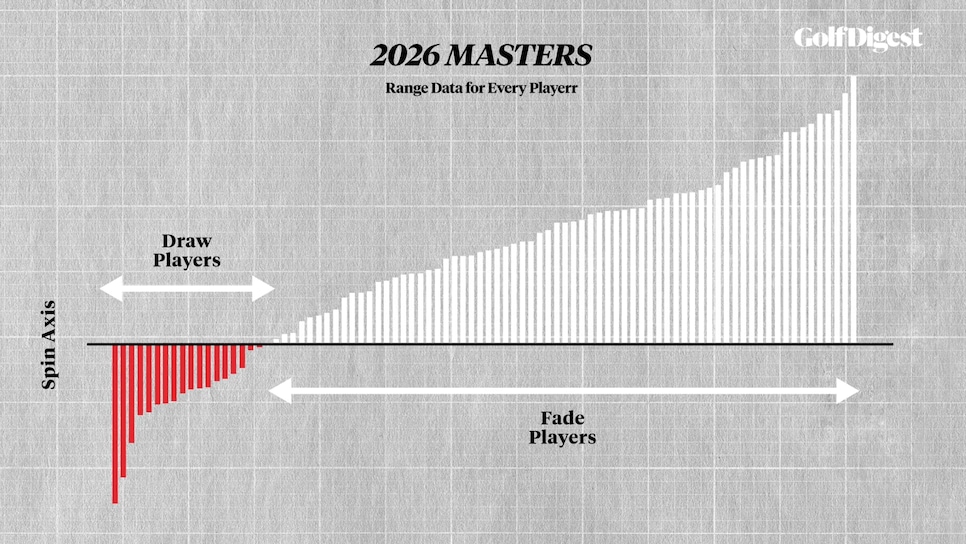
Below are the average spin axis of draw players versus faders – using data from the 2026 Masters – and draw players draw it less than faders fade it. The margins are thinner, fewer players do it, and the ones who do, do it carefully.
The reason comes down to a move some people call the path draw. And it’s worth understanding.
What they are
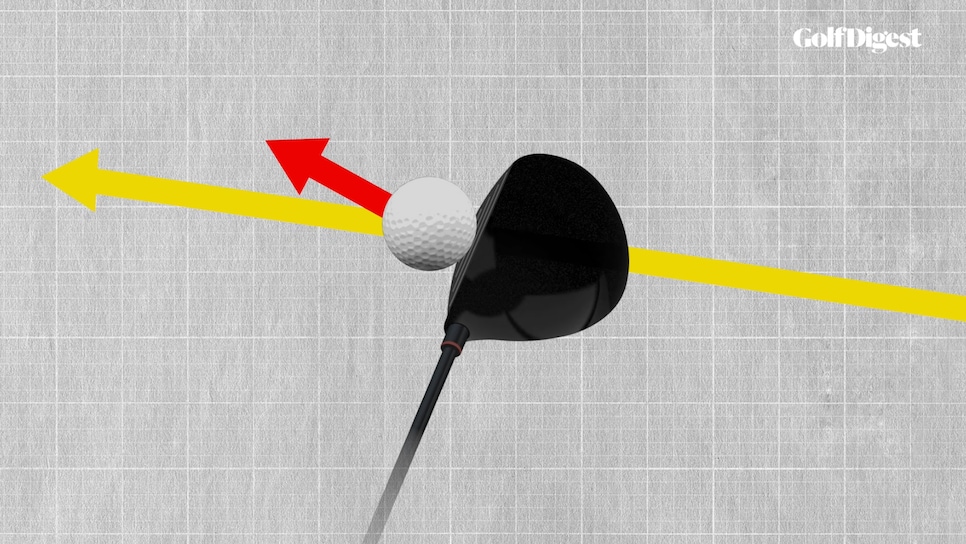
A draw happens when the clubface is pointing to the left of the direction of your swing – the clubface is closed, in other words.
A path draw is a way of getting that shape without leaning on the clubface to do the work. Players keep their body turning aggressively so the clubface stays more open, then create the draw by swinging just to the right of it.
How they’re different
Most juniors, before they’ve fully and amateurs hit draws a different way – dropping the hands behind the body, swinging out to the right, and rolling the hands through to close the face. Young Rory McIlroy came up on tour perfecting this. But it’s hard to time. The differences:
Hand draws rely on rolling the wrists to close the face. The good ones are push draws, but when those arrows get too far apart, they turn into high hooks.
Path draws keep the face more neutral and create the shape with a more extreme path instead. Tommy Fleetwood and Bryson DeChambeau are examples – they both work on keeping the clubface from turning over, while swinging out to the right.
Why pros prefer them
Rolling the clubface closed is kind of like playing with fire. It lowers loft, ramps up ball speed, kills spin – which is why hook misses are low and hot rather than high and soft. As the old saying goes, you can talk to a fade, but hooks don’t listen.
Path draws give pros a friendlier miss: a block or push, where face and path point the same way, out to the right. Predictable. Playable. And it’s why pros love them.