LIV Golf lost some of its bite when it cut Greg Norman loose last year. Now it must hit the ground running in 2026.
Some executives run sports, others redefine them. Greg Norman was the latter.
Which is why LIV Golf’s decision to cut ties with its founding chief executive and commissioner last September still feels seismic – not just for the league, but for the fragile, unresolved ecosystem of men’s professional golf.
Norman didn’t play the suit-and-tie role. He was a swashbuckler, a players’ advocate, a commissioner born to the job. The Shark understood, perhaps better than anyone alive, what elite golfers really wanted – autonomy, respect and a bigger slice of the value they generate. He was also willing to absorb any incoming fire so that his players didn’t have to.
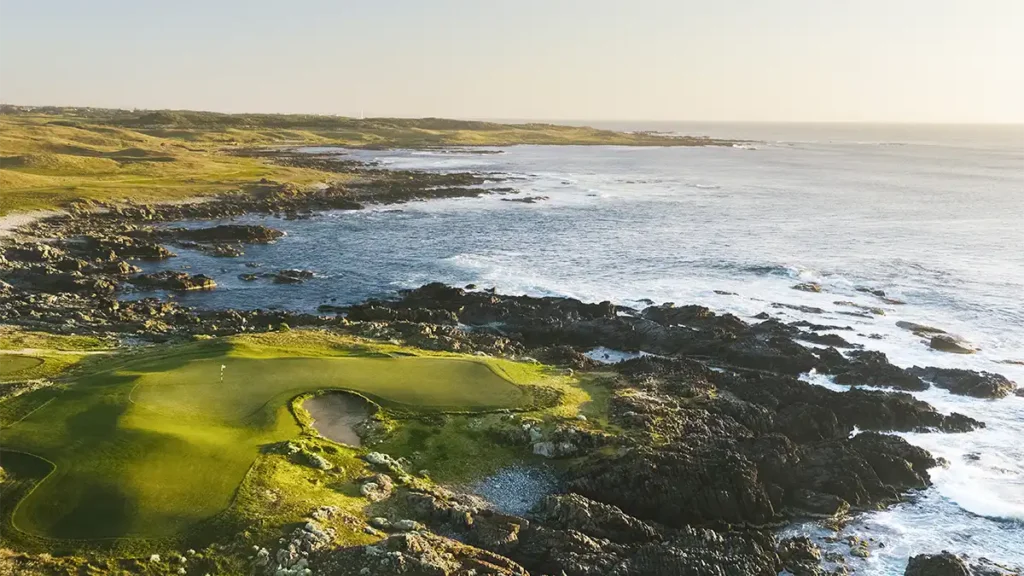
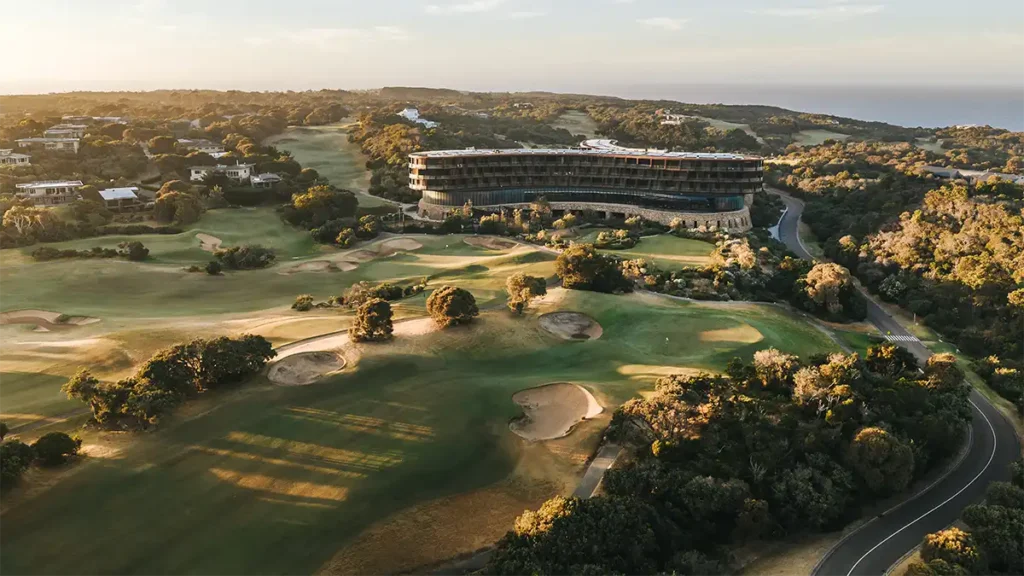
LIV Golf, for all its Saudi backing and slick production, is a people business. Which is why the league’s crown jewel – LIV Golf Adelaide – looms so large in this conversation. Adelaide isn’t just a successful event; it’s LIV’s global proof of concept. Packed grandstands, a rowdy party hole, a city that leans in rather than looks on suspiciously. Norman’s fingerprints are all over it… and they always will be courtesy of his role in building the event’s new ‘home ground’ at North Adelaide Golf Club over the next two years.
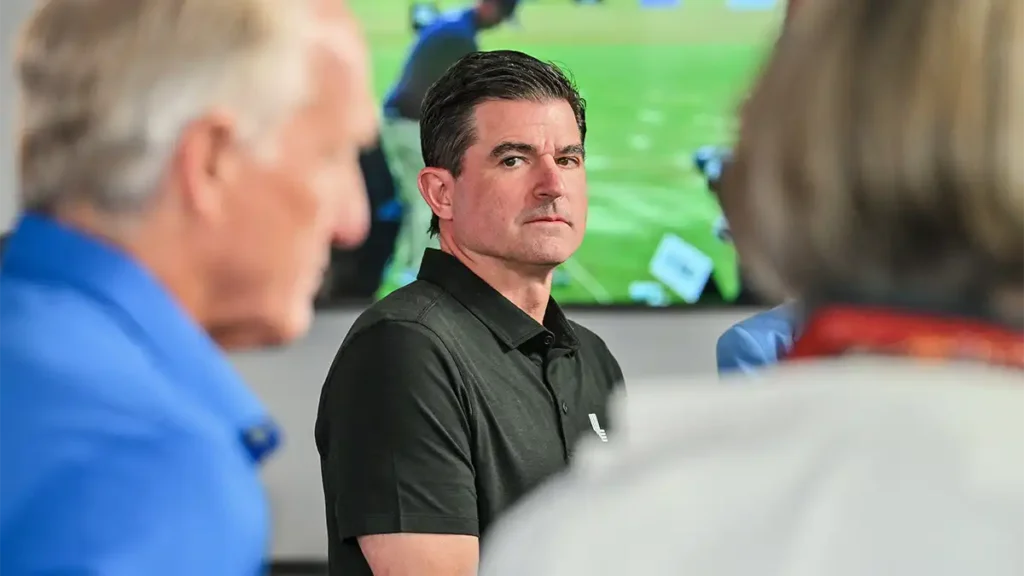
The big question moving forward is: can LIV Golf Adelaide keep marching on without its pied piper? Norman’s replacement, Scott O’Neil, is widely respected in the United States and commercially astute. But rapport isn’t transferable by job title. Can he connect with Aussie fans the same way Norman could? Can he sell the dream abroad with the same conviction as the bloke who once was the dream? I pose this only for one critical reason: without a blockbuster LIV Golf Adelaide event, O’Neil doesn’t have a league – he has a problem.
I’ve met O’Neil a couple of times. He seems affable, thoughtful and clearly has a vision for LIV Golf. What he doesn’t have is Norman’s bravado. Few do. That’s why 2026 must belong to the players. With generational-level contracts on the line, LIV’s stars now carry more than money; they carry a giant Norman-shaped hole on their shoulders. Bryson DeChambeau will draw the eyeballs (yes, there’s a reason he graces our cover this month), but players like Cam Smith, Jon Rahm, Dustin Johnson, Joaquin Niemann and Phil Mickelson must rise to the occasion – not just on the leaderboards, but in capturing attention, shaping narratives and proving LIV’s global appeal is stronger than ever.
Then, of course, there’s the mysterious case of Brooks Koepka. The five-time major winner’s recent departure from LIV Golf rang louder than most were willing to admit. Not because of his recent form, but because of what it symbolised. Koepka and Norman shared a lot in common – they live near one another, talk often and both held a worldview that players should be in control of their careers. When a foundational figure like that walks, for whatever reason, it inevitably raises questions about whether LIV’s cultural glue is loosening.
Those wild scenes of the Shark chugging back ‘shoeys’ with the boys may have made some wince, but they embodied the very essence of what LIV set out to be: unapologetically different and fun. The league’s move to 72 holes – world ranking pressures or not – shouldn’t signal a retreat from the bold identity it’s spent five years building.
I genuinely wish O’Neil well and hope he can harness his ‘inner Shark’ when required. Not to compare, but much of the public bashing Norman endured came from American press and entrenched PGA Tour supporters. That wasn’t accidental. He was effective. He was disruptive. And he was unrelenting in exposing a system that he truly believed, for decades, undervalued its labour and inexcusably dismissed important markets like Australia. The severing of ties has undoubtedly softened LIV’s image, but has it also blunted its edge? That’s now on O’Neil to manage.
Five months have passed since Norman’s exit and men’s professional golf remains in a stalemate. No deal. No clarity. No unified future. Just more threats of disciplinary action from Ponte Vedra to those that dare to ‘LIV’ a little. We’re stuck in a holding pattern that’s crying out for a bold chess move. In that context, removing your most aggressive, uncompromising chess piece is a huge gamble.
Whether LIV Golf comes to regret losing that force won’t be decided in press releases or quarterly reports. It will be felt in player rooms, on negotiating floors and, perhaps most tellingly, in Adelaide this year and next. But we shall keep the faith. May those beer cups fly high.
A successful LIV Golf Adelaide matters equally as much as a Rory McIlroy-charged Australian Open on the Melbourne Sandbelt. Together, they’re reigniting Australian golf’s march back to the glory days. But in golf, as in life, it’s often only after the storm has passed that you realise how much energy it was providing.
Long live the Shark. Long LIV Golf.
Every hole counts
What the players think of LIV Golf moving to 72 holes
“72 holes strengthens LIV Golf and elevates all of us. We’re creating more golf for the fans, more opportunity, more exposure and more momentum for every player and team.” – Cam Smith, Ripper GC captain
▶ ▶ ▶
“This is a win for the league and the players. Moving to 72 holes is the logical next step that strengthens the competition, tests us more fully and, if the growing galleries from last season are any indication, delivers more of what the fans want.” – Jon Rahm, Legion XIII captain
▶ ▶ ▶
“Everyone wants to see the best players in the world competing against each other, especially in the majors, and for the good of the game, we need a path forward. By moving to 72 holes, LIV Golf is taking a proactive step to align with the historic format recognised globally. This is a fantastic evolution of the LIV Golf product, showing how our league listens and adapts to create the best possible experience.” – Bryson DeChambeau, Crushers CG captain
▶ ▶ ▶
“Moving to 72 holes means more competition, which is what we want. More time on-course means more opportunity, whether it’s visibility, performance or delivering for our fans.” – Joaquin Niemann, Torque GC captain
▶ ▶ ▶
“Playing 72 holes just feels a little more like the big tournaments we’ve all grown up playing. I’ve always liked the grind of four rounds. It gives the best players a chance to rise to the top.” – Dustin Johnson, 4Aces GC captain
Photographs by LIV golf and getty images/BRENTON EDWARDS