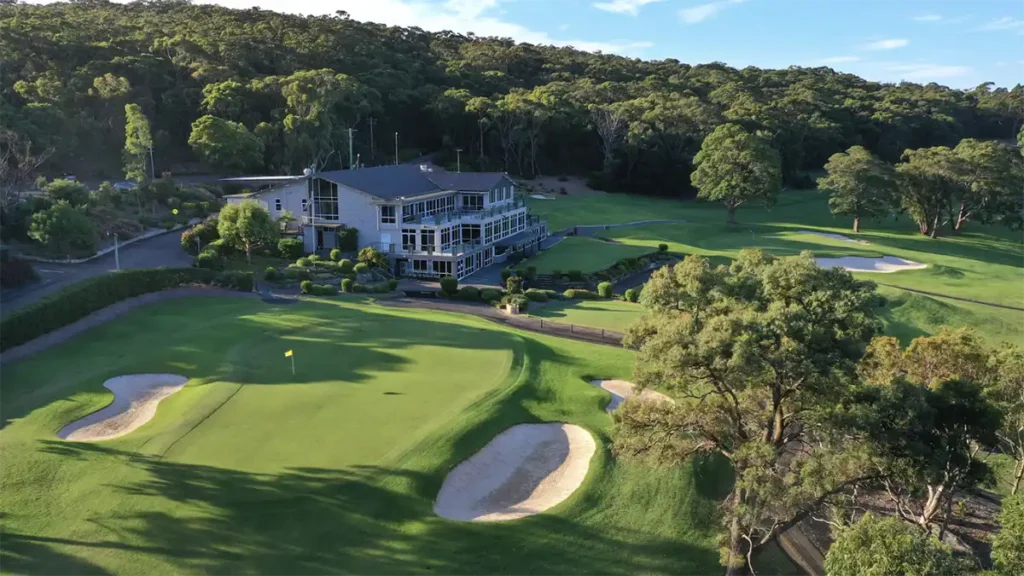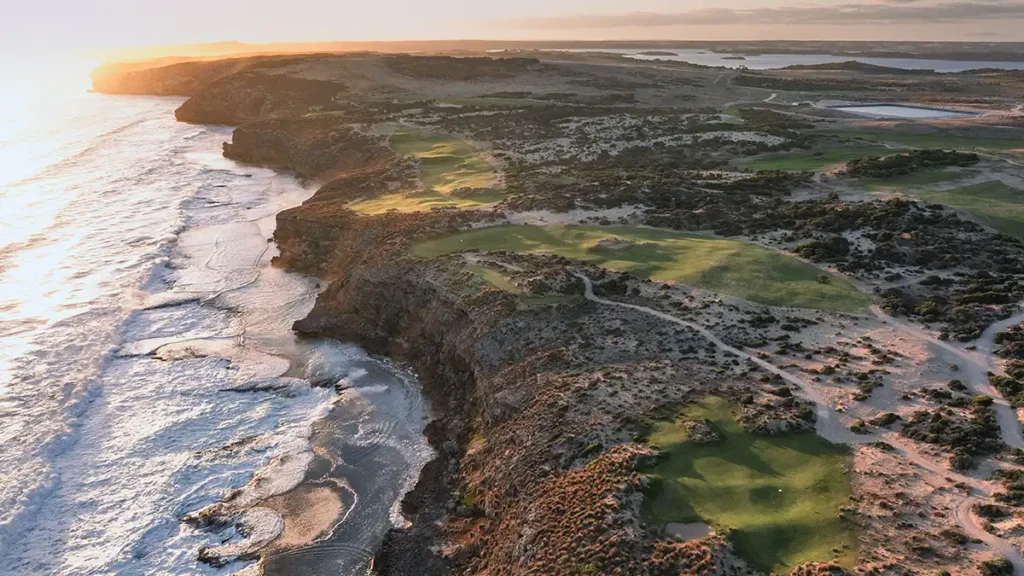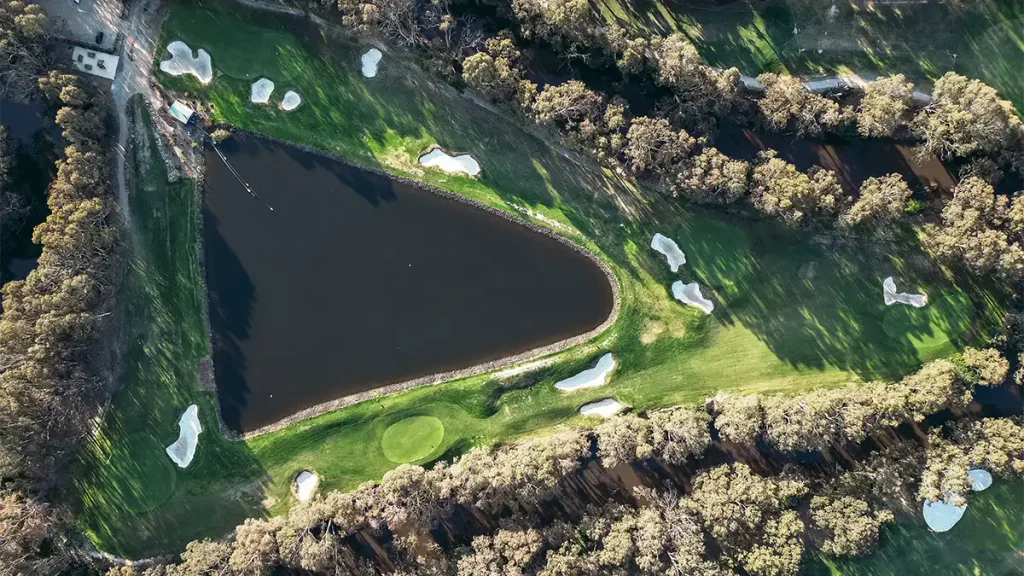
Rory McIlroy hails it superior to Royal Melbourne and he’s not alone among his playing brethren. So, is Kingston Heath really the best course in Australia and, if so, why? We poll players, architects and our Top 100 Courses panellists to get their take
The pointy end of any list always garners the most attention, and understandably so. We’re all fixated on who (or what) came out on top. It’s no different when it comes to Australian Golf Digest’s biennial Top 100 Golf Courses ranking, even though Royal Melbourne in some form or another has dominated since our first list was published 40 years ago.
Much like Phil Mickelson rode shotgun to Tiger Woods at the top of the Official World Golf Ranking for all those years, venerable Kingston Heath has remained the perennial bridesmaid in the Top 100, with 13 finishes at No.2 across 20 lists. Only once – in 2010 – has ‘The Heath’ taken top spot, one of just two occasions when Royal Melbourne wasn’t No.1.
A mere 0.91 points out of 80 separated the West course at Royal Melbourne and No.2-ranked Kingston Heath in our most recent ranking, released in May this year. Of the 31 panellists who scored Royal Melbourne’s West course and Kingston Heath during the 2024-2026 ranking cycle, 17 ranked Kingston Heath higher (with one tie). Despite the marginally stronger support among that cohort, the reason the course didn’t take top spot was because Royal Melbourne’s West course received stronger scores across the entire panel.
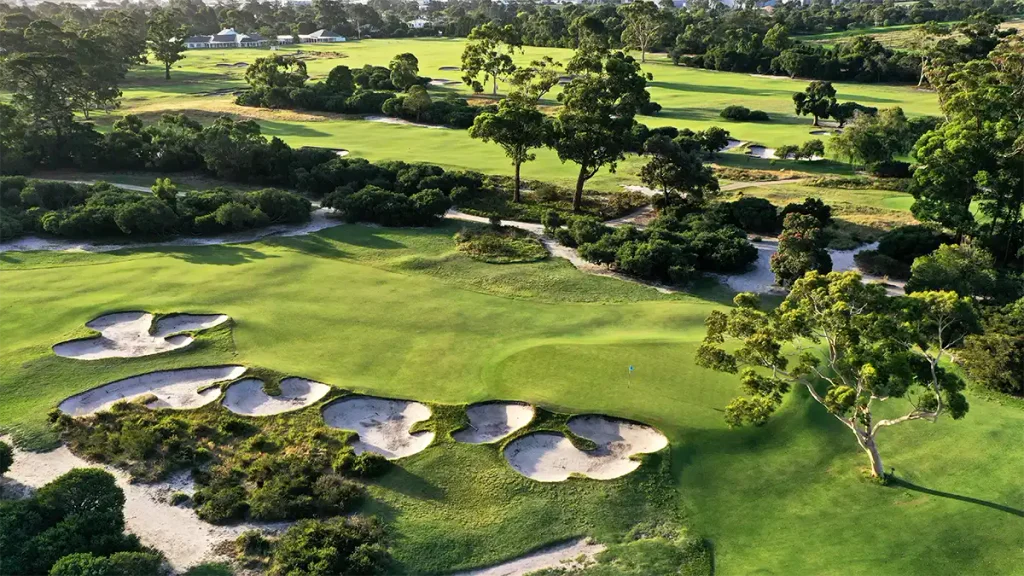
Yet there’s a definite legion within the game who consider Kingston Heath the better layout, especially at a time when Royal Melbourne can feel too short for today’s tour pros. Rory McIlroy created global headlines at the Australian Open last December when he declared, “I don’t want the membership to take this badly, but Royal Melbourne is probably not the best course in Melbourne.” When asked the obligatory follow-up question as to which course is best, the Northern Irishman wasted no time in issuing his two-word answer: “Kingston Heath.”
And if “best” isn’t the word used by Kingston Heath devotees then “favourite” is. It’s a sentiment shared by another former Open champion, Ian Baker-Finch.
“It’s my favourite in Australia – always has been,” he says. “And many players I know rate it their favourite in the world. I visualise playing at Kingston Heath – I’ve been a member there for 40 years – and the golf is second to none.”
Admiration for the layout and its attributes extends to the very peak of the game. “Unbelievable golf course,” says Tiger Woods, who won the 2009 Australian Masters at Kingston Heath. “You don’t get bunkering like this in any other place in the world.”

WHAT RORY MEANT
Still, McIlroy’s comments didn’t sit well with everyone [see page 87]. When veteran golf writer John Huggan sat down with him in the locker room at the Emirates Golf Club in Dubai seven weeks later, McIlroy added context in a story that appeared in the March issue of Australian Golf Digest.
“My thing is always, ‘Does the course challenge every club in my bag and every aspect of my game?’ I’m not sure many courses do that, to be fair. But there are some,” the 37-year-old told Huggan. “Plus, the game has evolved. If you are talking about a venue for a big tournament you have to design the course with that in mind. I’d love to play where every club in the bag is required. But Royal Melbourne is not that course. Has technology passed it by? Maybe. At least to an extent.
“The game of golf asks a lot of different questions when it comes to skill-sets,” McIlroy continued. “One of them is driving the ball, which is something I do very well. So, again, I am inevitably going to see courses through that particular lens. Which is why the thing I like most about Kingston Heath is that the holes are pretty much straight in front of me.”
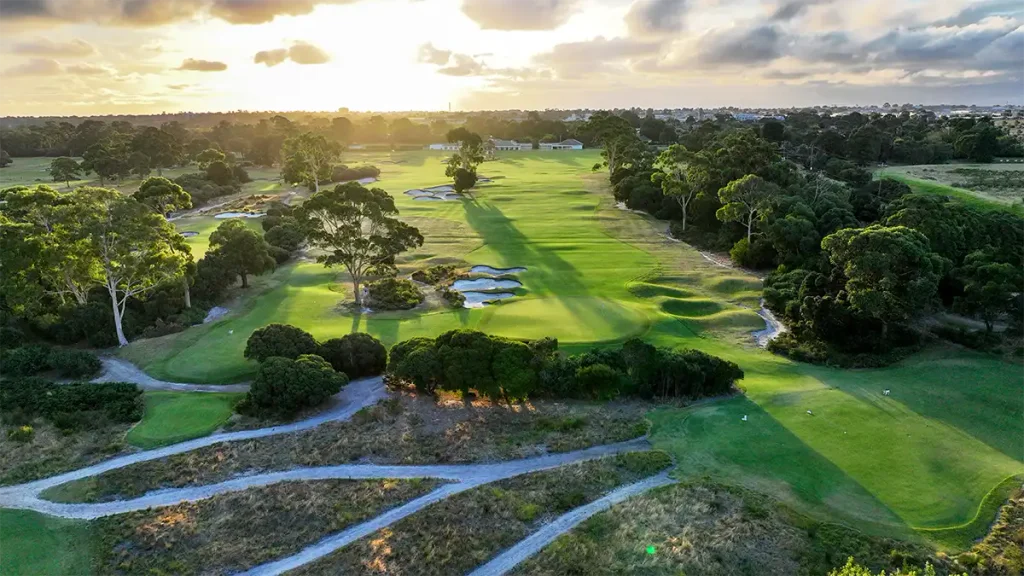
McIlroy isn’t the only long hitter who feels a little constrained by Royal Melbourne. “There’s a lack of drivers for me,” Min Woo Lee told Australian Golf Digest in late October. “There are a couple of times when I only hit one driver for the day and Kingston has a few more driver [opportunities]. I didn’t get to be in full ‘Min Woo mode’ and full ‘advantage mode’ [at Royal Melbourne] just because of that. We all know that playing on the Sandbelt is very strategic, but I miss hitting driver sometimes.”
“You do get to hit driver a bit more around Kingston Heath,” concurs Open champion Ryan Fox. “You’re splitting hairs there, though. Like, I’m definitely in Rory’s boat. I think my favourite is Kingston Heath on the Sandbelt, but it’s not like they’re miles apart. You give me a chance to play either and I’m very excited to play both.”
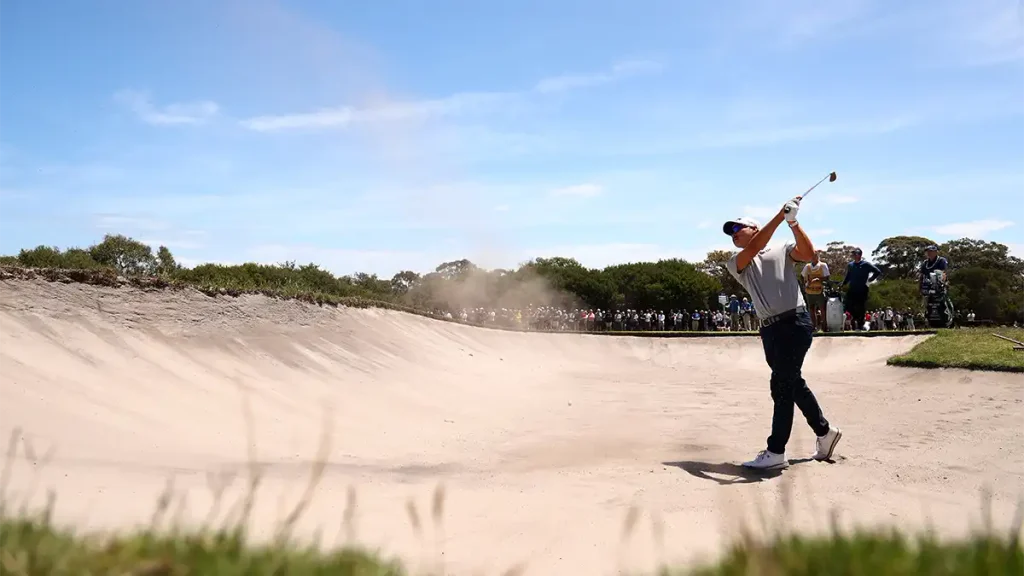
TOUR PROS vs ARCHITECTS
One of the points McIlroy made when clarifying his Royal-Melbourne-versus-Kingston-Heath comments in January was the need to view golf courses from the perspective of an elite player. “I look at courses through a tournament player’s lens, not through an architecture lens or even a historian’s lens,” he explained.
It’s a salient distinction. There aren’t many club members or everyday golfers who stand on the tee of any golf course and envisage taking lines that McIlroy does. Shots those in the gallery might have imagined while standing behind tee signage at Royal Melbourne last December was acutely different from the test he plotted a strategy for.
“There were a lot of blind tee shots, a lot of tee shots where I was hitting across fairways,” McIlroy said when asked what turned him off about Royal Melbourne. “I thought tee-to-green it wasn’t amazing. The green complexes are brilliant, though. And the bunkering around the greens is incredible. They could be the best green complexes in the world. But a truly great course needs more than that, especially when you are hosting some of the best players in the world. I also felt like many of the areas off the fairways were a bit scruffy. I like a rustic quality in some ways, but aesthetically it doesn’t look great. That’s one of the aspects I like about any course. I love Augusta National for that reason, although I realise not every course can be that way.”

“It’s just a personal thing,” Fox adds. “I just like the feel of Kingston Heath and the look of some of the shots, and I’ve been lucky enough to play both quite a few times in tournament conditions and, as I said, either of them, I’m certainly not complaining about. They are some of the best courses anywhere in the world, but just for me, Kingston Heath’s just got [Royal Melbourne] by a hair, basically.”
It’s a classic byproduct of the evolution of modern golf. The game played on tour is almost a different pastime when compared with recreational play. Then there are the course architects, who need to satisfy the needs and moderate the challenges for both sets of golfers. No one in golf is better equipped to offer the perspectives of all camps – tour players, everyday golfers and course architects – than Mike Clayton. The long-time European and Australasian tour player now has a 30-plus-year course-design career to his credit, and few golfers are as knowledgeable or passionate about the Melbourne Sandbelt.
“I can see why Rory would be frustrated playing at Royal Melbourne, and likewise he’ll be frustrated by the exact same things at Kingston Heath,” Clayton says before venturing down a familiar, yet justified, path. “The ball goes so far – and he’s a rollback guy. He completely understands the need to roll the ball back.
“I played with Tom Watson in 1984 for the first two days of the Australian Open at Royal Melbourne,” Clayton recalls. “He was one of the longest hitters in the world at the time – he smashed it – and he hit a driver on pretty much every hole because he was playing to the parts of the fairways that Alister MacKenzie envisaged players would play to, which were the wide parts. To earn the easiest next shot, you had to go to one half of that wide part, but he was hitting driver on every hole. Now, in the intervening 40 years, the ball goes 40, 50 yards further. So now Rory, who’s the equivalent of Watson as one of the best two players – Seve and Watson, Scheffler and Rory – he’s hitting driver into parts of the holes that MacKenzie never envisaged people’s drive reaching. So he gets jammed in.”

As such, and nearly 12 months on, Clayton views McIlroy’s comments more from a playability perspective rather than an issue of design.
“I don’t think he was judging the architecture because there is no question that as great a piece of architecture as Kingston Heath is on that bit of land, there can be no question that Royal Melbourne’s a better golf course because it’s just on a better bit of land and it’s an incredible piece of architecture,” Clayton says. “The Composite course, you can make a very good case that’s the best course in the world, and you clearly can’t make that case for Kingston Heath. It’s one of the best 20 or 30, but it’s not the best golf course in the world.
“What Kingston Heath is, is a great routing on a small bit of land, and a great routing in the sense that it’s incredibly cramped without having any sense of feeling cramped, so it’s a great routing. It makes brilliant use of the undulation that is there – 14, 15, 16, 17 are great holes, because that’s where the primary bit of undulation is.
“One of the criticisms of Kingston is there are lots of blind tee shots. Well, there are, but you always know where you’re going once you’ve played the course once. And the promise of the blind tee shot is that they set up great second shots. Had Dan Soutar and MacKenzie avoided the blind tee shots, they would have finished up with a 6,200-yard-long course and it would have been a really good course, but it wouldn’t have been the championship course that it is now… And no course has done a better job of eking every yard out of what it could get than Kingston Heath.”
So, what do those golfers who are more in Camp Kingston Heath see that distinguishes them from the Camp Royal Melbourne set?
“They see great bunkering because the bunkering is spectacular and it’s very strategic and it works really well,” Clayton contends. “It’s a fabulous golf course, but it wasn’t the same canvas that MacKenzie had at Royal Melbourne, which was a spectacularly large, sprawling site with undulation all over it. The only flat hole, really, is the first and the second’s kind of flattish, but apart from that, there was amazing undulation on that place. It’s got everything Kingston Heath has, but on a bigger scale. So how can Kingston Heath be better?”
The final word belongs to McIlroy – primarily because we have the reigning Masters champion to thank for the debate surfacing in the first place. He confessed in Dubai several weeks after playing Royal Melbourne that he had fallen into the trap of his expectations not matching the eventual reality.
“Maybe I built Royal Melbourne up in my mind too much,” McIlroy said with a smile. “And yes, it was good, if a little too quirky off the tee for me. In a way, I was speaking to the overall quality of the courses in Melbourne. It’s a great problem to have if I am saying that Royal Melbourne is the second-best course in the city. There is an embarrassment of riches down there. Plus, I didn’t feel like I was too insulting to my hosts. I did say the Composite course was still top-10 in the world – just not top-one in Melbourne.”
Each to their own, Rory. Each to their own.
Why Rory McIlroy is right about Kingston Heath and Royal Melbourne. And why he’s wrong
It was the moment that defined Wednesday at last year’s Australian Open and lit a fuse within Australian – and world – golf-course architecture circles.
Rory McIlroy, the career Grand Slam winner, world No.2 and a global golfer, declaring in no uncertain terms that Royal Melbourne is “not the best course in Melbourne”. Instead, Kingston Heath is, in his mind.
Firstly, the Northern Irishman deserves credit for not simply ‘straight-batting’ his answer to the question about Royal Melbourne Golf Club, which would have been so easy to do. But we’ve been here before – 38 years ago, to be exact.
Jack Nicklaus set tongues wagging at the Bicentennial Classic in 1988 when he described Royal Melbourne as a “good members’ course”. Nicklaus didn’t view the comment as a put-down; rather as a compliment. Similarly, McIlroy was quick to note that he still considers the Composite course as a top-10-in-the-world layout.
There is a corner within golf-course architecture that agrees with McIlroy that Kingston Heath is indeed the superior layout. Likewise in Adelaide, where venerable Royal Adelaide always ranks higher than nearby Kooyonga, however the latter has a definite and occasionally vocal following that argues it should be the other way around.
As the person who administers Australian Golf Digest’s biennial Top 100 Golf Courses ranking, I can tell you that in the most recent list, slightly more than half panellists who evaluated both Royal Melbourne and Kingston Heath scored the latter higher. That, however, was just the West course at the former and not the Composite, which is a key distinction here.
When our ranking elevated Cape Wickham above Royal Melbourne West in 2024 for the first time in the list’s near-40-year history, we made that exact point: the Composite course – if ranked instead of East and West – would surely be untouchable at the top.
So in one sense McIlroy is not alone in his views. He’s not in the majority, but nor is he ‘on an island’ on this one. Yet as former tour-player-turned-coach Bradley Hughes noted on X/Twitter, McIlroy needs to see Royal Melbourne in more ways than he had at the time.
“He would change his mind if he played there a lot more times and especially if he had to use the old equipment to try to get around that course,” Hughes wrote. “RM is landlocked and can’t do much more to make these guys hit long/mid-irons into those greens. [Ben] Crenshaw absolutely gushed about the place whenever I spoke to him about it. [Hale] Irwin, [Greg] Norman rave about it ’cos they saw it at its most challenging.”
I’d also argue that McIlroy made his call prematurely. On the Wednesday before the championship began, he’d not seen Royal Melbourne in all its guises. But that soon changed.
A day later during the first round, McIlroy teed off amid northerly winds that always intensify the challenge of Royal Melbourne on what became a 34-degree day. He made six bogeys against five birdies to shoot a one-over 72. In the second round, when the wind switched to blowing from the south, south-west, he tangled with the cutline before three late birdies saw him make the weekend. On Saturday, the wind came from the west (he shot a second straight three-under 68) before quartering from the south-west on Sunday when the top temperature dipped to 18 degrees and McIlroy closed with a 69 to share 14th place.
It was a vintage four-day stretch of late spring/early summer weather that highlighted the nuances in Alister MacKenzie and Alex Russell’s design and showcased its many faces and overall brilliance. It also armed McIlroy with a little more information and experience, even if he didn’t change his mind.
Photographs by gary lisbon; getty images/willaim west, Graham Denholm, andy cheung