
When I head to the range, I bet I’m chasing a lot of the same stuff you are. Let’s see where we match up.
I’m at a cool time in my life. I’m 27, got on tour four years ago and have been able to grab a few wins. Everybody says there’s pressure when you’re not winning and a different kind of pressure when you are, but I don’t get too stressed. I can’t grind all the time. That’s not me.
I’m probably a lot like you. When I go to practise, I’m finding a drive-thru on the way to get a giant iced coffee. I don’t like to tie my shoes – my swing coach, Jason Birnbaum, gets on me for that – or fix the flap on my glove. I’m most comfortable hat backwards, shirt untucked, talking college sports. Having fun helps me recharge for the days when I have to be sharp.
Even more, you and I probably have some of the same swing issues. I like to go at it fast, and my miss is to the right, although we never say “slice” on tour. My grip feels weird some days, and I have to keep an eye on ball position. I need to get better with my wedges. If any of this sounds familiar, let me show you what I’m working on.
DRIVER
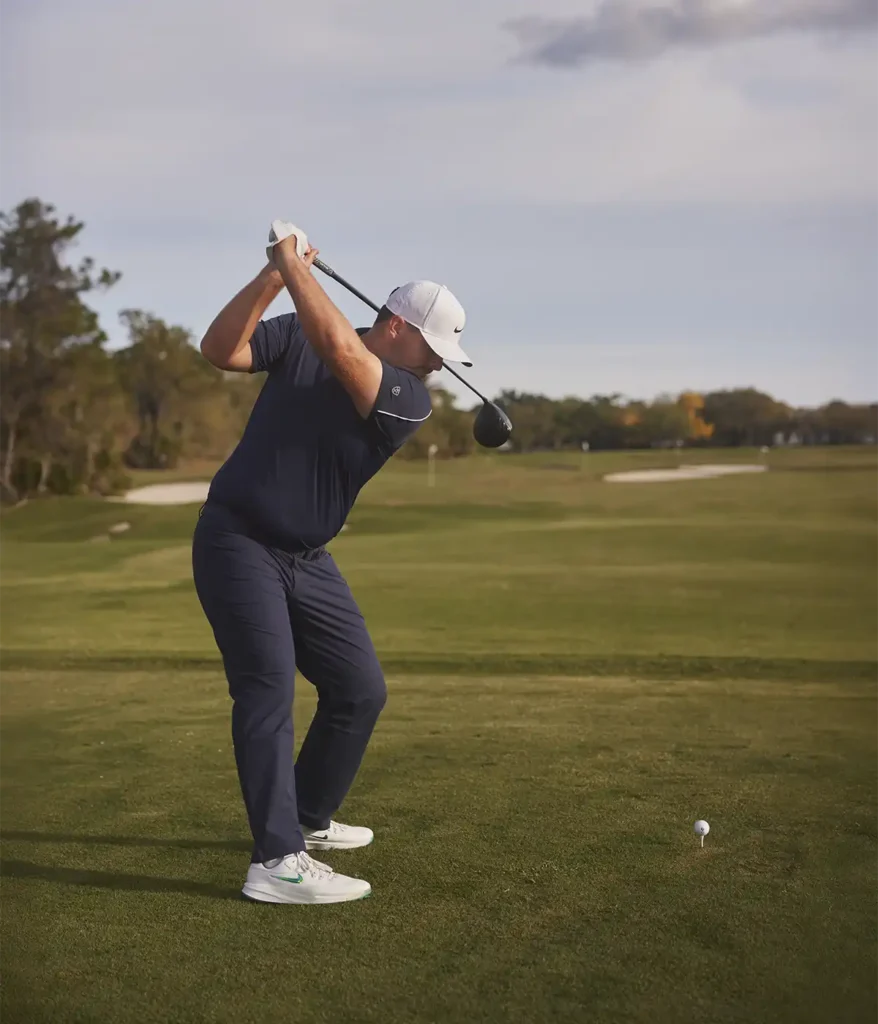
POWER FADES WITHOUT THE SLICE RISK
My natural ball flight is left to right. If I’m on the last tee with a chance to win, I’m aiming that thing left and ripping a fade. I never want to lose that shot, but I do have to make sure I don’t over-do my fade positions. Two keys are my shoulder alignment (not getting too open) and the shape of my backswing (not too upright).
Shoulder alignment is the easy one. I have a pretty weak right-hand grip, meaning my hand is more on top than turned to the right. But if it gets too weak, it shifts my shoulders more open. That’s something Jason and I always check, along with ball position. If the ball creeps too far forward, that also can crank my shoulders way open.
The second part – my backswing shape – I’m really keying on. I want to swing my left arm deeper, or flatter, to the top [above]. When I’m cutting the driver too much, my left arm moves out and away from my body on the takeaway, which makes my swing steeper. I want to feel the top part of my arm staying against my chest as I go back. Straightening my right leg on the backswing helps because it allows more hip turn and makes the backswing more rotational, less up and down.
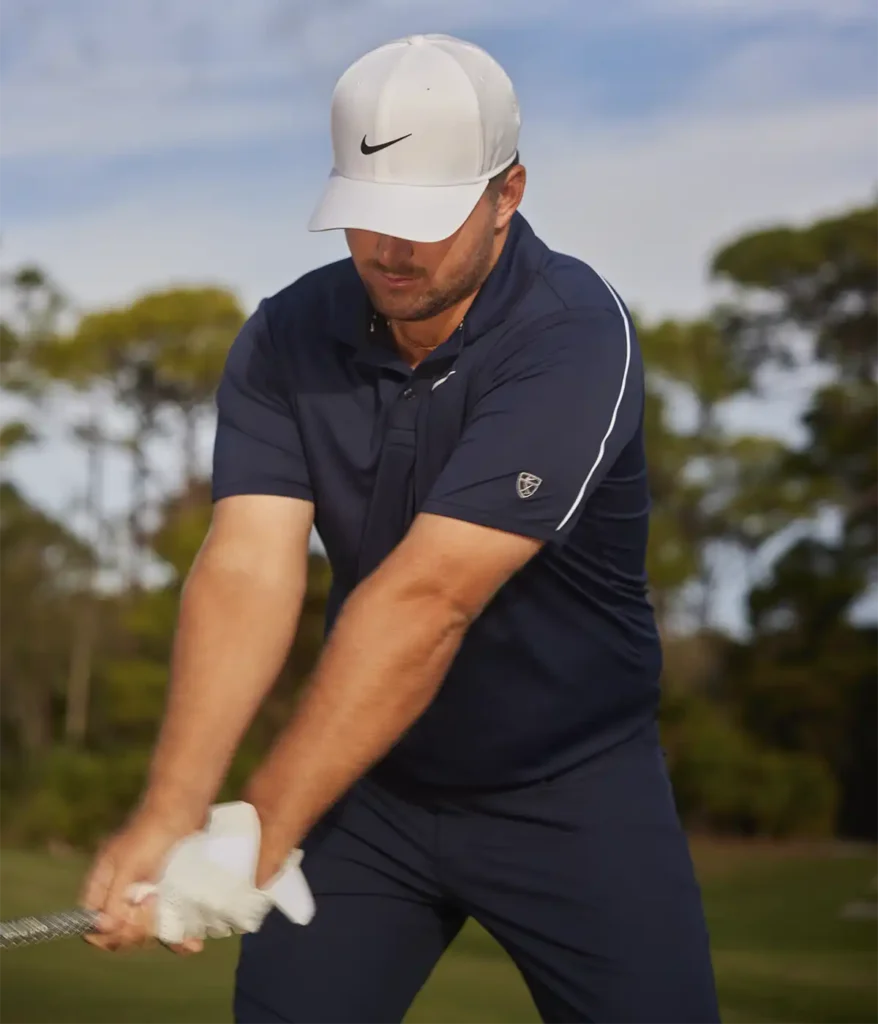
UNLOCK A BIGGER TURN
Another way I’m working on my backswing is a trigger that kick-starts my move off the ball. Like Jack Nicklaus’ famous head swivel to the right, I turn and shift my head a few inches away from the target as I start back [above]. This gets my weight moving to my right side and encourages more body turn to the top. The more I can turn, the better my chances of making a flatter arm swing and not that steep, lifting action that could turn my fade into a flare way right.

DRILL: STAY CONNECTED
Jason came up with this practice drill, and I love the feeling it creates. We cut a stretchy exercise cord and tied it into a loop that fits tight around my upper body. I stretch it against the outside of my left arm and wrap it around my ribs on the right. The cord holds my left arm across my chest [above], which is the feeling I want in my normal swing. I even hit balls like this. It’s awesome. I use this drill nearly every time I practise.
IRONS
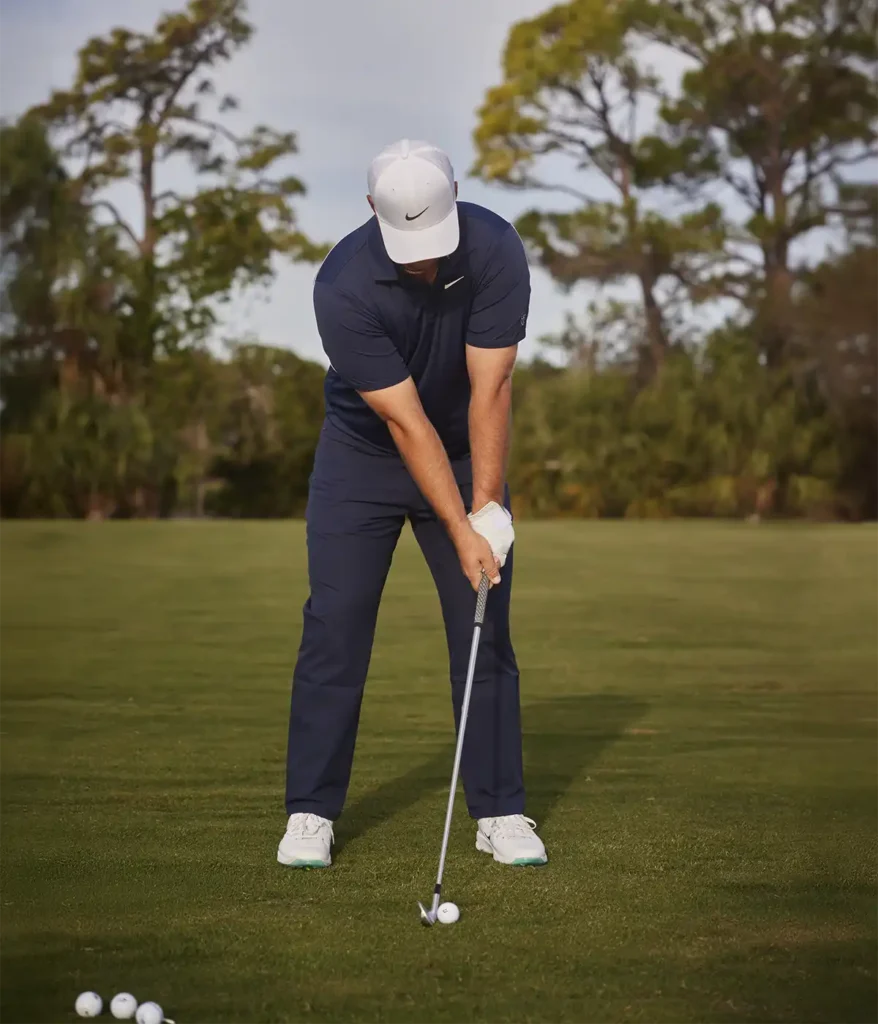
Low Bullets Beat Weak Floaters
I know what you’re thinking: How am I going to hold the green with low bullets? I’ll tell you. The issue I see with most golfers – and it gets me sometimes, too – is wiping the club across the ball with an out-to-in swing that kills power and sends shots to the right. If you make solid contact, you’ll get more distance, of course, but you’ll also have plenty of trajectory to stick it on the greens.
To hit my irons flush, I work on a few things. First is ball position. I play the ball just forward of centre for middle irons, a touch up for long irons and middle to back for short irons. Because I’m naturally a little steep, it’s critical that I catch the ball first, then the turf. If I get it at all heavy, it’s going nowhere.
I also push my hands ahead of the clubhead at address [above], which reduces the out-to-in path. If the clubhead passes your hands before impact, you’re wiping across the ball – that’s the hated high-right miss. Starting with my hands ahead pre-sets where I want to be at impact to smash an iron shot.
My last key is “covering” the ball as I swing down. I feel like the clubface is trapping the ball against the ground and my chest is on top of it at impact. Sound like a low punch shot? Great. Those always feel pure.
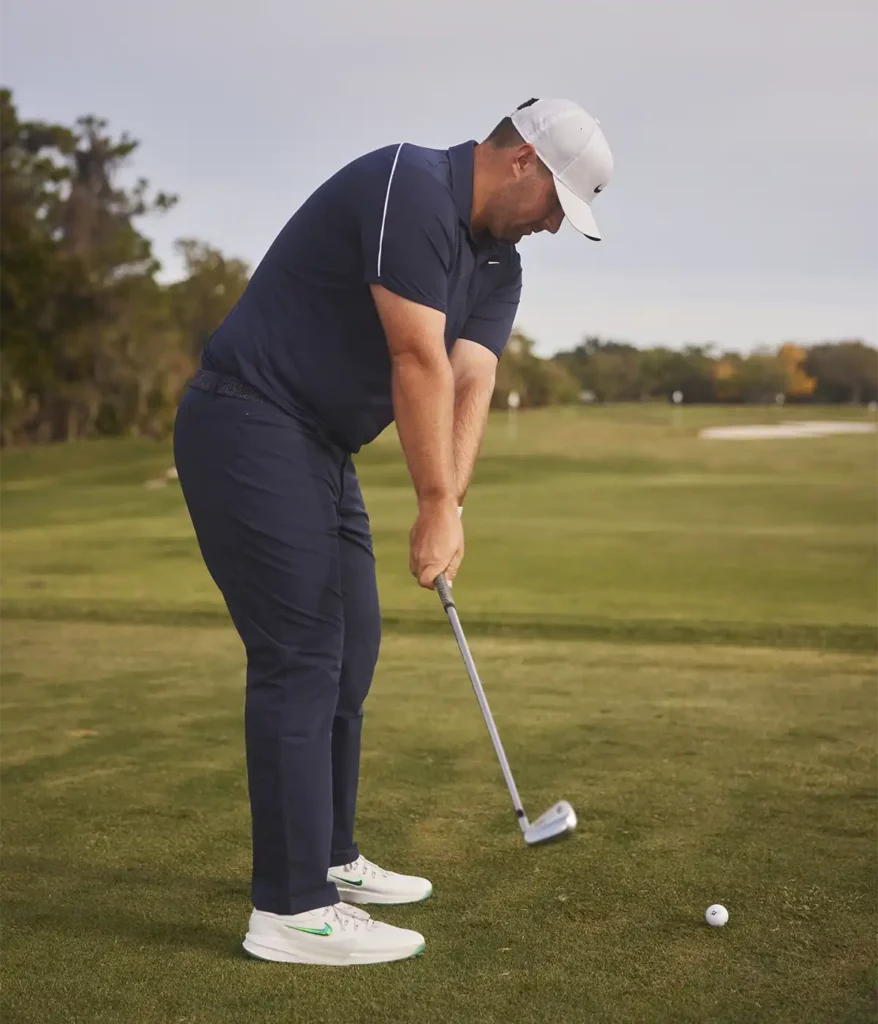
DON’T FORGET THE FACE
Most of us get the clubface too open on the backswing, then don’t close it enough by impact, so contact is weak. I set up a better strike by keeping the face more closed right from the start. I like to see the face still “looking” at the ball a few feet into the swing [above]. The feel for me is that my right wrist stays more on top as I start back. A stronger face position helps me avoid leaving the club open at impact, so I can shred my iron shots. I remember years ago shooting 62 at one of my favourite childhood courses – Hollywood Golf Club in New Jersey – thinking toe down to start back. I’ve used that thought ever since.
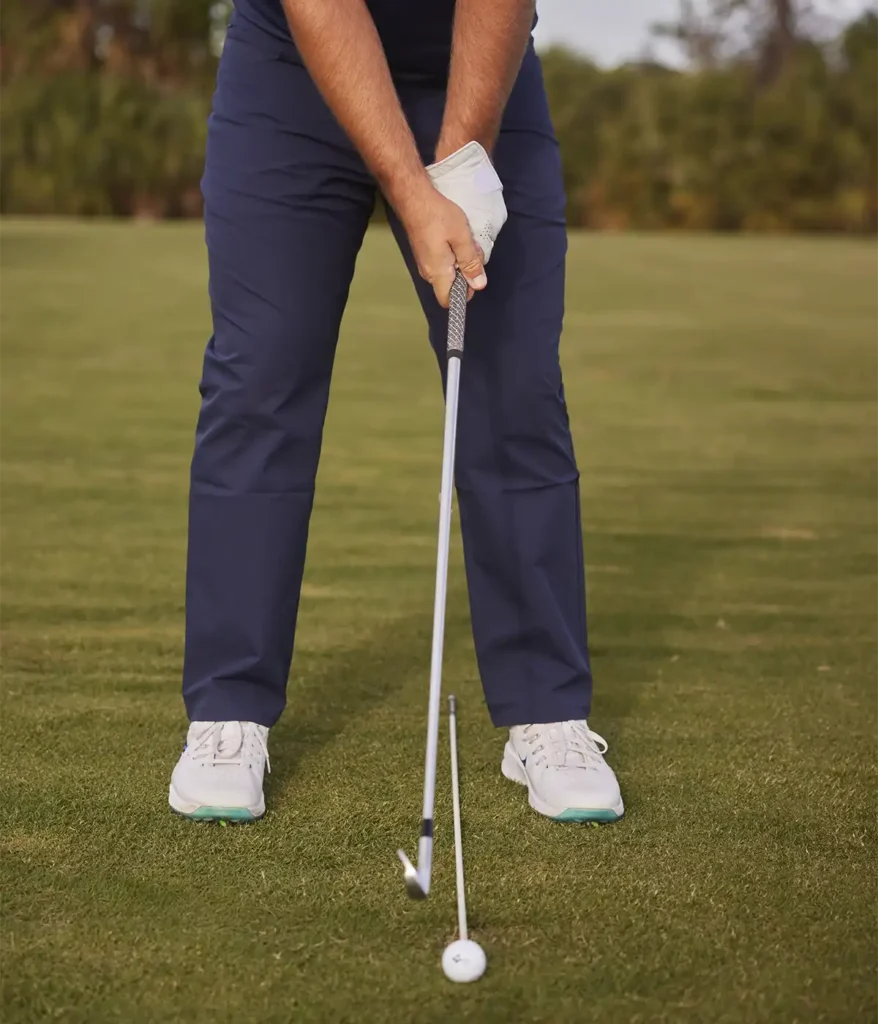
DRILL: MASTER BALL POSITION
You’ve seen this drill with the alignment stick a million times but for good reason – ball position is huge. It’s the first thing any tour player will check when his or her iron shots are a little off. Like I said, I want the ball just ahead of centre in my stance for a middle iron. I’ve got a 6-iron here [above], so I set the stick between my feet and perpendicular to my target line. My ball position tends to drift too far back, and then I have a tough time controlling direction. My fade doesn’t start enough to the left, and a draw will hang to the right. You gotta nail your ball position, and this is the easiest way to check it.
WEDGES
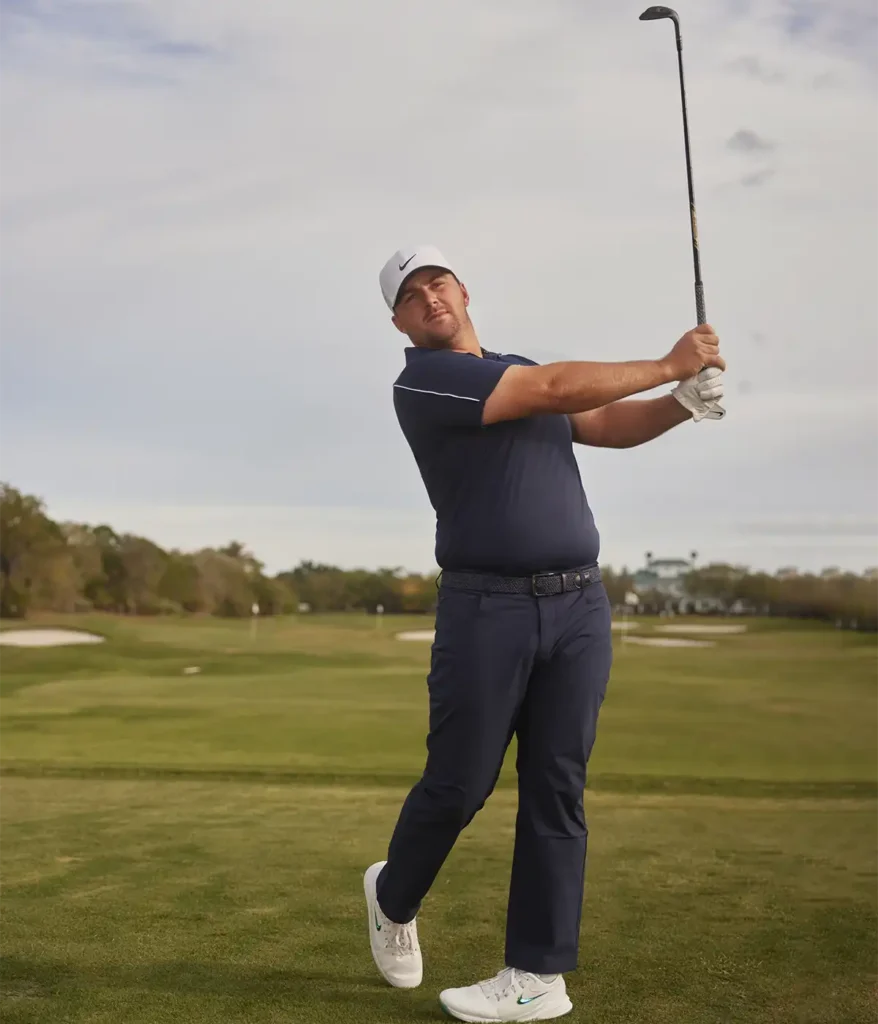
80-PERCENTERS THAT STICK INSTEAD OF FULL THROTTLE
When I get to the wedges, I shake things up. I try to draw them because my normal cut move puts so much spin on the ball and it flies too high. Plus, they sometimes spin back off the green. Trust me, a lower shot that hops once and grabs – that’s better to control distance.
The draw comes mostly from ball position. I play it way back, almost to my right foot, which leans the shaft towards the target for a low-shot setup. The ball being back also helps me start it to the right with a better chance that the face is slightly closed. Those are all draw positions.
The other thing I do is cut off the finish, like a Tommy Fleetwood swing. My hands finish low [above], and the club stays more in front of me than wrapping around my body. A low finish means a low flight. Plus, I swing about 80 percent, which helps keep the flight down.
I also try to feel a more rounded swing, with my left arm across my chest going back, just like I said with the driver. The driver cuts, and the wedges draw – the difference is mainly ball position. When I want to groove that rounded shape, I’ll hit a bunch of wedges. It trains the move I want with every club.
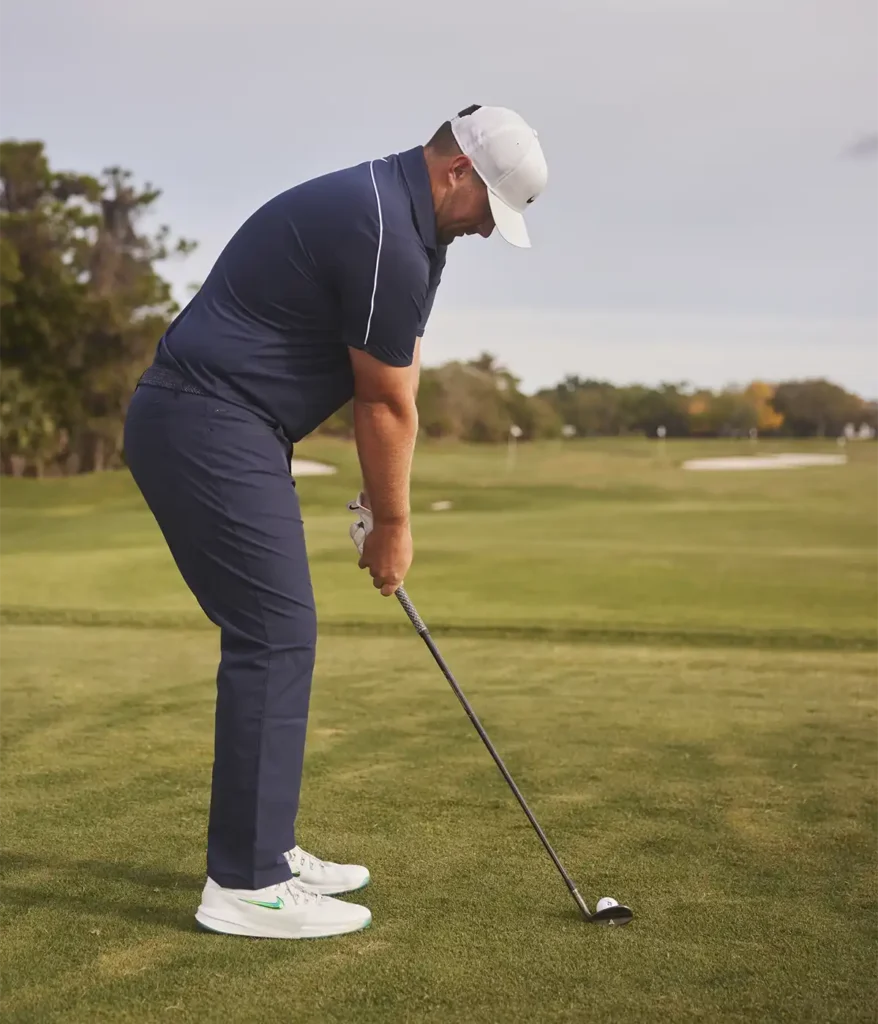
SQUARE THE SHOULDERS
With the ball back for wedges, my shoulders square up to the target line, even close a touch. That’s good for draws, and Jason and I check it a lot because my standard setup is open. A great way to test shoulder alignment is to video your setup from behind, looking down the target line. If you see a sliver of your left arm [above], your shoulders are square to closed. Or you can take your setup, hold the shaft across your shoulders and compare it to your target line. If the shaft matches your line, you’re square.
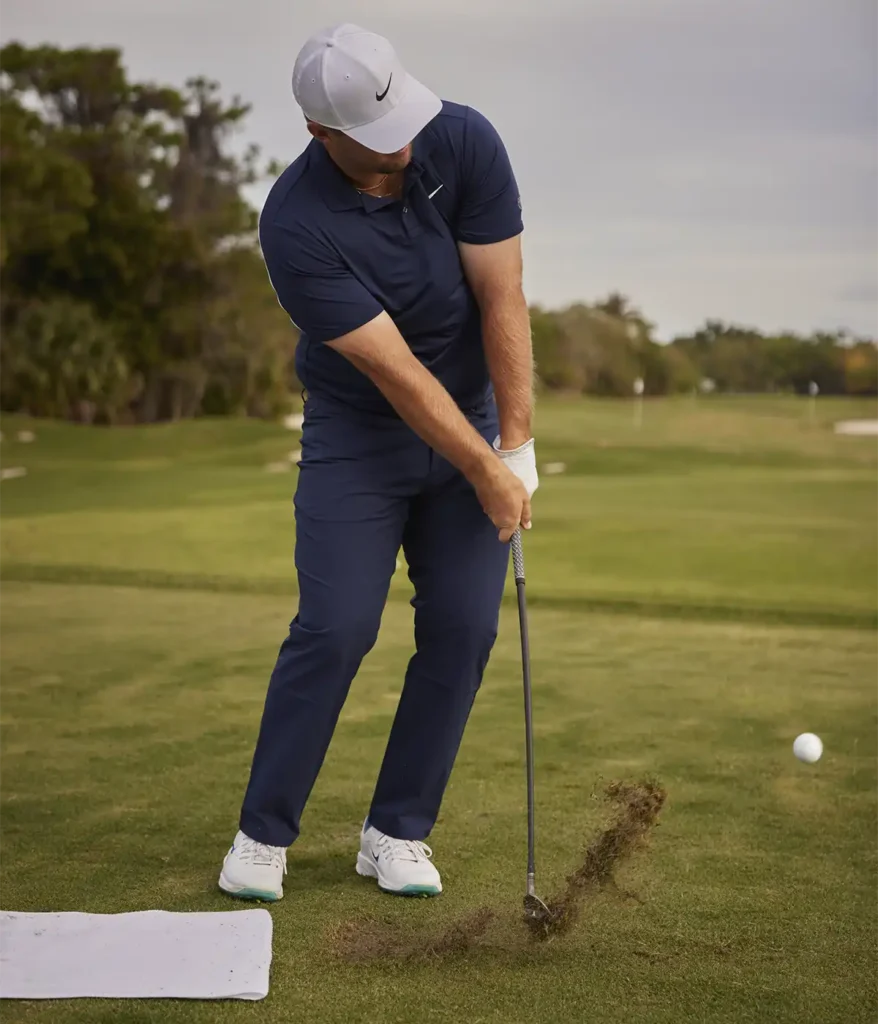
DRILL: MISS THE TOWEL
Two things matter most to me on wedge shots – flying the ball the right distance and knowing how much it’s going to spin when it lands. Both require precise contact. That’s why I practise with this towel drill. I place a golf towel a couple of inches behind the ball, then set the ball very carefully in my stance – just inside my right foot. I hit shots missing the towel and striking the ball the same every time [above]. Consistent contact is a must for dropping your wedges in tight.