
WHAT YOU NEED TO KNOW: Callaway launches its next generation of Chrome series golf balls (Chrome Tour, Chrome Tour X and Chrome Soft) with a distinctive upgrade in a stronger, stiffer mantle layer designed to boost initial ball speed throughout all three models in the line. A refined seamless aerodynamic dimple pattern aims to tighten overall consistency for shots from the fairway, as well.
PRICE & AVAILABILITY: $84.99 per dozen ($NZ99.99). Available from January 30.
RELATED: Want to find the right golf ball? Start with this distance
3 Cool Things
1. Four years faster. While Eric Loper, Callaway’s chief of golf ball research and development, has often said that a multilayer golf ball is comprised of many parts that work in sync on multiple levels to achieve the varying requirements of the full bag’s worth of shots, he also knows sometimes it’s a change to one of those elements that spurs new possibilities. For the new Callaway Chrome Tour, Chrome Tour X and Chrome Soft balls for 2026, that elemental change begins with the intermediate mantle layer. That layer, which separates the core or dual core from the cover and works to enhance both of those elements, exhibits new characteristics in this year’s models and the primary benefit is speed, Loper said.
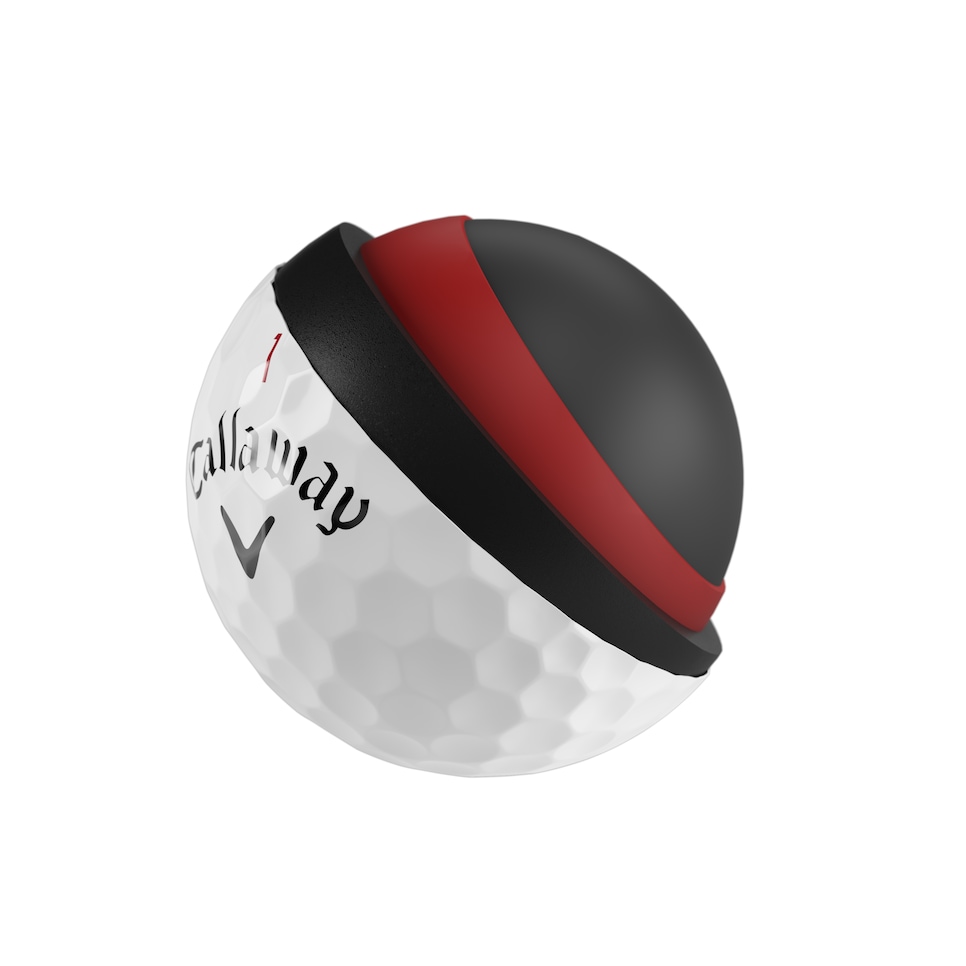
The material, part of what the company calls its Tour Fast Mantle, features a flex modulus that is 16 percent stiffer than the company’s previous mantle, which Loper said leads to speeds “that the industry hasn’t seen before in these types of products”. He says the mantle’s new exclusive material was four years in development with one of the company’s vendors, and its stiffness properties lent themselves to specific roles within the Chrome Tour X (played by most of Callaway’s tour staff), as well as the Chrome Tour and Chrome Soft golf balls.
“That’s important because if you think about a golf ball as a spring, and under impact or under load, that golf ball is going to deform,” Loper said. “And if you have a stiffer spring, or a more rigid material that’s acting as a stiffer spring, when that golf ball compresses or rebounds, it’s going to have higher velocity.”
The key with making the mantle stiffer is that it allows that increase in speed to happen without making the compression ultra-firm, which is the most common way to increase ball speed. The downside of higher compression is too much spin off the driver. That’s not a problem with the way the new mantle interacts with the rest of the Chrome series golf balls’ component parts, Loper said.

“If you look at the Chrome Tour X, that golf ball is great around the green, it has our highest wedge spin, it has higher iron spin, it’s fast off the tee, but we really wanted to make that golf ball longer off the tee, so to do that we needed to lower driver spin, and this material helps us unlock that,” he said.
“On the Chrome Tour, we felt like our spin throughout the set was ideal, so we didn’t want to change anything about the spin throughout the set. All we wanted to do was make it faster. And this mantle gives us more speed off the tee. And the same thing with Chrome Soft, that golf ball is still our lowest compression golf ball with a urethane cover and it’s going to be faster off the tee and slightly lower spin where we want more distance and it feels great around the green.”
2. Seam ripper. As much as you might think that every golf ball is spit out of high-tech machinery in identical fashion, the fact is that only happens with serious resolve and efficiencies in the manufacturing process. Callaway’s on record for having spent more than $US100 million in upgrading its ball plant operation in Massachusetts and those upgrades have opened up new design spaces. That exacting approach means balls get closer to the edge of the rules (i.e. faster), but it also means greater efficiency. That’s not just from ball to ball, but from shot to shot, Loper said. His specific point in this case revolves around the seam between how the two halves of a golf ball are joined together. He maintains that while some manufacturers might smooth out only that line where the two halves meet, he says in Callaway balls the process is more of an overall commitment to the consistency of every dimple all over the ball.
“Every single golf ball has this and what the industry does is, they use a process called seam buffing,” he said. “They’re going to go in there and basically grind off that material and as a result of it being an inconsistent process is the dimples adjacent to that parting line get distorted. And that does have an impact on the co-efficient of drag and lift, depending on the orientation. The process we use is not a local grinding operation. It’s something that’s more global over the entire surface of the cover and it does create uniformity. We don’t deform the dimples adjacent the parting line. As a result, we’re extremely consistent on shots into the green.”
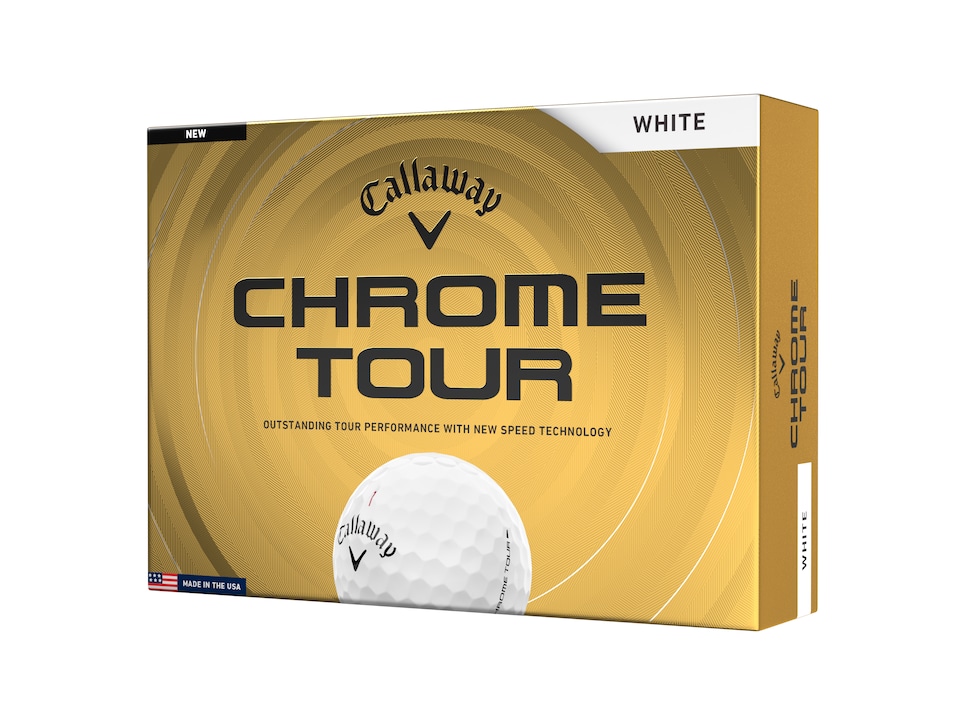
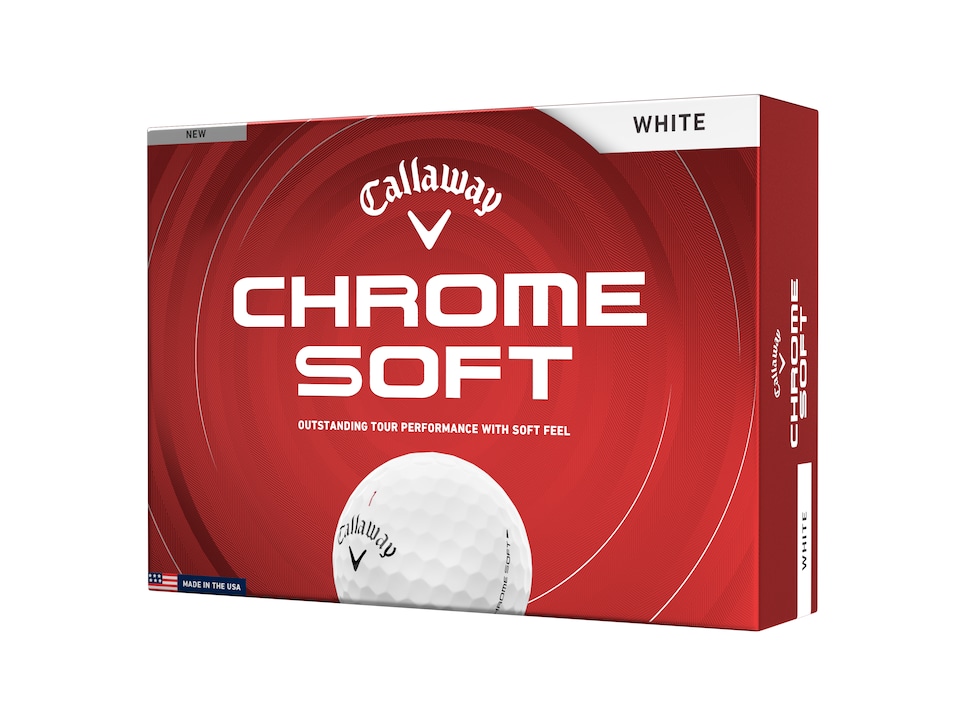
3. Three for one. Once again, the Chrome series will feature three options: the four-layer Chrome Tour and Chrome Tour X and the three-layer Chrome Soft. All feature a urethane cover to enhance greenside spin and feel. Chrome Tour features a mid-spin profile and offers all-around consistency in terms of distance, flight and greenside control. Chrome Tour X is designed for the highest speed and distance and targets the faster swinging player. Chrome Soft offers the spin and cover performance of urethane, while boosting launch off the tee and producing slightly lower full shots and the lowest compression and softest feel of the three models.
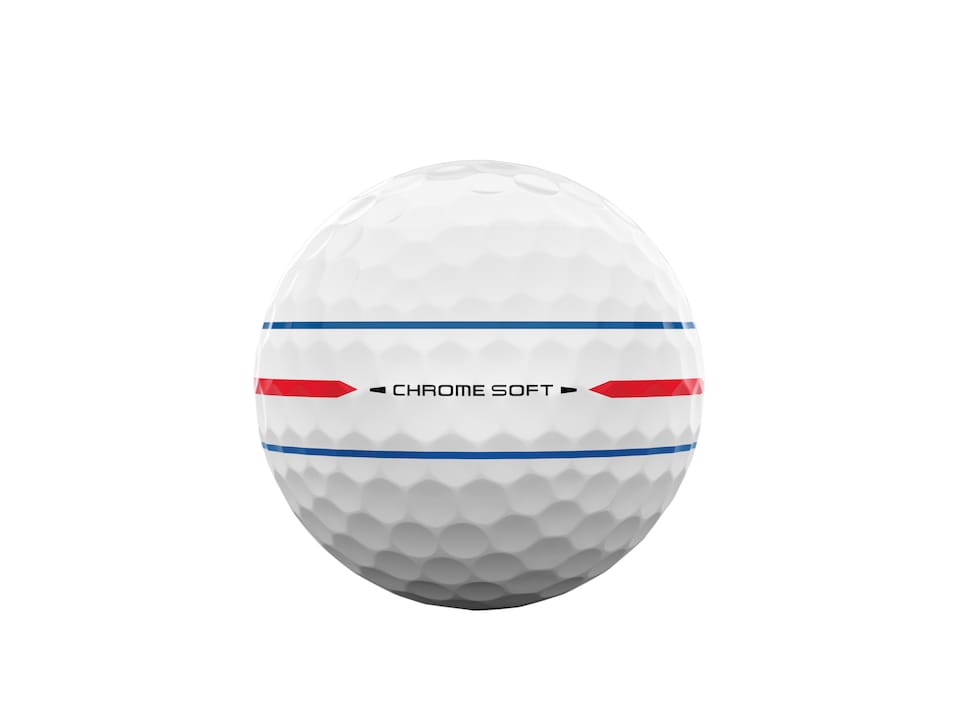
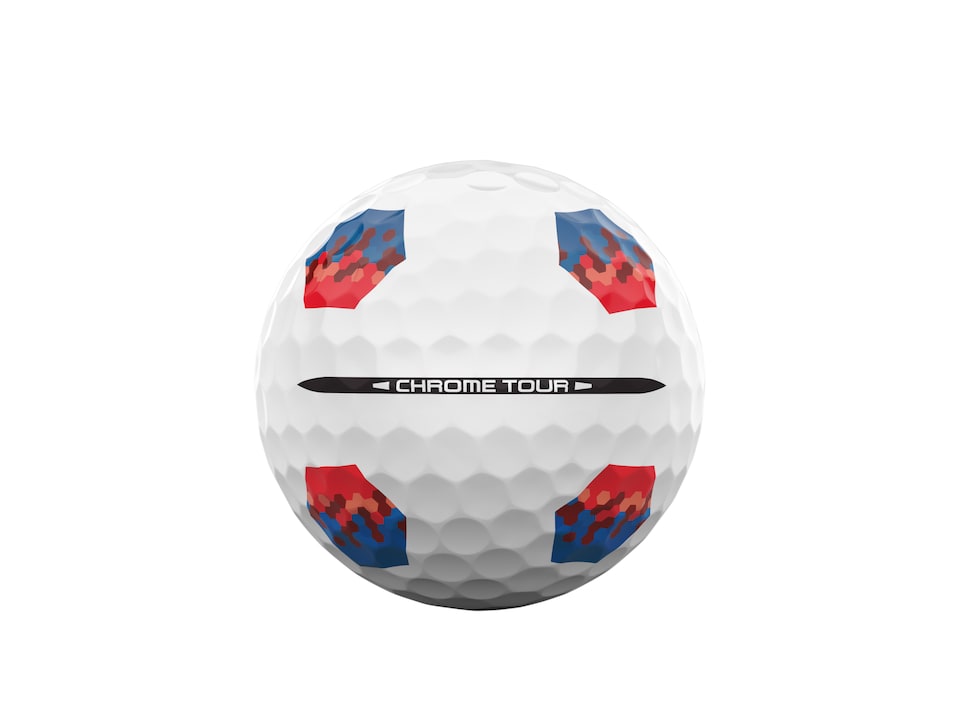
The balls also are offered in an array of non-white options, including yellow, the aim-and-alignment technologies of Triple Track and 360 Triple Track and the hexagonal “soccer ball” pattern TruTrack.