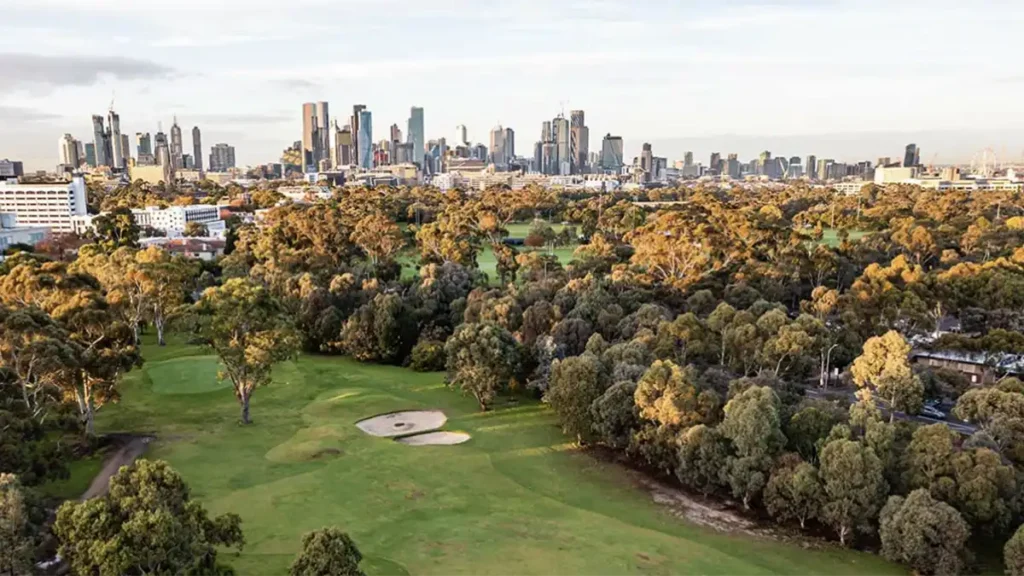
One of Melbourne’s most historic public golf courses is at the centre of a growing battle over its future, with golfers warning that proposed changes to Royal Park could damage a layout that has been part of the city’s sporting landscape for more than a century.
The City of Melbourne’s long-term plans for Royal Park include significant changes around the nine-hole Royal Park Golf Course, including a potential reduction in the amount of land devoted to golf and changes to roads and car parking.
RELATED: NSW Liberals and Nationals: ‘We’d restore Moore Park Golf Course’
The course, established in 1903, has a unique place in Australian golf history. Five-time Open Championship winner Peter Thomson learned the game there and won the Royal Park club championship as a teenager.
Golfers fear that further reductions to an already compact layout could compromise its character and playing experience.
The proposed changes are linked in part to a broader push to improve safety and connectivity within Royal Park. One key issue is the Upfield railway line and the Poplar Rd level crossing, which golfers have traditionally had to negotiate during a round.
City of Melbourne has argued that redesigning parts of the precinct could remove the need for thousands of golfers to cross the railway each year, while also creating more space for indigenous vegetation, wildlife habitat and public recreation.
One option being considered would consolidate the nine holes on the western side of the railway, potentially removing golf land south of the line.
That prospect has alarmed members of Royal Park Golf Club, who say the course’s small footprint makes any loss of land particularly significant.
Andrew Thomson, Peter Thomson’s son and a columnist for Australian Golf Digest, has criticised the prospect of major changes, arguing that the course needs careful maintenance rather than a wholesale redesign.
Royal Park Golf Club spokesman Kai Bowie has similarly warned that seemingly modest reductions could have a disproportionate impact.
The course currently measures just 2,316 metres for nine holes and is a par-35 layout. Its unusual setting – with both a train line and tram line running through the broader course precinct – is part of what makes Royal Park one of Melbourne’s most distinctive golf venues.
The golf course also has a strong community role. It remains a public facility open to golfers of all abilities and sits only a few kilometres from Melbourne’s CBD.
The council has stressed that the proposed configuration remains at an early stage and that any substantial changes would involve consultation with golfers, the club and specialist course designers.
FROM THE VAULT: The War On Golf has begun
Lord mayor Nick Reece has said improving access and safety is the long-term objective, particularly eliminating the need for golfers to cross the Poplar Road level crossing.
For golfers, however, the debate is about more than transport infrastructure.
Royal Park is one of Victoria’s oldest public-land golf courses and a place where generations of players have learned the game. With Peter Thomson’s legacy woven into its history, members fear that reducing the course’s footprint could ultimately undermine the very qualities that have allowed the unusual little layout to survive and thrive for more than 120 years.
The coming consultation will determine whether Royal Park can evolve without losing its identity – or whether one of Melbourne golf’s most distinctive courses will be fundamentally reshaped.