WHAT YOU NEED TO KNOW: The new Srixon ZXiR and ZXiR HL irons mark the company’s first foray into a new kind of steel alloy for a cast game improvement iron. The alloy, known as i-Alloy, grew from the proprietary Z-alloy the company developed for its wedges, and it’s designed to bring a softer feel with more forgiveness to the company’s familiar shaping in its ZXi forged lineup.
PRICE: Aussie and New Zealand RRPs and retail dates coming soon!
RELATED: Analysing the past three versions of Srixon drivers with a swing robot
3 Cool Things 
1. Feel me. The challenge with new technologies in golf today, particularly when it comes to innovation in iron design, isn’t just about making clubs hit the ball farther through thinner, more flexible faces. Rather, it’s in finding ways to make those stressed varieties of stainless steel still feel silky smooth. Often, the attempt is to calm those vibrations with some kind of rubbery badge or inject some squishy goo to improve feel. But the team at Srixon, which previously had developed a reputation for the feel of its forged irons, wasn’t eager to mask feel with some other element.
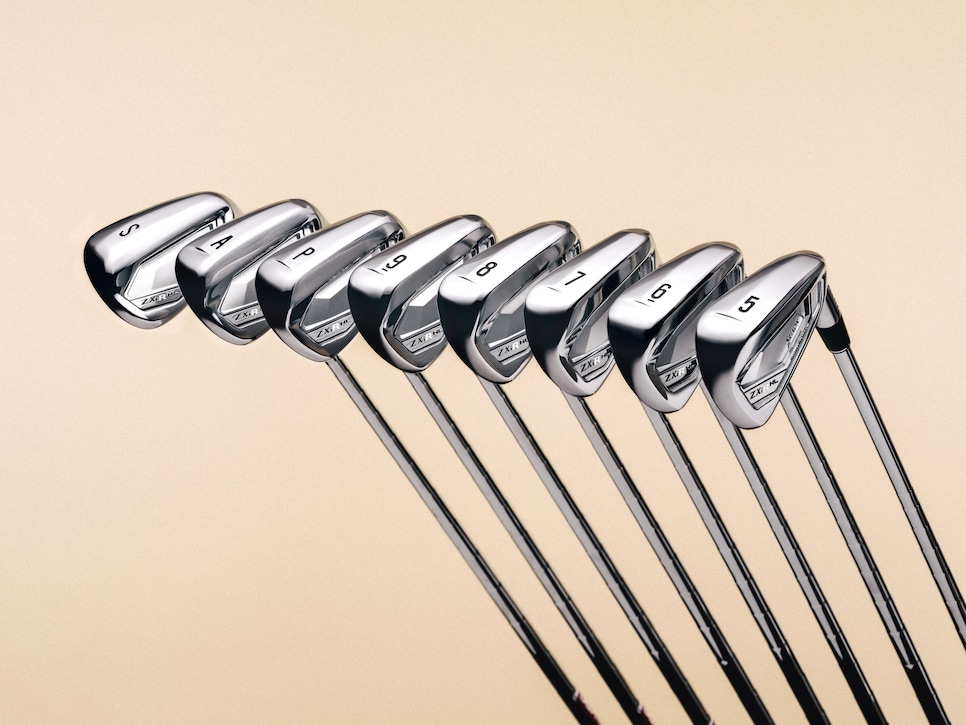
Instead, building off its development of its own variety of a steel alloy for its RTZ and CBZ wedges, the company’s team engineered its own new alloy for use in the new ZXiR and ZXiR HL irons. The emphasis was to bring enhanced feel to a couple of irons in the game improvement category, where the vast majority of competitors are using more common steel varieties like 17-4 and 431. The company says its new i-Alloy is 10 percent softer, while maintaining high strength so it can still be thin for enhanced deflection at impact, the key to better ball speed. The new alloy also saves mass compared to other varieties, allowing the ZXiR and ZXiR HL to be built with more forgiveness.
But the main emphasis is the softness of the new alloy and how it can be manufactured, or heat treated, to get that softness, said Boeing Smith, a senior research engineer at Cleveland/Srixon Golf and the lead developer behind both the Z-Alloy and the i-Alloy.
“No other stainless steel, not in the golf market or on the planet, that we know of can be tempered as high as this material, which makes it specialised for golf,” he said, noting that the i-Alloy essentially offers the durability and strength of a steel like 431 while offering a softer alternative that’s also a little lighter.
“That way we never have to compromise our approach to how we design our iron bodies. It just gives a greater design space, and this material allows us to push for the better feel that we’ve been known for in our forged irons but now in a cast body.”
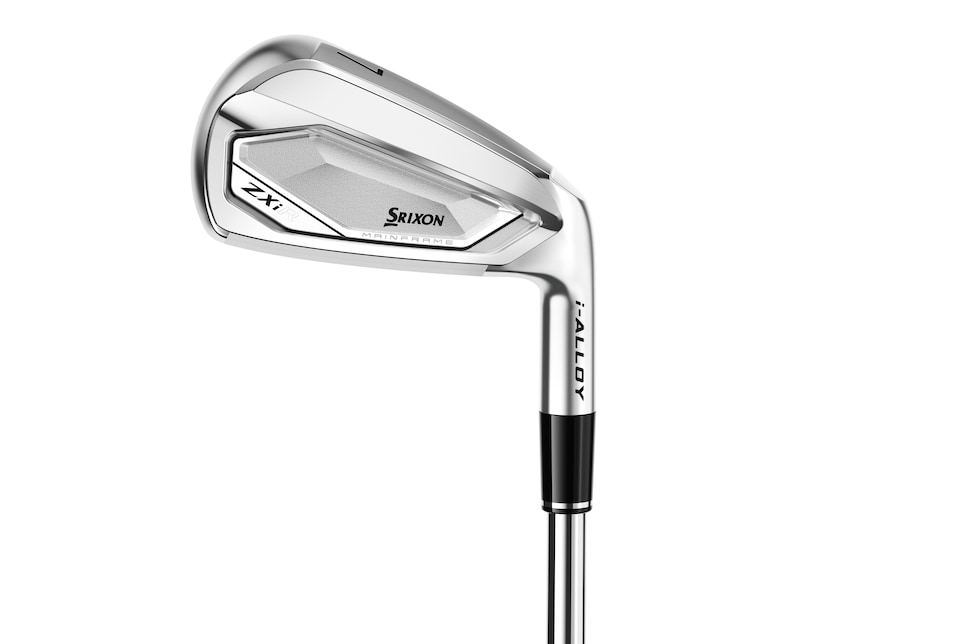
By using the new alloy, the ZXiR and ZXiR HL irons can offer a larger shape and wider sole, all with pursuing the preferred feel found in other Srixon game-improvement irons like the ZXi5 and ZXi4. In short, because of the alloy, ZXiR and ZXiR HL provide enhanced game improvement with better feel.
RELATED: Take a closer Look: Srixon ZXi Metals
2. Other advantages. The i-Alloy also means better use of other Srixon iron technologies. Specifically, the company’s variable thickness features more intricate patterns developed through a simulation program that studied dozens of impact locations and the stresses associated with those. It means a face area that’s now some 8 percent lighter than previous Srixon irons. That means the ZXiR irons have a larger face area than any previous Srixon iron while weighing less. Both a larger face and saved weight that can be repositioned around the perimeter translate to more forgiveness.
Another hallmark of Srixon iron designs has been its V.T. sole, which features increased bounce towards the leading edge for smoother turf interaction. The ZXiR irons feature a wider sole, particularly in the middle and long irons, so the midpoint of the v-shaped sole changes as the lofts increase to better mirror the attack angle found on longer irons vs. shorter irons. As well, the sole widths narrow as the irons get shorter so the effect of the V.T. sole is more pronounced for cleaner impacts on the shots with the steepest attack angles.

3. Choose your weapons by checking your ego. The ZXiR lineup includes the standard model and the higher-lofted ZXiR HL model, but the differences go beyond the lofts. The ZXiR HL lofts are 2.5-4 degrees weaker than the ZXiR, but the two clubs also different in sole width, blade length, offset and topline thickness. The ZXiR HL features a marginally wider sole, longer blade length, thicker topline and some slight increased offset in the long and middle irons (but not the short irons).
But more golfers should be paying attention to those loft changes on the ZXiR HL set. According to the company’s research, golfers with less than 110 miles per hour of clubhead speed with the driver (the vast majority of the buying public) weren’t seeing a distance gap of more than five yards between a typical 4-iron and 5-iron. Srixon’s team also estimates that 36 percent of golfers shouldn’t be playing a 5-iron, and 17 percent shouldn’t even be playing a 6-iron.
That’s why the ZXiR HL set begins with a 24.5-degree 5-iron. Its 6-iron (28.5 degrees) is close to the loft of many 7-irons in the market today. The result of those lofts is to produce shots that stop rolling quicker after they land, around five feet less on a typical 7-iron shot, according to the company’s research.