
NEWTOWN SQUARE, Pa. — The one and really only thing you need to know about hole locations is that there’s no such thing as an illegal one. There are no rules, only norms. The most interesting setups are when the golf course begins flirting with those norms.
That’s what we have at Aronimink Golf Club for the second round at the 2026 PGA Championship.
The hole locations here are difficult—really difficult—but most players seem to land just on the right side of fair.
“I don’t think it’s unfair by any stretch of the imagination,” said Chris Gotterup, who shot a five-under 65.
“I wouldn’t say there’s anything unfair out there,” said Scottie Scheffler, who shot one-over 71.
Which begs the question: What are these so-called norms, which transform firm-but-fair ones into unfair ones?
Well, using the USGA’s guidelines on the topic, along with a special blend of input from players, coaches, and caddies here at the 2026 PGA Championship, here are the main beats:
1. Far enough from the edge
You’ve probably heard this one before, but a hole location can only be so close to the edge of a green. How close, you ask? Well, that’s where things get a little murky.
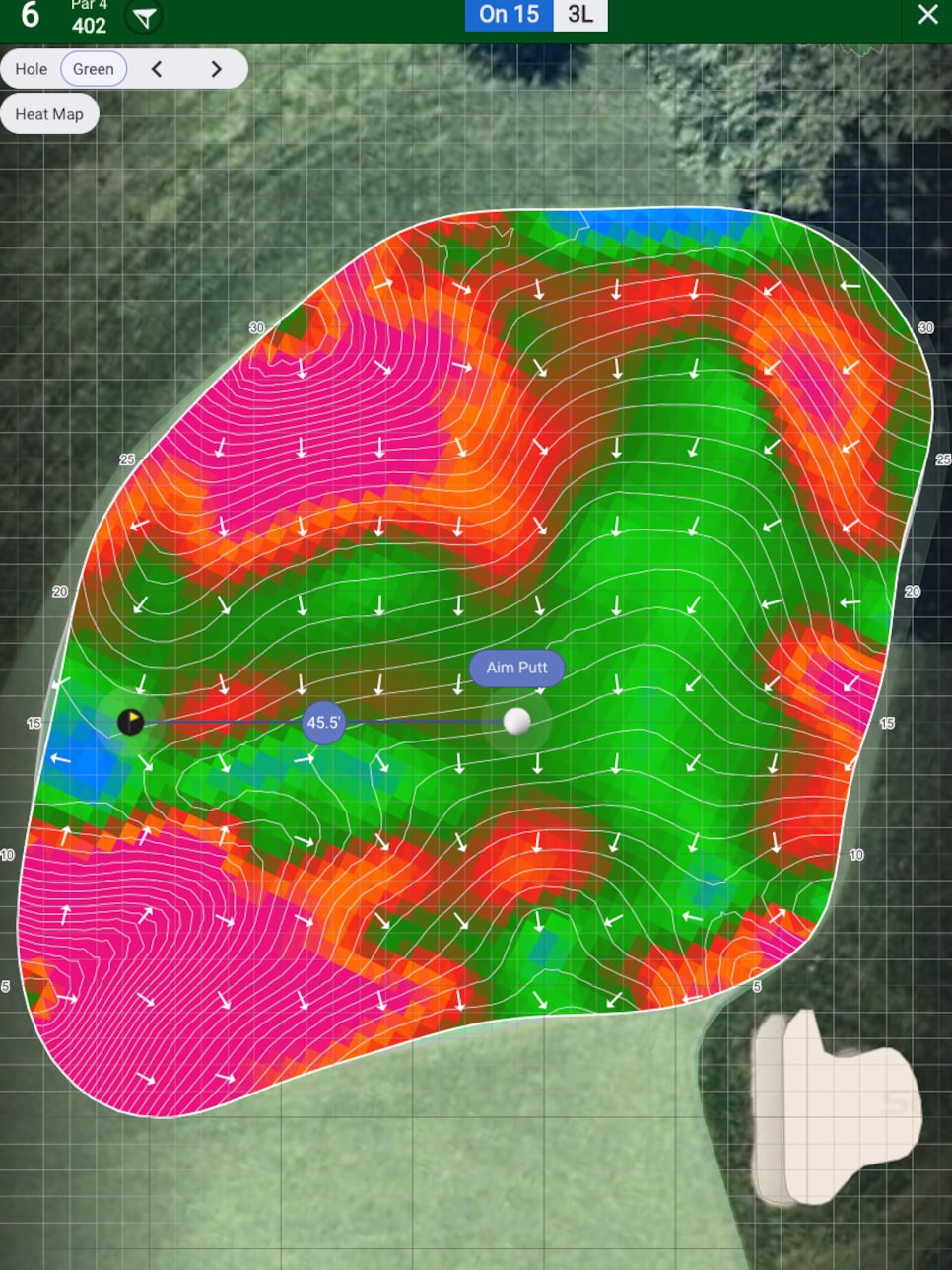
Previously the USGA had suggested five paces into the green on large greens or at least 10 feet onto the greens on smaller ones. By that measure, the most tucked pins on Friday at Aronimink didn’t pass that bar. But the more popularized guideline is one flagstick’s length from the fringe.
The hole locations on the 6th and 13th holes were the most tucked of the day—just three yards, or nine feet, from the edge. Considering a flagstick is usually about 7.5 feet, by that measure, these severely tucked pins pass the test.
“Some of the pins were really tucked, but those were holes when players had a wedge in their hands,” Andreas Kali, coach to Rasmus Neergaard-Petersen, said. “It’s not simulator golf. There should be strategy involved. It was hard but fair.”
 2. Can the ball stop?
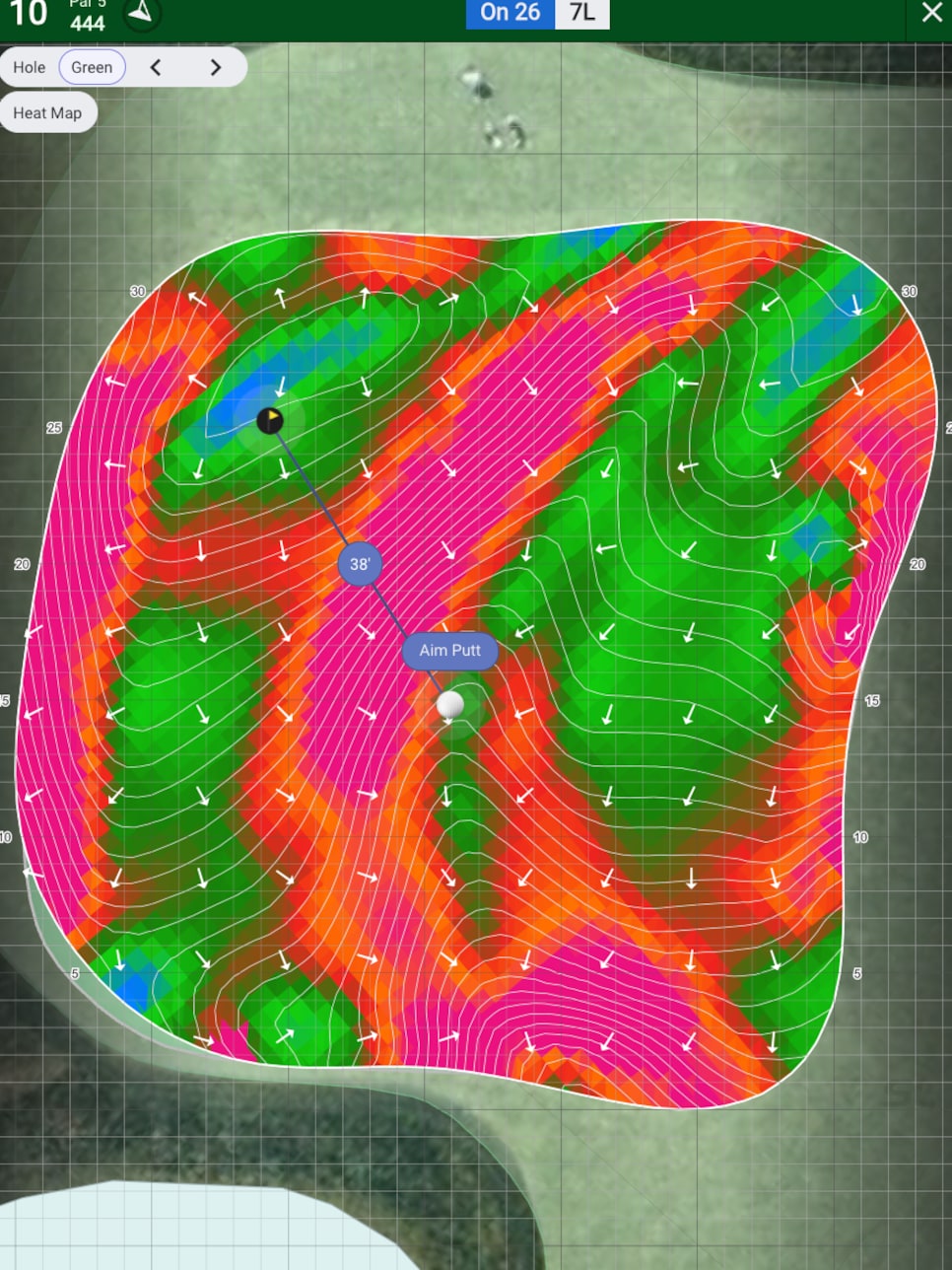
The ball, obviously, needs to be able to stop on the green. That comes down to balancing two things: The slope of the hole location, and the speed of the greens. On slower greens, you can place the ball on more severe slopes because it’s still going to stop. On faster ones, you need to place the ball on a shallower slope in order to get it to stop.
Putting coach Ralph Bauer, who teaches Alex Smalley (currently in second place), has a “rule of 39” for judging whether a hole location is fair. Simply take the percent-of-slope the hole location is cut on and multiply it by the stimp of the green. The answer can’t add up to more than 39.
So, if the ball is cut on a 3 percent slope, and the greens themselves are running 13 on a stimp meter, that equates to 39. The ball is barely going to stop to that hole, but it’s on the right side of fair. If the greens are running 14, the ball isn’t going to stop. That’s unfair.
“There are no such things as illegal pins,” Bauer says, “but if the ball can’t stop, that’s not good. You don’t want that.”
The green and blue spots represent those 1-to-3 percent slopes, and you can see the pins pass the test.
 3. What’s the wind doing?
Quick note here that wind needs to be factored in to this, because that speeds up the effective speed of the greens. A downhill putt running 13 on the stimp that is also downwind means it may run more like a 15 on the stimp—and may make an otherwise fair pin unfair.
“When it comes to an unfair pin, it would be wind direction. You have to look at wind direction,” Justin Thomas said. “You can’t have the pin in an area where the wind is not going to have an effect of blowing it off of the green…10 and 11 are great examples. That pin today, I think if the wind was blowing the opposite direction, it’s really hard to use that section because the ball very easily could just blow to the middle of the green…every green speed has a percentage that a ball will not stay. So I would like to think and hope that anybody who is setting a golf course is not going to put a pin in that percentage. So I think kind of combining those two goes into it and making it fair or not.“
 4. Is there a ‘deceleration zone’
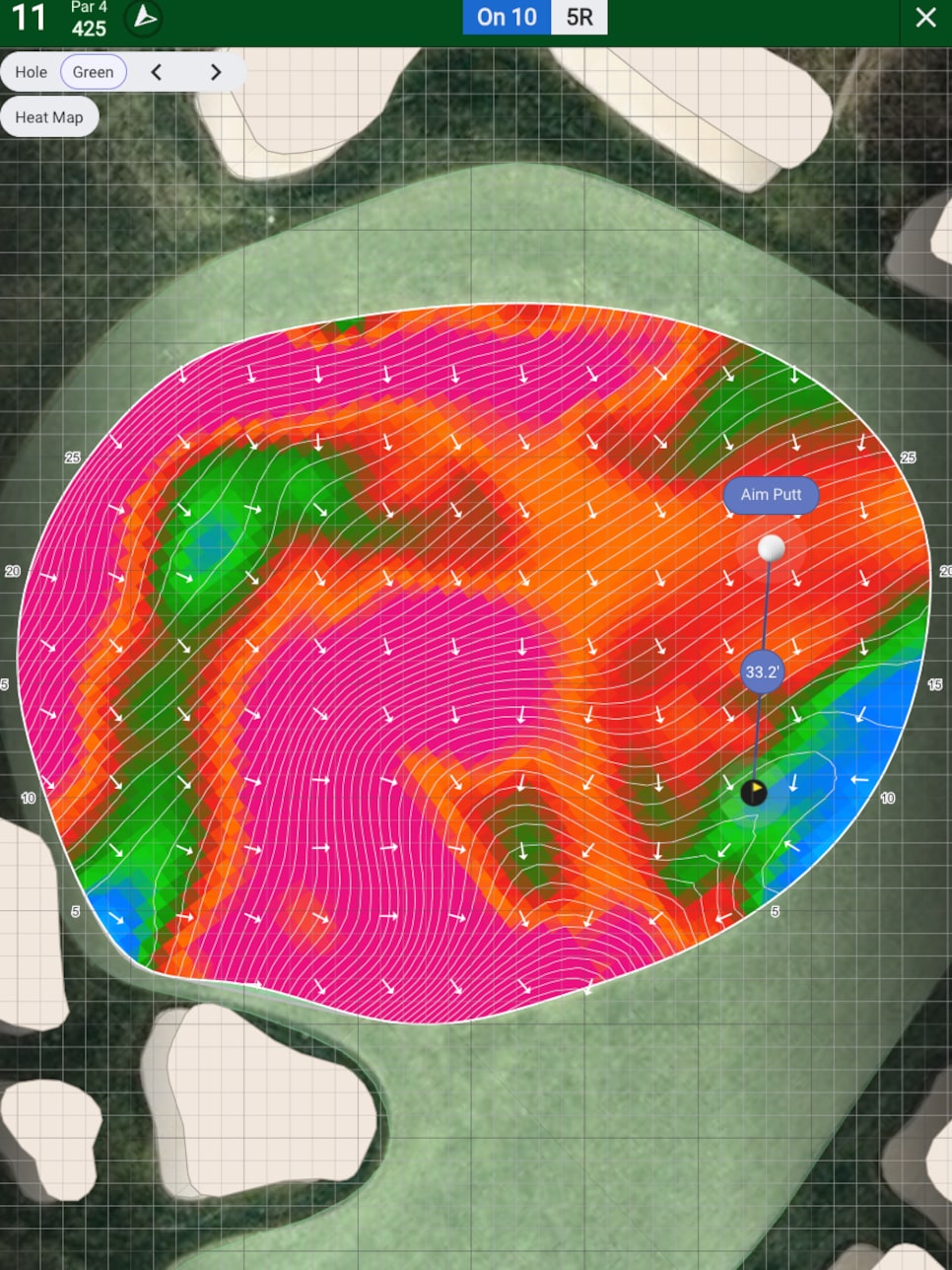
Finally, there needs to be some room around the hole location for the ball to slow down. A “deceleration zone,” putting coach Donal Scott explains. A buffer area where the ball has a reasonable chance to slow down. You should, in theory, be able to cut the hole location anywhere in this zone and for it to still be fair.
This is where things hinted at controversy at Aronimink during the second round. The most difficult hole locations on Friday were placed on the top of mini mounds. The deceleration zones were small, and sometimes only on one side of the hole and not the other.

“There are pins out there that we see at Augusta National, the thing is, it felt like every pin was on the bonnet of a car,” Shane Lowry said.
And this is part by design. Some think these zones should be three feet around the hole. Others closer to five feet. But it’s the edges of whatever zone you choose where the most interesting things happen. Friday at Aronimink was the proof.
This article was originally published on golfdigest.com