There is a difference between golf clothes with dynamic prints or catchy graphics and those that incorporate real art. The latter has traditionally been tough to pull off, but advances in printing technology are now making it possible for artists to precisely transfer their designs onto golf clothes. The new brands in this story, all founded in the last decade, are using these technologies to bring art to the forefront of golf fashion.
Liz Harwood is one such artist who finds inspiration in golf. “The way the sand lifts off the wedge, the movement in slow motion of a golf swing, the way the fabric sways with the swing: It’s all art in motion,” Harwood says.
Harwood is the designer and founder of Famara golfwear. She picked up the sport after the breakdown of her marriage almost 20 years ago.
“I found it was like meditation. Heading off, focusing on only one small ball for four to five hours just clears the mind,” Harwood says. “There is such discipline in golf that is inspiring when you are going through some adversity, and as a game against yourself, it really takes courage to keep focused.”
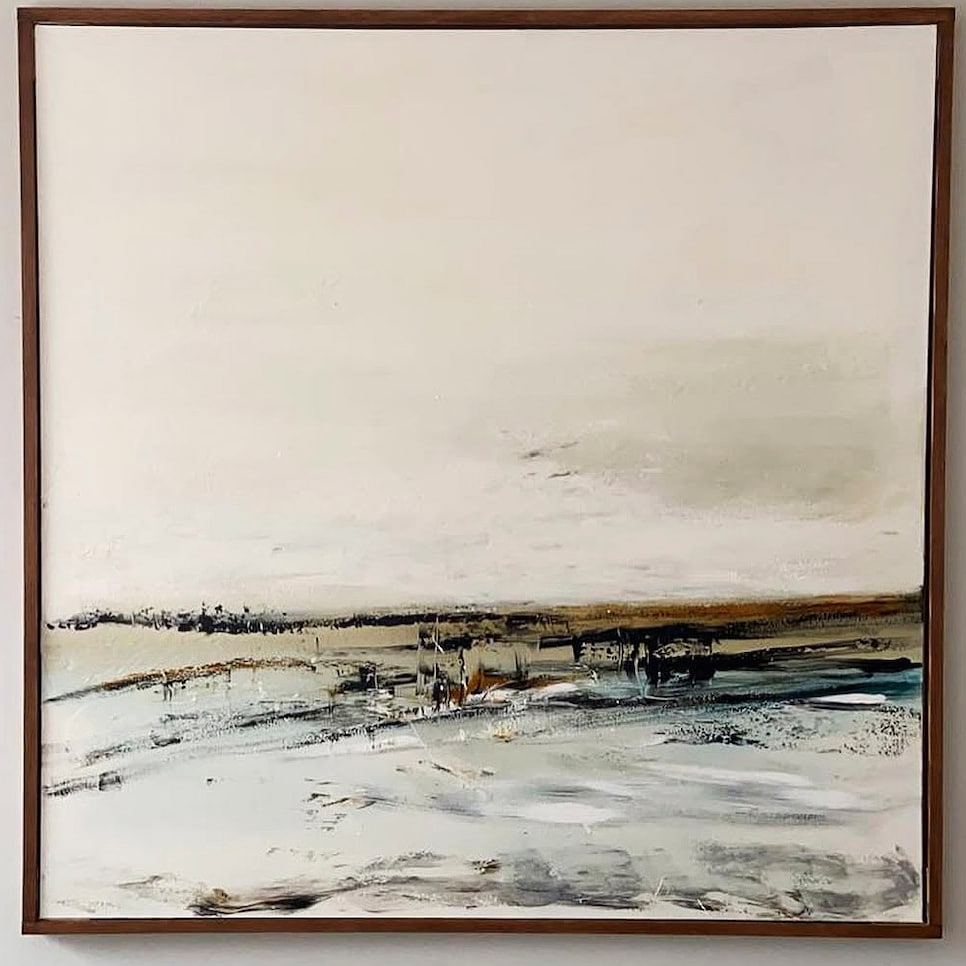
Newly single with three children to care for, Harwood moved her family from their native England to the Spanish island of Lanzarote. She ran an art school at the foot of a crater, finding inspiration in the volcanic island’s raw landscape with its ashy, earthen tones punctuated by lush greenery and oceanic blues. Her acrylic painting “Driftwood” is one example.
Drawing partly on her professional background in marketing, Harwood began experimenting with translating her paintings onto silk tank tops and cushion covers and selling them. Around the same time, she struggled to find golf clothing that fit her individualist spirit. So much of what she found in golf shops seemed to be merely shrunken men’s styles. She decided to marry her loves of golf and art.
Her subsequent brand, founded in 2022, takes its name from the island’s Famara Beach. Each garment, inspired by the one-of-a-kind nature of fine art, received a limited run of 100. She paired these moody, eye-catching pieces with solid, complementary basics. Harwood has since expanded her offerings, now having transformed seven of her paintings into signature prints, each with a capsule of monochrome basics to make wearing the intricate artworks more conceivable. She often digs into her archive of past works for source material, seeing them with a fresh eye when weighing their golf-apparel potential. Other paintings are newer, like the Impressionistic “Daisies,” painted with the help of her granddaughter. Each print, with its colors and storytelling, can evoke similar feelings as if you were viewing the work in a gallery, resulting in golf wear with character that feels personal.
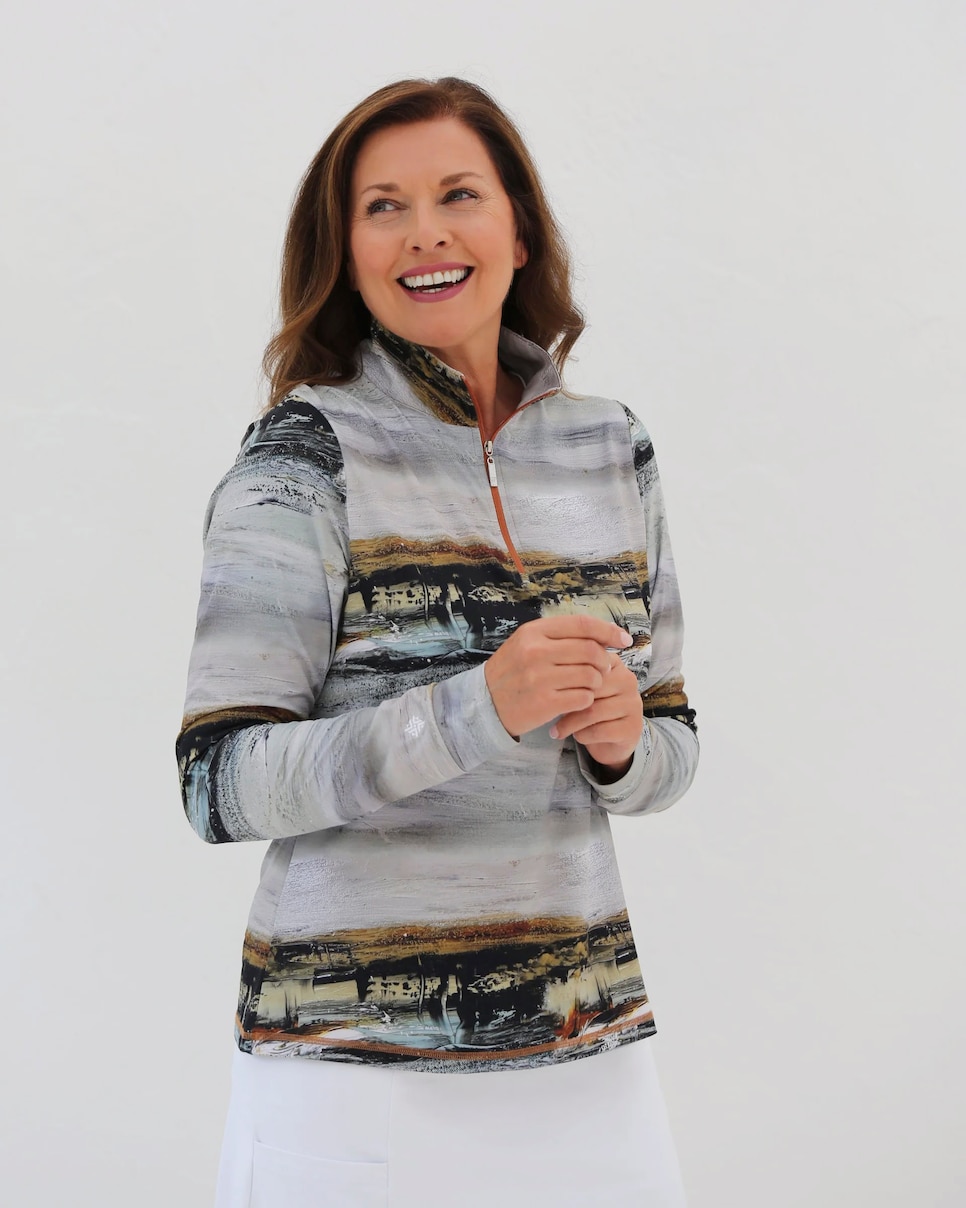
Famara Golf Long Sleeve Mid Layer, Driftwood photograph courtesy of Famara
‘Usually, sportswear companies don’t have fashion backgrounds. They only play with colors.’
–Ercan Indap, Dolcezza Golfwear
Historically, designs have been printed on top of fabrics through methods like screen-printing, heat-transfer vinyl printing, direct-to-film printing and direct-to-garment printing. Most of these methods essentially treat fabric like a sheet of paper, passing it through a machine not unlike a home printer. Each method has its limitations for practical sportswear. You might know this from experience if you’ve had a shirt suffer from peeling or cracked graphics, or just feel rough to the touch, the result of chalky ink resting on the surface. Many of these methods restrict color combinations—particularly if you’re trying to work on a reasonable budget—and result in a lack of detail.
However, nowadays there is sublimation printing, a more sophisticated method that turns solid dyes into gases and imbues fabrics with color, creating one harmonious entity. Created in 1957, the technique has only taken off recently with the advent of digitization and popularity of polyester. Today, continued advances in the tech make the process more affordable, accessible and customizable.
Dolcezza Golfwear, a Canadian brand, has found a niche in this market, relying almost exclusively on sublimation printing. Dolcezza began in 1976 as a fashion house before establishing its golf line in 2021. The brand scours galleries online to find artists from around the world to source vibrant, whimsical designs. Each garment comes with a tag that serves as a signature of sorts, depicting the artist’s name, a headshot and brief statement about his or her background and inspiration. For any artist looking to solve the perennial debate of food or craft, a Dolcezza licensing deal is a decent get. The brand doesn’t purchase the original canvas, so the artist is still free to sell his or her work down the line.
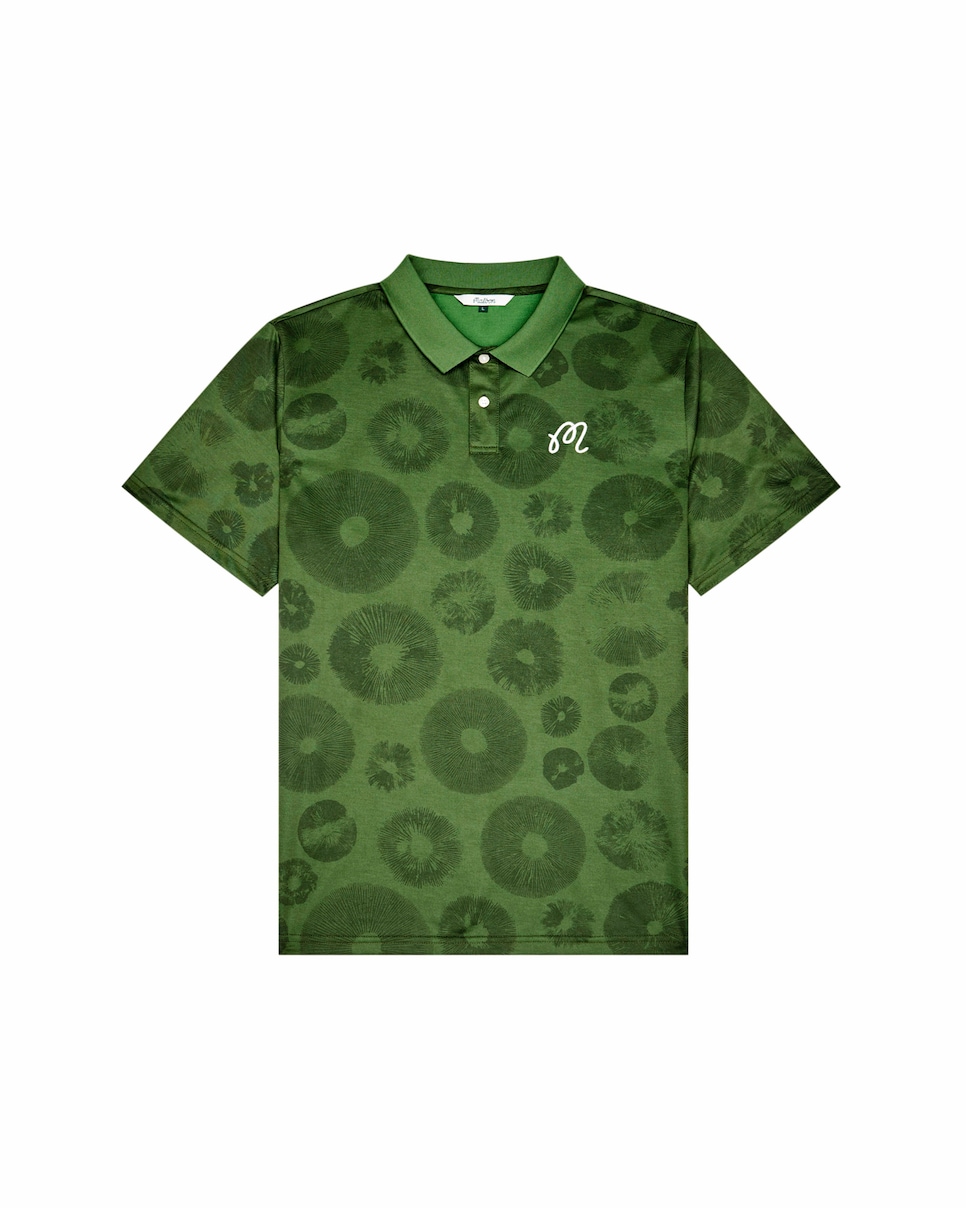
Shirt: Malbon Golf Fairway Foraging, Polo photograph courtesy of Malbon

“Usually, sportswear companies don’t have fashion backgrounds,” owner Ercan Indap says. “They only play with colors. They focus on how comfortable it is, the technical details, but they forget about fashion. But in golf, especially after a certain age, the woman wants to be noticed at the golf course. We are making clothes that get compliments. That’s our motto.”
Sublimation printing means you can work with hundreds of colors simultaneously, going well beyond the rotational printing methods that traditionally limited a maker to fewer than a dozen separate colors and risked “killing” the art. This allows, for example, the integrity of a floral watercolor painted by Montreal-based artist Majella LeBlanc to be mirrored and even enhanced in the resulting blouse. Every shade of hyacinth and olive, plus the delicacy of the sweeping, suggestive brushstrokes—the “exploration of newness,” as LeBlanc puts it—is reflected.
Megan LaMothe founded Foray Golf in 2016. Her phone camera roll is packed with photos from her travels to art and fashion capitals such as London, Paris and Tokyo. She’s found inspiration for her golf clothes in the exquisite and the mundane—at flea shops, cafes and museums. Foray Golf is particularly known for its florals, which pay homage to any chapter in your art history textbook, from the bouquets of Dutch masters to the dreamy wallpapers of Marie Antoinette’s Versailles bedchambers. In a world of digital illustration and printing, LaMothe can achieve the intricacy of detail and illusion of texture that you would get from, say, a 17th-century silk tapestry—with much less headache. In one such skirt, LaMothe modernized the 1700’s French “toile” style of fabric characterized by its insanely detailed scenery that’s printed in a single color. When borrowing inspiration from vintage textiles and embroidery, LaMothe and her team can use digital rendering techniques to “draw” the fabric—rather than just the design—giving the depth and streaking you might expect from a handwoven textile, only now fabricated completely differently. The result is visually intricate material that is also resilient to harsh playing conditions.

Skirt: Foray Golf Millefleur, Photograph courtesy of Foray Golf
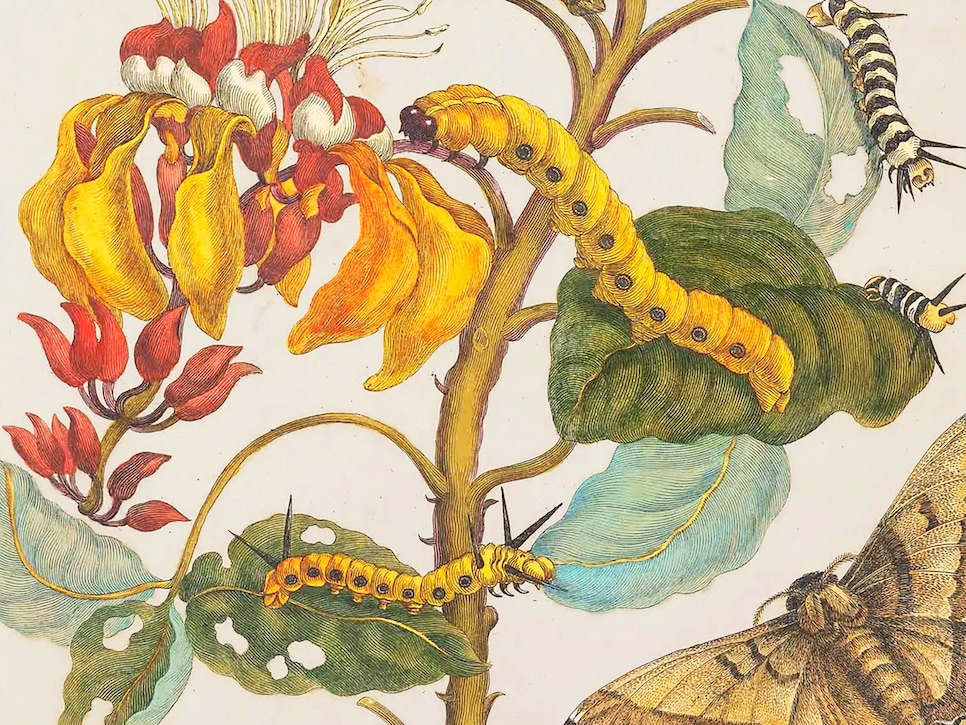
‘The movement in slow motion of a golf swing, the way the fabric sways with the swing: It’s all art in motion.’
–Liz Harwood, Famara Golfwear
Technological advancements also feature prominently in the origin story of JIM Weaver Designs, a Filipino-based lifestyle brand with a focus on wearable art—including golf clothing for men and women—that embraces Filipino heritage. Founded in 2016 by a group of four women—two sisters and two friends—looking for ways to stay connected and put their passion for art to paper, JIM Weaver began with a silk scarf featuring calligraphy and drawings from each artist digitally collaged together. It was only a matter of time before the brand brought its playful designs to the golf world as the sisters, Isabelle Ocier and Mischel Ocier Mendoza, grew up around the sport. Their dad, Willy Ocier, founded the Tagaytay Highlands Golf and Country Club outside Manila, but the group wanted to approach golf wear with their signature sense of whimsy.
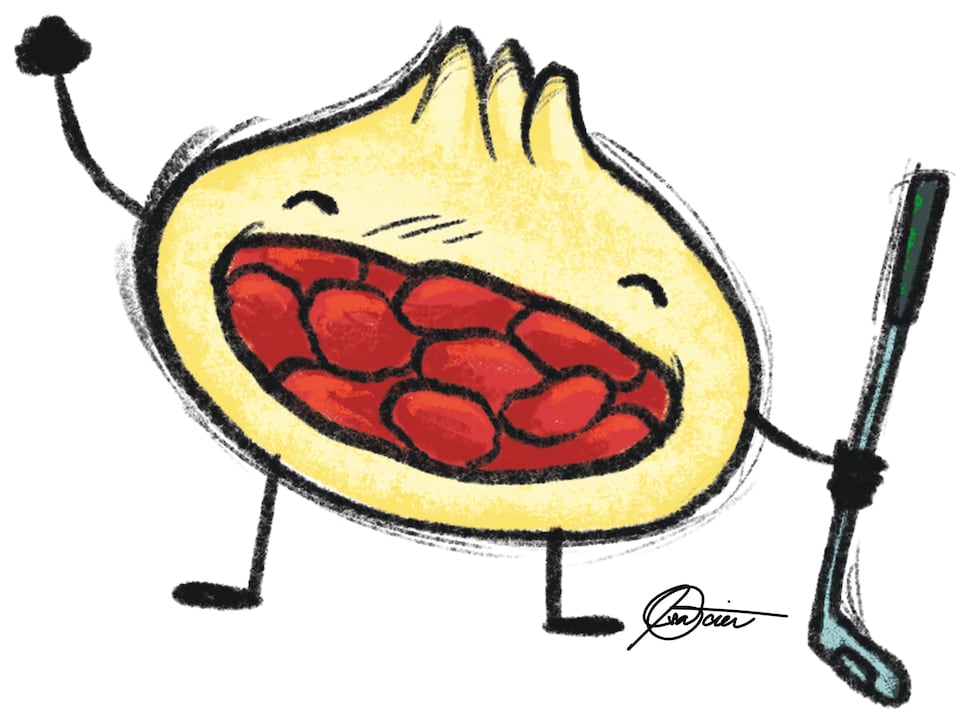
The result is fantastical, and often punny, doodles and designs—mostly drawn by Isabelle—like the pictured “Dimsome” print, a play on the words “foursome” and “dim sum,” a common snack at on-course tea houses. Isabelle began playing around with various dumpling-inspired characters, adding other Filipino favorites, like animated siomai, siopao and xiao long bao. We see them driving golf carts, nailing putts and waving beer bottles. The designs are packed with creative winks and inside jokes the sisters feared might only resonate with their golfing family and friends, but their art has tickled a larger, and younger, audience. They’ve also learned to embrace matching sets from noticing their customer base’s love for team and couples golf. Mastering a sense of detail and scale, and how the art will look on the silhouette as the body moves, has been and remains one of the primary challenges.
Stateside, Malbon Golf has had commercial and critical success bridging the art and golf worlds. The brand’s monthly “Hand of the Artist” series celebrates the artistry behind golf by capturing aspects of the founders’ lives that are intricately tied to the sport. A recent collection titled “Foraging Fairways” nods to Stephen Malbon’s family’s love for mushroom hunting in their home near Pebble Beach where they enjoy luck with chanterelles and porcinis. Stephen says he likes to play golf in the morning, forage on the way home and then cook up a meal of risotto or pizza. But it was really the artwork—or science project—of his son, Luciano, that inspired a recent print. For school, Luciano’s class foraged fungi then placed them on a sheet of paper overnight. The pores released dyes that remained after the mushrooms were tossed aside. The resulting evocative geometric motifs became the genesis for a limited-edition print.
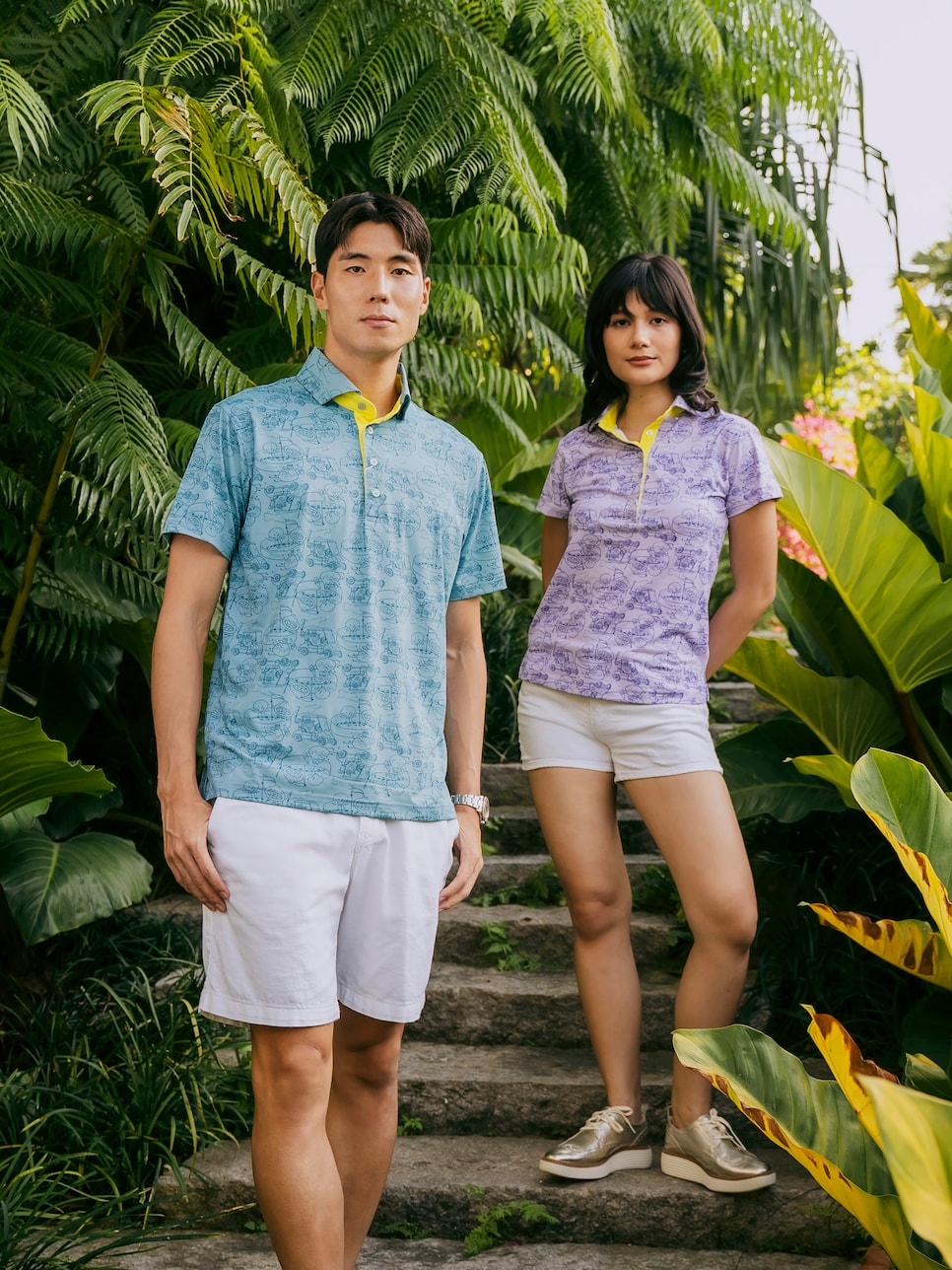
Shirts: JIM Weaver Designs Dimsome, Photograph courtesy of JIM Weaver Designs
Noriaki Isobe
For Stephen, like so many of the visionaries above, art and golf go hand in hand. Reading greens, avoiding hazards and charting courses are creative acts. The pressure in visualizing putts and seeing them through is perhaps akin to an artist trying to translate ideas from his or her head to paper. As a lover of art history and an oil painter himself, Malbon finds that creating on canvas is not unlike creating on other fabrics.
“A canvas and a denim pant are pretty much the same material,” he says. “It’s just putting it on a walkable, wearable, livable piece of artwork.”
MORE: Chandler Withington’s drawings remain one of golf’s most unique projects
This article was originally published on golfdigest.com