Somewhere near the Great Smoky Mountains, many hours after they’d left home in Bigelow, Ark., Billy Fryar and his wife Gena stopped to take a break so he could talk to a reporter on the phone. An overnight stay awaited them in Roanoke, Va., and then they’d make the final push to reach their destination—Rockville, Md., where the 5th U.S. Adaptive Open Championship began on Monday at Woodmont Country Club.
Billy is an avid competitive golfer who became paralyzed from the waist down in a rollover truck accident in 2000. He was ejected from his vehicle and suffered broken bones in both of his shoulders, along with seven ribs, punctured both lungs, crushed four vertebrae and remained in a coma for 31 days. He was incredibly fortunate to survive, and his reaction? “The main upstairs was watching out for me. He’s got some very big plans for me.”
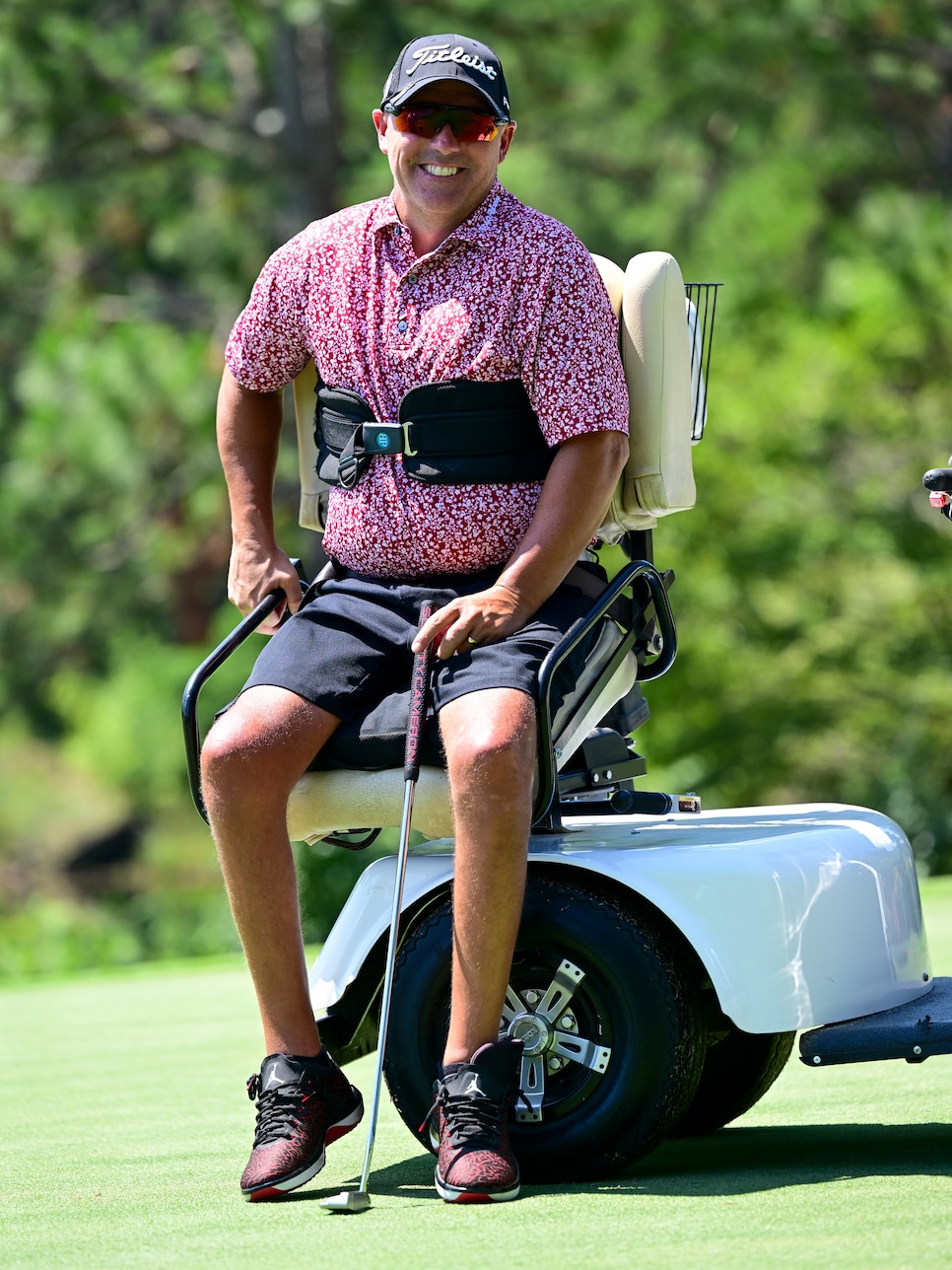
That way forward has included he and Gena crisscrossing the country for the last eight years to spread the gospel about the benefits and joys of playing adaptive golf. What sets them apart from anybody else on the highway is the SoloRider golf cart they pull in a 6-by-10 trailer. The Fryars rarely leave home without it.
“The cart becomes a part of you,” Billy explained. “It’s kind of like playing golf in your own shoes. You’re strapped to this thing being paralyzed, so your DNA is on that cart. It’s kind of your identity.”
8:23
 US adaptive open Golfer once struggled to finish 9 holes; now she’s a USGA champion
This will be the third U.S. Adaptive Open and first in three years for Fryar, 54, who played in the first two years it was held at North Carolina’s Pinehurst Resort. He joins a total field of 96 golfers who either earned exemptions through past Open achievements or reached the championship through eight qualifying tournaments. They will compete in eight categories: impairments of upper limbs, lower limbs, multiple limbs, vision, coordination, intellectual, multiple-limb amputees, seated players and short of stature.
In the inaugural year of the U.S. Adaptive Open in 2022, the golfers wowed spectators with their ability to not only adjust their impairments to the golf course but also excel at the game. Seeing people, for example, with one leg balance themselves to hit a pure shot was extraordinary, as were so many of the other scenes. Since that first year, the visibility of the tournament and adaptive golf has grown tremendously. And while there were good stories told in print and broadcasting in the early years, the event has risen to another level, with now three hours of dedicated final-round coverage on Golf Channel (July 9, 1-4 pm. ET), made possible by the USGA’s partnership with Deloitte.
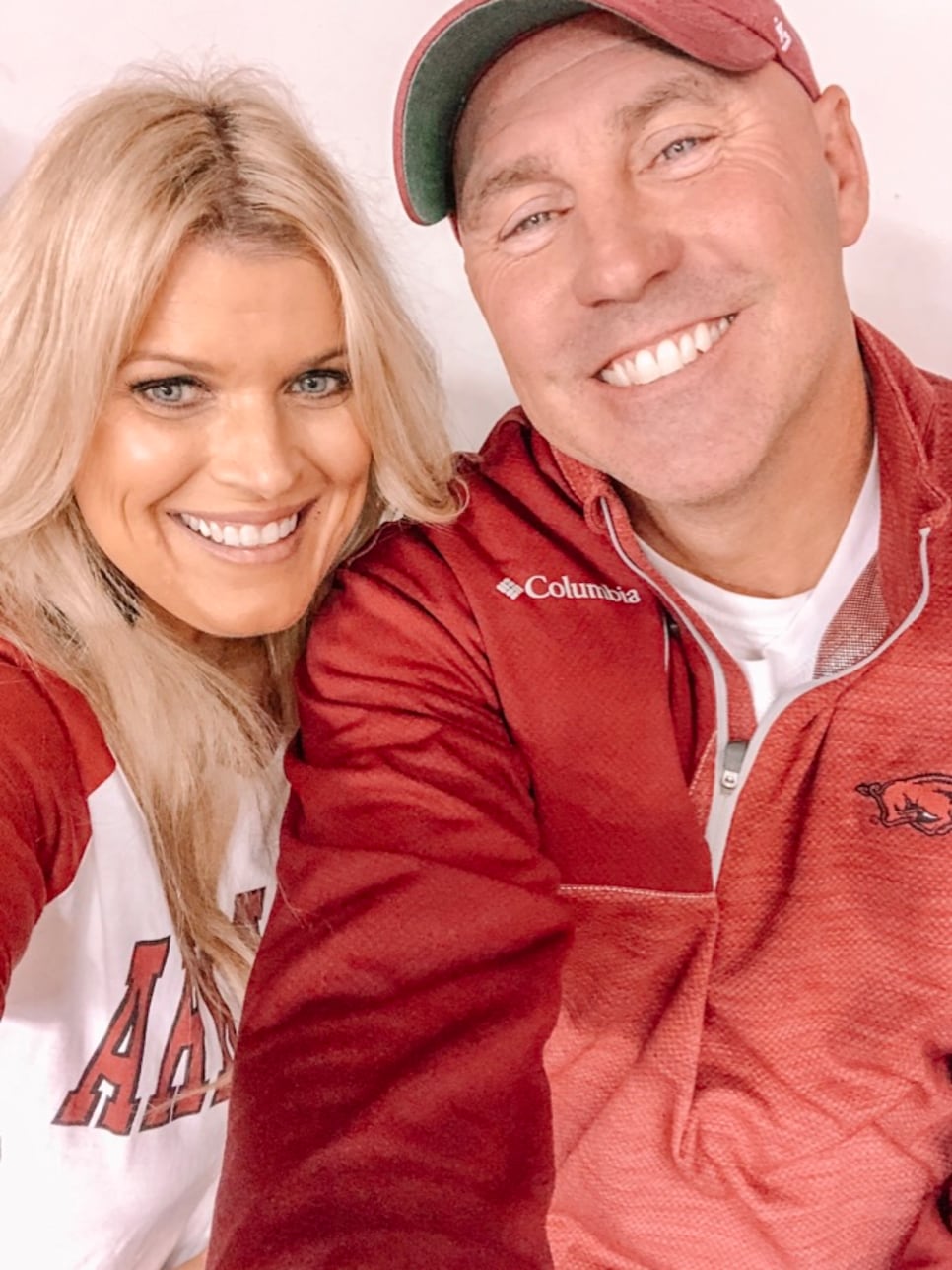
Gena and Billy Fryar.
Fryar, currently the No. 4-ranked U.S. adaptive golfer in his category, was coming off rotator cuff surgery in January and wasn’t sure that he’d be ready to compete in an Adaptive Open qualifier by May. After all, he plays with only his right arm because his left shoulder has “too much hardware” from his accident. But his recovery went well, and Gena pushed and pushed him to enter. He ended up shooting 80 to have the third-best qualifying score in the country in the seated division, and he is thrilled to be going back to the tournament he says offers in the best adaptive competition in the country.
“This is the biggest stage in adaptive golf,” Fryar said. “Because of the cameras, the sponsors, the accolades we get—that’s what makes it so special.”
The Fryars are now among the most recognized advocates in the adaptive golf world. After Billy began playing competitively in 2018, he started a Facebook page called the Seated Golfers Community. The Fryars also have their own website, It’s a Wheel Life, on which they document their journeys.
Billy, who was a sheriff’s deputy before his accident, and Gena were high school sweethearts who were married before he became paralyzed, and they have become a formidable and energetic team. “She’s my caddie, my PR, my manager, my dietician. She’s does everything for me,” Billy said with a laugh. “I’m the show pony. I just show up and play golf.”
He does far more than that. Billy has also regularly provided input to the United States Golf Association on how it has defined and updated its rules over time with the experience it has gained through staging the U.S. Adaptive Open.
As an example, when the first Adaptive Open was staged at Pinehurst, if a seated player’s ball plugged in the face of a bunker, it might be impossible for that golfer to get to the ball. They then had to take an unplayable lie and a one-stroke penalty—a harsh result. That’s now been changed to being able to take relief into the bottom of the bunker with no penalty.
Another change has come in the yardages at which various categories play. In the early years, everybody in the seated category competed from the same tees. But with input, the USGA realized that seated players using both arms hit the ball farther than those who were one-armed, and now two-armed players compete from 4,800 yards, while one-armed golfers are at 4,400. They are all still competing for the one top prize.
Robert Beck
Fryar jokes that one-armed seated golfers are the “unicorns” of adaptive golf. They certainly get noticed on any golf course. Because of the use of their SoloRiders, other players or observers often mistake their carts for normal electric carts and throw fits about it—not knowing that the adaptive carts are designed in such a way as to not damage a green any more than someone walking on it.
Fryar laughed as he recalled comments on a recent social-media video Gena made of him playing. There were a bunch of positive comments, but then one guy ripped Billy for his cart being on the green. A defender responded, and Billy said there was a war of words. “These guys were talking about meeting up for a fight!” he said. “They were going to meet in Philly at the bottom of the Rocky steps and duke it out! I was, like, this is great. Make this video go viral!”
More seriously, Fryar said, “I’ll have someone in their backyard yelling at me, and you just kind of go over there and educate them, and then they understand.”
Thanks to the work of the Fryars and many others, including the USGA, the reach of adaptive golf is larger than it’s ever been. Billy remembers in his early years of playing seated golf that he could hardly gather a handful of similar players in national-level events. Now, there are 30 seated golfers in the U.S. Adaptive Golf Rankings, led by Max Togisala, the reigning U.S. Adaptive Open seated champion.
Beyond his love of competition, the most important thing for Fryar is to encourage others, no matter their impairment, to give golf a chance.
“That’s a huge part of this,” Fryar said. “One, it gives me somebody to play against, and then you might find that person that’s sitting at home on their couch and want to try to play golf, but they don’t think they can. They see me doing it and they’re, like, ‘We can do this.’ So, we just want to encourage and inspire people out there. The competitive part is the mean side sometimes, but you can play social golf and have a fun time, too.”
This article was originally published on golfdigest.com