Why the world-renowned Te Arai Links is set to produce the most exciting Asia-Pacific Amateur Championship yet.
It isthe recipe for a dream golf tournament. A modern, seaside links in New Zealand that undoubtedly sits high on the bucket lists of golf fans. Augusta National and the R&A as two of the three tournament organisers. Heartfelt consequences for the winner and losers, yet no prizemoney.
All compelling reasons to watch the 2026 Asia-Pacific Amateur Championship. But the rugged terrain of Te Arai Links is prompting club officials to create a uniquely intimate setting for fans on site that may elevate the event to contender for golf tournament of the year.
On Sunday afternoon, November 1, several hundred fans will walk in the fairways, behind the players and between the rolling dunes at Te Arai Links, as an amateur golfer plays his way into the 2027 Masters at Augusta National and the 155th Open Championship at St Andrews.
The Asia-Pacific Amateur, to be held from October 29 to November 1 at Te Arai’s breathtaking South Course, will once again be jointly run by Augusta National Golf Club, the R&A and the Asia-Pacific Golf Confederation. The tournament was launched in 2009 to develop amateur golf in the region.
The fans lucky enough to be at Te Arai will be standing only metres away as they watch an amateur play out a lifelong dream.
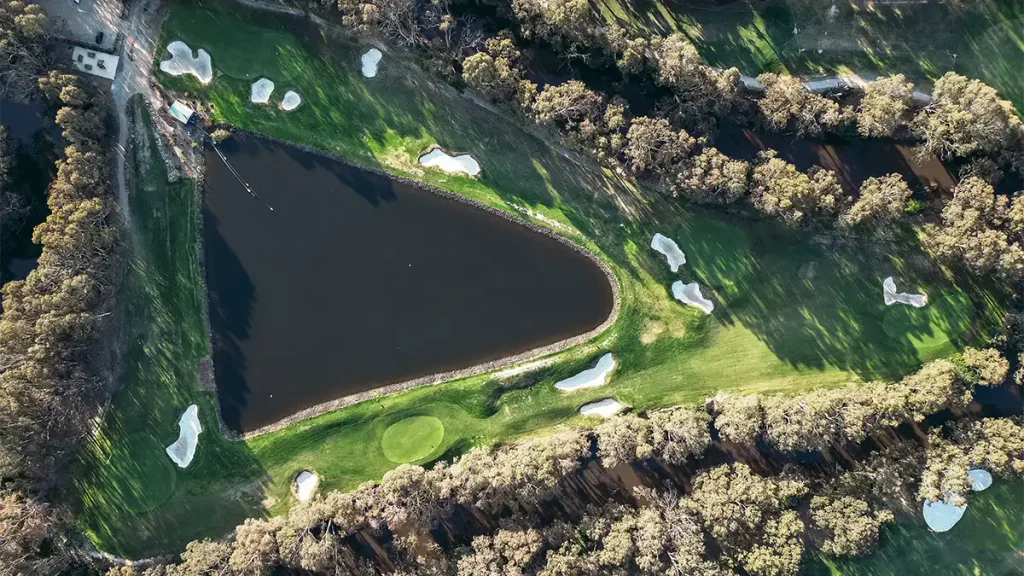
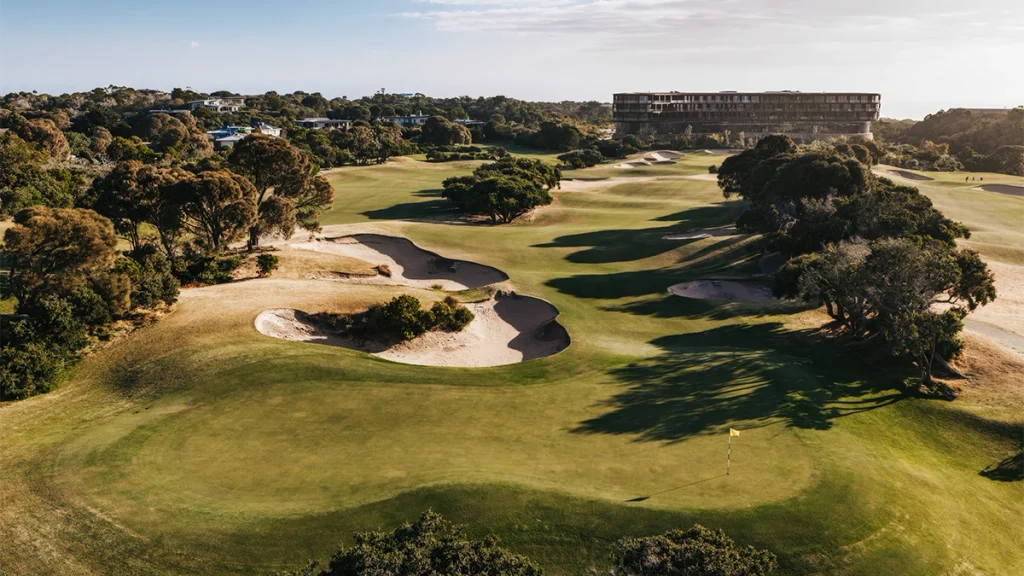
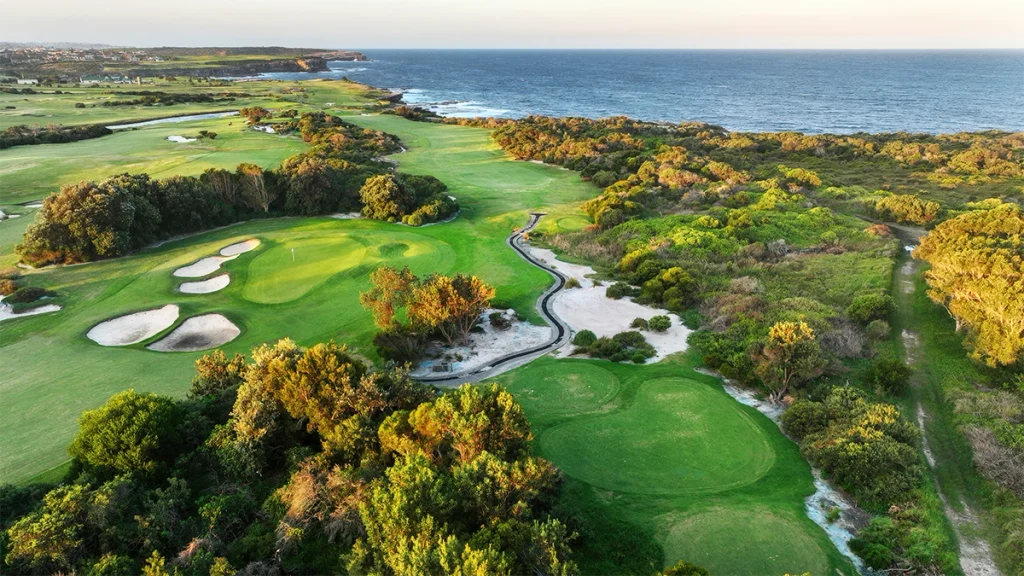
Te Arai Links was never designed to accommodate a major golf tournament. In many ways, it was deliberately designed for the opposite; for an intimate, soulful links golf and accommodation experience on New Zealand’s North Island. There are no conventional corridors bordered by rough and trees, no obvious spectator ropes running alongside holes and precious few places to hide galleries without disturbing the magnificent dunes and sandy waste areas that give the property its character. Yet that is exactly what might deliver the championship’s greatest strength.
Jim Rohrstaff, who partnered with fellow American Ric Kayne to co-create Te Arai Links and nearby Tara Iti, explained to Australian Golf Digest that Te Arai plans to allow spectators, which are expected to number 500 to 700, to walk the fairways behind the groups they are following.
“We’re probably going to allow the limited spectators who are there to walk the fairways, to walk behind the groups that they’re following and then gather in around the edges of the playing surfaces and the greens,” says Rohrstaff, Te Arai Links’ managing partner. “We just don’t want crowds trampling through the dunes.”
The move could evoke the intimate atmosphere of a Walker Cup, perhaps with more consequence given the
major-championship starts afforded to the winner.
Picture this: an Asia-Pacific Amateur competitor drives into the left half of a fairway and the gallery migrates behind him as he readies for his approach shot. Instead of watching the next shot from 70 metres away and behind a rope, spectators might be close enough to hear the conversation with the caddie.
“This year you might be 10 steps away from them,” Rohrstaff says. “It will be much more of that up close and personal.”
Since the inaugural edition, the Asia-Pacific Amateur has evolved into one of golf’s most meaningful tournaments – especially since it has provided early exposure for golf fans to eventual stars such as Hideki Matsuyama, who won in 2010 and 2011, as well as Ryan Fox, who competed in the first three editions before going on to become this year’s Open champion. Why? Well, there is no prizemoney. Players represent their countries, rather than sponsors or professional teams. Some nations send substantial contingents. Others arrive with one golfer, his coach and his family.
And this year they are not merely visiting Te Arai, they will essentially live there for the week. All 120 competitors will stay on the property rather than being transported from a nearby tournament hotel each morning, meaning the championship becomes an almost week-long festivity in one of the most acclaimed new golf destinations in the world.
“Being there for breakfast, lunch and dinner, they’re going to be able to really soak up what Te Arai Links is all about,” Rohrstaff says.
As Te Arai transitions from one of the world’s most sought-after new destination courses, there are logistical aspects to plan for. The Asia-Pacific takes a significant portion of CBS TV’s Masters broadcast team each year, including Frank Nobilo and Amanda Balionis. The tournament is live-streamed to the world and this could be the most anticipated viewing from overseas in the tournament’s history.
There are also the wonderfully ‘golf nerdy’ problems created by asking Te Arai to host high-level championship golf. Take the bunkers, for example. Ordinarily, Te Arai does not necessarily treat every sandy area as a conventional bunker to be raked after a shot, rather sandy waste areas where a player can ground their club. For the Asia-Pacific Amateur, those areas need to be managed to championship standards. The solution is gloriously simple; caddies will carry their own shortened rakes with a detachable head that can be carried with the caddie bib. Volunteers or Te Arai staff can tend particularly busy greenside areas.
There is another obstacle most tournament courses don’t need to consider: defining exactly where the greens begin. Te Arai is fescue from tee to green. Fairway surrounds and putting surfaces flow almost seamlessly into one another. That is part of its beauty, yet it becomes more complicated when the distinction determines whether a golfer is legally entitled to mark and lift his ball.
“When you’ve got a tournament with the rewards that [the Asia-Pacific Amateur] carries for the winner, you have to be very precise,” Rohrstaff says.
Te Arai has therefore been working on methods of creating a clearly defined putting-surface boundary without destroying the visual character of the course. It is the kind of preparation that reveals how different this Asia-Pacific Amateur will be.
The South Course, designed by Bill Coore and Ben Crenshaw, opened on October 1, 2022. It will have barely celebrated its fourth birthday when one of amateur golf’s most consequential championships arrives.
The winner goes to Augusta National next April, when Rory McIlroy, who made a one-off social golf trip to Te Arai Links in December 2024, will be the reigning Masters champion. The Asia-Pacific Amateur champion will also be back at St Andrews, given The Open returns to the Old Course in 2027. The defending champion there? That will be New Zealand’s own Fox, who is a Te Arai Links ambassador and who played with McIlroy on that social trip in 2024.
“We couldn’t have made this up and we couldn’t have drawn it up any better,” Rohrstaff says. “Ryan loves Te Arai Links, so that’s a really neat tie-in with the fact that it’s coming back here to his home club in New Zealand.”
Then there is the unpredictability of links golf in New Zealand in spring as well as Te Arai’s opportunity-laden back nine. October can be up there with Te Arai’s windiest months and conditions could range from blue skies to genuine links weather – wind blowing off the Pacific. The fairways and greens are generous, meaning simply finding them may not separate the field. Pin positions, firmness and wind can.
The back nine may set up a championship finish not unlike Augusta National’s volatile second half. Rohrstaff sees something similar in the South Course’s capacity to produce late birdies, or mistakes. From the par-5 14th hole onwards there are opportunities to attack. Players brave enough may take up to three chances to make eagle in the last six holes including the short par-4 16th and par-5 18th. But aggression can quickly become expensive.
“I wouldn’t be surprised if there was an eagle in the last five holes by the winner,” Rohrstaff says.
Imagine that; the Asia-Pacific Amateur up for grabs late in the tournament and an amateur representing Australia, or Japan, or China, or Korea, maybe even a home hero from New Zealand, gets hot down the stretch. Behind him walks a gallery small enough to hear the strike of every iron and every back-and-forth with the caddie.
Rohrstaff admits that amid the constant work required to operate Te Arai Links as a world-class golf destination, he does not often stop to think about the opportunity around the corner. But occasionally the magnitude catches him.
“When I first learned that we’ve got this event and the winner is not only playing the Masters, but the 155th Open is going to be back at St Andrews,” he says, “it’s like, Oh my gosh, we couldn’t pick a better combination. It’s outrageous.”
For the spectators walking those fairways, it could be equally extraordinary.