How indigenous vegetation can unlock greater harmony between Australian golf courses and their surroundings.
Take a short drive, walk or jog along Old South Head Rd in Woollahra, in Sydney’s eastern suburbs, and there’s a long, continuous peek behind the curtain of one of Australia’s most private and famous clubs. After an extensive renovation in 2024-2025, Royal Sydney Golf Club is now one of Australia’s most eye-catching layouts, too.
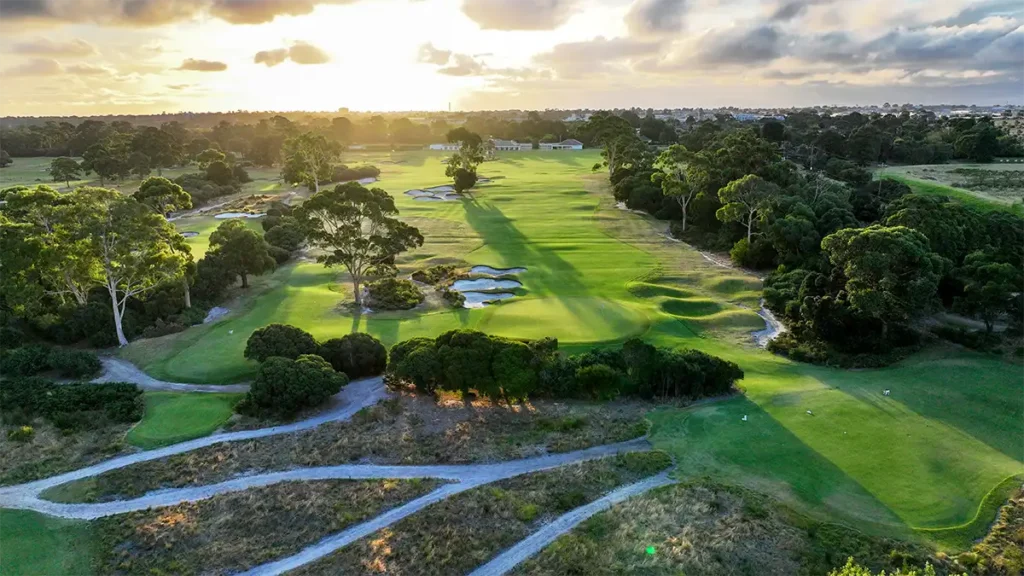
It is now far easier to see across the landscape of Royal Sydney’s new-look Bay course from outside the property after acclaimed American architect Gil Hanse performed an extensive restoration of the Rose Bay layout with the help of Sydney-based course designer and golf-course vegetation specialist, Harley Kruse. The result is breathtaking. Instead of the forest of paperbarks the course had been known for, there are now hectares of sandy, coastal heathland punctuating the tees, fairways and thoughtful green sites. The look of sandy barrancas, native grasses and the restoration of indigenous vegetation gives the property a strikingly rustic Australiana aesthetic. The paperbarks, planted soon after World War II, had restricted growth of native flora and fauna in the understorey and had narrowed many fairways.
The journey to get Royal Sydney, a 15-time host of the Australian Open, to that state was complicated. Some 597 trees were removed in the project, which prompted strong opposition from two councils and local residents. The restoration plans ended up in the Land and Environment Court. Royal Sydney had to amend its plans, which included an assessment of “prescribed trees”, a reduction in the loss of “high-value trees” and a “significant” increase in the number of new trees. The result was 2,187 native trees were planted for a revised total of 4,288 trees – compared to 2,696 before the restoration. There was also 14 hectares of turf converted to coastal heathland via 120 different local plant species. In scale, it’s one of the largest biodiversity projects undertaken in suburban Sydney. An environmental consultant group concluded that the revised plans would enhance the Rose Bay site’s overall biodiversity given there wasn’t previously a “strategic management of flora and fauna for conservation purposes”.
Royal Sydney is part of a wider trend among Australian golf courses that are using vegetation to restore not just their layouts but the land they occupy, as close as possible to their original state. A byproduct of that push is that courses are upgrading their overall architectural merit, and it’s happening across the country from Royal Sydney to Eastern Golf Club in Yering, Victoria, to Woodlands on the Melbourne Sandbelt. Even the brand-new 7 Mile Beach course in Hobart has played a similar role.
While golf was once considered an elitist sport that used large quantities of water and fertiliser, modern minimalist course design is trying to achieve the opposite – a higher level of sustainability and a more natural look and playability. That trend is producing interesting golf courses that are co-existing with their ecological surrounds.
“I think that the goal is to restore endemic vegetation because that is what ultimately gives a site its true identity; the flora that originally grew there,” Kruse tells Australian Golf Digest.
As golf architecture fans will learn over coming years, there is a significant distinction between native and indigenous flora. A golf course can have native Australian trees and plants that aren’t ideal to the land they stand on. Introduced trees can also negatively impact their surrounding environment. Few people in Australian golf are more in tune with the subject than Kruse, who details the origins of why courses across the country began planting introduced trees in the 1940s.
“The Australian bush and Australian flora were seen by many as inferior,” Kruse says of that era. “Clubs wanted to Europeanise our golf courses. They were then ‘improved’ by the ‘noble act’, shall we call it, of planting trees. Pine trees, cypress, oaks and poplars.”
Royal Sydney is just one example, Kruse explains. With good intentions, a significant tree-planting phase began at the harbourside links. But it caused a decades-long ripple effect for the golf course and its operation.
“One member, post-war, donated [between] 2,000 and 2,500 trees… and they planted them throughout the golf course and that began the demise of Royal Sydney in 1949,” Kruse says. “Within two decades, Royal Sydney went from this open [layout] with scrubby heath and coastal flora to a parkland course.
“The golf course had been lost to trees. As the trees grew – and they were all planted in the wrong places – the fairways became narrower. Then they had an irrigation system that was designed to the [new] fairway mowing lines that were a result of trees pushing the fairway lines in. The golf course, over time, became worse. The great Peter Thomson used to talk about the myopia of tree planting around golf courses that would creep in… and people don’t notice the golf holes closing up.”

GOOD INTENTIONS, POOR KNOWLEDGE
The second phase of a misguided tree-planting era on golf courses came in the 1960s and ’70s when a nationalistic curiosity towards Australian native flora was made without the necessary ecological precision.
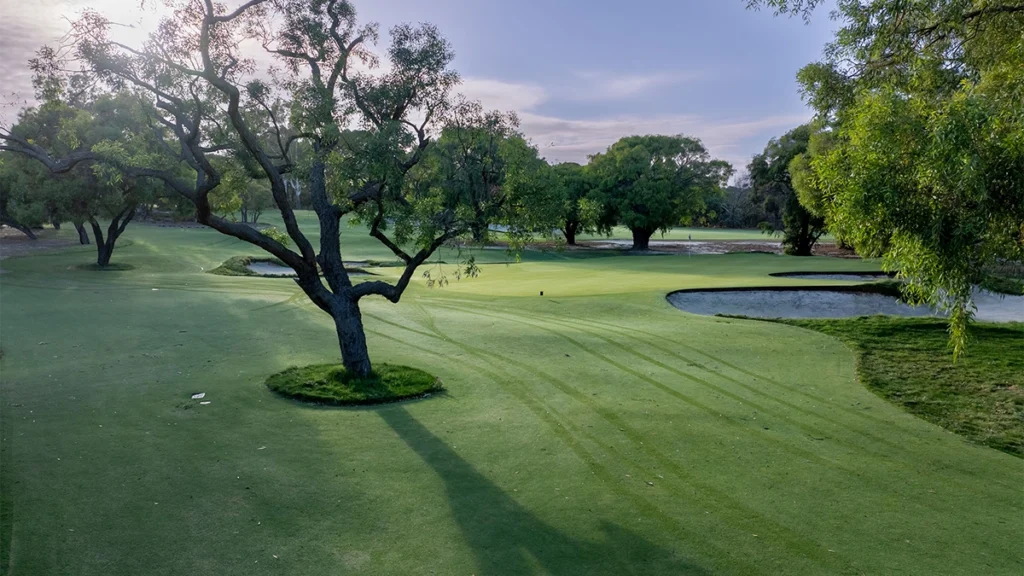
“After the early European tree plantings in the ’40s, there was a native ‘bush garden’ movement in the ’60s and ’70s when people decided to plant native plants,” Kruse says, noting that part of the appeal was that native plants and trees required less water. “The usual suspects you still see today at so many golf courses include Queensland Silky Oaks, West Australian Flowering Gums, Victorian Honey Myrtles, Spotted Gums from New South Wales, Lemon-Scented Gums and Cootamundra Wattles.”
In more recent years, there’s been a push to include vegetation as a major consideration alongside turf and bunkering. “We all talk about conditioning at a golf course, but the definition of conditioning is everything inside the fence, including trees and the vegetation,” course architect and former European Tour winner, Mike Clayton, tells Australian Golf Digest.
Clayton’s design career, which began in the mid-’90s and continues with his Clayton, DeVries & Pont firm, has helped redefine “conditioning”. Clayton says his work at Victoria Golf Club and Peninsula Kingswood are shining examples.
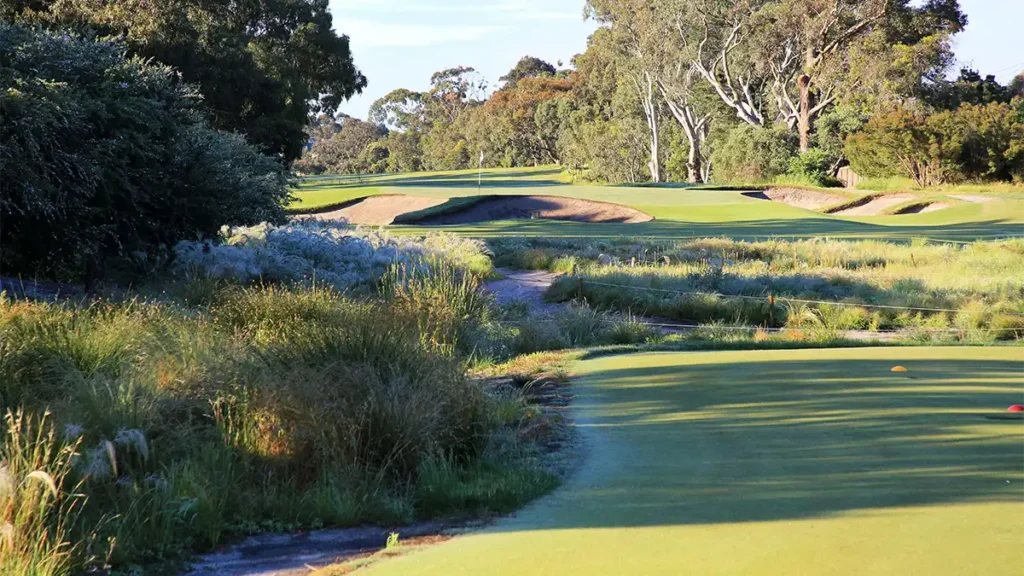
“Victoria Golf Club was our first job, and it was basically to cut trees down and restore bunkers,” Clayton says. “There’s a lot of how I thought the Melbourne Sandbelt should play in what we did at Victoria. Recutting the greens back to the original shapes, restoring bunkers, restoring heathland, taking trees out that had been planted illogically in the ’50s because people thought you should plant trees. I don’t know why, but people had this reverence for tree-planting. In terms of our vegetation philosophy, the North course at Peninsula Kingswood is super-important because it’s arguably the best conditioned course on mainland Australia. It’s the only one with purely indigenous heathland and Coastal Manna Gums.”
Kruse has rolled out the same philosophy at number of golf courses.
“Once golf courses realised they needed to maintain everything within the fenceline, they started to look at what they’ve got and how they manage it. Then you start to realise there was a lot of junk,” he says.
At Woodlands Golf Club, where Clayton and Kruse have teamed up, some areas of vegetation have been cleared at ground level to allow indigenous heath flora to thrive, along with the encouragement of local Manna Gums and River Red Gums. The work has illuminated the gorgeous, gnarled tea-tree trunks and low-lying indigenous vegetation. It’s already paying dividends via improved airflow and eliminating excessive shading to boost the playing surfaces, while removing intrusive species of vegetation that was drowning out beautiful indigenous flora.
Kruse has also been engaged at Eastern Golf Club, in the Yarra Valley less than an hour form Melbourne, to deliver a vegetation masterplan. His task is to assess ad-hoc tree planting and restore the delightful views the club boasts of the Yarra Ranges. Once again, he will introduce native grasses to bolster Eastern’s Victorian bushland charm.
WHERE BIODIVERSITY REIGNS
So, why is there an ecological misconception of golf courses and what is their true benefit to the environment? Australian Golf Digest asked Nicholas Williams, a professor of Urban Ecology at the University of Melbourne, how golf courses co-exist with their surrounds. Williams also works in urban horticulture and led a four-year research project examining the biodiversity of golf courses across Melbourne Sandbelt courses. His answer was illuminating.
“[Golf courses] provide refuge habitats [for flora and fauna] especially in the out-of-play areas [outside of the playing corridors], that are not managed intensively,” Williams says. “Meanwhile, urban landscapes (residential areas and parks) tend to be managed intensively. In a park, the grass will be mown, but the rough of a golf course or the out-of-bounds areas are not. Those areas allow ground-nesting bees to nest in the sand.
“Having a complex groundstorey, and understorey, vegetation provides additional habitat for greater diversity and abundance of insects, which provides more food for animals up the food chain. Where you have a more complex understorey and vegetation structure, you also have greater bird diversity and micro-bat diversity. Indigenous plants are then eaten by indigenous insects and are attracting more insectivorous birds, and not just your common urban birds.
“On the Melbourne Sandbelt, dense rough with lots of tea-tree enables small birds to persist whereas in urban residential areas and parks, which are just grass and trees, you don’t have that complex understorey. They are hiding spaces for birds, and more diversity of habitat for more insects, for example.
“Importantly, golf courses are also dark, so there’s no lights at night, which is really important. That enables nocturnal animals to behave much more normally. And that goes from insects and bats to nocturnal birds.”
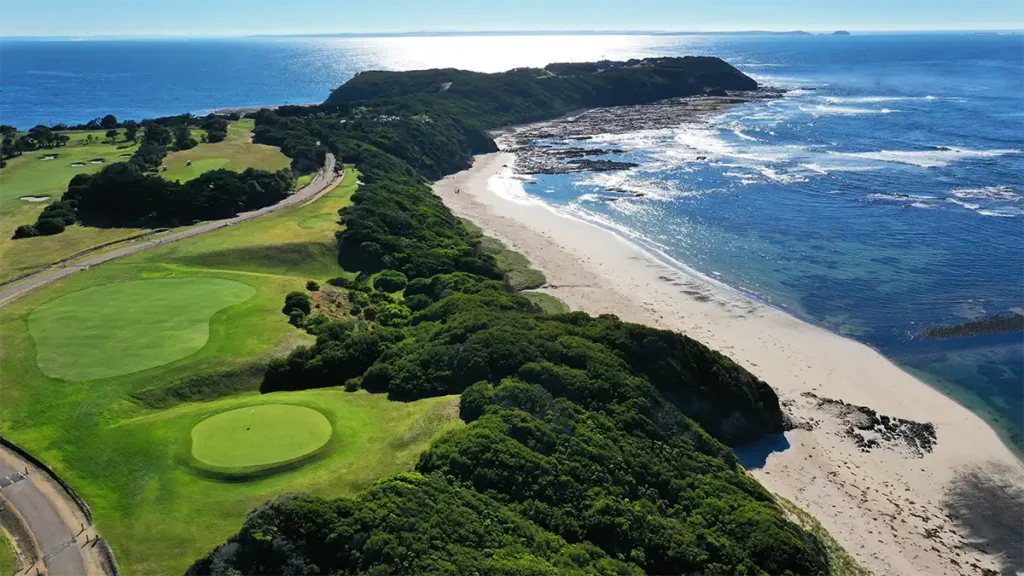
Another example of biodiversity flourishing after a minimalist golf course replaced a troubled site can be found at 7 Mile Beach in Hobart, which opened in December. The Clayton, DeVries & Pont design was crafted on land formerly used as a radiata pine plantation. 7 Mile Beach Golf’s general manager Will Kay says flora and fauna are already thriving.
“Golfers are amazed when we tell them the site was completely overrun by the radiata pines versus the landscape which is there today,” Kay tells Australian Golf Digest. “Those pines are registered weeds in Tasmania and are known to block all sunlight and subsequent vegetation and animal life as a result. They are also known to suck nutrients and moisture from surrounding soil, making it harder for other plants to grow. On top of plant life, the number of different paw prints in the sand now is amazing, and we have a very happy group of shore birds nesting in our sheltered dunes.”
Although Williams has not seen 7 Mile Beach in person, the concept makes sense. “That doesn’t surprise me; pine forests are pretty much biological deserts, and they also have what we call ‘allelopathy’, so chemicals that come out of their needles also suppress most other plants,” he says. “They’re pretty good in some places. In Perth, pine forests are really important for endangered cockatoos, and I wouldn’t be recommending removing them there. In Tasmania, it’s a different story, and the reinstatement of the original community will be beneficial to the bird life and the vegetation.”
From the brand-new 7 Mile Beach to a restored Royal Sydney, a counterintuitive philosophy is beginning to take shape – removing certain trees can improve biodiversity.
“It looks anti-environment,” Kruse says. “But if you get the ingredients of the right vegetation in a place, then you can start bringing diversity back.”
The result?
“At Royal Sydney, we’ve got more than 120 species of plants and there are ant populations coming back to the site,” he says. “We’re seeing skinks and lizards [returning], moths and butterflies breeding on the site.”
That balance can be difficult to achieve in conversations with local governments, but Hanse and Kruse’s work at Royal Sydney is an example of how it can be done with collaboration.
“One hundred percent; I think golf courses can be an enigma to councils,” Kruse says. “A golf course is not a quarter-acre block with someone building a house or a warehouse development. They are open, recreational spaces that don’t really fit in the category that the planning department of councils are used to. The perception, I guess, around private golf clubs [has also been a challenge].”
The foundations have been laid for Australian golf course design to revamp its image, and function. New designs and restorations can emphasise vegetation as not only an integral part of conditioning, but a link between the game and the environment.
“It’s the responsibility of golf courses within suburbia to be phenomenal hosts of flora and fauna,” Kruse says. “The replacement of 14 hectares of turf at Royal Sydney with coastal heathland would have to be the largest revegetation project in suburban Sydney. Royal Sydney wanted to do that, and they resourced it. It comes at a cost, but they’re doing it the right way.”
For decades, golf courses tried to look like somewhere else. Now, they are beginning to look like themselves again.
Photography by gary lisbon